


TORONTO – Some of the so-called sin businesses the provincial government was relying on to help rein in the deficit are falling short of short-term projections according to the 2013 Ontario budget.

“While the OLG and the LCBO have had significant year‐to‐year growth, their net income in the near term will be lower than projected in the 2012 Budget,” according to the 2013 Ontario budget.
Government revenue is expected to increase by $1 billion by 2015-2016 due to higher than projected net incomes from both the LCBO and the OLG in the medium-term.
The government had previously set a goal of $100-million in additional annual profits from both the LCBO and OLG. But the short-term net income from the two businesses will be lower than originally projected in the 2012 budget.
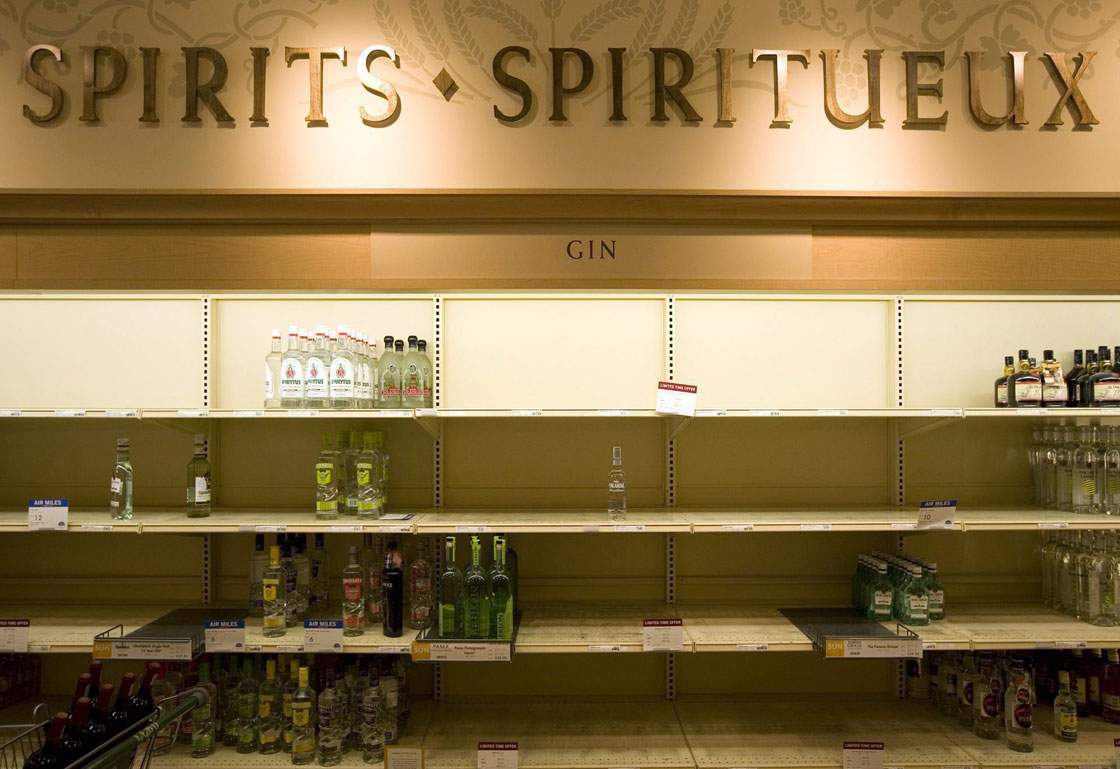
For the LCBO, the cost of expanding booze sales in the province currently outweighs revenue from stores.
Analysis: The 2013 Ontario Budget, a bouquet of thorny roses.
The OLG maintains they are on track to meeting the government’s revenue and efficiency targets.
The government is hoping to increase revenue from by an extensive and complex “modernization” of gambling and gaming in the province of Ontario.

Get breaking National news
The modernization plan includes establishing gaming zones throughout the province in which private companies would own casinos under the eye of the OLG.
And the OLG insists modernization is on track.
A significant part of the OLG’s modernization plan is the construction of a casino in the GTA.
The government has been forced to push back the date for RFPs from interested parties because some municipalities, Toronto included, have yet to state their willingness to build a casino.
The city’s executive committee – chaired by Mayor Rob Ford and staffed with usual allies – voted in April to approve a casino by a vote of 9-4.
The executive committee’s approval sends the issue to city council for a final vote.
But a Toronto casino has been heavily criticized by several city councillors – making it highly unlikely the body will approve the idea.
While the province could build a casino in a neighbouring municipality, the highest revenue would come from a casino within the city limits.
The government’s modernization plan was a key part of the 2012 provincial budget and the revenue gained from gambling in the province helps pay the bills for numerous projects across Ontario.
$1.6 billion in net revenue from lotteries goes is planned to support hospitals in 2013-2014.
Cities that host casinos – Orillia, Niagara Falls, Gananoque, Brantford – also receive payments that are estimated to be $92 million.
$10 million in 2013-2014 from the Quest for Gold lottery goes to amateur athletes across Ontario.
An estimated $41 million in 2013-2013 from gambling-generated revenue is expected to go to problem gambling prevention, treatment and research programs.
And $162 million will be divvied up between health care, education and public infrastructure.
After this story was published, Heather MacGregor, a spokesperson for the LCBO, had this to say:
While it is true that LCBO’s net income will be lower than originally projected in the 2012 budget, sales grew by 3.9 per cent in 2012-13, outpacing the Canadian and Ontario retail sectors.
In 2012-13, LCBO opened some 30 new stores and carried out major upgrades on three outlets. These retail improvements contributed some $14.5 million in additional sales. New stores typically pay for themselves within 18 months, and this, in turn, helps us outperform the marketplace.
Store expansion was also endorsed by the government and Don Drummond as a means of helping to generate incremental net income — at a pace far faster than existing stores.
We are currently in discussions with the government about ways the LCBO can generate more revenue for the province.


Comments
Want to discuss? Please read our Commenting Policy first.