





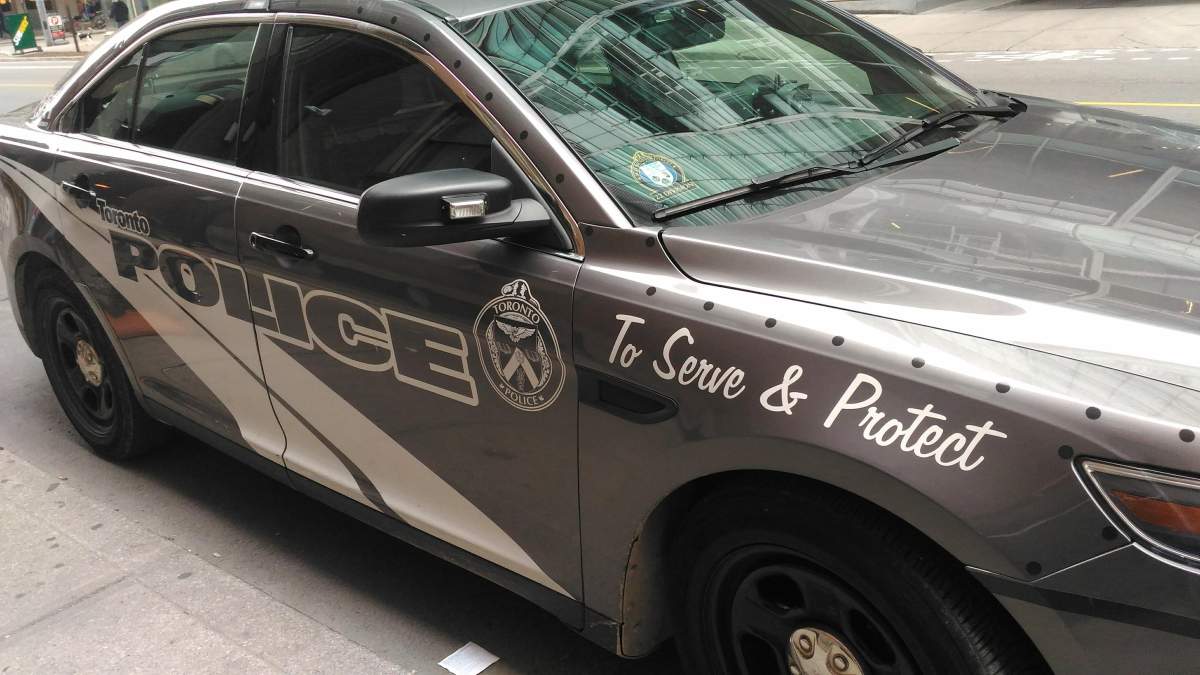
The president of the union representing Toronto police officers says a draft policy put forward by management banning members from consuming marijuana within 28 days of reporting for duty is “fraught with all kinds of issues and legal challenges.”

Mike McCormack of the Toronto Police Association told Global News Radio 640 Toronto that the restriction really translates to “absolute prohibition” which he says “is simply not practical.”
“Because it’s going to be a legal substance, there’s no indication that impairment would last into 28 days. It seems to be an arbitrary number.”

Get daily National news
McCormack says he doesn’t see the policy as “tangible” and that officers already have rigorous rules about being fit for duty.
“Police officers take their job very responsibly, It’s not like it’s 1936 and we’ve got reefer madness and these guys are going to be smoking dope like beans.”
The draft of the new policy doesn’t address second-hand smoke McCormack says officers are likely to come in contact with during a shift when pot is legalized on Oct. 17.
- ‘Local Governance 101’ Okanagan community’s first-ever council trains ahead of inaugural meeting
- Family of soldier badly burned at CFB Wainwright speaks about his injuries
- As B.C. scraps time change, experts have a warning about the risks
- B.C. soldier burned in CFB Wainwright fire remains in Edmonton ICU


“What happens when it’s a legal substance, people are smoking it, and I’m an officer are going up to investigate? If I get a second-hand smoke in my system, am I supposed to self-declare I have cannabis in my system, and go on a 28-day leave? Are the taxpayers going to pay for that?”
READ MORE: Toronto police to ban officers from consuming cannabis within 28 days of reporting for duty
On Tuesday, Toronto police confirmed that a draft of a new policy, banning officers from consuming cannabis within 28 days of reporting for duty, was distributed to its members as the impending marijuana legalization date approaches.
McCormack admitted the action doesn’t breach the current collective agreement with the union, but does raise a number of potential legal challenges.
“We’re hoping that discussions with the Chief (Mark Saunders) will change this draft policy to reflect the realities of what’s going on here.”


Comments
Want to discuss? Please read our Commenting Policy first.