The GRS garden project: How much does a garden really save?
Kris and I are huge fans of gardening. We grow our own flowers, herbs, fruit, berries, and vegetables. We’re not able to supply all of our needs, but we do what we can. For the past two years, I’ve argued that this is an excellent way to save money if you have the time and the space. But is it really?

An actual weekend harvest from August 2006.
During the next year, Kris and I plan to track all of our work and expenses in the yard. I’m not going to tabulate how long it takes to trim the laurel or the boxwood, but I will track the following:
- The cost of seeds and fertilizer.
- Our approximate water usage.
- The time we spend planting, weeding, and harvesting.
- The amount of food we harvest.
- The cost-equivalent from the local grocery store.
For example, when Kris places her seed order in the next week or two, I’ll note how much she spends for a packet of tomato seeds. I’ll keep track of how much she uses her grow lights (using my handy Kill-a-Watt electricity usage monitor), how much water and fertilizer we consume, how many tomatoes we harvest, and how much that would have cost us at the store.
I’m going to compile a whole lot of data.
On the last Saturday of each month, I hope to provide an update of our progress. At the end of the year, we’ll see our savings, and how much it cost us to save it. This isn’t going to be a precise experiment — there are too many variables involved. But our results should be able to tell us just how worthwhile our gardening hobby is.
Past entries on gardening include:
- Gardening 101: Plan Today for Summer Success (an article from my wife)
- Frugality in Practice: The Garden in Spring
- An Introduction to Square-Foot Gardening
Our first step? Browsing the seed catalogs to decide what we want to grow this year!
January 2008 Update
January is always a slow month in the garden, but it’s also full of promise. It’s time for our first chores of the year!
Pruning and Staking
Early in January, Kris and I spent fifteen minutes together in the yard re-staking our fruit trees. We have two apples, a pear, and a prune. They’re inclined to grow a little crooked, so every spring we make sure they’re securely fastened to their stakes. It looks like we should also be doing this every autumn. Cost: $0. Time: 0.5 work-hours.
Last weekend, I pruned our grapes and caneberries. This is always a little scary — I don’t exactly know what I’m doing. But once I get started, I’m able to fake it. With the blackberries and raspberries, it’s obvious that last year’s canes are dead. With the grapes, I just make it up as I go along, pruning the vines back to the wire, leaving a couple buds on each spur. This is a fun job for me. I love to prune. Cost: $0. Time: 0.75 work-hours.
The Seed Order
In the middle of the month, Kris placed an order for seeds. As usual, she exchanged ideas with a couple fellow gardeners, and they pooled their resources. A packet of seeds contains more than we need, so it’s nice to be able to share the cost with friends. Kris says she won’t plant anything until March, but I know that as soon as we get a sunny day or two, she’ll be itching to get to work. Here’s a glimpse of her spreadsheet:

“How long did it take for you to order the seeds?” I asked Kris when I started writing this article.
“I don’t know,” she said. “Maybe three hours.”
“Three hours?!?!?!” I was flabbergasted.
“It’s not like it’s hard work,” she said. “I’m just sitting there with the catalogs, dreaming.” That’s my wife: dreaming about seeds. For our purposes — and in order to get a nice round number at the end — we’re going to say that she spent 2.75 hours selecting and ordering seeds. Her cost was $27.30.
(Update: We use Totally Tomatoes for that fruit, and Territorial Seed for most everything else.)
Year-to-Date Total
January was quiet. We spent 4.0 hours working on our fruit and vegetable gardens, and spent $27.30 total. February will see more action. We need to fertilize certain plants, prepare our indoor planting material, and prune the fruit trees. Best of all, we’ll plant the peas. Things won’t get really time-consuming until March, however. (Well, there’ll be plenty of other yard-work — it just won’t be food-related.)
February 2008 Update
The Yardwork Begins
Like last month, there’s very little to do in February. It was still quite cold at the beginning of the month, but by Valentine’s Day, the bleak Oregon winter relented. We had some gorgeous sunny days with highs near 15c (59f). This was a cue to do our first serious yardwork.
We spent about 15 hours in the yard in February, mostly cutting back our 60+ rose bushes, pruning the boxwood, and picking up winter debris. But we did find some time to work on our food-producing plants, as well.
Preparing for Spring
First, we picked up the oak leaves that had buried our strawberry plants. The strawberries are allowed to run wild in the rose garden, sending their runners to-and-fro. A friend gave us 50 plants for free when we moved into this house in 2004, and now we have too many to count. We fertilized the berries last fall.
We also pruned our fruit trees — the plum, the pear, and both apples. Afterward, we weeded the potato patch and pulled ivy from around the blueberries. To finish up the weekend, we put up the pea trellis, and planted 72 seeds of Oregon Sugar Pod II. Come June, these will make a tasty snack, and at very little cost.
Last week, we took the time to test the pH of the soil around our blueberry plants. Blueberries like acid soil, so we’ll have to give them some special fertilizer in the next week or so.
Despite many hours spent in the yard, only 2.5 of them were devoted to our food-producing plants. We spent no money on this project in February.
Year-to-Date Totals
So far in 2008, we’ve spent $27.30 and 6.5 hours caring for our fruit and vegetable gardens. March will see more action. We need to fertilize certain plants, prepare our indoor planting material, and plan the vegetable garden. And any day now we’ll see our first peas poking through the earth:

March 2008 Update
In my mind, March is filled with gardening activities. Not so much, as it turns out. I think April will also be light.
Planting Seeds
Though we didn’t do much in March, we finally got to see some action from the plants. On March 1st, Kris planted the tomatoes and peppers (and some flowers). She spent 90 minutes sowing the seeds in special bio-domes. (“I don’t normally advocate one product over another,” she says, “but I really like these.”)

After the seedlings have made a good start, Kris hangs her grow lamp.
We placed two trays of seeds in our south-facing bay window. After they sprouted, Kris set up a grow-light to give the seedlings even more energy. (March is not exactly sunny in Oregon.) On March 24th, she transplanted the strongest seedling of each variety into a 4″ pot.

Can you believe they’ve grown so much in just three weeks? Amazing!
On March 15th, we fertilized the strawberries with Strawberries Alive. On the following weekend, Kris raked the leaves from the vegetable garden (we use them as a cover during the winter) and spaded one area. I’ll use the rototiller to work the earth in a couple weeks.
Through all of this, my peas have been growing slowly. (They’re so cute!)

I’m a little worried about the spotty germination, but I’m sure we’ll have plenty.
Also this month, we picked up a fully-functional upright freezer (the same form factor as a refrigerator) for free from one of Kris’ co-workers. This is a jackpot. It gives us a lot more room for food storage.
Conclusion
During March we spent $113 on organic pest controls and fertilizers for our fruit and vegetable crops. We also spent $16 to buy potting soil and a soaker hose. I used my Kill-a-Watt to measure the power consumption of the grow lamp, but it only uses a few pennies of electricity per day. Let’s call it a buck for the entire month, bringing our expenditures to $130 in March.
April 2008 Update
“It was the best of times, it was the worst of times…” — Charles Dickens, A Tale of Two Cities
April finally saw some action in the yard, but not the sort we’d hoped for.
The Hail You Say!
Most of the month was quiet. Our vegetable starts continued to thrive under the growlights. By the end of the month, the tomatoes had been transplanted into gallon-sized pots and were over two feet tall! Kris was itching to get them into the ground.
Average last frost is about April 15th, but this year, especially, has been strange, with snow in the Portland area in mid-April. Kris checked the weather forecast for night time lows and decided that it was worth the risk. Keeping the plants indoors any longer was also a risk; left inside, they would grow spindly as they stretched for real light.
Kris had the day off last Monday, and the weather was sunny and warm; she couldn’t resist. She spent two hours planting her tomatoes out in the vegetable garden. She dug a deep hole for each, mixed in a bit of fertilizer, gently patted the plants in, and placed the tomato cages around them.
On Tuesday, things took a turn for the worse. As I was leaving to drive to my presentation at Western Oregon University, it began to hail. The hail wasn’t big, but it fell heavily for ten or fifteen minutes. A fierce, cold wind battered the garden. “Yikes,” I thought. “Kris’s tomatoes are in trouble.” To make matters worse, Kris came home sick with a nasty head cold that kept her in bed the rest of Tuesday and all day Wednesday. Her defenseless plants were left to the elements.
Sure enough — the plants have been shredded. Most of the branches are broken and drooping on the ground. The slugs, sensing their weakness, have moved in to finish the job. Kris still holds out hope that a few days of sun (which we’re slated to receive) will help the plants pull through, but the truth is we may have to pay cash to buy new starts. And if we do, they won’t be the heirloom varieties she’s nursed from seedlings. (Kris’s note: I’m playing nursemaid for a week or two before I decide what to do. Today I sprayed the ailing tomatoes with a foliar fertilizer to see if that will help revive them. Nine of the ten plants still have their growing tips in fairly good condition, but all the side branches are sad. Woe is me!)
Meanwhile, the slugs have devoured her cucumber seedlings, too. Kris is not happy. (In fact, distraught may be a better word.) The peppers and acorn squash look okay, and the beets are sprouting nicely. The potatoes we started from the end of last year’s harvest are doing well. Ironically, most of the flower transplants look like they coped well with the hail and wind. Still, tomatoes are hardy things, to a point, so they may just make it afterall.
What started as an excellent month for the Get Rich Slowly Garden Project ended in relative disaster. Still, it’s early enough to still make an investment in nursery tomato plants, if necessary, to have a productive harvest later on.
Other Chores
Aside from the setback with the vegetable garden, we spent some more time in the yard during April, preparing our food-producing plants for summer. I spent half an hour hanging pest traps on the fruit trees, and Kris and I combined for an hour of work tying up the berry canes. (The raspberries and blackberries have gone berserk, by the way. They love the moderately warm, very wet weather we’ve been having. Wow.)
We did make a few small purchases during the month. We spent $25.98 for a new hose, as well as $2.53 on a couple of herb seed packets. (We spent $21.50 at the annual plant show yesterday, but that’s an expense for May. If you hope to grow a garden this year, now is the time to check for plant sales in your area. They’re an excellent way to find quality vegetable starts and expert advice.)
Also, our strawberry plants have begun to blossom. Some of them are enormous. In just a month, we’ll be harvesting our first produce!
Conclusion
During April we spent $28.51 on garden-related expenses. We spent 5-1/2 hours working on our crops.
We have a lot of yardwork ahead of us in the next few weeks, including much that is food-related. I’ve learned that I didn’t prune my grapes properly, so will have to repeat that task. I need to plant my corn (possibly this afternoon). We may need to replace the tomatoes. And with luck, we’ll harvest our first strawberries before the end of May!
May 2008 Update
Today I picked the first two strawberries from our garden. They weren’t particularly good strawberries — there’s been plenty of Oregon rain lately, and they were rather flavorless — but they were strawberries, the harbingers of summer. They signify the start of five months of food harvest from our yard.
Final Orders
As you’ll recall from last month’s update, April ended with a bang. A late-season hailstorm damaged Kris’ tomatoes. We were worried that they all might have been destroyed, but in the end only two needed to be replaced.
During the first weekend of May, we visited the Oregon Master Gardeners plant sale. Though Kris starts most of her vegetables from seed, she cannot resist a chance to wander the stalls looking at other options. This year she spent $21.50 on jalapeños, zucchini, basil, oregano, and thyme.
We also placed two garden-related orders online this month. We spent $23.59 at Park Seed on supplies for next year. (We’re counting this as a cost for 2008 in order to compensate for the material we purchased in 2007 but used this year.)
We also placed a $65.80 order with Spray-N-Grow to purchase a variety of fertilizers, as well as a product called Sluggo. Unfortunately, the Sluggo isn’t working very well so far.
In Oregon, slugs are a nuisance. (They’re our unofficial state animal!) We can’t use the ever-popular beer traps because the rain renders them ineffective. Our garden is too big to use copper tape — it doesn’t seem to do much good. Nothing organic seems to work either, when it’s raining daily. The slugs have been chomping Kris’ cucumbers as fast as she can plant them. My corn is beginning to sprout, but the slimey beasts are licking their chops over that, too. (And then the corn has to make it past the blue jays.)
Time in the Garden
Kris and I both spent time in the vegetable garden this month, but not as much as I had expected. She spent about four hours planting things and applying a foliar fertilizer. I spent an hour spading the soil (no rototiller for me this year) in order to prepare it for the corn, after which I planted the seeds themselves. I also spent half an hour weeding the grapes. Combined, we spent only 5-1/2 hours working on fruits and vegetables in May. (Kris says she would have spent more time if it hadn’t rained so much!)
I keep expecting the time we spend on this project to explode, but so far it hasn’t. Just wait until blueberry season arrives, though. It takes forever to pick those things…
Interlude
Sally Herigstad at MSN Money highlighted our garden project in her recent article listing five foods it’s cheaper to grow. The foods? Fruit trees, lettuce, herbs, vine vegetables, and bell peppers. She also lists five to leave to experts: potatoes, carrots, celery, asparagus, and wheat. Thanks for pointing to our project, Sally!
Garden Tour
While Kris and I may not be putting a lot of work into the garden yet, the plants have shifted their efforts into overdrive. They loved the warm, wet Oregon May. The berries are bearing, the fruit trees are fruiting, and the vegetables are growing like gangbusters.
Last week, Kris took the camera outside to photograph some of her favorite plants. First up is one of the tomatoes:

“This picture is sad,” Kris told me. “Look at how the plant is still missing most of its lower leaves!” I’d like to point out the tomato paraphernalia: the sturdy tomato cage and the two-liter bottle staked next to it (for watering during the summer). In the background, you can see an acorn squash beneath a plastic cloche.
The second photo shows my beloved caneberries: blackberries, raspberries, and marionberries. This probably looks like a wall of green to you; that’s what it looks like in person, too.

If you could see through that wall of green, you’d spy a twenty-foot row of grapes. Around the corner, we have four fruit trees: two apples, a pear, and a prune. This looks like the first year we’ll get a sizable fruit crop.

Finally, here’s a photo of Kris’ pride and joy, her red currant bush. The berries are green now, of course. That’s okay. We can wait.

There are many other plants we could show you: the herbs, the potatoes, the peas. Ah well — maybe next month.
Conclusion
During May we spent $110.89 on garden-related expenses. We spent 5-1/2 hours working on our crops.
“I don’t know,” I said after tabulating the numbers tonight. “We’ve spent $300 on the garden already — there’s no way that’s going to pay off.”
“But most of the monetary expense is done now,” Kris said. “All that’s left is caring for the plants. From now on, it’s all about the harvest. I think you’ll be surprised.”
I hope so. To date, we’ve spent 21 hours and $296.70 on our garden, and all we have to show for it are two watery strawberries!
June 2008 Update
It was a miserable June for gardeners in northwest Oregon. The first two weeks weren’t just wet — we’re used to that — they were cold, too. The local media dubbed the month “June-uary”. Residents were quick to embrace the term. The cool weather pushed back a number of crops. Strawberry farmers groused. Blueberries and raspberries are three weeks late.
But now the sun has arrived. We’ve been harvesting strawberries and peas all month, and I picked the first blueberry this morning. (Not very good — it wasn’t quite ripe.) Raspberries should be on in a week or so, I think, and judging from the copious blossoms, we’re going to have a bumper crop. Meanwhile, the pear, plum, and apple trees have set loads of fruit. By the end of the July we may even have some vegetables.
In short, though the month got off to a slow start, we should be rolling in produce before long.
Time in the Garden
Our gardening chores have become more routine. Now that all of the crops have been planted, all we do is:
- Weed
- Fertilize
- Harvest
Between us, Kris and I spent about seven hours this month performing these tasks. I’ll admit that Kris is the weeder and the fertilizer. We both harvest, which is a chore I enjoy. There’s something zen-like about moving among the strawberries. (And just wait until I pick blueberries — I find that highly meditative.)

First Harvest
We harvested our first strawberries on May 31st, though we’ll count them in June’s totals. (Likewise, we harvested our first currants today, but will count them for July.) During the past few weeks, our harvest has comprised:
- 11.74 pounds (5.325kg) strawberries
- 2.35 pounds (1.067kg) snow peas
This will seem like a bounty to some of you, and like a pittance to others, but it’s what our garden produces. It’s what we have space for. Actually, I believe both crops were substantially reduced this year due to the weather. Even the peas struggled. (Peas don’t usually struggle in Portland.)
Snow peas at the local grocery store were $5.99 per pound throughout this month, so our harvest was worth $14.08. The strawberries are more difficult to price. Purchased from Safeway in two- or four-pound containers, they could be had for $2.50 per pound. Kris picked twelve pounds at a local farm for 85 cents per pound. But I’m going to use the grocery store’s one-pound price ($3.99) because our harvest came in roughly one pound increments. That’s another $46.84 worth of food. (I welcome advice and debate over this methodology, by the way — I don’t actually know the best way to compare prices.)
In total, we harvested $60.92 of food from our garden this month.
Conclusion
During June we spent 79 cents on the garden (for a packet of lettuce seeds at Winco). We spent seven hours working on our crops.
Last month I wrote that I doubted we could recover our expenses on the garden. This month, after only small harvests of peas and strawberries, it seems like there’s no question that the garden will save us money. I’ll bet we harvest $300 in tomatoes alone!
After six months, we are $236.57 in the hole on this project.
Earlier I mentioned that Kris picked twelve pounds of strawberries at a local farm. U-Pick produce is an excellent deal if you don’t have a garden of your own. A family trip to pick berries can be an excellent outing for children, and it can yield some delicious jams and syrups.

July 2008 Update
It was a berry, berry good month at Rosings Park (as we call our happy half acre). Gloomy June faded into memory, the sun came out, and the berries ripened. This is the time of year when there’s little to do in the garden but water the plants and harvest the produce. There’s plenty of work to preserve the food, however: canning, freezing, and drying.


Raspberry Disaster
At the beginning of July, we discovered we had no raspberries. We usually get several pounds from our over-zealous canes, but this year we only got a few nibbles — they weren’t even worth weighing.
We’re still not sure what went wrong, but the most likely cause of our raspberry disaster is poor pruning on my part. Our guess is that I either pruned the canes back too hard, or, more likely, pruned them too late. We do expect to see a fall crop (and probably a good one), but our summer crop of raspberries never materialized.
Sharing Food
This project is interesting because it has forced us to decide how to classify certain costs and “profits”. For example, we don’t actually grow cherries on our property, but the neighbors let us harvest 12.5 pounds (5.649kg) of fruit. Should we count that in our totals? At about $2.99/pound, that’s $37.38 of cherries!
We’ve decided instead to keep a separate tally for produce received through other methods. There’s certainly a cost savings involved, but we didn’t actually grow it ourselves.
Meanwhile, we’ve found a way to deal with our excess berries while also compensating for our inability to grow carrots and lettuce. We’re trading berries for greens grown by one of Kris’ co-workers. This is a great deal for both parties. For accounting purposes, we’re ignoring this deal, however. After we harvest the berries and weigh them, it doesn’t matter what happens after that.
The Fruits of Our Labor
Here’s the complete tally for this month’s garden production.
- 0.79 pounds (0.360kg or about 1 pint) strawberries @ $3.13/pound = $2.47
- 2.92 pounds (1.326kg) snow peas @ $5.99/pound = $17.49
- 5.91 pounds (2.681kg or about 8.5 pints) red currants @ $3.99/pint (~300g) = $35.66
- 5.23 pounds (2.376kg or about 8 pints) blueberries @ $2.99/pint (~300g) = $23.68
- 1.52 pounds (0.689kg or about 3.5 pints) gooseberries @ $3.99/pint (~200g) = $13.75
- 6.52 pounds (2.965kg or about 10 pints) caneberries (blackberries, boysenberries, and marionberries) @ $2.49/pint (~300g) = $24.61
- 1.27 pounds (0.575kg) of string beans @ 1.99/pound = $2.52
- 5 zucchini @ $0.50/each = $2.50
- 2 cucumbers @ $0.50/each = $1.00
For the purposes of this project, we’re using “best match” pricing. Based on GRS reader suggestions, we’re obtaining typical pricing from our local farmers market. In some cases, we use pricing from a local organic produce stand. In all cases, we’re trying to be fair, but this is more art than science.
Our total harvest in July yielded $123.68 in produce, including 31 pints of berries.

Time in the Garden
This month Kris spent about an hour each weekend fertilizing and keeping tabs on the garden. Together, we spent one hour this month tying up the tomatoes, spreading mulch, and other chores. But most of our time was spent picking berries. We combined for about six hours harvesting our produce. We spent eleven hours total working on our crops this month.

Summary
During July we spent $20.94 on the garden for three bags of soil to go around the roots of the blueberries. (The bases of the blueberries are mounded, and the soil tends to erode, exposing the roots.)
As July draws to a close, the tomato plants have reached the top of their cages and are loaded with green fruit. The Sungold cherry tomato will be first to ripen (we’ve nibbled a few already), followed by Stupice. The cucumber and zucchini are beginning to produce regularly and the corn is thriving. In the herb bed, the elderberries are growing dark and gleaming, and the nearby fruit trees each bear a load we’ll enjoy late in the summer.
Kris has put away snowpeas and grated zucchini in the freezer, along with several batches of freezer jam (my favorite). She’s also put up several varieties of cooked jams and jellies, canned cherries in light syrup, pickled green beans with dill, garlic and ginger, and has dried cherries, blueberries and currants for future use. (One of her co-workers came over on Wednesday to learn how to can pickled beans.) We’ll be glad to have this summer’s bounty during the long rainy winter.
August 2008 Update
The berry harvest continued this month at Rosings Park, our happy half acre south of Portland. Blackberry time is my favorite time of the year. And though August is often too hot for me, I’m willing to suffer the heat because I know it means the start of canning season. Sure enough, Kris has been putting up salsa and applesauce and all sorts of pickles and jams. Yum.
Also, much to Kris’ delight, we finally harvested tomatoes this week, an entire month behind schedule.

The Dark Side of Gardening
Here’s one of the sad secrets of gardening: mid-summer can be frustrating. If you don’t stay on top of things, the garden can get away from you. Here’s an actual quote from Kris mid-month. We were on the couch watching Olympic diving when I transcribed the following lament:
I didn’t pick the blueberries. The beans need to be picked so they’ll keep producing. The cucumbers are coming on. I need to water things because it’s going to be hot this week. I need to get our extra zucchini over to the neighbors. I didn’t even pick Patrice’s apples. She offered me three times, but I’ve been too busy, and now they’re done.
Remember: we have a modest garden. We grow food for fun. This project will determine whether there’s a cost benefit as well. But even a modest garden can produce a lot of food. With my mother in the hospital and Kris’ parents in town, we didn’t have much gardening time during the first two weeks of August. For a while, there was a danger that we’d lose control, but we managed to persevere!

Supplementing Our Harvest
We spent nothing on the garden this month except our time. Between us, we spent about eight hours picking berries and veggies. (Kris also did a bit of fertilizing early in the month.)
We did, however, supplement our harvest in a number of ways:
- We visited a nearby farm for U-pick beans.
- We picked up some tomatoes and other vegetables for canning from our favorite produce stand.
- Best of all, friends and neighbors gave us apples (or allowed us to pick them).
We’ll continue to exchange produce with other people, giving away our surplus and enjoying the bounty of other gardens. In about a month, I’ll be able to harvest Concord grapes from the neighbor across the street. The juice from these is fantastic.
The Fruits of Our Labor
Here’s the complete tally for this month’s garden production.
- 0.76 pounds (0.347kg or just over one pint) blueberries @ $2.99/pint = $3.46
- 18.04 pounds (8.184kg or 27-1/4 pints) caneberries (blackberries, boysenberries, and marionberries) @ $2.49/pint (~300g) = $67.92
- 3 pints elderberries, for which I can find no cost comparison
- 2 plums @ $0.42/each = $0.84
- 4 beets @ $1.99/bunch = $1.99 (approx.)
- 4 Anaheim chili peppers @ $0.30/each = $1.20
- 6 zucchini @ $0.49/each = $2.94
- 11 cucumbers @ $0.49/each = $5.39
- 1.23 pounds (0.560kg) of green beans @ $2.49/pound = $3.06
- 3.48 pounds (1.580kg) of fancy potatoes @ $1.00/pound (approx.) = $3.48
- 4.53 pounds (2.053kg or nearly 7 pints) cherry tomatoes @ $2.49/pint = $17.03
- 8.35 pounds (3.789kg) tomatoes @ $1.99/pound = $16.63
Our total harvest in August yielded $123.94 in produce, mostly from berries and tomatoes. Note that for grins and giggles, we’re tracking the yield (in pounds) of each tomato plant. I’ve been dying to know how much a single tomato plant can produce in a year.
Note: For the purposes of this project, we’re using “best match” pricing. Based on GRS reader suggestions, we’re obtaining typical pricing from our local farmers market. In some cases, we use pricing from a local organic produce stand. In all cases, we’re trying to be fair, but this is more art than science.

Summary
We spent no money on the garden this month! We’re now within $20 of our expenses for the year. By the middle of this week, we’ll be clearing “profit”. We’ll be able to begin computing how much our labor is valued at. (Though we do this because we love it, not just to save money.)
This month, we didn’t keep track of the apples and cherries and other produce we obtained through other methods than our own garden.
As the summer wends its course, food production will remain high, especially among tomatoes. We’ll also begin harvesting fruit before long: pears, plums, grapes, and apples. As usual, we won’t have copious amounts of any of these (except tomatoes), but just enough to relish the pleasures of gardening.

September 2008 Update
September generally brings the largest harvests for our garden. That was true again this year, but not by as much as we hoped. The bad weather at the beginning of the season means that things just aren’t ripe yet. Kris has been encouraging her tomatoes for weeks. I’m dying for the grapes to be ready. (They’re almost there!)

Kris gives orders to her garden elves. Photo by Lisa.
We did harvest a lot last month, the bulk of which was tomatoes and tree fruit. We had so many tomatoes, in fact, that Kris was able to enlist the help of five-year-olds Albert and Annika to help harvest. They did an amazing job picking cherry tomatoes.
Like Investing in Fruit
September’s nice because there’s almost no garden maintenance. All we have to do is stroll out to pick the food we want. During the middle of the month, Kris and I had a mild misunderstanding. I thought she told me to go pick all of the apples from our trees, but she really told me to pick a few for some jam. I came back into the house with 19 pounds of apples, which was far more than she needed. We made a spontaneous batch of applesauce.
Actually, Kris did a lot of canning this month: marinara sauce, applesauce, salsa, pickled plums, and more. As usual, we supplemented our own harvest with free food from friends and neighbors (25 pound of pears here, 15 pounds of plums there), as well as things like onions and garlic from the produce stand.
Now, as the rains begin and the harvest draws to a close, our pantry and freezer are both packed full. When we make a blackberry cobbler in February, take pickled “dilly beans” to a potluck or pop open a jar of spicy salsa on a chilly afternoon, we’ll be extending the benefits of our garden year-round. Our home-canned goods will help defray food costs over the next eight months until we can expect another strawberry crop to kick off 2009’s garden bounty.
The Fruits of Our Labor
Our total harvest in September yielded $152.75 in produce, largely from tomatoes. Here’s the complete tally for this month’s garden production.
- about 3 pints elderberries, for which I still have no value
- 1.95 pounds (0.886 kg, or 2.95 pints) caneberries (blackberries, boysenberries, and marionberries) @ $2.49/pint (~300g) = $7.35
- 2.82 pounds (1.276 kg) Italian plums @ $1.49/pound = $4.20
- 5.64 pounds (2.560 kg) pears @ $0.99/pound = $5.58
- 26.52 pounds (12.038 kg) apples @ $0.99/pound = $26.25
- 6 Anaheim chili peppers @ $0.30/each = $1.80
- 3 zucchini @ $0.49/each = $1.47
- 1 cucumbers @ $0.49/each = $0.49
- 4 measly ears of corn @ $0.50/each = $2.00
- 692 grams of Interlaken seedless grapes, which would sell for about $3 at the local farmers market
- 6.50 pounds (2.951 kg or nearly 10 pints) cherry tomatoes @ $2.49/pint = $24.49
- 51.09 pounds (23.195 kg) tomatoes @ 1.49/pound = $76.12
Note: For the purposes of this project, we’re using “best match” pricing. Based on GRS reader suggestions, we’re obtaining typical pricing from our local farmers market. In some cases, we use pricing from a local organic produce stand. In all cases, we’re trying to be fair, but this is more art than science.
A Little Bit of Whining
I’ll be honest. I’m a little disappointed. Once it became clear that this garden was going to “make money”, I wanted it to kick ass. It hasn’t done that. Don’t get me wrong — we love having fresh produce outside our front door, and we enjoy the work with the plants, but I was hoping for more.
I think there are a few ways we can improve.
- For one, we can focus on plants that are more productive in our climate. (Look for a complete exploration of this topic in December or January.)
- For another, we can begin refining our gardening methods to emphasize frugality. As I noted at the start, we haven’t altered any of our normal habits for this project. In the future, it might be worth doing so.
- Finally, we can have better weather. Oregon’s Willamette Valley had a short summer this year. The rainy grey skies lingered an extra month, and now they seem to have arrived two weeks early. That loss of six weeks (and especially those first four weeks) has a huge impact. That means our tomato harvest is stunted, and that we only had four ears of corn come to maturity.
This year, we initially made a large financial outlay for two types of organic pest traps for the apple trees. They proved successful; our apples were practically worm-free! As the two trees mature and bear larger crops, the number and value of the apples will increase as the cost of the traps will drop (because some parts are reusable from year-to-year).
I almost want to repeat this entire project next year to see if we can spend less and harvest more! (Maybe we’ll do it behind the scenes, providing totals at the end of the summer.)
Summary
We spent nothing on the garden this month, and very little time. It doesn’t take long to harvest 19 pounds of apples or five pounds of tomatoes. September is the closest our garden will ever come to “pure profit”.
There is still food left to harvest. Though the rains have set in, we may have more tomatoes. (There are plenty on the plants, but the cool weather is likely to prevent them from ripening.) There are potatoes left to dig, and the acorn squash is ready to pick and dry for winter storage (to be tallied in October).
Most importantly, we have grapes to pick. We only have 20 feet of young grape vines, so we won’t have many from our yard. But the neighbor has vast swaths of Concords growing wild. I wanted to pick them last weekend, but he insisted they were two weeks away. I plan to pick them next Saturday. I just hope these rains don’t ruin the flavor. (Will rain do that to grapes?) There are few things I love more than fresh Concord grapes. (Especially fresh free Concord grapes.) They make amazing grape juice and Kris wants to put up some grape jelly.
Kris has made notes on her garden plan to help her organize her seed order for next year. Only a few short months until the seed catalogs arrive! And she has begun an experiment to grow a few herbs indoors this winter. Stay tuned on whether that is worthwhile.
October 2008 Update
October can be something of a relief for gardeners. The bulk of the harvest is finished, and all that remains is to pick the last straggling fruits and vegetables, and to begin cleaning up. While it’s sad that the harvest is winding to a close, it’s comforting to know there’ll be a respite from the work for several months. Plus it’s a chance to start dreaming about next year, all of the changes and improvements to be made.
And, believe it or not, the success of next summer’s garden begins today.
A Pile of Crap
Last weekend, Kris and I received an unexpected windfall of sorts. John, our neighbor across the street, hooked us up with some free shit: He brought us a trailer-load of horse manure.
We had been planning to use some sort of soil amendment in the garden next spring, but hadn’t yet worked out the cost or the kind. John knows somebody who boards horses, and when she sweeps their stalls, she’s left with piles of hay and sawdust — and horse manure. Apparently she has so much of this stuff that she’s just giving it away. (We offered to pay John for his trouble, but he refused. We’ll bake him some home-made bread instead.)
On Sunday morning, John wheeled in a trailer containing about three cubic yards of this stuff, so Kris and I spent an hour spreading it over the vegetable garden. We’re happy to have finished this task already, especially in such a frugal fashion.

I shoveled while Kris wheeled and spread.
Sizing Things Up
“How big is your garden?” e-mailed one reader during the middle of the month.
“I don’t know,” I said. “But I can find out.” I went outside with a tape measure to discover:
- Our main vegetable bed is roughly 15 ft by 34 ft (4.57 m x 10.37 m), or 510 square feet (47.4 sq. m.)
- Our herbs occupy an irregular space of about 50 square feet (4.65 sq. m.)
- Our berry patch is in 126 square feet of space (11.71 sq. m.)
- Our caneberries have their own space, about 24 linear feet about 4 feet wide, for a total of 96 square feet (8.92 sq. m.)
- Our grapes are in a similar space parallel to the caneberries
- Our four fruit trees are spaced throughout the lawn
Not counting the fruit trees, that’s a total of 878 square feet (81.61 sq. m.) devoted to gardening. Those of you in the country might think this garden is small; those on city lots (or in apartments) might think it’s huge. For us, it’s just right.
Final Harvest
Our total harvest in October yielded $130.77 in produce, most of which was tomatoes and grapes. (Our grape vines are just beginning to mature. The yield from the plants should increase markedly in the future.) Here’s the complete tally for this month’s garden production:
- 32.41 pounds (14.716 kg) tomatoes @ $2.49/pound = $80.70
- 2 small pumpkins @ $0.50/each = $1.00
- 9 acorn squash @ $0.50/each = $4.50
- 2 cucumbers @ $0.49/each = $0.98
- 14 ears of corn @ $0.50/each = $7.00
- 0.58 pounds (0.264 kg) carrots (volunteers from last year) = $0.50
- 0.31 pounds (0.140 kg) red sweet peppers @ $2.99/pound = $0.93
- 0.72 pounds (0.325 kg) golden beets @ $1.99/bunch = $3.98
- 8.92 pounds (4.048 kg) Niagara grapes @ 3.00/pound = $26.76
- 3.96 pounds (1.800 kg) fancy potatoes @ $0.99/pound = $3.92
Note that this does not include the 40+ pounds of Concord grapes we picked from one neighbor, nor the 5+ pounds of high-bush cranberries we picked from another.
I should also mention that we had pretty much given up on the corn. The poor weather in the spring stunted its start, and then it was battered by a summer storm. Plus we didn’t plant a lot of it. Ultimately, however, we were able to harvest almost 20 ears total (between September and October), which isn’t a lot, but the stuff was good. Instead of giving up, we think we might actually try to grow more of it next year.
Note: For the purposes of this project, we’re using “best match” pricing. Based on GRS reader suggestions, we’re obtaining typical pricing from our local farmers market. In some cases, we use pricing from a local organic produce stand. In all cases, we’re trying to be fair, but this is more art than science.
Summary
We spent a little more time in the garden this month, but again had no monetary expenses. The numbers for this month’s harvest also include $25 for the fresh herbs that we’ve harvested throughout the year (chives, basil, cilantro, sage, thyme, bay leaves, marjoram, oregano).
All that’s left now, really, is to perform garden clean-up. We’ll probably have several hours into the garden in November, but I doubt we’ll have much time in December at all. That’ll give me a chance to write a summary of the lessons we’ve learned, and to provide some tips for others who would like to try this!
Though we’ll spend more time in the garden this year, we’re unlikely to spend more money, and we’re unlikely to harvest anything else. We’re fairly certain that the numbers above are close to the final numbers for the year. We’ve spent $318.43 on our food and harvested $606.97 worth of produce. Roughly, we doubled our financial investment in this project.
Kris has already started one project for next year: She’s begun to grow herbs from seed to have a winter indoor garden (with grow light). The basil, cilantro, dwarf dill, thyme and oregano are off to a good start. Herbs are some of the most cost-effective plants to grow in a home garden. Even if you have limited space, a window-box herb garden can be an easy and economical way to dabble in the hobby.
November 2008 Update
This month’s garden update is small. As winter approaches, there’s less for us to do, and all that we harvest are herbs (and those only occasionally). Our major garden task this month was raking leaves. For most people, this is simply yardwork, but for us it’s a chance to work on the vegetable garden.
Last year, we bought a used chipper-shredder. We use it to grind up the many twigs and branches that fall on our property, but in mid-November, we also use it to shred the fallen leaves. With just a few hours work, we were able to create a thick layer of mulch for the vegetable garden, which we placed atop the horse manure our neighbor gave us last month. In late April, I will till all of this stuff into the earth just before we plant.
Speaking of next year, Kris and I have decided that we will do this project again in 2009, continuing to provide monthly updates. We enjoyed it more than we had expected, and believe a second year of data would be instructive.
But I’m getting ahead of myself. First, here are the final totals for our garden harvest this year.
Berries ($225.74)
We don’t have a lot of berry plants, but those that we do have are good producers. They’re low maintenance and provide a lot of fruit for the space they occupy. I’m actually tempted to remove the 25-year-old blueberries to replace them with younger plants of a different variety.
- 12.53 pounds (5.688 kg) strawberries = $49.31
- 1.52 pounds (0.689 kg) gooseberries = $13.75
- 5.91 pounds (2.681 kg) red currants = $35.66
- 5.99 pounds (2.719 kg) blueberries = $27.14
- 26.51 (12.035 kg) caneberries (blackberries, raspberries, etc.) = $99.88
- 6 pints elderberries, for which we still have no value
Vegetables ($294.59)
Our vegetable crop was stunted this year by the lousy weather in Oregon’s Willamette Valley. We’re not the only ones who suffered. Nearly every gardener we know moaned about the poor yields, especially with tomatoes and peppers.
- 5.27 pounds (2.392 kg) snow peas = $26.87
- 2.50 pounds (1.135 kg) green beans = $5.58
- 11.03 pounds (5.008 kg) cherry tomatoes = $41.52
- 14 zucchini = $6.91
- 10 chili peppers = $3.00
- 7.44 pounds (3.378 kg) fancy potatoes = $7.40
- a couple of pounds of beets = $5.97
- 0.31 pounds (0.140 kg) red sweet peppers = $0.93
- one huge volunteer carrot = $0.50
- 18 ears of corn = $9.00
- 16 cucumbers = $7.86
- 9 acorn squash = $4.50
- 2 small pumpkins = $1.10
- 91.85 pounds (41.700 kg) tomatoes = $173.45
Fruits ($66.63)
Our fruit trees are young. We planted them four years ago, and they’re only just beginning to produce substantial crops. This was also the first year that the grapes produced a harvest. I’m tempted to pull out some of the grape vines to replace them with Concords, which I love. But as long as our neighbor across the street will let us pick his fruit, I don’t need to do this.
- 26.52 pounds (12.038 kg) apples = $26.25
- 5.64 pounds (2.560 kg) pears = $5.58
- 3.32 pounds (1.507 kg) Italian plums = $5.04
- 10.44 pounds (4.740 kg) grapes = $29.76
We also harvested at least $25 worth from our herb garden during the year.
Summary
And so we come to winter, that time of year when gardeners sit forlorn, gazing at the cold, frozen ground. Only the lingonberries remain to harvest. This year, Kris has started herbs from seed indoors, which gives her some sense of gardening. She’s talking about adding an Asian Pear tree to our small orchard. But mostly, now is a time to leaf through seed catalogs and think about the crops we’d like to grow next summer. Our dreams of August’s bounty pull us through the dark rainy days ahead.
2008 garden summary:
| Month | Time | Cost | Harvest |
| January | 4.0 hours | $27.30 | — |
| February | 2.5 hours | — | — |
| March | 3.5 hours | $130.00 | — |
| April | 5.5 hours | $28.51 | — |
| May | 5.5 hours | $110.89 | — |
| June | 7.0 hours | $0.79 | $50.83 |
| July | 11.0 hours | $20.94 | $123.68 |
| August | 8.0 hours | — | $123.94 |
| September | 2.0 hours | — | $152.75 |
| October | 5.0 hours | — | $155.77 |
| November | 6.0 hours | — | — |
| December | — | — | — |
| Totals | 60.0 hours | $318.43 | $606.97 |
Next year our costs will be lower, as one type of pest-trap for the apple trees can be reused.
January 2009 Update
Even with the other stuff going on in our lives, Kris and I found time to begin planning our summer garden this month. Soon the winter days will warm, teasing us with thoughts of working in the yard. But true gardening weather won’t arrive for about three months.
The Fruit of Our Labor
There may not be much gardening to do during the winter, but we still eat plenty of food we’ve grown ourselves. Last week, Kris made several fruit smoothies and a fantastic berry cobbler from blackberries she froze in August. (Just thinking about this cobbler again makes me drool!) We’ve also been consuming canned pasta sauce and salsa, cream of tomato soup, pickles and applesauce.
Meanwhile, we’ve also made use of the herb garden we’re growing indoors this winter. We have a container filled with basil, cilantro, dill, and oregano. This is an easy (and cheap!) way to add a touch of freshness to our cooking.

Seed Order
The real highlight of the month, of course, is placing the orders for seeds and supplies. Based on GRS reader suggestions, we’re trying Seed Savers Exchange for the first time this year, along with our other normal sources.
As in 2008, Kris created a spreadsheet to track her purchases (and the seeds she saved from last year). Our seeds have arrived, and now must wait patiently for the beginning of March. That’s when many of them will be started under our grow-lights.

January was an expensive month for our garden. We spent $25.75 on vegetable seeds (and 25 strawberry starts). Kris spent $42 on flower seeds (which we do not track for this project). And, finally, we spent $105.40 for fruit trees and supplies (such as lures for pests).
New Trees!
After some debate, Kris and I have decided to add three more fruit trees to our yard. Our happy half acre already contains two apples, a pear, and a plum. Next week, we’ll drive out to One Green World (a fantastic source for fruit trees — they ship everywhere) to pick up two different varieties of Asian pear and a self-fertile semi-dwarf sweet cherry (as opposed to a pie cherry).
To us, cherry trees are problematic. We love the fruit, but the trees are a hassle for a couple of reasons:
- Most cherry trees need another nearby that blossoms at about the same time in order to pollenate correctly. Because ours self-pollinates, we avoid this problem.
- Cherries can be invasive. At our old house, the neighbors had a 50-foot cherry on the corner of their property. The damn thing sent deep into our yard, which meant we had volunteer cherry saplings all over our lawn. The worst part: the tree was so tall that only the birds harvested the fruit. We’re going to cope with this by placing our cherry tree near the street, and choosing a semi-dwarf size that will max out at 15 feet.
Kris and I have also discussed expanding our vegetable garden by tearing out more of the lawn. I don’t think we’ll do that this year, but it’s an option for the future. Our unusual extended snowstorm may have done damage to our crops, so we’ll keep a close eye on how the berry bushes, asparagus, and perennial herbs emerge this Spring.
Summary
One of our goals for 2009 was to try to reduce costs, but it’s possible we’ll end up spending more than in 2008. Already, we’ve spent nearly half what we spent last year. We’re okay with that. Our $66 expenditure on three fruit trees is a one-time thing. Once these trees are established, they’ll cost almost nothing to maintain, and they’ll produce fruit for decades.
February 2009 Update
We spent a lot of time in our garden this month, which was unusual considering that it’s February. In fact, the twelve hours we spent working on our food crops was the most we’ve worked in a month since I began tracking the numbers in January of 2008. We don’t mind. A little effort now will pay off big in the months and years ahead.
New Trees
Much of our time was spent prepping for and planting three new trees. A small fruit tree can be an excellent addition to the suburban yard. A mature fruit tree is an attractive piece of landscaping that can offer a summertime bounty with minimal effort. (The downside is that they can be messy.)
The cost of a fruit tree is mostly up front. A sapling generally runs about $20 and takes a little work to plant. Young trees produce no fruit for the first few years, but eventually patience and effort are rewarded. Our existing fruit trees — two apples, a pear, and a plum — are entering their fifth year, and will yield fine crops this summer.
On Valentine’s weekend, we planted three new trees. We added two Asian pears (chojuro and ya li) in the “orchard” area of our property, which was originally a filbert orchard, became an expanse of grass, and now has six fruit trees. We planted a cherry (lapins) near the road. (Cherries can be invasive; we reasoned that by putting the tree near the street, it would be less of a hassle.)
After planting the young fruit trees, we took time to prune their mature siblings, and to prune the berry vines and the grapes. Pruning the berries is labor-intensive. For one thing, they’re thorny. For another, they’re a twisted mess. Kris’ sister helped us untangle the brambles, cut out the old wood, and tie the good branches to our berry trellis.
Sowing Seeds
We also began our vegetable garden this month. Two weekends ago, I double-dug (double-digged?) a bed for the sweet peas. (When you double-dig, you’re essentially loosening two layers of soil, which helps the plants to grow.) We installed three pea trellises, and we’ve been planting one batch of peas each weekend. I’ll put in the last batch tomorrow. I may have to re-plant some of the earlier peas, though, because the blue jays have discovered they make a tasty snack.
You may recall that Kris is unhappy with the current performance of our four-year-old asparagus plants. Last weekend I double-dug a second area of the vegetable patch to act as a new asparagus bed. This spot should have better drainage. Here we planted 15 crowns of asparagus (Jersey knight and Mary Washington jumbo) and several dozen red onion sets. We won’t be able to harvest the asparagus for a couple of years (the plants need time to develop), but we’ll use the onions in salsa this summer.

In the herb garden, Kris pruned the rosemary and the lavender. She’s quite pleased because her chives are peeking up. Very soon now, she will begin her vegetable seeds indoors. Many people have requested that Kris document the process, so I think we plan to have a mid-month update on how to start plants from seed. Stay tuned!
Summary
“Our expenditures in time and money are way up this year,” I told Kris after I finished compiling this month’s numbers. I was Very Concerned. But all Kris said was, “Yay!”
To her, more time and money spent on the garden now means bigger harvests in the future. I’m not convinced. Still, Kris assures me that we won’t have many other garden expenditures until May. (Which would bring our costs back in line with last year’s pace.)
Note that this month we harvested and used some of the herbs that Kris has been growing indoors all winter. In fact, we just had a mess of basil in our baked ziti last night!
March 2009 Update
In Oregon, the month of March is unpredictable. Every gardener is itching to get outside, but it’s wet and cold with a few precious — and fleeting — moments of sunshine. In those sunny moments, you can bet you’ll hear a lawnmower going!
I’ve spent a lot of semi-productive time in the flower beds this month, checking on the progress of my perennial flowers, most of which seem to have come through our extremely cold December just fine. While they’re just peeking up from winter, it’s a good time for me to assess which plants are getting invasive and where the bare patches are that will be filled by the plants I have started from seed indoors.
Indoor Gardening
On March 1st, I started seeds for basil and eight types of flowers. Four weeks later, some of them are ready to be moved into 4″ pots. I also started some mesclun salad mix in our indoor herb container, and harvested the end of the winter’s basil and dill (leaving the oregano, which looks great).

On March 15th, the day arrived that I look forward to all winter: tomato planting day! I plan to have twelve tomato plants this year (nine varieties in all). By the last day in March, each seedling was happily growing under fluorescent lights in the windowsill. Just a few days ago, I began seeds for two types of squash and some cosmos flowers.
Outdoor Gardening
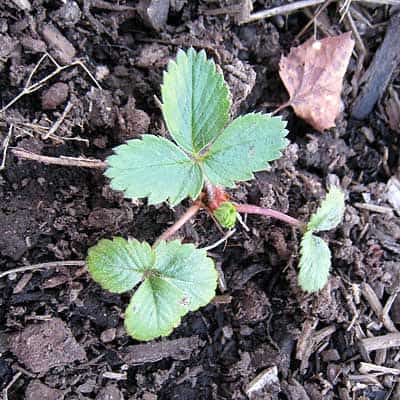
The peas and onions we planted in February have sprouted. Mid-month, into the vegetable patch went seeds for three kinds of beets and more salad greens, and among the roses I planted an additional 25 strawberry plants. Neither the beets or the lettuce have sprouted (it’s been cold!) but I am confident that they’re on their way.
Plant Swap
When J.D. writes about our gardening endeavors, he typically concentrates on the herbs, fruits, and vegetables. He loves to eat! But much of my time is devoted to the flower garden. The expansive flowerbeds on our property were filled with 125 rose bushes when we arrived. After giving many away, relocating others and accidentally killing a few, we’re down to about 60. In their place, I have gradually added perennials, bulbs and self-sowing annuals.

In April, my friend Rhonda is hosting a plant swap. Each participant will bring plants dug from her own garden, and take home others. A few guests are coming empty-handed because they are in new homes without gardens, but I am sure there will be plenty to share.
This month, I spent a couple of hours digging and dividing, and now have about 30 pots to swap. This is a fun way to frugally multiply your landscaping! Since most of the plants that people bring to swap are “vigorous growers”, you can bet that it will only be a few years before they’re ready to be swapped again with someone new.
Summary
The edibles garden took little time this month — about 4 hours — especially if you don’t count the many trips I took outside just to squat and peer at the soil where I had planted seeds.
Based on last year’s tests, we estimate that we spent just $1 in March to run two fluorescent shop lights. We anticipate an inexpensive April as well. J.D. had a minor freak-out when he saw our February expenditures, but looking back at last year’s totals, by now we’ve only spent $10 more, gotten $15-worth of herbs from the winter window box and planted three new fruit trees. That’s a bargain!
April 2009 Update
April was a slow month for our garden. We didn’t do much. Part of this is because we’ve become more efficient. But another part is because we did some of our chores earlier this year.
Kris has been antsy to get plants in the ground. I always tell her that May 1st is our target date, but she’d plant out on the first of April if she could. Last year she put her tomato starts out a few days early, and that was a mistake. They were pummeled by a freak hailstorm and never did produce much. This year, she decided to wait.
She did, however, do a little bit of work. She planted beets, radishes, and lettuce. She transplanted her tomatoes into bigger pots. And she produced a garden map that outlines where she intends to plant things.

Kris has mapped out where she’ll plant tomatoes and chili peppers
My only garden work was a frustrating hour spent rototilling the compost and leaves and horse manure into the soil. It was frustrating because we have a large, willful rototiller that seems to have a mind of its own. Our actual garden isn’t very large, and we currently have created a sort of maze around the asparagus and onions. That makes it difficult to maneuver. I did manage to get the ground worked up, but it didn’t happen without cursing!
Speaking of cursing: Last year, our gooseberries were mauled by a sawfly infestation. This year, the sawfly larvae are back, and they’re not only devouring the gooseberries, but the currants as well. The gooseberries we can live without, but not the currants. Kris is researching organic pest controls.
Garden Tour
We may not have much to share about our garden this month, but we do have some photos. The last few days have been sunny, so we’ve had a chance to photograph our garden in its early stages. Here, for example, is the (mostly) blank canvas:

As a reminder, the area of our vegetable garden space is roughly 15 ft by 34 ft (4.57 m x 10.37 m), or 510 square feet (47.4 sq. m.). This actually isn’t very big, and we’ve considered enlarging it. As I mentioned before, Kris planted out her tomatoes yesterday, so this space is no longer empty. Before she planted them, however, Kris set her tomatoes outside to “harden off”. I know this photo doesn’t really show it, but these things are enormous after only six weeks of growth:

Meanwhile, we do have some crops up. We’ve recruited help to maintain them. Meatball has been tasked with patrolling the beets, radishes, and peas, and Simon has been given charge of the onions:


The peas and onions aren’t the only things growing. This is the time of year that berries begin to go berserk. They’re not producing fruit, of course, but they’re beginning to show promise. The blueberries are laden with blossoms (especially the Toro, which are our favorite). So too are the strawberries:

Our caneberries have begun their vigorous growth. No blossoms yet, but lots of new shoots:

Though I don’t have photos, our fruit trees have also begun to bloom. We have two apples, three plums, a cherry, and a pear. We’ve set out pest control in a few of these, and that’s all we’ll really have to do until harvest.
Finally, here’s a salad that we made from herbs and lettuce greens that Kris grew indoors. This is a perfect example of how you can harvest home-grown food in a small amount of space. (You can’t harvest a lot of it, but you an harvest some.)

Summary
The edibles garden took little time this month — just 3 hours. We didn’t spend a dime. We harvested a single asparagus spear (which Kris consumed raw), but we won’t count that in our totals.
May 2009 Update
What a difference a year makes! Our fruits, berries, and vegetables had a slow start last year (and then were further slowed by a cold, cold June). This May was warm — very warm. Our food crops loved the weather, and they’ve shown explosive growth.
First Harvest
The sunny weather produced lots of growth. The peas and raspberries and blueberries and fruit trees all look amazing. We’re going to have huge crops. We have a couple of small snow peas on the vine, and the tomatoes are blossoming. But only three crops have yielded fruit through the end of May:
- In its fourth year, our asparagus finally produced a crop. It wasn’t much of a crop, but it was a crop. We harvested 31 spears (about 520 grams). I went to the grocery store last night and measured five bunches of asparagus. They averaged 20 spears, about 500 grams, and cost $2.99 each. I figured that our asparagus was worth $3.11.
- Kris added some strawberry plants to our patch. (Our strawberries live intermingled with the roses.) They’ve been producing fruit for several days, which means they’re a week earlier than last year. So far, we’ve harvested 325 grams (0.72 pounds) of strawberries worth about $2.86.
- We’ve also begun to harvest radishes. “The radishes are a failed experiment,” Kris told me today. “They’re easy to grow, but we don’t like them, so we can’t count them for the project. In fact, I hate the radishes so much that I have to spit them out in the sink whenever I try them.” So, we won’t count this third crop as worth anything.
That puts our May harvest at $5.97, which isn’t much, but it is still $5.97 more than we harvested in May last year.
Challenges
Though our garden is going well this year, we’ve experienced some minor annoyances:
- For the second year, the gooseberry sawfly larvae stripped the leaves from the gooseberries. Kris is cutting her losses. She says the gooseberries can come out, which makes me happy. Those things have nasty thorns. Besides, I can now plant two more blueberry bushes! (I love my Toro blueberries — very productive in a small space.)
- Kris is still waging a war against the slugs. This is an annual battle, one in which she’s tried nearly every recommended remedy. The slugs are threatening her precious cucumbers, marigolds, and sunflowers. But this year she’s trying a new strategy: she’s losing the battle to win the war. She planted more of each variety than usual, and is just accepting that she’ll lose a certain number.
- Finally, we’ve had some equipment failures. Our spray nozzle broke. Kris tried to fix it, but it was beyond repair. The same is true of the soaker hose, which sprung a gusher at the connector.
These aren’t major problems, obviously — they’re just minor annoyances. We try to take care of our equipment, but there are a few failures every year. Partly because of this, May was an expensive month. (It was also expensive in 2008.) We spent $98.55 on garden supplies, including herbs and vegetable starts.
Summary
I spent zero hours in the garden this month. I did a few quick tasks, but no major work. Kris made up for that. She tells me she spent 15 hours on food-producing activities last month. I’m skeptical. That’s 40% more than our busiest month in 2008 (July). On the other hand, she did do a lot of work out there. (She tells me that just as some GRS readers warned, the horse manure we spread last fall has produced a fine carpet of weeds, which she hoes daily.)
June 2009 Update
It’s the beginning of summer, and that means our garden is lush and green and growing. It also means there’s nothing exciting to write about. We’ve begun to harvest a couple of things, but mostly our chores have become routine. We weed and fertilize while we wait for the crops to ripen.
One problem we’ve encountered this year is weeds. There are always some weeds to be pulled, but as many GRS readers warned, spreading horse manure on our vegetable garden caused more weeds to sprout. Kris is the weed-puller (and plant-fertilizer), so she puts the most hours into the garden. She spent four hours working on food crops this month, while I spent three, all of which were harvest-related.
Harvest
As our harvests begin, I want to remind you of our methodology. For the purposes of this project, we’re using “best match” pricing. Based on GRS reader suggestions, we’re obtaining typical pricing from our local farmers market. In some cases, we use pricing from a local organic produce stand. In all cases, we’re trying to be fair, but this is more art than science.
Also, last year we established through repeated measurements that a pint of berries weighs roughly 300 grams. I’ll use this approximation frequently throughout the summer.
Those ground rules established, here’s our harvest for the month of June:
- 13.55 pounds (6.151 kg or about 20.5 pints) strawberries @ $2.99 per pint = $61.30
- 5.17 pounds (2.344 kg) snow peas @ $2.99/pound = $15.45
- 0.31 pounds (0.139 kg) raspberries $3.49/pint = $1.62
Our harvest this month was worth a total of $78.37. In June 2008, we harvested $50.83 worth of food. That’s a 54% increase in the value of our crops!
Despite the correct pruning we gave them this year, our raspberry harvest looks as though it’s going to be pitiful. The culprit? They’re overcome by the monstrous marionberry vine that has taken over the entire trellis. We may relocate the raspberry canes, so will evaluate the yard for a suitable spot and decide later this summer. However, there is a silver lining; we love marionberries (a type of blackberry-boysenberry cross).
Summary
And so the profit portion of our project has begun! July, August, September, and October will be even more productive as we begin to pick our caneberries, our tree fruit, and, especially, our tomatoes.
As always, we’ve been supplementing our own produce with food picked elsewhere. Last weekend, our friend Jolie joined us for a trip to the strawberry patch. Kris and I picked 24 pounds of berries (about two flats), for which we paid just over $20.
On Friday, our neighbor came over to let us know that her cherries were ready to harvest. We’ve decided not to preserve any cherries this year, but we picked about 10 pounds just for snacking.
July 2009 Update
Welcome to Oregon, where for the past week it’s been hot. How hot? Here’s the temperature graph from the National Weather Service for Monday, Tuesday, and Wednesday:
The heat hasn’t prevented us from working in the garden. We’ve been watering the thirsty plants, and we’ve begun harvesting their fruit. It’s hard to believe that just three months ago, this was a bare patch of earth. Now it’s grown so lush that it’s difficult to photograph:
But how have our harvests been? Let’s find out.
Currently Currants
Remember how last year Kris and I couldn’t find a price for our currants or gooseberries? They’re just not available here in Oregon, so we used the same figures for them as we did for our other berries. But earlier this month we stopped at an Asian supermarket, and they had both gooseberries ($2.99 for 6oz.) and red currants ($3.49 for 6oz.).
So what?
Well, in July we harvested 8.362kg of red currants from our two bushes, which is 18.42 pounds. That’s a lot of currants. Look again at that price in the last paragraph. $3.49 for 6oz. translates to about $9.30 per pound. In other words, we harvested $171.43 worth of red currants this year.
Holy cats!
I have new advice for how to make a garden profitable: Plant red currants — and lots of them!
But what can you do with eighteen pounds of red currants? Kris made two batches of red currant jelly with the most beautiful ruby red color you’ve ever seen. She’s going to enter some in the county fair in mid-August. We also had two friends come glean the extras. Plus there were currants left over to freeze!
More Harvest
While the currants gave us a bumper crop, other plants were less productive. The gooseberries didn’t produce much. And for the second year, they fell victim to the gooseberry sawfly. Kris and I agree: Those things are out of here! I’m going to dig them up and we’ll replace them with more blueberries.
Speaking of blueberries, they weren’t very productive this year either. I’m not sure exactly what the problem is, but we’ve harvested less than half the blueberries we did last year. Our raspberries were pathetic for the second year running; they just can’t compete with the vigorous marionberry canes.
Still, harvest season is in full swing. Here’s the complete tally from our garden in July:
- 18.42 pounds (8.362kg) red currants @ $3.49 for six ounces = $171.43
- 0.95 pounds (0.430kg) gooseberries @ $2.99 for six ounces = $7.55
- 4.91 pounds (2.229kg) snow peas @ $2.99/pound = $14.58
- 1.09 pounds (0.494kg) green beans @ $1.29/pound = $1.41
- 5.91 pounds (2.681kg) caneberries (blackberries, etc.) @ 2.49/pint (~300g) = $22.25
- 79 cucumbers @ $1.29/pound (about 5 cukes) = $20.38
- 11 zucchini @ $0.50/each = $5.50
- 6 red onions (negligible value)
Our harvest totaled $243.10, but most of that was from the red currants. Without those to salvage our stats, we would have finished behind last July. That’s okay, though. The tomatoes are just about to come on, and we’re going to have a lot more of them than we did last year. The fruit trees will also give us bigger crops than last year since they’re a year more mature.
Summary
As we often do, we also picked fruit from friends this month. We picked cherries from the neighbor across the street, and on July 3rd we drove out to raid the cherries belonging to our friends Ron and Kara, coming home with thirty pounds of mixed Queen Annes, Bings and sour pie cherries. Yum! We also made use of some early apples for a juicing experiment. This “free” produce isn’t included in the numbers below.
August 2009 Update
After late July’s blistering heat, August has been relatively cool around Portland. Our fruits and vegetables have been producing excellent crops. Kris is constantly busy in the kitchen, canning and preserving food. We’re eating fresh salsa all the time. And hard as it is to believe, I’m almost sick of blackberries.

Fresh berries in a bowl of cereal == a great breakfast! Photo by Kris.
This is actually the best year we’ve had for blackberries. They started producing at the end of July, and there’s been a non-stop flood ever since. Sometimes — in mid-winter — I think I want to plant more blackberries. But during the month of August, I’m reminded that this is a silly idea.
The blackberries aren’t the only prolific producers this year. Our young plum tree is going gangbusters. It yielded its first small crop last summer, but this year it’s really loaded. And Kris’s cucumbers are the most eager growers of all. She has more cucumbers than she knows what to do with and has been taking the excess to share with co-workers.
Also, our tomatoes are doing much better than last year. The cool June in 2008 stunted the crop. We only had 12.88 pounds of tomatoes in August. This year we picked 31.39 pounds of the fruit — and even then we felt this was a little low.
Not everything has produced well, though. July’s heat ended our blueberries early. In fact, we’re unhappy with the blueberry/gooseberry/currant patch, so we’re going to rip out most of the plants and replace them with new ones. Our current blueberry plants are transplants from the neighbors, and they’re 25 years old. They’re weak producers. Time to put in something that will produce fruit worth picking.

Summer harvests can be beautiful. Photo by Kris.
Still, harvest season is in full swing. Here’s the complete tally from our garden in August:
- 19.34 pounds (8.780kg or 29-1/4 pints) blackberries @ $2.49/pint (~300g) = $72.87
- 3.00 pounds (1.361kg) elderberries, for which we have no value
- 1.61 pounds (0.729kg) plums @ $1.49/pound = $2.40
- 4.20 pounds (1.906kg) pears @ $0.99/pound = $4.16
- 0.44 pounds (0.200kg) apples @ $0.99/pound = $0.44
- 2.15 pounds (0.975kg) new potatoes @ $0.99/pound = $2.13
- 2.06 pounds (0.937kg) beets (~3 bunches) @ $1.99/bunch = $5.97 approx.
- 6 zucchini @ $0.49/each = $2.94
- 93 cucumbers @ $1.29/pound (about 5 cukes) = $23.99
- 0.56 pounds (0.256kg) green beans @ $2.49/pound = $1.39
- 31 chili peppers @ $0.29/each = $8.99
- 1.63 pounds (0.738kg) cherry tomatoes @ $2.49/pound = $1.84
- 29.76 pounds (13.509kg) tomatoes @ $1.99/pound = $59.21
Our harvest this month totaled $186.33 worth of produce — and that’s without some freak crop blowing the lid off the values. (Last month, we discovered that our red currants are worth quite a bit, which distorted the totals for July.)
This year, for the first time ever, Kris entered some of her produce at the county fair. Her dilly beans took first prize (out of ten entrants). When I picked them up after the fair was over, the woman who returned them to me raved about the beans. “They were so good,” she said. “I had to copy down the recipe.”

Kris’s prize-winning dilly beans. Photo by Amy Jo.
We continue to receive “free” produce from here-and-there. Friends and neighbors share their surplus, just as we share our surplus with them. Last weekend, for example, the old couple next door brought over a wheelbarrow load of pears. The seventy pounds of fruit they gave us kept Kris canning all day Saturday, and yielded 16 quarts of sliced pears in syrup, 7-1/2 quarts of pear sauce, and 5 quarts of dried pears.
Things are looking good! Better weather in 2009 combined with more effective efforts on our part has created a far more profitable garden project. And again, that’s even though we’re not particularly frugal gardeners.
September 2009 Update
After a long productive summer, our September in the garden was kind of anticlimactic. Sure, we continued to harvest our home-grown food, but neither of us was particularly “in” to the garden this month. It was a chore instead of an obsession. September can be that way sometimes.
Still, there’s always something happening with our home food production. This month:
- We’ve been harvesting lots of apples and plums. It took four or five years, but our Jonathan apple tree has finally turned productive. We pulled down nearly 40 pounds of apples this year! And the plum tree was loaded.
- The blackberries are still producing, but we’re sick of them. I can hardly believe I’m saying that (blackberries are my favorite), but I’ve had enough berries. And besides, they’re not very good this late in the season. We stopped harvesting them long ago.
- Kris has been using her food dehydrator to preserve lots of dried pears and plums. This is a great way to extend the harvest and to provide fruit for snacking during the winter. (We also canned lots of applesauce and pickles.)
- As threatened, we tore out the old blueberry plants. They’re over 25 and their production has slowed tremendously. I’ll tear out the gooseberries next weekend. We’ll buy some new blueberries to replace these plants.
Now we’re just waiting for the grapes to ripen (soon, very soon) and the harvest season is done. Kris and I are both disappointed that, for us, this has been the Summer of No Corn. We didn’t grow any ourselves, and we didn’t have another convenient source. When people did give us corn, it was terrible. Ah well — there’s always next year.

But what you really want to know is how much we “earned” from our garden in September, right? Here’s this month’s tally:
- 37.00 pounds (16.798kg) apples @ $0.99/pound = $36.63
- 2.51 pounds (1.140kg) pears @ $0.99/pound = $2.48
- 5.57 pounds (2.528kg) Italian plums @ $1.49/pound = $8.30
- 0.69 pounds (0.315kg) caneberries (blackberries, etc.) @ $2.49/pint = $2.61
- 1.01 pounds (0.460kg) grapes @ $3.00/pound = $3.04
- 0.61 pounds (0.278kg) green beans @ $2.49/pound = $1.52
- 64 cucumbers @ $1.29/pound (about 5 cukes) = $16.51
- 29 chili peppers @ $0.29/each = $8.41
- 18 squash @ $0.99/each = $17.82
- 27.46 pounds (12.468kg) tomatoes @ $1.99/pound = $54.65
As always, we also enjoyed some of the harvest from our friends and neighbors. We obtained 28 pounds of plums from other folks, a bunch of onions from my cousin, and about 30 pounds of fresh-caught salmon and halibut from the millionaire next door when he returned from Alaska. (And Tina offered us as much corn as we wanted, but we weren’t able to pick it.)
I’m a little worried about October. Last year, we harvested over $150 in produce because the tomato season lingered. This year, though, tomatoes are essentially over. Kris and I don’t expect to harvest much more than we already have. Who knows, though…maybe we’ll be surprised. Still, our harvest total for the year is already greater than our total for all of 2008, so we’ve made improvements!
October 2009 Update
As those of you who follow me on Twitter already know, it’s been a l-o-n-g Saturday filled with all sorts of misadventures. Murphy’s Law has been in full effect this Halloween. I’d meant to post this month-end garden summary around noon, but now will have to do. In fact, there wouldn’t be a summary at all except that my wife sat down and wrote it for me. Here’s what Kris has to say about the month of October…
October arrived with the typical cold and damp, bringing Portland’s garden season to a close. During the fall and winter we’ll enjoy the hearty foods we’ve packed away from this year’s crops, until by early spring we’re ready to begin anew.We’ve been eating fresh fruit and vegetables from our garden patches since May’s first strawberries. Not bad!

The Last of the Tomatoes
We harvested the last of the garden produce this month.Rain and wind don’t mix well with ripening tomatoes, so I picked 15 pounds of semi-ripened tomatoes to take inside. Stored in a cool place between layers of newspaper, some of these will turn out to be fairly delicious.The rest will rot.
The cucumber plants coughed up enough for another month’s worth of salads, and the beets were ready for roasting. (In fact, I’m roasting some in the oven even as I write this.) In addition, I tore out the jalapeno plants and dried the peppers in slices in the dehydrator.Some went to our neighbor who loves spicy foods; the rest will go into winter cornbread and soups.
Usually I collect the fallen English walnuts in our front yard, but the squirrels have been especially voracious this year!And my volunteer vine turned out to be a birdhouse gourd that gave me two mature gourds for fall decorating.

The Fruits of Autumn
I spent time in the mud ripping out cucumber and squash vines, then the beans and tomato plants, and tidying up the apple trees. We also dug out the beleaguered gooseberry plants and three poorly-producing 25-year-old blueberries.We invested $84 in five new blueberry bushes of various types and sizes.(We’re trying to stagger the berry harvest so it lasts as long as possible.)As we rake leaves in our yard, we’ll spread them onto the garden bed to mulch the asparagus and keep down the weeds over the winter.
In the waning hours of sunshine, early October in our neighborhood smells of Concord grapes.We wait until the scent tells us they’re ready, then head over to the generous neighbor’s yard to pick all we can use. Our own young vines produced a good crop as well. This year, J.D. gathered about 30 gallons of mixed purple and green Concords.I made juice (22 quarts) and grape jelly.It’s a long day but so worth it every time we open a jar.We also made another batch of applesauce from twenty pounds of fruit brought back from an orchard by a friend and fellow canner.
This summer’s total for canned food: 140 quarts of assorted pickles, apple/pear sauce, juices, jams & jellies, salsa and fruit.My pantry is full to bursting!I love being able to eat this local bounty during our winter, rather than buying produce that’s been shipped from far away.
In addition to the canned food, the freezer is stacked with berries and assorted sauces, and dried fruits and herbs are stored in a dark and dry place. All this “free food” keeps my grocery spending in check even when we’re not eating directly from the garden.
Monthly Totals
The fall is when I tally the herbs for the year.Our herb garden provides me with sprigs and snips all year.The annual herbs are finished (basil, stevia, cilantro) and others die back until spring (lemon balm, oregano, mint, lavender) but the perennials will keep going for our winter kitchen use (rosemary, chives, bay leaf, sage & thyme).Throughout the summer, I’ve dried lavender flowers, mint and lemon balm, stevia and raspberry leaves for making tea infusions. Altogether, I estimate that the herb garden has produced at least $50 of harvest.
Here’s the tally for October’s harvest:
- 56 jalapeno peppers @ $0.29 = $16.24
- 18 cucumbers @ $1.29/pound (about 5 cukes) = $4.64
- 5 bunches mixed beets @$2.99/bunch = $14.95
- ~9.64 pounds of tomatoes @$1.99/pound = $19.18
- 8 pounds grapes from our vines @$3/pound = $24.00
- Assorted herbs, all season $50.00
- Costs: 5 blueberry bushes ($84)
2009 Totals
| Month | Time | Cost | Harvest | Month | Time | Cost | Harvest | |
| Jan 09 | 3.0 hrs | $131.15 | — | Jan 08 | 4.0 hrs | $27.30 | — | |
| Feb 09 | 12.0 hrs | $36.67 | $10.00 | Feb 08 | 2.5 hrs | — | — | |
| Mar 09 | 4.0 hrs | $1.00 | $5.00 | Mar 08 | 3.5 hrs | $130.00 | — | |
| Apr 09 | 3.0 hrs | — | — | Apr 08 | 5.5 hrs | $28.51 | — | |
| May 09 | 15.0 hrs | $98.55 | $5.97 | May 08 | 5.5 hrs | $110.89 | — | |
| Jun 09 | 7.0 hrs | — | $78.37 | Jun 08 | 7.0 hrs | $0.79 | $50.83 | |
| Jul 09 | 7.0 hrs | — | $243.10 | Jul 08 | 11.0 hrs | $20.94 | $123.68 | |
| Aug 09 | 12.0 hrs | — | $186.33 | Aug 08 | 8.0 hrs | — | $123.94 | |
| Sep 09 | 2.5 hrs | — | $151.97 | Sep 08 | 2.0 hrs | — | $152.75 | |
| Oct 09 | 8.0 hrs | $84.00 | $129.01 | Oct 08 | 5.0 hrs | — | $152.77 | |
| Total 09 | 63.5 hrs | $351.37 | $809.75 | Total 08 | 54.0 hrs | $318.43 | $603.97 |
February 2011 Update
Spring is around the corner. I think. After spending three weeks basking in sunny skies and temperatures of 20-30 degrees (yes, I’ve taught myself to think in centigrade!), it’s something of a shock to return to Oregon’s five degrees and rain. Still, I know warmer weather is just around the corner — and that means it’s time to garden.

Ordering Seeds
Kris has already started to think of the garden, of course. Her mind makes the leap just after Christmas, when the first of the seed catalogs starts to arrive.
In January, she went through her seed supply — her leftover seeds and seeds saved from last year’s crops — to determine what she needed to order. In the end, she chose:
- Green beans
- Beets
- Turnips
- Peas
- Pickling cucumbers
- Pumpkin
- Zucchini
She spent a total of $24.15 on seeds, ordering mostly from Territorial Seed Company, which sells seeds specifically targeted at “the maritime Pacific Northwest”. (If you can buy your seeds from a regional company, do so. You’ll get plants better suited for your growing conditions.)
Kris has a system for buying seeds. If it’s a new variety she’s trying, she buys the smallest package possible. If it’s a kind she knows she likes, she buys enough to plant for the next two to four years. She saves the extra seeds in the fridge (in an air-tight container).
We’ll plant more in the garden, of course. As usual, we’ll pick up tomatoes, basil, and peppers at the Master Gardener sale at the end of April. These plants will have a good head start, and will let us try a few new varieties.
Kris estimates the seed-buying process took about two hours.
Early Work
While Kris was buying seeds, I spent some time getting the garden ready. With the help of the boy we hired for a weekend, I tore out some of the old plants, weeded some patches, and — gasp! — cut our blackberry canes to the ground. (This won’t kill them. It’s like pressing the reset switch. They were out of control, and this will give us a chance to guide their growth. But it does mean we won’t get many berries this year.) We spent maybe two hours total doing this. (Meaning, I spent two hours on this, and I paid Ian $20 to help.)
This weekend, Kris intends to plant the peas — if the weather cooperates. The ground is very wet, and there seems to be more rain on the way. (What is this? Oregon?). She’ll also start seeds indoors for her flower garden (nicotiana, zinnia, cosmos, marigolds, and so on). The flowers are mostly from seeds saved in previous years, though the flower-garden costs aren’t included in this project. (Flower gardening is one of Kris’ favorite hobbies.)
Next month, Kris will start seeds indoors for food crops: cucumbers, pumpkin, and zucchini. She times when she plants the seeds based on when she intends to plant them outside (which is May 1st), and counting backwards to get the weeks needed according to the seed-packet instructions.

At the end of April, we’ll attend a “garden exchange”. This is the third year our friend Rhonda has organized a plant swap. Everyone brings their extra plants and seeds, sets them out for others to see, and then takes home what they want or need. In anticipation of this event, Kris will plant extra flowers and vegetables for trading. (She’ll also dig out some perennials to share.)
A garden exchange is a fantastic, frugal way to share plants, but now is the time to organize this if you live in a cool climate. Don’t wait until the last minute.
Favorite Fruit Smoothie
It’ll be a while before we have fresh berries, but we’re still able to enjoy the fruits of last year’s harvest. In fact, Kris has been using our supply of berries in yogurt smoothies. Here’s her recipe:
- 1.5 – 2 cups plain low-fat yogurt (homemade, if you have it)
- 1 banana
- 1-2 cups assorted berries (strawberries, blueberries, blackberries, or a mix)
- juice from one orange
- 2 Tablespoons of berry jam (or honey)
We don’t grow the bananas or oranges, of course, and we don’t harvest the honey. But we grow the berries, make the jelly, and, thanks to Jolie Guillebeau, we make our own yogurt. And in just a few months, we’ll have fresh berries to use in the smoothies.
Monthly Totals
With the cold weather and our trip to Africa, the 2011 garden project is off to a slow start. (It’ll pick up over the next few weeks, though.) We’ve spent a total of 4.0 hours and $44.15 on this year’s food-producing garden ($24.15 for seeds and $20 for hired labor).
It’s interesting to note that there’s really no “typical” year so far.
- In the first two months of 2008, we spent $27.30 and 6.5 hours on our garden.
- In the first two months of 2009, we spent $167.82 and 15.0 hours on our graden.
- In the first two months of 2011, we’ve spent $44.15 and 4.0 hours on our garden.
If you had ask me to guess before I started this project, I would have thought that each year would be much like the year before. Apparently, that’s not the case. I’m eager to see how this year’s costs and harvest unfold…
March 2011 Update
March is usually a time for Kris and me to get back to work in the garden. The weather warms, and we get to watch as our first sprouts poke through the soil. This year? Not so much. It was a cool, wet month.
The average temperature in March was about 46 degrees Fahrenheit — which is below normal for this time of year. In fact, Portland just had a record stretch between 60-degree days. The last such day came in early December. We usually get a couple of 60-degree days in February, but if the clouds hadn’t parted on the afternoon of March 31st, this year we wouldn’t have had a warm day until April.
Meanwhile, rainfall was nearly 75% above normal for the month. If that rain had all been concentrated over a few days, we might have done some work in the garden. But it wasn’t. It rained 28 days in March. Twenty of those days saw 1/10th of an inch of rain or more. It was so wet last month that the peas we planted after returning from Africa simply rotted in the ground. And now it’s too late to plant replacements. So, we probably won’t have peas this year. (Which is sad, because I love peas!)

As you’ve probably deduced, between the cool weather and the heavy rainfall, Kris and I did nothing on our garden in March. In fact, we did nothing in the yard. The lawn did get mowed — but not by us. It’s been far too wet for my mower. But we were making dinner last Monday night, when Kris asked, “Is somebody mowing the yard?”
Sure enough. There was the Real Millionaire Next Door on his riding lawnmower. I went outside to chat with him. He just got back from his winter in New Zealand (where it was summer, of course), and he’ll be here a month before heading north to Alaska. He’s like a migrating goose. But he’s a goose who mows our lawn and brings us salmon, so it’s always good to see him.
This garden update is pretty lame, I know. Trust me: There’ll be more to report for April. And May’s installment will be packed!
How’s the weather where you are? How does your garden grow?
April 2011 Update
After a long vacation in February and a wet, dreary March, Kris and I finally were able to do a little work on our vegetable garden in April. Sort of. The weather remained chilly and damp throughout the month, so we didn’t get as much yardwork done as we’d like. (The average high temperature for April 2011 was 4.5 degrees below normal. The average low was 2.1 degrees below normal. Rainfall was 5.04 inches, almost twice the average for the month.)
Waiting for the Sun
Though we couldn’t really plant anything until the last day of the month, Kris has been itching to get in the garden, so she’s been doing a lot of maintenance and clean-up. She and I put a total of twelve hours into our food-producing gardens in April (though eleven of those hours were hers). Most of these hours were spent pulling weeds, digging out old overgrown herbs, and getting the gardens ready for planting. (We opted against using the rototiller this year, so it took longer to prepare the plots.)

A big, furry weed in the middle of the chives.
In mid-April, we attended the neighborhood plant swap, where we were able to pass along plants we no longer need (or want) while picking up others that might be more useful. Kris brought home parsley, tomatoes, and lovage (a celery-tasting herb). She also scored lots of perennial flowers. (But we don’t track flowers in our garden project, thank goodness. That’s purely for fun.)

At the plant swap, Mike and J.D. enjoy some fleeting moments of sunshine.
At the plant swap, our friend Craig gave us three kinds of lettuce seeds and some plant-marker stakes made out of old mini blinds. (What an awesome idea!) Though we never have success with lettuce, Kris planted some indoors, and we’re giving it a go. She also has some basil started in a window box.
Blossoms and Sprouts
Meanwhile, most of our fruits and berries have begun to blossom, and our early crops are finally starting to show some life. The apple trees, for instance, are in full bloom, as my allergies can attest:

In January, we cut back our blackberries and raspberries hard. (“You’re not going to get any fruit on those this year, you know,” my real millionaire next door told me. “I know,” I told him. “It’s a price I’m willing to pay.”) Now, though, the caneberries are sending up lots of new growth.

The grapes and blueberries currants are blooming, too. The peas are up, though they’re behind, and we’ve harvested a few spears of asparagus.


The peppers are in a container this year so that they can have warmer soil than the rest of the garden will get. We’re hoping this will make them more productive.

Kris’ frugal greenhouse: A garbage bag over the pepper pot
The tomatoes are currently in Kris’ mini greenhouse. They’ll stay there until the garden soil warms — our night-time temperatures are still in the low forties, about five degrees below normal — or until they get too big, whichever comes first.

In short, we’re being patient. When the weather turns warm, we’ll be ready to plant things out. If we’re lucky, by the end of June, we’ll be writing about sunny days and sweet, delicious berries.
Monthly Totals
At the Oregon Master Gardeners plant sale, Kris spent $28.25 on plants for the vegetable garden. She bought:
- nine tomato plants
- one cucumber
- four chili peppers (I picked out two of the plants)
Kris also bought some herbs. “But they’re decorative herbs,” she tells me. “They’re for the flower garden, not for the herb bed.”
I also spent $15.98 on a bag each of potting soil and compost, bringing our total expenses to $43.23.
All we harvested in April was about 263 grams of asparagus. Asparagus goes for $2.99 a pound at the local natural-food store, which means we’ve reaped about $1.73 in “revenue” from our garden so far this year. We won’t really start getting our money’s worth until June, when the strawberries begin to ripen. (I can hardly wait!)
May 2011 Update
In my mind, Oregon has mild springs: plenty of rain, sure, but also lots of sunshine and hints of the summer to come. Since we started the garden project, though, that just hasn’t been the case. Our springs have mostly been cool and moist — just like our winters.
May was again — surprise! — cool and moist. There were some sunny days, and our rainfall was around average, but the temperature was much cooler than normal. (Well, long-term normal, not recent normal.) Still, our garden isn’t as stunted as it has been in years past.
The State of the Garden
Despite the weather, our garden is thriving. As you’ll recall, Kris bought lots of “starts” at the garden show on the last day of April. She set out the tomatoes to harden off (allowing them to become acclimated to the great outdoors), and eventually moved them to the garden. From seed, she planted green beans, cilantro, cucumbers, zucchini, and pumpkins. She also planted nasturtiums — edible flowers — from seed. And sunflowers (though we don’t plan to eat those!)
Indoors, we’ve been growing lettuce, which is rare for us. We’ve tried lettuce (and carrots) before, but for some reason, we never have success. But our friend Craig, who is a fantastic gardener, gave us some lettuce seeds saved from last year’s crop. We planted them indoors and now have quite a crop.

For the first time, we’ve grown lettuce that actually tastes okay. It’s not great, but at least it’s not bitter. Meanwhile, some of the cucumbers are still under cloches (made from two-liter soda bottles) because it’s been too cold.
Kris has been hoeing her garden and performing routine maintenance. I haven’t had time to tend to my berries (the blueberries are overrun with weeds!), though I did find time to trim the tall grass in the caneberries and grapes. And last weekend, Kris and I spent half an hour working together to tie up the blackberry canes.
Interlude
While working on the berry canes last week, we disturbed a nest of baby spiders. “Holy cats!” I said. “Look at those guys. There must be a hundred of baby spiders.”
“They’re not really babies,” Kris said. “They’re more like teenagers.”
“I wonder what they eat,” I said. And then I had a thought. I ran inside to grab my camera so that I could shoot the following short video.
I went outside this morning to look at the spiders again, but they were gone — every single one of them. I don’t know enough about spider life to know if they were eaten, washed away by rain, or simply grew up and moved off of their mother’s fencepost.
Monthly Totals
Our costs in May were relatively low when compared to past years. Kris spent about six hours working on the food crops this month. “I’d love to spend more,” she tells me, “if the weather would cooperate.” It looks like she’ll get her wish. The forecast for this weekend is sun, sun, sun — and the long-range forecast looks promising, too. I spent about an hour in the garden, giving us a total of seven hours worked this month.
Our only monetary cost was $10 that Kris spent on a large rhubarb plant, which she’s installed in a corner of the garden. (I’ll never know why, though!)
During the month of May, we harvested three things:
- 1.95 pounds (0.886kg) of asparagus at $2.99/pound = $5.84
- lettuce for two salads (we’re not going to track the “profit” from our lettuce, though we’ll write about how much we use)
- some chive blossoms for chive blossom vinegar, which Kris will use for marinades and salad dressings
June’s harvest will be our first of any size for the year, as we begin to pick the ripening berries. And, of course, July and August will bring us a bounty of fruits, vegetables, berries and herbs!
We’ve spent a lot less on the garden this year than in past years. That’s because we haven’t spent anything on infrastructure. In 2008 and 2009, we had some major expenses for hoses and tomato cages and so on. We’ve had none of those costs this year. In theory, our infrastructure costs should be minimal now that we own most of the things we need to grow our garden.
June 2011 Update
Summer is finally here in our corner of the Pacific Northwest: The birds are chirping, the insects are humming and the garden is producing.
June started cold and wet but has gradually warmed enough to make Kris think this year’s garden is going to be successful. And she needs a successful summer after two straight years of poor tomato harvests — our pantry needs restocking! But those tomato crops are a long way off. At the moment, we’re enjoying our strawberries, peas (both snow and snap), and the lettuce from the window box we keep inside under a fluorescent shop light.

The tomatoes have burst into blossom, promising heavy harvests in late summer
The strawberries have been a morning staple this month (mixed into yogurt with homemade granola), and the peas are delicious straight from the vines or cut for a crispy addition to our salads. But as much as we like these early crops, the best is yet to come. The zucchini are almost big enough to harvest — maybe this weekend — and the currants are ripening to a gorgeous ruby red. The promises inherent in blossoming crops are making our mouths water: cucumbers, tomatoes, potatoes, blackberries, raspberries and elderberries, as well as peppers and pumpkins are all blooming like mad. (Do your job, bumble bees!)
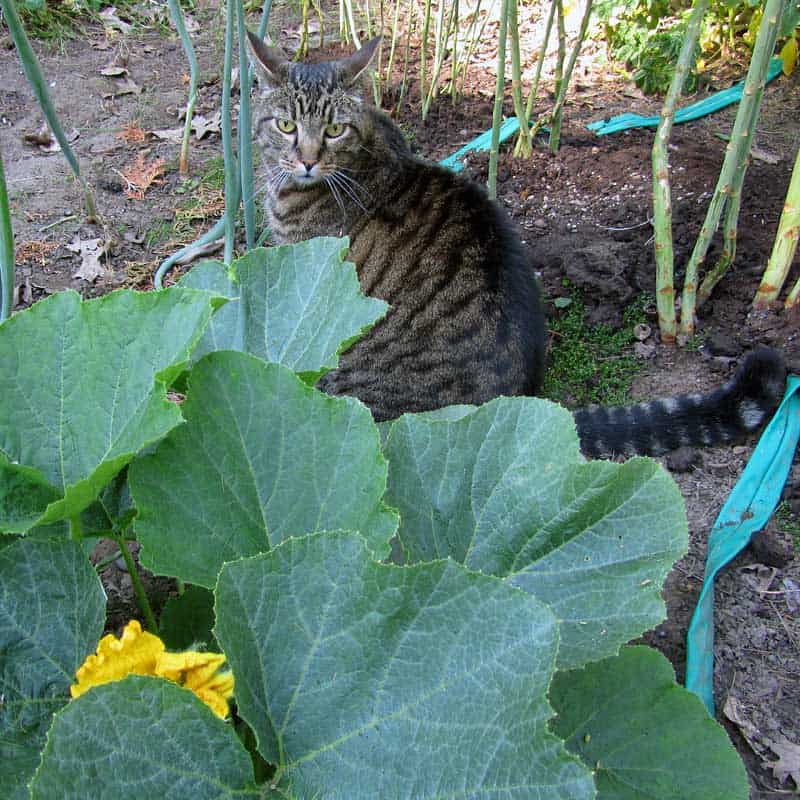
Simon stands guard by the pumpkin plant
From the herb garden, we’re harvesting basil and oregano. The oregano gets dried in the sun, and the basil is added fresh to pasta and pizza. Meanwhile, the apple, pear, and plum trees show potential for sizable crops — if the weather cooperates.

Drying oregano in the sun (between two window screens)
You may remember that we cut the berry canes back hard this year. Well, you’d never know it to look at them! They’re out of control! We’re expecting a small berry crop this year, but I need to get out there and tie up the canes before they take over the neighborhood. And we spent some time this month weeding our patch of young blueberry bushes and adding bark mulch. The mulch was our only garden-related expense for June ($36), but I think we’ll need to actually add another layer in July.

Despite being cut back hard, the blackberries are eager to produce.
Based in part on GRS reader feedback, we’re looking for some help with the yard and shrub maintenance since I’ll be traveling more. That will leave Kris able to focus her energies on the food and flowers as the summer continues. Altogether, she estimates we had about eight hours of garden-related labor this month.

Our potato patch is enthusiastic this year
Our harvest for June included:
- Romaine-type lettuce for six big salads, roughly equivalent to one head = $1.49
- 3.38 pounds (1.535kg or about 4 pints) @ $2.99/pint for local organic at our farm stand = $11.96
- 1.10 pounds (0.501kg) peas (snow and snap) @ $1.69/pound = $1.86
- Oregano and basil = roughly $0.75
That’s a total of $16.06 worth of food harvested from our garden in June, but it’s barely getting started. The next few months should see a bounty of tasty, low-cost food. Yum!

Simon patrols the herb garden to keep it free of squirrels
July 2011 Update
We had a strange July in our garden. First, the cool weather lingered longer than it ought to have. It wasn’t cold and wet, but the days were cool. Then we were gone for much of the month: Alberta, Colorado, Washington. Finally, our harvest was much smaller than in previous summers.
Part of this was because gave most of our currants to a friend, and our new blueberry plants (we replaced the old ones last year) produced fruit, but it went unharvested. (Translation: I wasn’t around/didn’t remember to pick the fruit, so we got none. This is a dumb way to garden.)

July Totals
The low production, the donated fruit, and the wasted berries meant our numbers for the month were pretty pitiful. Our harvest for July included:
- Strawberries: 310 grams at $2.99/pint = $2.42
- Peas: 1474 grams at $1.69/lb = $5.49
- 12 pickling cucumbers (1403 grams) at $1.99/lb = $6.15
- Red currants: 990 grams $3.49 per 6 oz. = $20.32
- 12 zucchini at 50 cents apiece = $6.00
- Green beans: 1446 grams at $2.99/lb = $9.52
That’s a total “profit” of just $49.90, which is way behind the previous two years we’ve tracked the numbers. (This total doesn’t include the cherries we picked from neighbors and friends. That 13 pounds of fruit was worth roughly $32.)
We also had some minor expenses in July:
- Garden sprayer for fertilizer = $12.99
- Liquid calcium supplement = $5.99
The good news? August has been awesome so far. We’ve harvested a lot of beans, peas, cucumbers, and more. If the sun continues to shine, we’ll have a great tomato harvest. And the fruit treas are loaded! In three weeks, we hope to be sharing some big numbers with you.
Zucchini-Basil Pesto
This section was written completely by Kris.
I don’t know about your garden, but mine produces way more zucchini than I can ever eat. And although my basil is thriving, it’s put to shame by the zucchini. How happy was I to find a frugal pesto recipe in our local paper that uses plentiful zucchini as an extender in a Zucchini-Basil Pesto? It replaces expensive pine nuts with more affordable almonds, but don’t skimp on a good quality cheese—it really kicks up the flavor of this mild summer pesto.
Zucchini-Basil Pesto
(makes two cups)
- 1 tablespoon butter
- 1 large shallot, peeled and sliced (2/3 cup)
- 3 to 6 medium garlic cloves, chopped
- 3 tablespoons almond slivers or chopped almonds
- 1 medium raw zucchini, cut into 1/2-inch dice (7-9 ounces)
- 1 cup fresh basil leaves, packed
- 4 teaspoons lemon juice (preferably fresh)
- 1/2 cup grated Parmigiano-Reggiano cheese
- 1/4 cup olive oil or canola oil
- 1/2 teaspoon salt and freshly ground black pepper to taste
To make the pesto: Melt butter in a medium sauté pan over medium-low heat. Add the almonds and shallot and cook until the shallot is softened but not browned, about 5 minutes. Add the garlic and sauté until fragrant, 45 seconds. Transfer the almonds, shallots and garlic to a blender and add the zucchini, basil, lemon juice, and cheese. Pulse until finely chopped. With the blender running, slowly add the 1/4 cup olive oil, stopping to stir the ingredients occasionally. Blend until smooth and season with salt and pepper.
I’ve adapted the recipe slightly to my taste and I use the lesser amount of garlic because I can find it overpowering. Feel free to make changes of your own and play around with it! This pesto would be good with pasta, grilled chicken, or as a dip or sandwich spread. This recipe makes about two cups — a pesto recipe using only basil would need about four cups of basil leaves instead of the one cup required here — and freezes well in small portions.
August 2011 Update
August finally felt like summer here in Portland. The entire month was sunny and warm, and there was very little rain. The garden rewarded us with productivity. Our harvest in August wasn’t huge, but we expect to pick a lot of fruits and vegetables in September.

A harvest of beans
Still, we did begin to harvest many favorites, including nearly four kilograms (or nine pounds) of green beans! Our harvest for August included:
- Zucchini: 29 at $0.50 each = $14.50 (plus nearly as many donated to friends)
- Tomatoes: 9.01lbs (4.090kg) at $1.99/lb = $17.93
- Green beans: 8.68lbs (3.959kg) at $0.99/lb = $8.59
- Peas: 2.88lbs (1.309kg) at $1.69/lb = $4.87
- Cucumbers: 22.25lbs (10.102kg) at $1.49/lb = $33.15
- Yellow onions: 2.52lbs (1.144kg) at $0.99/lb = $2.49
- Jalapeño peppers: 14 at $0.50 each = $2.80
- Elderberries: 3.52lbs (1.599kg) at $2.99 per pint = $16.45
- Blackberries: 2.60lbs (1.182kg) at $1.99 per pint = $5.97
That’s a total of $89.45 worth of food harvested from our yard, and that doesn’t include the stuff we gave to others or that we harvested from elsewhere.
For instance, Kris and her friends picked apples at the house next door. We ended up with about 50 pounds of fruit, enough to can three gallons of juice and four pints of apple butter. Plus, Kris picked enough roadside blackberries to make two batches of jam. Yum!
Speaking of canning, Kris has been hard at work storing up the food from our yard (and from the local produce stand). She’s canned zucchini bread-and-butter pickles, dill pickles, ginger pickled beans, and a variety of jams. She entered some of last year’s goods in the county fair, and came away with prizes for her plum jam, bread-and-butter pickles, and pickled carrots. Plus, her sour cherry jam won a special award. (It’s just that good!)

The products of a single canning session
We’re looking forward to a big harvest in September. The forecast is for hot, clear days, which should keep our garden producing. Our fruit trees are laden with apples, plums, and pears, and there are still blackberries to be picked. Plus, by the end of the month (or perhaps early in October), we’ll start to harvest grapes.
It’s a wonderful time of year to be a gardener.
Weeds
This month, the cats weeds got out of control. As you’ll recall, we used to have four cats weeds but one died last February. We were doing fine with three, but when my mother had to move out of her home, we adopted her two cats weeds, giving us five. That’s a lot of weeds.
To make things more interesting, if you follow my personal blog, you know that we’re dealing with a new weed over the past ten days. A rabbit appeared in our yard one morning and adopted us (and our cats) as his own.

Two new weeds in our garden: Silver and Blackberry
Nobody in the neighborhood claims this rabbit weed, nor have our attempts to find his owners on-line come to fruition, so Blackberry (as we call him) is living on our property for now. He’s a cute little sucker, as this video demonstrates:
That’s enough weeds for now, though. We don’t have room for any others!
We had no expenses during August, and we worked very little in the garden. Our only time was spent harvesting.
September 2011 Update
Our late summer this year meant that our crops were delayed, but when the sunshine came, it came on strong! I was very busy in the kitchen in September, but not so busy in the garden itself.

An almond-pear tart
My records show that since the beginning of the month, I’ve preserved 126 pints of food for pantry and freezer, bringing my year-to-date total to over 263 pints (131 quarts). Not included in those numbers are the dried pears and plums I’ve been able to make from this year’s bumper plum crop from our tree and some of the 50 pounds of Bartletts shared by our neighbor, Roberta. And the fresh fruits and vegetables have meant I’ve purchased only lemons, limes, and onions at the store over the last month; of course, we all know J.D. has purchased pineapple, blueberries, and watermelon!
My pantry is now stocked with jars of applesauce, spiced pear sauce, and apple juice, apple butter, pear butter, pear-vanilla preserves, and plum-anise jam. The freezer has nine quarts of herbed tomato and onion pasta sauce and four pints of oven-roasted tomatoes with olive oil and sea salt. Added to the many pickled items and jams from earlier in the summer, we’re in good shape for the cold and gloomy Oregon winter months ahead! I’ve also made a good number of jams to give to friends for this year’s holiday gifts.

Italian prune plums from our tree
Starting to Clean Up for the Season
On one of our last sunny September days, I tore out the bean bushes and cucumber vines. They probably would have produced a bit more (the beans were still flowering), but I was in a mood to clean. Out came the smaller of the two zucchini plants, the dried pea vines, and the gourd vine once I had harvested this year’s gourd crop. Other than that work, the only labor for the month was the time spent harvesting — about 5 hours total.

Potatoes from our garden
What’s Left to Come
I’ve only collected about half the potatoes and will dig the rest in October. There are still tomatoes on the vines, but our recent rains may make them split and rot before they ripen. And time will tell about the Concord grape crop as well. I’d love to make some Concord grape juice and jelly — we’re out of both — but without J.D.’s help to harvest it, it will be quite a project. And there are still a number of jalapenos and habaneros turning bright colors on my plants—waiting to be picked and turned in to something much too spicy for me to eat myself!

Tomato sauce, step one
After spending so many hours over a hot canning pot in September, I’m ready for the gardening season to end and the enjoying season to begin. Here’s our total harvest for the month:
- Bartlett pears: 5513 grams, 12.14 pounds @ $1.69/pound = $20.52
- Cucumbers: 3465 grams, 7.63 pounds @1.49/pound = $11.37
- New Potatoes: 3405 grams, 7.5 pounds @ 1.49/pound = $11.18
- Jonathan apples: 48 pounds @ $1.49/pound = $71.52
- Italian Prune plums: 16662 grams, 36.7 pounds @ $1.49/pound = $54.68
- Jalapeno peppers: 680 grams, 1.5 pounds @ $1.99/pound = $2.99
- Tomatoes: 32742 grams, 72.12 pounds @$1.99/pound = $143.52
- Zucchini: 12 at 50 cents apiece = $6.00
- Interlaken seedless green grapes: 2274 grams, 5.0 pounds @2.99/pound = $14.95
- Five decorative gourds: $2.50
That’s a grand total of $332.68 worth of produce in September! That’s a record harvest for any single month, and doesn’t include the 20 pounds of apples and 50 pounds of pears we picked up from friends. Maybe that’ll help make up for the slow year we’ve had so far. Let’s look at the annual totals.

Lunch – a bacon-tomato salad
October 2011 Update
Our gardening season is complete for 2011. After an initial burst of cold and rain, our October weather was surprisingly pleasant. The garden plot has been cleared and is ready for us to rake leaves over it for the winter. The birds are enjoying the dried sunflower heads, and I’m waiting for a hard frost to cut back the asparagus ferns.
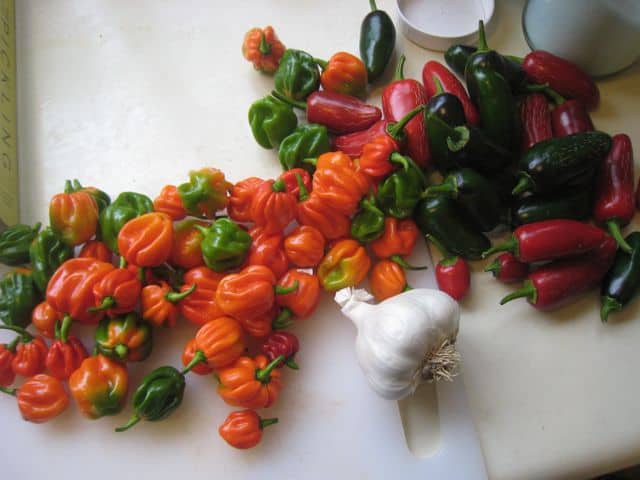
Habaneros and jalapenos—made a garlic chili relish for the people who like things HOT!
October means grapes around here, as well as the end of the apples and tomatoes. I made final harvests of our chili peppers and potatoes, and I’ve been carefully meting out my precious remaining plums and last batch of fresh salsa from the fridge. It will be many long months before we have any fresh produce from our own yard.
Final tally for food put-up to date: 333.5 pints! That’s a lot of jars, and the pantry under the stairs is stacked high — more boxes are stored in the basement. That also includes the preserves that will be part of this year’s holiday gifts to our friends — we love our tradition of exchanging homemade treasures. I look forward each year to planning what I will make to share. As my friends are increasingly good at humoring me by returning my jars, and the fruits/vegetables are generally free, the cost of these gifts “boil down” to sugar and pectin! (Ha — that’s a canning pun!)

The pantry under the stairs
Oregon’s many wineries are worried about a poor harvest this year, but our grapes had their best year ever. In addition to harvesting from our own vines, I was able to pick about 30 pounds of Concord grapes from our neighbor (the millionaire next door) and made J.D.’s favorite juice and jelly to welcome him home.

One part of the grape harvest—that’s about 10 pounds
Garden clean-up and harvesting totaled about six hours of labor for the month. Here are the numbers:
- Tomatoes: 4726 grams (10.41 pounds) @ $1.99/pound = $20.72
- Seedless and seeded grapes: 24 pounds @ $2.49/pound = $59.76
- Jalapeno and habanero peppers: 1151 grams (2.54 pounds) @ $1.99/pound = $5.05
- Zucchini: one! = $0.50
- Apples: 7.7 pounds @ $1.49/pound = $11.47
- Potatoes: 9.5 pounds @ $1.49/pound = $14.16
- Herbs (all summer’s worth: rosemary, basil, thyme, sage, & chives): $50
That’s a total harvest worth $161.66 in October with no out-of-pocket expenses.
Lessons for the year
Some of our crops this year were small (currants, blackberries), bringing our annual harvest value down. But despite that, this year’s overall profit is higher than for the other years we’ve tracked our progress. Why? First of all, our costs were very low this year — we’ve got the main garden infrastructure established and didn’t need to purchase many items. In addition, I was very selective in my choice of seeds and plant starts this spring. And perhaps even more importantly, our maturing plants are producing substantial crops of asparagus, apples, plums, and grapes.
I look forward to next year’s crops from these perennial plants, as J.D. and I have been discussing taking a year off from the vegetable garden of annuals in 2012. I’ll turn my attention to the somewhat neglected flower beds instead and we’ll enjoy eating the pantry down. I think I may have enough jam to last us until 2018!
2011 Totals
Here are this year’s totals through the end of October.

Share your progress! I’d love to hear about other people’s gardens. Especially if this is your first time growing your own food, please chime in with what you’re doing and what you’re learning.
Final Word
This garden project is not a formal experiment. Kris and I are long-time hobby gardeners, and we have set ways that we do things. This year, we’re trying to incorporate some new ideas from GRS readers, but most of the time we’ll do things the way we have for more than 15 years.
We’re not trying to be 100% organic (though we are mostly organic through our normal practices). Nor are we trying to be 100% frugal. Instead, we’re trying to see just what our garden costs and produces based on our normal habits. We hope the results of this experiment will help us find new ways to economize and to improve our crops.

Become A Money Boss And Join 15,000 Others
Subscribe to the GRS Insider (FREE) and we’ll give you a copy of the Money Boss Manifesto (also FREE)

There are 1254 comments to "The GRS garden project: How much does a garden really save?".
I think a garden is a great hobby. If you enjoy it you should do it but I think you’re right – there are lots of variable that might not make it cost effective.
Farms are efficient and can produce goods much less expensively than we can at home.
I think where gardening really saves is in hidden costs that eventually trickle down.
1. You reduce the cost of transporting your food to your house, whether done commercially (farm to grocery store) or on a personal level (grocery store to home).
2. You reduce (eliminate) the amount of chemicals used to create your food. Depending on what you believe, this could have health benefits in the future that would otherwise be paid in high insurance premiums. One could argue that if enough people avoided items with pesticides, preservatives, etc. the general health of Americans would rise and insurance premiums would lower nationally.
3. You reduce the amount of fuel put into food production, including the machinery to move, grow, harvest, and the machinery to make the chemicals put into that food, as well as the machinery that makes all that farming equipment. This also burns less fuel, and means better things for the environment.
I think even if you break even on gardening, you will have improved your quality of life because you’ll have better tasting food that hasn’t used as much fossil fuel or chemicals, and you’ve done something you enjoy that’s out of doors and provides for your family.
This is one of those areas where I’d rather cut back somewhere else so I don’t have to garden. I think a lot of money can be saved, and a lot of great food had for cheap, but it’s simply not something I enjoy. I always have good intentions and enjoy the planning and planting, but when it comes to caring for the garden and harvesting, I fail miserably. To the point I’ve vowed not to try again.
I am, however, thinking of signing up for shares from a CSA grower this year. And I’m looking forward to reading about your progress.
That photo is making my mouth water. One of the only reasons we garden is for the amazing taste of fresh tomatoes. You simply can’t get good tomatoes in the supermarket, and the ones that occasionally are good during the late summer cost a fortune.
It will be interesting to see the results but even if it costs more if you like gardening who cares? The connection to food you grow is worth any extra cost there might be. There is nothing better than eating a veggie that you just picked! Man I wish it was summer right now!
For what it’s worth, to negate any potential health costs that might be avoided by growing your own food (avoiding dangerous chemicals, etc.), perhaps you should compare the cost of gardening to the cost of buying organic food and versus non-organic food (just in case you have too much time on your hands!).
You should also track how much you actually consume, because harvested food doesn’t save you money if it rots on the shelf. I find this is an issue when 100 tomatoes all become ripe at the same time. Also harvested food that is given away can only be counted as a cost saver if it replaces a gift you would have bought. Plus you don’t know how much of what you gave away rots on the shelf (and I have often failed to consume all of the giant bag of vegetables my neighbor brings by each year). Of course you should track total harvest, but you should also track total consumed and total given away and report the three different numbers.
Compost, recycle nutrients.
Great Post! I will enjoy seeing how it comes out. I imagine there will be ebbs and flows. Winter not being cost effective but summer exceeding. Although it sounds like you grow indoors as well so it will be neat to see a month to month.
I dont think that gardening is anything that someone can be made to do. You end up failing. Personally I love it. Cant wait to do more and although I am a novice I am learning every season.
I have the same reasons to garden as the above posts, but also would like to include one other. I garden because I want to teach my children(a two year and 4month old twins) where their food comes. How do you put a value on that?
Anyway, great post I will continue to read it.
Thank You…Good Luck !
I would just say that not all of the value of gardening can be quantified in saving money, much of the value of doing things on your own comes from a much less quantifiable “rich” quality of life.
Take a look at what can be accomplished on 1/10 of an acre if you try. The Path To Freedom journal is about a family homestead in Pasadena: http://www.pathtofreedom.com/journal/
This family of 5 just posted their year’s veggie tally–over 5700 lbs!
I know what I get out of my garden. A few years ago I ‘did the math’ for a couple years and the garden was worth roughly $14.50 per square foot to me. I make extensive use of [TALL] trellises and trellising varieties (climbing beans, indeterminate tomatoes, vine-forming [as opposed to bush-forming] versions of cucurbits. Each is planted directly beneath the trellis with companion plants surrounding them. (PS, for a great slicer tomato, try “Mortgage Lifter” … but only if you have an outlet for the excess!)
There are, as others are noting, just a ton of things to consider. I’ve done enough math to convince myself that my time in the garden is actually worth more per hour than my time at my former job.
I’ve always found herbs to be the best bang for buck and time invested. Most store bought cut herbs also have a very short shelf-life, especially when compared to just leaving them in the ground and snipping when needed.
With other foods, some of the not-so-great savings growing your own is mitigated by the value that comes from fresh taste, lack of pesticides, gardener satisfaction and the convenience of proximity. It’s much more difficult to attribute a dollar value to that mix of variables.
For example, my garden grown peas never beat the prices at the markets, but when I grow them myself, there are a few weeks of backyard grazing that I can’t get at any store.
Just wanted to comment on one variable
¨The cost-equivalent from the local grocery store.¨
Like the comment about organic food, i think it would be hard to get the same quality from the store as you can from your garden, the tomatoes that are picked green and then rail roaded across the country to your house in new york are not nearly as good for you or as good tasting as what you can grow.
I’ve had a garden for many years. I’m so “spoiled” that I refuse to eat tomatoes when they are not in season. The taste of store bought tomatoes and other vegetables isn’t even close to what I can grow. Every Fall I enhance the soil with manure so don’t forget to include that in your costs if you do that. The initial set up costs makes the first yr costs higher, but the following years the cost declines. When I include reusable canning supplies and time the costs rise, but I know definitely that the strawberries or peppers (store bought food that has a high pesticide content) I feed my kids is definitely pesticide free and not just labeled that way.
I’m another person happy to live vicariously through your gardening and enjoy the indoors for the rest of the year. It’ll be interesting to see how you get on.
One thing to remember.
Don’t compare apples to oranges, so to speak.
Don’t compare your average Wal-mart tomato (or what ever else you grow) to your home-grown tomatoes. Their tomatoes are grown with who knows what pesticides and fertilizers. You need to compare your tomatoes to certified organic tomatoes to gain an true equivalent comparison.
I just remember the price I paid to get heirloom tomatoes at a farmer’s market for a recipe, then not having enough, so I had to make an additional trip to Whole Foods and boy were they expensive, too!
One of my goals this year is to cook from my currently non-existant garden, so keep up the gardening posts! I would love to see a monthly tally.
In a class I took last summer, it was a delight to get fresh vegetables from a classmate who is determined to primarily eat food raised on his land. He raises and eats a lot of rabbit, and has a huge garden. He was such an impressive role model!
Ooooh, fun. Are you also going to calculate the improved taste from home grown and the calories burned from doing your own gardening?
I look forward to the upcoming posts.
What a great idea! I look forward to hearing the progress. One thing to consider is the added quality you will get with your garden. Even if there isn’t much cost saving compared to a supermarket there might be compared to equivalent organic, fresh food. I’m actually in the process of starting a “Gardening with Kids” series on my parenting blog in the coming weeks. That’s another area where it’s not just about cost savings. It’s about teaching kids a lesson about what’s actually involved on getting food on their plate and giving them a life skill. Everyone should know how to feed them self from start to finish.. even if they choose not to use the skill.
“Time? Time?” Kris said when she saw this post. “We never discussed time. We only talked about money. You have no idea how difficult it’s going to be to track time.”
Hm. She may be right. Still, I’m going to give it a shot. I mean, there’s 4-5 months of the year in which we do and spend nothing on the garden, right? Right?
another way to check out is square foot gardening. The website is pretty much to just get you to buy the book but the book itself was an interesting and informative read. Try the library for it.
While I haven’t tried it in practice (or any gardening since I was a kid), I’ve heard good things about it from quite a few people and intend to try it on a small scale this year.
You know, JD, there are only two things that money can’t buy, and that’s true love and homegrown tomatoes.
I have heard it argued that it doesn’t make financial sense to garden, because when your produce is ripe and ready, the same crop is available at the lowest price of the season at the store, because it’s harvest time for professional growers, too. There’s some merit in that argument.
But for people who’re really into gardening as a hobby, it’s not just about how many pounds of produce (or, forget-we-not, bouquets of flowers) that are harvested.
I get so much pleasure over the course of the year in watching stuff grow, and in watching my kids learn about plants and bugs and food fresh out of the garden. Carrots and radishes are *absolute magic* to toddlers and preschoolers–poof! food! right outta the ground! Oh, and what great pride for a mama when my oldest declared she wanted her *own* garden last summer. The apple doesn’t fall far from the tree after all…
In the past decade I’ve carved a few gardens out of derelict and neglected dirt, and that gives me a huge sense of accomplishment and positive change in the world. For those inclined solely to the bottom line, the major improvements in landscaping I put in around my old house–a little at a time and at little cumulative cost over several years–are a big part of its attractiveness as a rental property. Worth it!
Finally, it does my pagan heart good to have a direct engagement with the turning of the seasons, above and beyond picking my wardrobe and paying my heating bill. *Now’s* the time to plant, *now’s* the time to harvest, *now’s* the time to put the garden to bed, *now’s* the time to rest and plan for the next season. It’s a big part of my spiritual grounding and practice… I can’t put a dollar value on that.
Any ideas on keeping dogs out of the garden? My wife and I would love to start a little vegetable garden, but unfortunately our dog refuses to stay out of the area and would trample/eat anything that managed to survive.
NOW don’t forget to include the cost of record keeping in the calculation (i.e., hours spent tracking times an hourly opportunity wage).
🙂
Sometimes it is not about how much you save; there are intangibles.
imho,
“gardenless”
Great idea.
I’d say forget the time. On materials alone the “savings” are not going to be overly impressive. If you add in time as well then it won’t be worth it.
Look at it as an enjoyable hobby that pays you a little bit of money (like my blog).
Mike
JD — you are an inspiration! I am an apartment dweller, which is mostly alright. Except I really want a patch of earth to call my own and grow some flowers and veggies (no, going to a community garden wouldn’t work)
My parents garden every year — this year they had bumper crops of squash and carrots — they have been giving away carrots for months and practically had to buy a new freezer for all the carrots they put aside. Not to mention eating their carrots daily. I keep telling them they are starting to turn orange.
I think you’re not only engaging in a great garden but keeping alive a valuable skill. Fresh produce just keeps getting more expensive.
P.S. — I’ve tinkered off and on with container/patio/indoor gardening. I’m getting organized to give it another go with herbs and tomatoes for the spring. And I keep improving my indoor plant green-thumbness. It really helps me connect with nature to be around plants.
@Frugal Dad
When my parents and their neighbors did to keep the dogs out of the garden area was they enclosed it with wire fencing (the normal 4″ heighth of backyard fencing) and a gate. Both of their garden plots already were bounded by the yard’s perimeter fencing on two sides so it just meant putting up the other two remaining sides.
It was worth it to know the garden produce wasn’t accidentally “watered” with something less desireable than water.
Remember to convert your kitchen waste into Compost … and believe it or not, you can put the “leavings” you pet may leave on your lawn too … the composting process leaves that fine – what do you think manure is?
This saves money (waste disposal is typically on a “per-bin” charge, at least where I live), and reduces cost (less requirement to buy in manure/compost).
Remember to convert your kitchen waste into Compost … and believe it or not, you can put the “leavings” you pet may leave on your lawn too … the composting process leaves that fine – what do you think manure is?
This saves money (waste disposal is typically on a “per-bin” charge, at least where I live), and reduces cost (less requirement to buy in manure/compost).
1. Great idea. There is more than just cost benefits as others have said.
2. If you plan on NOT keeping track of the time you put into it, multiplied by what your time is worth per hour (gross salary/12/160), and do not include that as a cost, then you may as well not make the comparison at all between what you would have spent at the grocery store as time is likely to be your biggest expense. Not saying a garden is not a worthwhile investment of your time, just that you can’t tell us that you’re comparing costs unless you include the cost of your time, which is a very real expense.
Fantastic idea! I can’t wait to see how it goes. A veggie garden is something I’ve thought about starting off and on for a while now.
Good luck!
Great idea, I look forward to reading future posts about this topic. This past summer we grew vegetables in a community garden plot within walking distance of our apartment. It was a great experience, it encouraged us to be physically active (in both walking to and from the garden daily as well as the actual garden work) and enjoy the outdoors. Although I didn’t keep detailed records of expenses, we did decrease our monthly grocery bills by 50-75% in July-September.
JD,
Realizing this is WAY premature, I just wanted to pose this question…
Is there a point at which you would determine your efforts are not worth it to you?
Obviously, if you break even or come out ahead you will probably be THRILLED. But, if you find out this is costing considerably more than you save, will you instead put your money into local farmers’ pockets? You know, the whole “frugal thing” you write about so much. =)
Good luck to you and yours. I will be watching avidly.
Oh my gosh, you can’t even GET food like what you show in the photo here (our vegetables are awful, and even the organic stuff that’s shipped in is only so-so) so if I were doing this, gardening would win hands down. (Since I’d have to factor in the cost of plane tickets to places where things actually grow…)
I didn’t see this posted in the replies… but you should consider installing / using a rain barrel to collect water for the garden. A quick google search yielded 50-60 gallon buckets for around $100 – I’m sure you can get them cheaper locally or modify something to fit your needs. While that $100 may cost more than this year’s water bill allocation for the garden, the bucket should last more than 10 years and will, in the long run pay off – and it’s a very “green” thing to do.
I love gardening and think this is a fabulous idea. I hope the fertilizers you mention are organic. I recommend reading “Organic Gardening” magazine for lots of great tips and inspiration.
Composting is a must but I would disagree with Cormac about pet manure – unless your pets are rabbits, chickens, goats, horses or cows. Dog and cat waste is NOT safe for composting, nor that of tigers or hyenas. Rule of thumb is if the animal eats a plant-based diet, you’re safe composting their waste. If they are meat-eaters, don’t do it. If you have a fresh water aquarium, the waste water is Great for gardens, or even to pour it into your compost. All the beneficial bacteria will Love it!
Best of luck to you!
This is the whole idea behind aquaponics!
Tracking all of that data sounds like a lot of work, but I’m glad you’re doing it and I can just read the results!
Your veggies look fabulous, as always. Ripe tomatoes are the best. I miss Portland – everything seems to grow there. 🙂
You and your readers might be interested in learning about winter sowing — the short explanation is that it’s the practice of sowing seeds outside in the winter, even in places like Minnesota, using free containers (like 64 oz soda bottles) and Mother Nature. It’s really easy to do, produces *much* hardier plants than any seeds I’ve sown indoors. And the folks at GardenWeb are wonderful sources of wisdom if you have questions.
http://forums2.gardenweb.com/forums/wtrsow/
A great way to save money too!
This sounds very interesting. I have to agree with the others, though, who said that the best reason for gardening is homegrown tomatoes…even if growing your own turns out to be more expensive.
My dad grew TONS of tomatoes last season, so many that he had to start canning or they’d go bad. Now, in January, we’re eating pizzas with tomato sauce from his garden tomatoes, and last week I made a delicious Italian soup called papa al pomodoro–and the “pomodori” were all homegrown. Mmm…I’m making myself hungry.
Rain barrels are for sale for $5 at the corner of Boones Ferry and Crosby Road in the Woodburn area. Or really, any large farm will have a lot of extra food-grade plastic barrels.
Also, there are a ton of seed-exchanges in Portland.
And, of course, canning. To insure nothing goes to waste.
Thanks for keeping tabs on this! My wife and I are planning a garden this year, hopefully save a couple of bucks on veggies. We don’t have much space, so we’ll be using some alternate techniques, like growing as much as we can vertically, and hanging plants like tomatoes.
Hopefully our compost bin (only $20 – the rest local government subsidized) and rain barrel will cut back on fertilizer and watering costs. It only takes .16 inches of water to fill my 58-gallon barrel.
Have you read “The $64 Tomato”? Its basically following the same idea. See: http://www.64dollartomato.com/
@Anjjol … you are repeating myth about not composting pet waste. Even applying it directly (as a side-dressing) is a low-risk activity if done properly.
Simply put, there is nearly ZERO risk of getting a disease from diseased manure IF that manure was composted and aged properly, or even close to properly. (Not all that difficult.) It takes gross mis-handling of compost for diseases and parasites to survive. If the manure wasn’t diseased to begin with, the risk simply never existed to begin with.
Suggested reference is: http://www.jenkinspublishing.com/humanure.html
Simply put, the more manure of any sort in a pile, the healthier it is (up to a certain point, being roughly 15% to 30% by volume, depending on other variables such as the form of available carbon material and the amount of water and oxygen available).
@Adam Boettiger: That’s the wrong approach to accounting for a garden.
Time spent in a garden is not time removed from higher value income producing work, but occupies time not ordinarily scheduled for income-producing activities at all. Thus it cannot be expensed, having at the same time elements of healthy recreation, relationship building (with spouse, friends, family and neighbors), income production (food matter and writing matter) and health enhancement.
If he was taking time off from work to trim his bushes, that would be a different matter.
Additionally, home gardens are the most productive acres in America. Always have been, likely always will be. Organic management is frosting on that cake. Not only does it put tons of material back into use, it keeps those same tons OUT of municipal dumps and open waters. Have you ever considered how absurd it is to pee a few ounces into a toilet and rinse it away with gallons of potable water? That waste is then partially treated and dumped back into the public water supply.
The link I gave above is a good one. Joe Jenkins has got his head screwed on straight, it’s the rest of us who don’t.
I agree that the time involved isn’t a cost but a kind of benefit (bound to be helpful in the “get fit slowly” direction).
Also want to second the person who suggested growing flowers as well as vegetables — easy to compare costs, and great to have as quick gifts and for your own enjoyment…
JD … here in Michigan, gardening is roughly a 10 month operation. Harvest begins again in March with lettuces. Didn’t stop this year until mid-December (kale). I just went outside an hour ago and noticed that some of the kale is showing fresh vigor. If we can get global warming up another 5 degrees or so, I’ll have a 12-month garden (never ending tomatoes!!!!!!)
@ Frugal Dad — keep dogs out of the garden with a ring of mothballs around it. The fumes offend their sense of smell and they tend (short of electrified barbed wire nothing is certain) to give it a wide berth.
@ db … I’ve seen gardens hanging from buckets at about the 30th floor level in Mew York. Tomatoes will grow upside down from suspended bags. Keep looking … you CAN grow something (and something is better than nothing!).
Lot of responses to this post … I’m wondering how many of the commenters can actually look out their window at last years garden?
Any regrets? I have one … I had to be out of state during a terribly hot & dry spell and my garden suffered because I got lazy and didn’t install my weep irrigation last year. I’ll have to be out of town at roughly the same time this year so I am determined to get the irrigation in place as soon as the plants & seeds are in this year.
You could probably do lettuces, tomatoes and herbs and potatoes really cheaply. And garlic too. They’re easy to grow, and they cost a lot in stores. But they don’t take up too much space. And if you have a surplus, you can make friends with your neighbors, or donate to the local food pantry.
Since you mentioned tracking the energy spent with grow lights, i wondered what kind you are using? I found a lot of stuff online about using red/blue led grow lights that use a lot less power, don’t heat up and don’t used wasted spectrum of light for the plants, but i have yet to play with them.
Great idea! I can’t wait to see the outcome.
To me, it’s less about saving money, than about taste. If you’ve ever eaten a tomato from a walmart or grocery store, you know how incredibly bland and tasteless they can be. That’s because most store-bought fruits and veggies are picked BEFORE they are ripe (especially tomatoes, bananas, etc.) This is to give them maximum shelf life, etc. Unfortunately, it also makes them taste like crap. At the very least, grow your own tomatoes – you’ll really see a difference!
As an avid gardener, who has just moved to a new location out of town so I can start gardening again, it has definite health benefits. I also love having pickled vegetables and other things from the garden. I will definetly be keeping up on this series of posts and let you know of my own gardening exploits this coming growing season.
I find this post very interesting, in fact I offer to provide you the equal set of info from my Oakland, CA garden. We have been at this for four years now, blog is out of date, but we continue.
We’ve been canning and making our own cider, wines, etc. for four years and I FINALLY feel like we’ve got the hang of it. I swear by the same cookbook Kris uses for canning and I think that’s important to remember…sure you can only consume soo much….
…But there’s really no limit to what you can preserve. We no longer buy gifts at Christmas or holidays. We make our own gifts and we endeavor provide as much as we can from own our garden or purchase locally.
I know some people aren’t interested in the care, but don’t forget to talk to neighbors. We have many who aren’t interested in picking the fruits and nuts that are growing in their yards. It’s fun to process them and share, and if you like to cook it can be addictive :-).
J.D., I admire what you guys are doing, and as a gardener I’m not certain that I ‘save’ a large sum of money, but I gain much more:
-working in the yard exercise
-something to tackle as a team with my husband
-good quality food that I can control
-interaction with my environment
This is something I had planned to track this year too, so I look forward to reading more.
Jeri.
Hey JD – where are you that you can be planting in February? I’ve seen snow on Memorial Day, so I’ve got a bit longer to wait.
I plan on placing my seed order (from Burpee – where did you get yours?) in early March, start them inside in April 1, and move them outside early to mid-May. We also don’t have much room for a garden, so we’re looking at alternative techniques, like hanging tomato plants and growing as much as we can vertically.
JD
I have been reading your blog for a while and love it. I am especially interested in your garden project as it falls in line with one of our future goals of growing most of our food. I have always wondered if it will be cheaper, or just healthier.
Thanks!
Toni
It will be interesting to see how much you spend, but how do you quantify “enjoyment?” I really enjoy working in our little vegetable garden.
Also, you didn’t show us the full list, I know, but I would encourage you to order some seed that is out of character for you. I’ve raised brussel sprouts, kohlrabi, mesclun mixes, and several off the wall vegetables. It really adds to the fun 🙂
My little container garden is going to be more involved this year than last. I have a worm bin in the kitchen (they came yesterday! Worms! Yay!) and plan to have mostly peppers, because that’s what I’ll eat consistently. I’m starting them from seed inside (yay grow light!) and we’ll see if I impulse buy anything more interesting. Maybe I’ll actually go for herbs this year, too.
We just “ordered” some tomato seeds from my mother in law. For what ever reason tomatoes here (Spain) are just crap, the only good ones are from Holland. My in-laws have the best tomatoes so we’re planning on growing some on our balcony.
This is something I will watch with great interest. My father has tried to get me to grow my own vegetables for years. My retort has always been that they are too cheap for me to waste my time growing them.
Best Wishes,
D4L
Great idea! Your project could confirm or de-confirm a suspicion I’ve harbored for a long time: I’ve begun to think it costs more to have a garden than it does to buy produce in the store. Well…nonorganic produce, anyway.
Prices on organic have come down enough, though, that even if that’s all you buy, gardening may still be higher, by the time you’ve bought seeds and small plants, soil amendments, fertilizers, mesh to deflect insects, shade coverings, frost coverings, fake owl to scare off hungry birds, dog to scare off the neighbor’s toilet-seeking cats, edging to keep the grass out (sort of), chicken wire to keep the dog from digging, stakes and trellises, a shovel or two, a wheelbarrow, trowels, a rake, small nippers, large nippers…gaaaah!
The satisfaction of growing your own is pretty priceless, though. Assuming you can figure out what to do with 500 pounds of zucchini! 🙂
It will be interesting to see what the final breakout is but I do know that you get MUCH better tasting fruits and vegetables, growing them yourselves!!
I lived in apartment and did some container gardening. We lived right by the playground, therefore kids and adults picked my tomatoes clean last year! I have since moved and don’t have as much space, but I’m looking into hanging tomatoes? We’ll see how they turn out!
Thanks for sharing, I love the spreadsheet idea and I don’t know why I didn’t think of splitting my seed order too. I’ll be working up what we plan to buy, and some items that’d be nice if others wanted to go in on them, and post that to my local social list to see if anyone else wants to go in on the order.
As for vh, I guess I just don’t see the garden even coming close to being as much or more than in store produce. But then again, we buy a TON of produce, and don’t the majority of the stuff you listed to plan our garden. I’d suggest checking out the Square Foot Garden book, it really focuses on how gardening doesn’t need to cost so much.
We live in Portland, Oregon. There’s nothing (besides peas, perhaps) that we can plant outside right now. But Kris has an elaborate grow-light setup, including little mini-greenhouses. She takes over the living room every spring! I’ll post photos once she gets this set up, which I’m betting is the end of this month
We get our seeds from a variety of sources. Kris swears by Totally Tomatoes for tomatoes, and we use Territorial for most of everything else. They’re a local company that specializes in varieties for “the maritime Pacific Northwest”…
JD,
I’ve been lurking on your blog for a while and I love it! My wife and I will be moving into our first house in May and we are excited to try Square Foot Gardening (thanks to you!).
Thanks for all the great info!
-Daniel
http://youngandfrugal.wordpress.com
All I can tell you is I’m with Kris on this one. And I understand you can get great grow-lights from Amsterdam if you’re into dreaming that is.
Kris, who is standing at the window, staring at the miserable mix of rain and snow, dreaming of spring, wants for me to share a link to this post about her tomatoes. It’s from my personal site in late April 2006 (right around the time I started GRS). This is what she’s wishing for right now, but she has three months to go!
While I think it’s great to look at how this could be a real frugal opportunity, it also appears to me you folks really like working in the garden. If that’s the case, it’s not just about money; it’s about your personal fulfillment, which is one area I’d like to spend more, not less, time 🙂
–
Ryan
http://uncommon-cents.net/
My husband and I are planning to begin a vegetable garden this year and am very much looking forward to your future comments on how you fare in terms of costs.
Frankly, the cost is only an incidental factor in our opinion, since we (like many others in this posting) love real tomatoes.
I’ve grown flowers for years, but I’ve been unsure of my ability to properly handle a veggie garden. However, there’s so much great info available now through postings of this type, I’m inspired to take the plunge.
Looking forward to more of your postings on this subject.
Thank you!
I can’t wait until we can have a garden. I think of it as frugality on two fronts. One, the very tasty results. But two… it’s also really cheap entertainment, if you enjoy gardening. So you’ve killed two birds with one stone, there. It’s sort of like knitting. If you count the time as labor, the cost of a hand-knit sweater is astronomical. If you count it as entertainment, it’s quite frugal. There’s a certain lesson in learning to have fun doing things which are productive.
Barbara Kingsolver’s “Animal, Vegetable, Miracle” quantifies her savings from her garden at somewhere around $7,000/year in not spending money at the grocery store, and $4,000+ profit after the cost of garden accessories are factored in.
If you’re smart about it, and start seeing yourself as A MEMBER OF A COMMUNITY OF PEOPLE and work those connections, as opposed to always thinking about buying what the catalog tells you you need to, you’ll save thousands.
This is a great idea! I look forward to reading about your findings. I don’t have much land and have to grow everything in pots, so I just keep a salsa garden 🙂
I am very interested in this as well it would be nice to know that all my hard work I put into my vegetable garden also is saving me money.
JD,
Let me recommend that you avoid the hybrid tomatoes. If you have BAD disease problems this year, then do it next year, but this year go to http://www.totallytomato.com/ and grab some of their heirloom varieties. The local greenhouse will only have a half-dozen comparatively bland tomatoes with much of the sugars and acids that make a tomato GREAT bred out of them in the interests of disease and pest resistance.
You can also get some FAR BETTER garlic online than you can simply by planting the “California White” cloves from the supermarket. The CA White is just bred for size, not flavor. Try a Leningrad or Ojo Roja if what you want is GARLIC that makes no apologies, takes no hostages. ISTR thatyou live in a warm area, so find a long-season onion and a long season garlic. I am in a cold area, so I need to use different varieties.
I’m not sure how much my few peppers from last year cost. Pots and dirt, stakes, plants, I already had the rope to tie them up but count that anyway, water’s included in rent. Still, everything but the plants is reusable. Once it’s warm enough, I’ll be outside dumping out the pots, breaking them up, mixing in worm compost (okay, that’s an additional fifty dollars, but it’s one-time), and getting ready for another year.
It does count as fun for me, though. I’m not willing to do anything not fun to save money.
Okay, okay, I exaggerated about the fake owl! And yup, I cruise yard sales and estate sales for gardening tools. Definitely I’ll look up the Square Foot Garden book — thanks, Donna Jean.
A friend recently gave me a special issue of _GreenPrints_ journal called _The Weeder’s Reader_. It’s very mellow, makes you laugh and cry, sometimes at once. Don’t know if you can get it on Amazon.com. But GreenPrints is at Box 1355, Fairview, NC 28730. If you enjoy gardening (and cats, dogs, & people), this strange & sweet little book is worth sending away for.
Hi J.D.
Gardening is quite time consuming, but the satisfaction of see the literal fruits of one’s labor is quite nice.
Are you two practicing any composting at all? That would save in a couple of ways:
1) less fertilizer need$ to be bought
2) less waste go into our landfills, instead the food scraps will go back into our yards
I have a small city garden and was never able too use all the seeds in a pack before they became too old to be viable. Also, all those $2.50 packets really added up and limited the number of varieties I could try. Sharing seeds with neighbors (as you are doing) is one option, but wasn’t practical for me.
I couple years back I discovered https://www.artisticgardens.com/ a seed company that sells herb and vegetable seed packets for only 35 cents each. There are always plenty of seeds for my small garden, and usually still enough to share.
JD,
If you really want to measure every last cost associated with your garden, you should measure the amount of power those grow lights consume. I would suggest using a Kill-A-Watt or a similar usage meter. I would be curious as to to how much money you’re spending on running the grow lights, as I also have a (very small) grow light setup in my home.
JD,
Great website. Here in South Carolina I can have quite a good winter garden and two plantings in the summer. Right now I have some garlic and cabbage growing and will be planting most of the summer garden the Friday after Easter. One of the ways I like to save money on my garden is by seed saving. Usually there are some left over tomatoes, peppers, cucumbers ect… that never quite get picked. Dry the seeds out dand plant them again next year. This also works great with herbs. I usually just plant the whole seed head and the next spring they sprout back up. Also great to share with fellow gardeners. Also I save on soil and fertlizer buy getting some compost at the county composting center. For $20 I can fill up the back of the pick up truck and will have a supply of soil an compost for the summer. This year I’m working on drip irrigation and a rain collection barrel to cut the biggest expense, the water bill. It gets hot and dry here in the south and my veggies get a bit thirsty.
Cool post, and timely. I love the idea of pooling seeds. Duh, we always get way too many seeds, so this is a great idea. I giggled at your grape-pruning follies. We also have grapes and just wing it when it comes time to prune. It helps that we live in wine country, so we can get advice from the pros, but until you’ve done it yourself…Also, one of my most joyous garden moments was discovering eggplant grows beautifully in our garden. Yay! So, I second the idea of trying something new each year.
I don’t get the idea that gardening is time consuming. Last year I built 3 raised beds – total time to build and fill was about 6 hours. I watered every morning for about 10 minutes – turn on the sprinkler, make coffee, turn off sprinkler. Come home in the evening, and while I let the dog out I pull a few weeds. That’s it. In exchange, I got fresh produce, full of flavour, and only as much as I wanted – as a single person I get tired of wasting produce because I can’t eat it in time.
Buying local is important to me, so I was saddened read that Territorial Seeds is supplied by Monsanto. I’m ordering from Abundant Life this year.
I wanted to give a big thanks to Bekah’s comment about artisticgardens.com — we used them to help reduce our initial seed purchase and saved $68, thanks so much for sharing that site. For someone just getting started, it’s a big plus to shave some off the cost.
Totally Tomatoes has outrageous shipping rates, depending on where you live in the country. (I’m in Alaska.) I found http://www.tomatogrowers.com was a lot more reasonable.
This is a great project. I am eagerly following the results.
I am very, very interested in your garden project. We would like to get to the point where we’re growing more fruits and veggies, but we have a lot of work to do getting it all set up, and we’ll need to bring in soil. All of this costs money 🙁
I’ll look forward to those updates. My husband and I are big gardeners, but not so much for cost savings. In our case it’s for the love of working in the soil, and because garden grown produce is the most delicious food around. You can’t get that fresh-harvested flavor in the produce aisle at any price, so cost-wise it’s almost impossible to compare apples to apples.
How much time do you spend cooking food from scratch? Do you factor that into how much you save when you eat at home vs. eating out? Sometimes cash flow is all that really matters.
If it’s something you enjoy doing, how much time you spend on a hobby that saves you money (even though you have to invest a little up front) shouldn’t matter.
I just spend like $500 on landscaping materials. Not quite the frugal path, but it’s better than paying someone to cut my grass all summer!
Like others, I am very interested in your progress. You inspired us to start a Square Foot Garden ourselves, and initially it will be a small project that I’ll use to teach the kids a little about gardening, frugal living, etc. I was excited to get the vegetables up and running, they wanted to devote all 16 squares to strawberries!
Amy: If you see this comment – check out the Square Foot Gardening post (it’s under Popular Posts in the sidebar) by J.D. here at GRS. It involves using raised beds, and is a great alternative to scraping, digging and replacing tons of soil.
THis is going to be neat to track and see if it is break-even, profitable or just fun!
It sounds like you have a lovely garden. Keep us posted on your progress. We have a very small garden here in Massachusetts. It could be bigger,but we just don’t have the time. This year, we decided to join a local CSA.
Lisa
I am interested in following your progress. A kind friend gave me her extra seeds this year — she only used about 1/2 of each packet — so my cost is practically zil. I should keep track of my hours, though.
OOOH man, I’m glad you are doing this. I hope it proves that gardening is a good venture, but I’ll wait and see.
Peace!
Protip: if you want to increase soil acidity, you can go with several cheap options.
Best, easiest, and fastest is to mulch with pine needles. (I’m origionally from South Jersey – we have pine trees *everywhere*)
Not only do they leech acidity into the soil, but there are there compounds in the pine needles that retard new growth (weeds). They can also look quite pretty – or at least I think so.
I’m looking forward to seeing how you do this, and what your results are. I hope things work well for you!
Enriching soil can be inexpensive, as well- I’m composting the rabbit poo from my rabbitry. It’s black and crumbly, and will improve the soil immensely.
Best of luck to you!
Hi JD, I too have started my own Square Foot Gardening project since reading your post. Hope things go well for both of us!
Jonathan
i decided to take on a small window box garden of my own! we live on the second floor of an apartment complex. my peas and lettuce sprouted a few days ago, they’re getting very tall. the others take longer to germinate. it’s still too cold at night to put the boxes outside.
keep us updated!
Your lucky! I still have a foot of snow in my yard with more on the way.
FYI – we learned a blueberry fact yesterday and I thought I would share. Yesterday we were at Urban Grind in NE (we live in PDX, too) and there were some bags of coffee by the door when we left. I asked my man, “Should we take one?” He said, “Why?” And I replied that I thought they were good for blueberries. He did some research and indeed the high acidity is good for blueberries. Apparently you can work the coffee grounds right into the soil. We don’t drink coffee at home but will probably try to get a bag whenever we go to a coffee house. Cheers!
Alas, I share the yard with a neighbor and she takes it over every year.
I’d move but I can’t find anything I can afford.
Perhaps boxing the boxwood would reduce maintenance. When I was a kid we had a shrub-lined driveway and boxed the shrubs every winter.
Hi – I was reading a few posts where people are concerned that they will have all of this produce and it won’t be economical because of not being able to consume it all. A few tips:
-trade with friends who have produce YOU do not grow.
-Can, can, can, can, can, and when your done can some more.
-when your done canning – freeze, freeze, freeze, freeze, and freeze some more.
– when your done freezing invest in a food dehydrator and use that – you can’t be dehydrated tomotoes in your soups or pasta.
-there are many many ways to use your produce so as not to waste it – be thankful of your bounty and just think how delish it will be when it’s out of season in the middle of winter and you are reaping the benifits of your home grown nutrition!
I’m excited about your progress and can’t wait for the March 2008 post. I live in an NYC apartment and just started growing about 25 vegetables, fruits and herbs that I eat the most. The initial cost of supplies and equipment set me back about $500, and I suspect maintenance will be an additional $15 a month to run fluorescents. While I haven’t thoroughly compared how much I’ve spent or saved to weekly grocery shopping, it’s being in control of what I eat that’s important in keeping me healthy and helping reduce fossil fuel usage. Plus, it’s a great hobby.
I’m actually interested in seeing how much your new freezer saves/costs you: energy costs vs. the changes to your food costs. I found that my food costs spike and fall more dramatically with the freezer, rising when I purchase a quarter of a steer or half a pig, rising slightly when I double a recipe to freeze half, and then falling dramatically on weeks when I only buy fresh veggies (I’m in a CSA).
my husband has been gardening since he was about 8. He has a bean seed brought here from Italy from an uncle that he saves every year. He’s 48 now. I got into to gardening to spend time with him and it’s changed my life. We grow everything organically too. The act of gardening nourishes our souls, which is priceless. The food we get is a side-effect.
Bit of a stupid question but did the bio dome come with seeds? It’s not really clear on the website.
Also got some tomato seeds from my in laws (Tomatoes in Spain are almost inedible) and planning on starting them in clean yogurt containers.
sounds great! Though a word of caution. That upright freezer that you picked up for free may end up being worth a lot less to you than you imagine due to energy costs. I’d keep a close eye on it using your kill-a-watt.
The main design flaw in the uprights is that every time you open the door, the cold air inside the freezer spills out onto the floor, resulting in the compressor having to kick on and drag the temperature back down. (Remember that hot air rises, cold air falls) Chest freezers are much better in this sense as they don’t have an escape path for the cold air. Be sure to minimize the times you open the door as much as possible.
Also, a freezer is at its most efficient when it is full. If you only have a few items in there at the beginning of the season, you may want to bulk up the items by freezing water in old gallon milk jugs and using those to help. This is due to the frozen mass of the contents being much better at maintaining the temperature than the compressor.
Just a few caveats to be aware of. I hope your harvest is more than enough to make it worthwhile.
We will be getting a late start here, as we will not be able to start even prepping our garden until after we get into the new house the middle of May. Until then, we will live vicariously through your efforts. 🙂
That’s good advice about the upright freeze, depending on its age it might be an energy sink for you.
This is a very clever series, I’ve always wanted to do the garden thing but we don’t get enough sun (it’s the way our townhouse is laid out, nothing to do with geography).
I am also very excited about my garden this year. I grew up on a farm with eight siblings and we grew all our own veggies, plus we had cows for beef and milk and chickens for eggs. I am eager to reduce the chemical load in my food and get back to organic vegtables and fruits.
I’d recommend that anyone with such passions and interests invest in a subscription to Mother Earth News. The spring issues are chock-full of awesome money-savers for creating and maintaining a small garden, composting, and advice about fertilizer.
For example, I was going to rent a rototiller to turn up the soil on my 18 x 24 garden plot. But then I learned that that the better way is to cover the entire piece of land with newspapers for a couple weeks and let the newspapers kill the weeds for you.
Then you choose where your rows will be and pile on some local (usually free) compost in the rows (right on top of the newspaper), while putting down wood ships (usually free from a local stump grinder) in the paths. This totally negates my need for a rototiller and helps control the weeds all summer long.
What I didn’t realize is that when you till the entire plot, you turn up thousands of new weeds sprouts and give them exposure to the sun, thereby creating a virtual weed garden! I’m so excited that using this method will drastically cut down on my weeding time this year, plus I can use the established paths and rows for years to come. No more tilling for me!
In addition, Mother Earth News comments that many people spend oodles of money on chemical fertilizers when one of the best fertilizers is one we usually throw away: pesticide-free grass clippings. Grass clippings are also awesomely effective for weed control when you put a thick layer all around your veggie plants.
Check out http://www.motherearthnews.com…I think you’ll find that a $10 subscription will pay itself off with the first issue!
Good luck to all you fellow gardeners out there! Enjoy the experience!
@Rob #3:
The bio-domes do not come with seeds. I often save seeds from my own garden (mostly flowers) or trade them with other gardeners. With crops like tomatoes, I grow one or two plants of many different types, so each seed package will last me several years, wrapped tightly in a ziploc bag in the fridge. Kris
i’m also excited to see my plants getting bigger. since i’m growing in boxes on our deck, i haven’t had to buy anything but the seeds (also broke down and got tomato seedlings) and potting soil. we have had the boxes for several years.
good luck!
I’m also a PNW’er (transplanted from a warmer clime), and have been eagerly anticipating the day I can finally plant my veggies (last year, amazing tomatoes, basil and peppers, this year adding some squash to the mix). Last frost here is soooo much later than I’m used to. . .
I’ve tried starting from seed before, but didn’t have much luck. However, I didn’t have a ‘grow lamp’. How much does this cost (other than the electricity)? Does the bio-dome eliminate the need for this?
Are you planning on canning your extra vegetables? Or just tossing them in the freezer? You may have discussed this in an earlier post, and if so, please point me in that direction. . . .
My wife and I started a garden last year as an experiement in saving money. My grandfather always had a large vegetable garden and him and my grandmother would always can them for the winter.
Well, after adding up the cost of our garden; tiller rental, fertilizer, garden hose, hoe, shovel, seeds and seedlings. We spent a total of $235 for a handful of tomatoes, and two bags of green beans!
Not to mention all of the time we spent planting, and watering.
Oh well, at least we got the itch to start a garden out of our system.
I’m sure the fruit and vegetables this will produce will more than pay itself off…. especially with the rising costs of produce these days.
They look good so far!
this has inspired me to do a similar project. It’s a substatially smaller scale, I’ve spent $16 so far, and harvested $1 in parsely. How do you tally your water costs? I’m not going too this year, since watering the plants, the pavement, me and herself is my two year old’s favorite activity. Possibly the cost in oregon is negligable, but Texas is could be substantial. I was thinking I should try to figure that out for next year. I’m also considering how I should tally my savings. For instance since I am unlikely to pay for organic produce so my parsley saved at the non-organic rate. Since I always buy the cheaper items, should I tally a red pepper as saving the cost of a green pepper? Maybe two tallies- raw costs saved and added luxury benefit.
I’m a relative gardening idiot (also completely an indoor/patio gardener), but I tried out one of those bio-dome things to sprout herbs and it worked fabulously.
Now I have more seedlings than I know what to do with.
Great idea for a story! I just live in an apartment with a North facing window and don’t feel like it would be worth my time to do veggies in containers on the patio. I have had luck with herbs last year. This year I do have 3 herbs started from seedlings. Seeds are definately a bargain, especially if you can get them on sale!
Great series, I will be following this one closely. My sister and I have often contemplated starting our own vegetable garden. I drive a 30-mile round-trip once a month to go grocery shopping, and we could do with some fresher produce (we often use frozen vegetables near the end of the month).
But, being dreadful gardeners, and our previous gardening attempts all having turned out quite futile, we often conclude that it might end up costing us more money.
Just got pointed to your blog – great stuff. I’m on the learning curve with food production myself – we recently fled to a deeply rural island, where I’m trying to transform my pile of rubble and overgrown ornamental shrubs into something useful.
A previous poster mentioned the possible energy consumption issue around the upright freezer – would be very curious to hear about that. We’re on a solid grid but only wired for 70 amps, so we have to count watts (stereo+vacuum=boom, for example).
If the freezer turns out to be a big pig, would laying it on its back work? I’ve heard of people doing that with their fridges in genny-dependent situations.
I think food production is becoming critical for us peasantry. Local meat and dairy is being blocked by new inspection regulations, while big agribusiness puts on its Local(TM) Organic(TM) makeup.
If I can raise carrots more impressive than last year’s rather, ahem, puny bitter stubs, I might even try out a chicken or two.
Have to check out this bio-dome. Maybe I can make one myself (this year’s cash, if any, is reserved for flour, firewood, and dirt).
Everyone’s expenses seem high on the dirt+shovels front. Last year I spent about sixty bucks for several hundred litres of dirt, plus the cost of some seeds.
Water costs here are negligible (I live on the West Coast, up north, and it’s wet and forested here). I have a couple of hoses, some recycled buckets, some very cheap (sub-$10 each) light tools, and I’m getting along O.K. so far. I would advise people finding their overhead high to shop out of town, and buy soil and manure and the like in farm country if possible.
Anyway, I digress, as usual. Looking forward to seeing how your garden grows. It seems you’re a bit ahead of us seasonally down there – I’ve still got frost every morning and only the most tentative little buds are poking forth here and there.
Off to punch down my dough (it’s PIZZA NIGHT here hahahaaaarrrll drool slurp),
Lord Reptor.
Kris says–
Well, some reader questions made me consult our utility bills for water costs last summer. Here in the great, wet, Northwest, we are lucky to have both cheap water and occasional rain showers during our growing season.
During the months when we don’t water outside at all, our water use runs $10/month. During the five months (May-September) that we do outside watering, our water bill averages $22/month. Subtract the inside uses and that means our irrigation outside costs us $12/month. I’d love to hear what other areas of the country/world pay in comparison.
Note: we choose not to water our lawn at all (meaning it’s crispy by August), so our outdoor water expenditures are split between the vegetable and herb beds, the fruit trees and berries and my flower beds. I’d attribute $8/month to edible crops of some kind. Our sewer provider is a separate utility and is a flat monthly fee.
Second note: We do have a shallow irrigation well that I can use until about July 1 (when it dries up). This is used mainly on the herbs. I also have a rain barrel I use to collect water for hand-watering newly planted seedlings and bedding plants in the flower garden.
I’m actually impressed our water costs are so low. When Jd & I bought our first house, we didn’t realize we had to pay for water. We watered that beautiful lawn every day the entire first month– May– until the first bill arrived. Surprise! Now we don’t prioritize a “perfect” lawn of grass, so it lets us spent our energy and money elsewhere.
My tomato starts are really starting to pop. For some reason, the pepper seeds have been really hesitant this year.
I got too ambitious with the Portland weather in February, and put my pumpkin seedlings out, and they’re now no better than the compost.
That does seem to be a lot of tomato plants, though. I had only 4 plants last year (that were worth anything, at least), and still had more fruit than the family and neighbors could handle.
Just thought I would add – if you’re going to give the gardening thing a shot, get biodegradable seedling trays that you can plant straight into the soil.
I got the plastic, ice-cube tray style ones and completely butchered my seedlings when I transplanted them into the soil.
Sigh…
Is there a way to kick-start pepper seeds? I have been told that they like it warmer, so I keep a heater pointed at them while I’m home, but they’re not sprouting as readily as others in the tray. Note to self: pay attention to what comes up immediately and what takes a while.
Where did you get the 4 inch square pots for transplanting the tomatoes? I’ve looked everywhere — Home Depot, Lowe’s, all the local nurseries. Nobody has them. homeharvest.com has them for $.29 each:
http://homeharvest.com/containergardenpotsplastic.htm
but shipping is close to $7.
grrrr….
I really enjoy these posts, living in an apartment I get to garden vicariously through the photos and the explanations.
Not to mention it’s free for me too! 🙂
@debtdieter
I am an apartment dweller as well – but don’t be fooled into believing that we can only do our gardening vicariously!! I am growing a huge (relatively speaking) “balcony garden” this year. I have tomatoes, peppers, potatoes, lettuce, spinach, a bunch of herbs all which are going to be growing on my 6×8 balcony… You can do it too!!
I’d love to see your balcony efforts too then ChristianPF!
We’re heading into Winter here in Australia, so I might be inspired to start my own come Spring!
This year my husband and I decided to start a garden. We moved from a city to a place with some land.
We had a garden in the city; however, planted with plants that had already been started (and paid a pretty penny for them!). We had great luck with the zucchini, tomatoes, and strawberries that year.
This year, we decided to start from seeds. I tried some seeds in a pot for a month and nothing happened. Went out and bought little greenhouses from WalMart (Jiffy brand: holds 72 peat moss pods: Cost $5.96/each), and planted my seeds, in 3 days our soybeans, greenbeans, and roma tomatoes sprouted. Today, a week and a half later, I had to take the lid off of the greenhouses because the seedlings grew so tall!
I highly recommend a grow light. We bought ours at Home Depot for $5.00, and put it in the light socket in the hall closet. The greenhouses (2 of them) fit perfectly on the top shelf along with room for my other pot of red raspberry chutes that came from gurneys.com too early (in my opinion).
One problem: I tried to transplant a couple of the soy & greenbeans after just 1 week in the greenhouses, and some of them did not do too well. I think I will have to take the advice from this website and wait until they are at least 3 weeks old. Thank goodness I didnt do all of my plants.
Our garden will consist of potatoes, tomatoes (roma, beefstake & globe), soy beans, green beans, zucchini, hot peppers, and red raspberries.
To save on room in our garden, I’ve made my own “topsy turvey” for the roma tomatoes (I have started many roma tomatoe plants because I am looking to make alot of spaghetti sauce this year). Not just one home-made “topsy turvey,” but 6 of them! The cost from TV: $9.99/2 of them. My cost: $1.25/each (containers from the dollar store, a yard of fabric from WalMart at $1.00, soil & rope to hang them). I am hoping to grow strawberries from them next year. Also, I am planning on planting my potatoes in mounds to save room.
We will see how much fruit we get from our labor. 🙂
~M
I love your blog.
I like the idea of calculating the cost of industrial food production Vs home food production.
I don’t know how the farming subsidies work in the US, but here in the UK we pay a huge amount of subsidies to the EU for farming, funded though our taxes. This was to encourage post war food production. However as large numbers of farmers are also voters in the EU, there has been a general reluctance to scrap subsidies. Not helped by the supermarket chains being able to sell us “cheap” food.
Subsidies have also had the effect of reducing the effectiveness of 3rd world markets as EU farmers are paid to overproduce, and the EU produce is dumped onto their markets. So we pay further taxes to provide aid to the 3rd world.
If you have agricultral subsidies then the tax ( and any charatable donations) you pay for 3rd world aid and the subsidies themselves need to be taken into account.
There’s a great site in the UK about using perennial plants instead of anual ones – much easier to maintain! The link is: http://www.pfaf.org/leaflets/perennials.php
I liked it a lot and will follow some of their advice.
JD, the wife and I, pressed for time, resorted to buying sprouted tomato, pepper and herb plants today. We also got ‘extra’ asparagus roots from the same produce stand (they grow their own and the corn there is cheaper, fresher and better than anywhere else.
We spent $39.11 including seeds, many of which will get planted alongside the freeway fence (climbing beans) as our contribution to Guerilla Gardening. http://www.guerrillagardening.org/
We got a pretty good deal on the legume seeds at 99 cents for a heaping 1/2 cup full. A heaping tablespoon of black-seeded Simpson lettuce seed was also 99 cents.
I only really need maybe 30-40 pole bean seeds this year (this year we will be planting mostly tomatoes) so the rest will go alongside the freeway fence.
Although most seeds can be saved from year to year with good results, most garden plants will also provide more than enough seeds to replace themselves, so I would encourage your readers to consider urban gardening with any leftover seed and plants, particularly in areas where poverty has taken root.
Dear Friends, Gardening saves loads of money, and provides fresh, beautiful vegetables and fruit in season, and lots of canned food in winter. The secret is not to spend a lot of money, and strive for SUSTAINABLE AGRICULTURE. Start composting right away, all kitchen waste including egg shells, coffee grinds, tea bags, peels, cores. Find a local stable for free manure, or ask around and find who has pet bunnies or guinea pigs, the manure laced shavings make great soil enrichment material for free and this keeps it out of the landfill. In autumn, heap leave on the garden and leave them to rot. If you don’t spray your lawn with chemicals, the clippings make great mulch, spread in thin layers so the clippings don’t overheat as they rot away. READ RUTH STOUT’S BOOKS, both sadly about of print, about the “no work” garden method which she pioneered, where you garden through a thick layer of mulch and eventually don’t have to till the garden. Don’t plant landscape trees and bushes which don’t produce. America is the only country in the world to develop A PEAR TREE WHICH FLOWERS BUT DOES NOT PRODUCE FRUIT: the Barltett ornamental pear! Plant sweet yellow cherry trees, quince trees, sour red pie cherry trees, bush plums, a big red plum tree, lady apple and chestnut trees. We get huge drifts of lovely flowers on all the fruit trees in spring, plus the lady apple trees have a heavenly scent. Then we get fruit during the season, and no, we don’t even spray. When the tomatoes come in we can all there are jars to fill, and eat them fresh. If there are more tomaotes, peppers, lettuce, whatever, we put out a sign on the front fence saying “tomatoes $1.00” and sell the surplus which pays for seeds and the occasional use of water. As soon as the glut is over the sign gets removed. Plant perennials which will yield food year after year: strawberries, both June bearers and everbearing, rhubarb, horse radish, Jerusalem artichokes, asparagus. With a garden you’ll eat more seasonally, and enjoy fresh and tasty, pesticide free vegetables and fruit. Save money on seeds, buy an acorn squash and a butternut squash. Remove the seeds, dry them and plant, AND EAT THE ORIGINAL SQUASH! Plant a clump of sunflowers for the birds. The seeds which fall on the ground and don’t get eaten will grow next year and you’ll have goldfinishes visiting the garden every year. You can also sell the sunflowers for arrangements.
Small dishes of beer work great for slugs. Just place them out in the garden and in the morning the dishes will be full of once drunk, now dead slugs, repeat until the dishes remain empty for days! Then you know they are all gone. Slugs LOVE beer and can’t resist the urge to climb up and drink but then they drown and boo hoo can’t get out!
We had a very similar experience with our garden. Our last frost date is March 26th, and we put out tomatoes on April 1. They were doing fabulously and even had some fruit. Then, we had horrible hail and wind on April 26th. It looked like Edward Scissorshands had visited our garden. We bought and planted 3 tomato plants from Lowe’s while lamenting the seemingly inevitable loss of our heirloom tomatoes. But, you know, there is really something to be said for burying those stems deeply. 15 of the 16 tomatoes are doing well with new growth and even a few blooms! Our pumpkins came back, too. However our squash are, well, squashed. Don’t give up hope. Keep applying the foliar fertilizer and putting out pie pans of beer for the slugs. Those tomatoes just may surprise you!
Just be sure to use cheap stuff, like PBR, if you use beer to kill your slugs.
Bummer about the hail.
I’m sure you’ve thought about this, but in addition to the savings that gardening provides, you need to add the pleasure factor, which might be a positive or negative.
I have a similar stance on cooking. I enjoy cooking and generally believe that I save money over eating out, but I know sometimes it would be cheaper and quicker to eat out, but the psychological benefits from cooking outweigh other factors. Looking forward to the next update.
My wife has a great garden and she suggests that you line the plots with copper strips. Also, raised beds helps. Living in the same sort of climate as you (British Columbia), she has to deal with a lot of the same things. She always has a great harvest in the fall, though she is having a hard time getting out this year as it has been fairly cold and rainy.
Ian
Ditto on the beer suggestion.
It works wonders in keeping the slugs off of my lettuce and cucumber plants.
Sorry about your garden troubles, I know what that is like. We lost almost everything to some early spring hail a few years ago. I still have the dents all over my car to prove it 🙁
We finally moved all of our plants from pots to the garden this weekend, which SHOULD keep us out of frost danger, but we’ll see. I’m really excited to taste some of our heirloom varieties we planted this year, and the thought of some of our fresh basil and tomatoes with some mozzarella for some caprese is making my mouth water.
My peppers have not taken off. I’m hoping it’ll be safe to put them outside when they have two and four leaves per seedling– I think they’ll do better with real sun on them, even if the cold makes them miserable for a day or two. Next year, I’m starting vegetables at Valentine’s. Or possibly ordering plant hormones from the lab and *forcing* them to grow.
freecycle also will get you some great starts.
I’ve been talking to Dave Shonk at Bumblebee farms in Troutdale, he says that growing’s been tough this year.
I hope this will not color your opinion of gardening for food. The most this should do is make all of us appreciate that getting food at a supermarket can be a convenient fallback to a failing crop. Realize, too, that if the cost of gardening is a lot for you this year, it’ll be less next year, and if it’s more than average then your groceries will also be more than average.
Also, have you checked into cost of CSAs? Apparently it’s really cheap.
If you are going to try and kill bugs with beer (as opposed to some chemical designed for that purpose–I assume they make such things), perhaps you should start setting your beer out (a week?) ahead of time to knock down the population before you put your tomatoes in the ground.
Do you have an idea of how much of what your garden will yield?
I would echo what the other commenters have said about beery slug traps. Also, if possible, make a barrier around your garden beds with something slugs don’t like to go across, like sand or gravel. Dry weather is probably not something you can count on in your neck of the woods, but slugs really don’t like to crawl over surfaces that suck out their moisture.
JD (& Kris),
Thanks for a great website! I can relate a bit, last year I planted some nice heirloom green beans and a late freeze killed them. If you search around heirloom tomatoes are available. The Lowe’s here in South Carolina carry a few varieties like Brandywine and German Pink. Heirlooms are becoming more popular. Ditto on the beer for slugs. As for another bug repellant. I take a few hot peppers (habaneros), out them in a blender with some water and a splash of vinegar and puree. Strain and put in a $0.99 spray bottle. It keeps quite a few bugs away. BTW, I like to wear latex gloves when making and spraying this concoction, you’ll find it quite potent.
We are not experienced gardeners, but are trying several varieties of tomatoes this year with our 2 1/2 year old twin daughters. I’ve read about some organic fertilizer for tomatoes (www.gardeners.com) and I’m wondering if this is something we should use. I’d love to know what you think.
mmmMMMmmm…beer…(insert Homer Simpson gurgle).
Here in Colorado, where our motto is “if you don’t like the weather, wait a minute” our rule of thumb for gardening is that it is (finally) safe to plant on Mother’s Day.
That being said, a couple of years ago we waited for Mother’s Day, planted everyone, and got a 6″ snow that night.
You have to laugh or it just isn’t funny.
My tomatoes almost completely died out right before I transplanted them. I staked them up and gave them some extra TLC and they have taken off again. I’ll bet yours recover fairly quickly!
I understand your frustration with the weather. It’s been a cold, wet spring here in Wisconsin, too. I’m nowhere near being able to plant anything yet!
fyi: I’ve read that tomatoes get spindly indoors because the wind outside encourages them to stay low and strong. Next year, you might try wiggling the plants every day (sounds silly, I know) or maybe blow a fan on them for a little bit each day to keep them stout.
I’m interested in your results. You might come out way ahead with the way food prices are skyrocketing.
Slugs/snails love the moist environment of dark, wet dirt, keep the garden dry by using drip irrigation. Yes, it can be expensive to purchase all the supplies, but you’re only watering the plant, not the whole garden. You’ll use less water, and once purchased, they can be re-used in future gardens. Consider it a long-term garden investment that pays for itself year after year. I have a fairly good-sized garden, and use drip irrigation (am lucky enough to have had most of the hoses given to me by someone who no longer needed them) – only the plants are watered, leaving the rest of the garden dry. I’ve yet to see slugs/snails of any sort in the garden. Last year I was watering the whole garden the whole garden with a spray nozzle – slugs & snails would dine on my veggies, not this year.
The thing about beer – slugs/snails are attracted to the yeast, that’s what gets them. I have a great month-by-month gardening book (Northern California Gardening by Katherine Grace Endicott, ISBN 0811853128, no connection to it, just have learned a lot from it) that has a recipe to make your own homemade concoction to repel snails, instead of using beer (although, I haven’t tried it, as I don’t have the snail/slug problem).
Also, the copper tape can be expensive to purchase, because copper is not cheap. It does however pay well at the recycle center, so thieves love copper for their recycle value.
Another tip of heard is to water the garden in the evening, then just after sunset go out with your flashlight and pick all the snails/slugs – this should be useful in the spring when the snails are laying all their eggs. Get them before they hatch.
Happy gardening – nothing like garden fresh veggies 🙂 🙂
Hi,
I have inherited some fruit trees when we moved last year, and was curious about your “pest traps” for fruit trees? What are you using & have you had success with them before?
Thanks,
Chris
What about okra???? It is a lovely, stress-free plant to grow, produces way more okra pods than you can hope for from just a handful of plants, and is one of the most insect and disese resistant plants on earth.
I live down here in Houston – basically the jungle – and have had good luck with MiracleGro tomato food (its bright pink; you mix with water) and Sevin Dust (for the bugs). My plants already have 6 or 7 fairly large tomatoes, with more blooms showing up every day (I also planted on Feb. 15) The beer/slug thing is useful…thanks!
I am sorry for your loss. I bought a house late last year and planted my first garden ever a couple of months ago and I have really enjoyed your garden updates. It has really made me think about what I am spending on my garden and if I will re-coup that money spent. Thanks.
Sigh! Sounds a lot like my gardening luck.
Maria may have something with the drip irrigation. Plus it’s more water-thrifty, and some plants prefer not to get water on their leaves…drip helps a lot with those.
Hail in April. Good grief.
One thing that’s worked in past gardens here has been to build a little frame (I nailed together scrap slats from old trellises and junk pieces of lumber) and then cover it with that nylon meshy fabric that’s used to make wedding veils. The stuff is very cheap. You can baste lengths of it together–no need to use a sewing machine–and then secure it to the ground with U-shaped “stakes” cut from old wire coat-hangers.
This lets light in and keeps most bugs out–around here, the plague is grasshoppers, followed by moths whose babes are voracious caterpillars. It also keeps out birds and the neighbor’s cat. I imagine slugs would wiggle underneath it, though. It might tear under the onslaught of a heavy hailstorm, but if the hail didn’t last too long and wasn’t too large, it could break the force of the falling ice so that some of the plants would be saved.
I ran soaker hose under my covering, so I didn’t even have to sprinkle the garden. Just turn on the spigot for a few minutes, soak the ground around the rows or mounds, and turn it off. This is an inexpensive and very easy alternative to a drip irrigation system.
Cheap way to get slugs:
crumble up egg shells around the base of your plants. The sharp edges deter slugs and snails from crawling towards your tasty and vulnerable plants. Won’t deter much else, but works great for slugs. And nearly free if you eat eggs anyway! (also, will need to be refreshed as rain and garden work wash away shells)
Funny about Money: Soaker hoses are excellent as well. We use a small amount of it, as we ran out of the drip hoses (and we got some w/the free drip irrigation hoses we received).
I saw a small portion of a (green living) program on PBS where the person said that soaker hoses used about 3″ under the soil/mulch are extremely affective at keeping snails away – you’re watering below the soil, topsoil remains dry and the snails don’t find it an inviting environment. I personally haven’t tried it, but most of the drippers on our irrigation are also covered by mulch. This also helps with reducing/eliminating water loss (through evaporation) & maximizes the water for the plant.
You will enjoy those strawberrys when your local ones start selling from the farms and they want 11-13 per gallon!?!?!?
BTW I enjoy your bloging and have a sm ft2 garden myself.
Actually, tomatoes need eggshells to provide calcium which prevents blossom stem rot..(that weird brown/black spots on the fruit which ruins a lot of tomatoes)..Dig in as many eggshells as you can or just use bone meal.
Interesting discussion. On the positive side, don’t forget to subtract the gym fees and gasoline to get there. Add the cost of sunscreen. For us, avid gardeners, the biggest deterrence to gardening has been deer. For several years they didn’t come into the clearing where we built our house, but once they did, they became as bold as brass. One year the devastation was so bad I couldn’t bear to look at the yard. We discovered “Shotgun”, a solution that we dilute and spray on the deer’s taste treats. Now we have hosta, but don’t dare grow food crops.
How ya doing on that garden, JD?
I’ve got $32.78 in my garden so far and have pole bean, pink shell bean and crowder pea seeds (an experiment) left over to share.
I’ve already shared 1/2 flat of tomato plants. (a half flat was only about 98 cents less than a whole one … and we know a family on a tight budget with a good-sized garden … so, for 98 cents, we bought their tomatoes for them. And got a lot of ‘warm fuzzies’ for ourselves.)
So, two families are going to be eating very well indeed from the original $31. (I bought broccoli plants afterward.) Others will benefit through the season from the excess.
I already had grapes, three kinds of garlic, strawberries, mint(s), dill, sage, basil and chamomile in the garden (all either perennials or self-seeding).
To that I have added 3 kinds of legumes, two kinds of tomatoes, 2 kinds of peppers, arugula, black seeded Simpson (both loose-leaf salad greens) and asparagus roots (got roots 2/$1.00 at a local farmers market).
Basically, since I garden organically, my cash outlays are done. If I get nailed by fungal wilt in the fall beyond what my compost tea can combat, I’ll have to apply lime. That will set me back about $5. Since I use compost heavily, there is no need to lime the soil. If I get slugs, I’ll have to spring for a 5# can of cheap coffee.
The compost heap has been perking along at a happy 130 deg. F. for about a week. I’d like to see 160-170 … but 130 is actually a good temp. if I can sustain it.
Other than that, I’m down to just the expense of water until time to harvest & preserve.
I’ve begun (just barely!) a blog on the topic of urban organic gardening. It’s at (oddly enough) http://nmwoodworks.com/gardening
It’s still -very- rough around the edges, but if you don’t mind a little saw dust, you’re welcome to stop by for a quick visit while I build it out.
Regardless of when you plant out tomatoes, peppers, eggplants etc. (all “tender species”), you should invest in “season extenders” that range from cheap painter’s plastic to glass greenhouses.
It is critical that temperatures remain above 55 degrees or vegetative growth will stall, and plants will be stunted and may not even throw a crop.
I’m trying “gro-therm” from Territorial Seed co. over half-hoops of berry wire. so far after 2 weeks my tomatoes, peppers, sweet potatoes and squash plants are thriving. They are showing way more vegetative growth in this colder spring than last year’s uncovered growth.
I live in the “Puget Sound Lowlands” at 500′ elevation, about 45 miles east of Seattle.
Warming the soil and temperature with plastic or glass will also dramatically increase the germination rate while decreasing germination time..
It’s really neat reading about your garden and how it is so new and little. I am down here in Houston. I live in the city and have the tiniest garden ever. But it was warm enough to plant here in mid-February. I have been eating tomatoes for several weeks now (my plants are well over 5 feet high), my bean crop is almost finished, I don’t know what to do with all of my basil, and I am getting okra daily (from one plant; I had to replant the other plants, as they fell victim to the yard guys cutting the grass). Kepp up the postings! I will enjoy reading about them long after my garden is finished by the heat.
Leave carrots to the experts? You’ve got to be kidding me. My children love to grow carrots. We sprinkle seeds right onto the ground, and within days they’ve sprouted. The children get to thin them then, and again as they grow. Pretty soon we have “thinnings” big enough to eat (baby carrots!), and the children really enjoy the process.
Maybe they don’t give you the biggest savings, but there is no reason to leave them to experts, as far as I can see. In fact, they are best left to the most novice of gardeners in your family. 😉
ps. Have you tried D.E. for the slugs?
Slugs: If you’re willing to do it, and zoning laws allow, the best solution for ’em is to buy yourself a few ducks. Seriously. I grew up on a farmstead, and we always had a few ducks hanging around to chomp down on the slugs. I’ve seen them eat slugs larger than their own beaks.
And they lay eggs, too. Turn your slugs into cheap protein!
That is interesting that potatoes are supposedly one of the hardest vegetables to grow. I have had much success over the past 3 seasons and it is probably the easiest thing I grow. I like this series you are doing.
J.D. – you inspired us to start our own square foot gardening project. It has since upsized to an in-ground garden with some smaller herbs, etc. still planted in an above ground table box.
I wish we could grow some fruit trees here in the south, but I’m afraid outside of peaches few tree fruits are hearty enough to survive the summer heat.
Just to clarify, I think the recommendation to skip growing potatoes, carrots, celery, wheat and asparagus is based more on cost savings rather than crop difficulty. The article mentions that stores have reasonably priced, decent quality carrots, celery, potatoes and flour all year round, and that both potatoes and asparagus take a lot of garden space for what you get. However, like all home gardeners, we grow what we like! I love digging in the dirt to find my hidden treasure of new potatoes, then heading right to the kitchen to steam them. Add a bit of butter and chives and I’m in heaven!
Potatoes can be grown by anyone. Maybe growing up on a farm made me an expert, who knows, but seriously, potatoes grow themselves. The only expert part is keeping them from taking over the garden (best to give them their own container).
I guess you aren’t my neighbor since no one in my neighborhood has a yard that awesome! I started a square foot garden last year only to discover my backyard doesn’t get enough hours of sunlight. Too many trees. We couldn’t even grow zucchini. 🙁
My peppers, all sixteen of them, are… puny. Next year, I’m starting them earlier. Christmas, maybe. I’m glad I bought seedlings to augment the seeds I started; this means some of them are well ahead of the rest.
The first couple days out burned them pretty badly, though. I think they’ll do a lot better now that they’ve adjusted.
The only garden pests I really worry about are squirrels. My plants are in containers– I rent, and my backyard is the parking area– but last year, a squirrel put a walnut in my tomato. That was a surprise.
I think she is suggesting to leave potatoes and carrots to the experts because of cost–they are very cheap.
J.D., I love that you are doing this Garden Project series. I love reading the updates. We have a huge garden, but our landlord pays for everything, we just do the slave labor. I am sure it will pay off when the harvest comes.
Great job on the garden. I am just growing herbs, onions and garlic. Herbs have to be the best investment to grow on your own though. They only take up a little space and will provide you with fresh herbs for a long time. And they are very cheap compared to what fresh herbs cost in the store.
This series is really helpful–thanks for posting it! I’m very on the fence about growing edibles in my current yard (not much room, would have to take out some good landscaping), so seeing how it really works is just what I’ve been looking for. And I would be shocked if you didn’t get your $300 back and then some–you’ve got so many exciting things to harvest!
J.D. the way toget rid of slugs is shallow containers and beer. We use tuna cans and emptied them on a daily basis. I haven’t had slugs in 2 yrs. CO State U did a study about 15 or 20 years ago to see if the brand of beer made a difference (it was written up in Organic Gardener). They found that non alcoholic beer had slightly better results but didn’t justify the cost. The next year they wanted to do the same study the didn’t have enough slugs to do it.
Based on the cost of berries and tomatoes at the farmers’ markets around here, I KNOW you’ll more than make the $300 back.
Try using diatomaceous earth on the slugs. It is non toxic to humans, you just have to be careful not to inhale it. It causes the bugs to dehydrate and die.
http://waltonfeed.com/grain/faqs/ive.html
http://forums.gardenweb.com/forums/load/ipm/msg0416430022194.html
http://www.planetnatural.com/site/diatomaceous-earth.html
If the rain is a problem for the shallow dish beer slug bait solution, can’t you make some sort of umbrella for the dish?
obviously this MSN person has never set foot on dirt in their life! Potatoes are the easiest things to grow!
With all due respect, JD, if you’re going to grow a garden to “represent the frugality of growing a garden” please don’t sabotage it to your thousands of readers by spending money where it shouldn’t be spent.
I would also like to know, where are you getting your information and help? Gardening (even personal gardens) is a community effort. A neighbor that likes to garden is a necessity! If nothing else an internet chatroom where you can get help on problems should be included in your routine.
Also, if the strawberries taste bland, I think it could be your soil. Did you “get the best money could buy” or did you develop it through care, time, and good composting? Soil development is very important.
When I see $300 spent on a small garden I think immediately that you’re not committed to giving this project the fair shot it deserves. Why not apply the principles of frugal living that you have in every other area of your lives?
Sluggo? Are you kidding? Ducks or geese are the best idea for you. Study up on them first, though– some species (like dogs) can be more agressive than others. Try covering the beer with a home-made “hooch”.
I also take issue with the fact that you’re only looking at the price tag of the garden. Do you try to enjoy your time out there? Because it sounds like it’s just an experiment that your doing because a bunch of readers say it’s a good idea. In that case STOP NOW! You’ll just turn off thousands of people away from personal gardens.
sorry to be so critical, but you can’t “buy” a garden and that’s what I see here. It’s a relationship that you have to build through time. It also gets cheaper over time (again, only if you do it right and try to garden sustainably!). To garden frugally you have to garden sustainably and with some creativity.
Thanks for the update. It is an interesting experiment. Perhaps composting some of those leaves in your garden might have offset some of your fertilizer costs.
Zach, I can appreciate your concerns. However, this project isn’t an attempt to change our relationship with our garden. We’ve been gardening for 15 years (and I grew up in a family that gardened). I’m not sure what makes you think we’re only looking at the price tag of this project — we do enjoy gardening, and that’s the main reason we do it. The potential cost savings are an added benefit. This isn’t some project I started on a whim. We’ve changed nothing about how we approach gardening except now we’re trying to document the time and money we spend on it.
To answer some of your questions and concerns:
1. We have many friends who garden. This informal network exchanges plants, tips, and ideas all the time. One of our close friends is a Master Gardener. We have many great books devoted to the subject. And, of course, we tap into online resources when necessary. We’re not fumbling around here.
2. We’re not trying to sabotage the project by “spending money where it shouldn’t be spent”. We’re trying to offer an accurate representation of what gardening costs are like for us. We’re trying to find a balance between spending money and spending time. If we buy certain things, it’s not because we’re trying to “buy” a garden. It’s because we’re doing what we think the garden needs.
3. While the idea of ducks or geese sound intriguing, and we may eventually try that, it’s not really practical for this neighborhood or for our lifestyle. (Maybe I’m wrong. Maybe ducks and geese require no maintenance.) And what’s wrong with trying Sluggo? We know that the beer and copper tape don’t work, despite repeated suggestions from readers. Why not try something else to see if it does work?
4. You’re right that the bland strawberries might be due to the soil. In this particular instance, I’m fairly certain it’s from the heavy rain over the past couple weeks, but the soil is a definite suspect, too. That’s okay. We grow them in our rose beds, scattered among the flowers. It’s a great use for space that otherwise would be empty.
I like to think that Kris and I are very much into the sustainability thing. We might not approach it the way you would, but it is important to us. If you were to read all the garden-related posts on GRS from the very beginning, you’d know that our blueberries are 25+ year old plants which we transplanted from the neighbors. You’d know that some of the raspberries were transplanted from a friend. You’d know that the strawberries originated at our old house in the mid-1990s, were given to a friend, and then returned to us when we moved into this house. You’d know that the grapes are all from cuttings made around the neighborhood. You’d know that we dug the garden space ourselves, cut the sod and erected the berry trellises ourselves, that we compost our kitchen waste (and the leaves — though the oak leaves don’t readily break down). You’d know that we use organic fertilizers, and that we rarely turn to synthetic chemicals (Sluggo notwithstanding). We’re all about sustainable, natural gardening.
In short, we’re not approaching this on a lark. We know how to garden. We may not choose to garden in the same way you choose to garden, but our method is perfectly viable. Gardening does cost money, and it’s disingenuous to pretend otherwise. We’re not trying to sabotage this project, but neither are we trying to sugar-coat it.
Diatomaceous earth will aid in keeping the slugs at bay, and so will raking up some of those leaves that are so close to your tomatoes. Those leaves are no doubt keeping the ground more moist than it has to be, and slugs thrive in moist soil. In one of your pics, I see what appears to be an inverted plastic soda bottle, presumably to feed a water spike. Since you are watering the plants in this fashion, allowing the surrounding soil to *dry out* a bit might work wonders for reducing the slug population. Also, actively hunt down the little suckers in the places where they hole up for the day.
How does that tomato cage work for you? Honestly, I have seen it offered in catalogs, but they are too expensive for me. I just use vinyl coated garden stakes and velcro ties. It allows me to get intimate with my plants and a more active participant in their growth and maintenance and health. Plus, I like the smell of tomato plant on my hands. 🙂
Oh yeah — I should note that a certain percentage of our expenses (30%? 50%? 10%?) has been on infrastructure: hoses, multi-season fertilizers, tools, etc. In retrospect, I should have broken out these costs from the beginning. They are costs that ought to be amortized over several years. However, I don’t feel too bad because these sorts of costs occur every year, and probably balance out.
Finally — and this is important — we are gardening in Portland, Oregon. I have no doubt that gardeners in other parts of the country can spend much less (or much more) and get different yields. These costs are representative of our climate and our approach…
Also: because of where we are the ground has not yet dried out, and probably won’t for weeks. The rain will continue to fall. How we approach slugs here is different than how one might approach them in, say, Arizona.
I borrowed Bountiful Container from my library because of a previous post. I always wanted to start a garden but it always seemed intimidating. Anyway, I now have squash, red and green bell peppers, tomatoes, two types of lettuce, chives, and strawberries growing outside. On my windowsill, I have thyme and two types of mint.
I planted the tomatoes from seeds but I think I planted them too late ’cause they are TINY. I think I’ll get some from the garden center that are larger.
Anyway, keep up the garden updates, JD! I personnally can’t wait to make a salad from the veggies in my garden.
@Zach,
Can you turn it down a bit? Your know-it-all-vibe is spraying off the screen. It’s awfully easy for you to cast stones at a situation that you know very little about: re: strawberries in Oregon. While your comments about the importance of soil are accurate (if not a bit pedestrian) this has very little to do with what happens to the berries when it’s been so wet. They will be large and watery. What we need right now is a good shot of sun for a few weeks, then we’ll have juicy, sweet berries.
Zach, these folks love gardening, it’s who they are, it’s not a “project”. I’m trying to imagine how your post could have been MORE insulting.
From Kris:
Hey fellow gardeners, I’d love your thoughts on the oak leaves. This is the first year I am trying using them as mulch/weed retardant between the tomatoes. What do you think? Good idea or bad idea?
The victims of the slugs (cucumbers) are in a small raised bed (without oak leaves).
Seeing as eggshells hasn’t been mentioned as a slug-deterrent, I thought it might be worth suggesting. When I lived in a place that could handle a garden, I used to keep my egg shells (cleaned & dried out), then break them and scatter them around the plants I was growing, as we had slugs as well. Given that you have very moist soil, they may just end up sinking into the ground, but they cut up the slugs pretty good and it kills them since the slugs are so soft. The shells are good for the garden (eventually) as well. Just a thought.
I am a gardening idiot! (ROFL) I know nothing pretty much except to enjoy whatever happens to grow. Here is what we have done….
Last year we started a built-up bed about 4′ x 14’using supplies found on the property. We got the dirt in it and our backs (horrible as they are) didn’t allow for us to plant one thing. Cost – $20
This year, we planted. We put that black fabric over the soil and pinned it down.
Cost – $12
– Cut holes in the fabric and planted some bedding tomatoes, squash and peppers. Additionally planted the following from seed: okra, corn, eggplant
Cost – $15
– Looked at my baking potatoes and found some healthy sprouts and cut them into quarters and planted those too.
Cost – FREE (they were gonna be garbage or compost)
– Next we added a soaker hose and ran a water hose to it since the garden is about 50′ from a water spigot and we have been in a horrible dought. Cost – Free since it was here when we purchased the house.
– Said a prayer over it and low and behold, most things are waist high with about 75% of the growth literally in the last week.
Speaking of the last week…I took our shredder and fed a stack of newspaper to it. I got a 5 gallon bucket (free) and dumped it in and we added water and Miracle Grow to the mix and made our own homemade fertilizer. We scooped out the newspaper and piled around each plant. This week, we’ll do some more of the same and top off with mulch to hold back weeds and keep the paper from drying and blowing away.
Cost – newspapers free with a free subscription to WSJ. Miracle Grow for this instance of use? $2 approx. value
Dirt, fabric, plants, Miracle Grow and anything else I can think of is about $50 max. The joy I am getting from watching this garden grow is PRICELESS. Time invested is about 5-7 hours.
Next year we plan on making the garden larger but all of our gardening will be of the built-up variety since we are on a bed of rock.
Personally I am amazed that I can grow a single thing. With our bad backs, we can’t be doing a lot of weeding or using tools because we can only manage a half hour or so before we are done. We did a long narrow garden so we could walk around it and easily reach halfway across it. -Using Miracle Grow because it is lightweight and we can manage it. We’d rather use something more natural, but you do what you can.
Ginger
I’m really enjoying this series! As a newbie gardener, I’ve just got lettuce, tomatoes, peppers, and herbs. It’s great to see how I can expand as I learn more. I’d love to do berries, especially because we seem to only get strawberries from our local market. Keep up the good work!
try using crushed eggshells for a slug deterrent (srinkle arund your beds). It works up here in Canada and it’s CHEAP!
If the oak leaves are not encouraging mold or rot or harboring those pesky slugs, they might be worth a try as a weed preventative. My tomatoes are usually more densely placed compared to what I see of yours, and the plants themselves tend to shade out most any weed growth. If the wind does not remove the leaves, it could be effective.
Maybe for next year, you could consider a ground cover like clover or even dandelion, from which you can get more edibles. You can maximize the space apparently not being used for anything else while virtually eliminating the weed issue. Just something to think about.
I love the idea for using two-liter bottles to keep your soil moist! Here in Phoenix, that’s a constant battle. Could you tell me a little more about how you use the bottles? Is there a hole punched at the bottom? How often do you fill them (I’m sure my Phoenix methods would have to be different, but I’m just curious). Thanks!
JD, have you and your wife started thinking about next year’s garden yet? There’s lots of things you can do to make things even cheaper next year, with a little planning this year. One is to plan which plants you want to harvest seeds from, and let them mature to the point of producing usable seeds to dry and save for next year. Also, if you save seeds you can participate in a seed swap, to try some new varieties.
For starting seeds, I really like winter sowing – http://www.wintersown.org – all you need to do is save clear plastic containers from things like milk jugs, chinese take out, 2L bottles of soda, or even save used ziploc bags – you can start plants in them over the winter, and come spring you will have plants ready to put in the ground, that didn’t cost you anything. I tried it out this year for the first time and it worked beautifully – nearly every seed that I planted grew, and I actually had too many plants! I ended up giving about 1/3 of them to a neighbor to plant in her garden.
Composting is another great way to save money, if you don’t already do it – who wants to spend money on something you can make yourself? The way I do my compost is in a big trash can with a tight fitting lid (bungee cord it on to be sure its secure). Drill holes in the bottom, add a few worms from the yard. No mess, no smells to attract animals, easy to keep somewhere in the sun but out of the way – and mixing it is as easy as rolling the can around on the yard for 30 seconds a day. Plus I love using more of the stuff I buy.. turning it into compost is so much more fulfilling than sending it to the landfill.
One last tip, if you know a llama or an alpaca farmer ask if you can come pick up some of their poop. (they call it ‘beans’) Its a great fertilizer, doesn’t have to be composted, and won’t cost you any more than a little bit of labor with a shovel and bucket to collect it. It doesn’t even smell all that bad. http://www.hidog.info/LlamaManure.html has more info about it.
JD,
Would love at some point soon (future gardening review?) to get your projections on what your crop yield will be, and where that will fit with your costs. I am a gardening novice, so when I see $300 I too wonder if you’ll end up saving money on the effort.
At what rate are you valuing/charging your time? $10? $15? I recall some info on this previously, but couldn’t find with a quick perusing.
Might be worth allocating the infrastructure expenses (equivalent to depreciating them) on a 3 or 5 year scale.
Your garden looks beautiful! Whatever it costs, maybe it’s worth it for the aesthetics. 🙂
Come summertime, it surely will pay back your investment–not just in the grocery-store value of the veggies, but also in the deliciousness of fresh-picked and in the pleasure you’ll get in having made your produce grow in the backyard.
Carrots…experts?? That’s a new one. Few things are easier to grow from seed than carrots–making them very cheap and very wonderful. Even the Depot has a wide selection of interesting varieties, all better than you can buy at the supermarket. Ditto beets. Yum! Wonderful garden beets!!!
Great job on growing your own food most people do not even think about edible landscaping anymore when doing landscaping design. Even better you can use passive solar design to help lower cooling bills.
My home is shaded by plum and apple trees in the summer. Fresh fruit and shade just for planting a few trees years ago. My pecan tree should start to produce in the next few years. How about fresh chives for my baked potatoes or fresh rosemary when baking my chicken and there is always the peppermint and lemon balm for teas or seasoning.
Last week I had homemade chili made with homegrown cayenne peppers, and tomatoes are growing that I started with 3 plants bought from Wal-Mart for $3 and I have 5 tomatoes I’m just waiting to get ripe. Cost $3 and 1 minute a day to water them.
Beer traps in rainy climates: use a salad dressing bottle–the large ones that are sort of flat and have a fairly wide mouth. Turn it so that the flat sides are vertical to the soil. Seat it into a little trench so that the bottle has the neck horizontal to the ground and make sure it is enough out of the soil that rain won’t flow into the mouth. Fill it with beer to just below the level of the neck. It will be deep enough inside to drown the slugs, after they are attracted down the neck of the bottle and into the liquid, and the rain will not be an issue.
Great post and pics! Artichokes are great too!
The $4 dollar plant that we bought in OCt is about 6 feet tall and producing about 20 artichokes. At $1-$2 a pop in the store, it is a great investment. I will plant more next year. They are great landscape plants too. I am told they are a perennial and will produce year after year.
again great post!
I think the biggest benefit you’ll see from the garden is in the taste of the food. I find that a lot of store bought food is grown for durability and travel. Tomatoes from the store are often bland and tasteless but the ones picked fresh are so good. Another thing to consider is the fruit you’re growing – many of those items aren’t stocked in the store and when they are they’re very expensive. Great project JD
Thanks for taking the time to track your garden’s progress, both in terms of time and money. I have been considering whether starting a garden is right for me (I also live in the PDX area), and it helps to see how much time and money it could take, before I take the plunge. Thanks again.
To Elizabeth (#30):
The watering spikes I use for tomatoes are similar to the ones shown here: http://www.associatedcontent.com/article/168236/ecocrafts_2liter_pop_bottle.html?page=2&cat=24
Or, as the article suggests, you can just keep the screwcap lid, drill a drip hole in it, and invert the water-filled 2-L bottle in a hole dug next to each plant.
Thanks for all the suggestions, everybody! I’m giving the slug trap suggested by ctkenye (#35) a try today– may it trap and drown the slimy monsters!
J.D., can you briefly explain how the plastic bottle for the tomatoes is set up? Did you punch a hole and inverted the bottle? Do you water only through the bottle?What is the purpose of this versus watering the soil directly? Thanks!
We paid $25.00 for a 15’x25′ plot at out local community gardens. We spent another $20.00 on seeds and planted all the expensive produce we normally buy.
Oh, and we usually bike over to check on it from our house. Unless there are other car oriented errands nearby.
Your garden sounds like fun! You could try squirting slugs & surround the plants with 1 part ammonia to 5 parts water spray. Breaks dwon in the soil adn kills those pesky critters dead! Also – I grow carrots in a 4 parts sand to 1 part composted manure blend in containers -very successful! Finally, get REEMAY covers for those berries so you can improve the chance of getting some of your yield before the birds and bugs do! Good luck!
I see your $300 and raise you nearly $200. We’ve moved from Australia via Colorado and Canada and now live in a rental apartment with a 12’X12′ patio in San Jose. Buying pots and potting mix and associated infrastructure (watering cans, organic fertiliser, sluggo) is expensive! But we have our first tomato and have eaten a few leaves and peas out of about $100 investment in plants. And I get to potter in the “garden.” Which is priceless.
One way to keep slugs away: crushed egg shells (coarse crushed) around plants–the slugs cannot slither over the eggs without injuring themselves and the eggshells don’t damage the plants.
Slugs + eggshells = myth
see http://tinyurl.com/52sz69
It makes me sad to think of all the things people might not ever do or try if the only yardstick used to measure “success” were money.
If you spread vaseline around the border of your vegetables, it’s supposed to keep the slugs away too. It would be rain proof… worth a try?
Best of luck to you in your gardening efforts. It will be rewarding in so many ways.
I don’t think I saw a reply to the inquiry about using D.E. Have you tried it?
Can’t wait to see thet results of your labor.
Although diatomaceous earth will definitely do the trick, you may want to try crushed oyster shells to thwart those pesky slugs. Seeing as Portland, Oregon, is reasonably close to the coast this shouldn’t be a huge problem for you.
Just to let you know:
http://www.nytimes.com/2008/06/11/dining/11garden.html?em&ex=1213329600&en=57da52d982ec3b3c&ei=5087
As you mentionned in a more recent post: gardening is becomming more and more popular.
I didn’t read all of the replies, but when I was in Illinois I had a slug problem with my hostas. I had read somewhere, (Organic Gardening probably) to try needles from an old christmas tree. I piled up all the dead needles around the plants and I SWEAR there never was another slug to be found. Of course Oregon does have an extraordinary amount of slugs.
I love this project. I’m very interested to see how it all adds up for you. I’m in Colorado now and have very different gardening issues.
The person who replied on 6 January 2008 at 2:18 pm is right on the money! You should be comparing ORGANIC prices, not the Wal-Mart ones! I tilled up by back yard last year and planted a 1,100 square foot garden and tracked it’s production last year. I harvested 1,170 pounds of organic produce and gave most of it to a homeless shelter since I hadn’t started canning.
Keep up the good work. Even more important than your cost comparison is the fact that you are inspiring others to take the plunge into gardening, which subliminally benefits everyone by example.
Being a retired sailor, I found that I didn’t have a clue as to how to grow my own veggies. Fortunately, I found some old Victory Garden books from the 1940’s. Basically, gardening for dumies. Last year we spent a total of $30 on our garden. Results: enough vegetables to feed a family of 5 for a year. Excess food was donated to the local senior center. This book can be found at the http://www.victorygardenstore.com It has saved us thousands in food costs.
Hi Enjoy your site.
I have a thought for you about the slugs. Have you tried diatomaceous earth? It is sometimes used for pool filters, it is ground shells. Apparently it is very sharp on a microscopic level, and slugs do not like to cross a line of it poured on the ground. My wife used to pour a line around her marigolds to protect them and and seemed to work well.
A quick google found this site: http://www.gardenharvestsupply.com/productcart/pc/viewPrd.asp?idcategory=11&idproduct=39
Good luck!
-K
This is great. Even if you happen to only break even, I think a very important factor to consider is that you’re spending time outside in the fresh air, possibly including wife-time, and getting some exercise while gardening. It also comes with the satisfaction of know your living off the land (to some degree).
Just a thought. Great job!
I think your methodology for calculating your savings is correct. What ever you would pay for the same amount of goods seems sensible to me.
I’m not a seasoned food gardener, but I would assume you are coming into your prime growing season. You should see the gap between expenses and savings decrease.
I’m interested to know what the what made up the costs in the more expensive months. Off to look at those now…
JD, If you took on more of the weeding duties, you might have something to add to Get Fit Slowly too…. weeding is an excellent weight control/loss activity!
Keep up the good work! July and August should be abundant.
Well I know this is not a formal tracking but if it were ME doing the tracking I’d use:
1. time only if it were doing something I’d prefer not to do – so I wouldn’t count harvesting time if you enjoy it kwim?
2. I’d use the price that I’d pay if I were not being frugal and getting the same sort of fruit – is it organic in your garden? what’s the organic price?
I agree that if you even break even it’s wortwhie though I’m betting you come out ahead – I *know* you’ve come out ahead in quality and in healthfulness of both experience and product kwim? So it’s a win win situation
Good for you – I’m jealous of your space – I’m thinking about getting a couple of small apple trees if I can ind the time to learn enough to choose them. I’ve lost so much sun in my yard and hate to cut back our beautiful trees for more garden – but we’ll see ho my scrawny peppers and tomatoes do in their iny sunny spot 😉
We’ve been up to our ears in strawberries as well 🙂 Been taking in about 1 gal every other day for a few weeks. Now starting to wane and down to 1/2 gal. But we lack freezer space to store it all for future use, so we’ve been making strawberry pies/sauces/whatnot.
Any idea if a deep freeze would recoup its cost (for $ savings on storing garden crops and bulk meat, etc)?
JD
Congrats….I bet they taste better than the store ones, just because it was home grown with love and tenderness!
Absolutely–if you’re not spraying stuff on the garden, your price comparison should be to organic produce.
Congratulations on starting to see some wonderful goodies! You can’t get truly delicious vine-ripened fruits and vegetables in the grocery store at any price.
I am also jealous of your space – have a balcony . I have been waning to try out U-pick farms.
It’s hard to compare gauge the frugality of a garden. How do you quantify enjoyment? If you do it instead of something else that cost money it may save you more than the next person. If you wouldn’t normally buy the amount of produce that your garden grows (e.g nearly 12 pounds of strawberries), it becomes more complex. And compounds, since I believe I remember reading Kris makes strawberry jelly as gifts. Many factors would have to be examined to figure out the cost-benefit of a garden. You seem to have a good idea, just recording it out of interest more than anything.
Congrats on your first harvest!
It sounds like you are indeed going to save more than you spent… but I’m betting the improved taste of the food will be worth the cost alone – Especially the tomatoes!
Can you comment on any difference in taste from the store-bought strawberries vs. your home-grown ones?
Kris picked twelve pounds at a local farm for 85 cents per pound. But I’m going to use the grocery store’s one-pound price ($3.99) because our harvest came in roughly one pound increments.
JD, I’m confused. Why not use the 85 cents per pound for comparison? Did you have to buy at least 12 pounds at the farm? Other than that bit of confusion, I would use basically the same method for comparison. At the time of my harvest, I would check the prices in all the stores I would have potentially bought the item of harvest from. Also, I agree with Funny About Money that you should compare the organic price.
Question: Are all of your fruit trees in the ground or are any in containers?
We -are- having a difficult time deciding how to calculate the strawberry harvest value! The problem is that the stores are not carrying any local berries (only Californian) to compare and using the u-pick price doesn’t seem quite right, either, because that’s not how most people would get their fruit. I think we should be using a farmer’s market price for local organic ones– maybe we’ll check it out this Sunday morning.
When I went strawberry-picking at the farm, I just picked until my box was full– which turned out to be twelve pounds. These became jam and syrup. Our own berries we are eating mostly on cereal, over ice cream, with shortcake, etc. I also made a refreshing chilled strawberry soup– yum!
With our homegrown berries, their taste is very weather-dependent. Even a day or two of strong sun makes them very sweet. A rainy day makes them less so. Compared with the mammoth out-of-state berries in the store, our local berries are much better for jams and cooking. The texture of the fruit is much more delicate and they easily melt into a wonderful strawberry pulp.
Oh, and our fruit trees are all in the ground, but we chose dwarf varieties so they should stay about 15-20 feet tall at maturity.
@Gousalya: It’ll taste better than the store produce because it is picked and eaten when it’s ready. Most store bought produce ( especially strawberries ) is picked before fully ripe.
I’ve been waiting for this update! You harvested nearly 12lbs of strawberries in one month!!!! How many plants do you have? (I want to know for next year lol).
I too am doing my own little experiment though I am trying to do it the cheap/frugal way, and organic. So far I have corn, cucumbers, tomato, radish, and beans. With lots more seed sown. I spied my first few little tomatoes yesterday!!! YAY!
I agree that if you are organic (or almost) you should compare to the organic prices at the store or farmers market. And I agree with the comment above about weeding helping you get fit! I am doing everything myself and I have never slept so well in my life! lol!
I will also say that the weather has been BRUTAL here. With temps in the triple digits (109 last weekend!) and I lost a few plants due to the excessive heat. Seems there is a sweet spot temperature wise for gardening.
Are you planning for fall planting yet?
What exactly are you going to do with $300 worth of tomatoes? If you plan on canning them, I would like to see the cost of preserving your food included. I love to garden and preserve my own food but it might not be cost effective the first year. The more years you do it, the more experiance and tools you have, the more money you should save.
I think you should use the average price of strawberries for comparison.
For price comparison on harvest: pick the lowest price you can find and the highest price. At the end of the summer, you’ll have a range of how much you saved/spent.
My peppers are not pepperful. I’m in Iowa. We had rain here until mid-June. Of the nineteen plants I moved outside, I think I still have eight, most of which have not grown significantly larger. I didn’t know it was possible for a plant to be outside for a month and not add a single leaf! I’ve bought a lot of seedlings to replace dying my-planted-seeds, too. I’ll be surprised if I recoup my costs (pots and dirt got pricey and peppers are pretty cheap) but I won’t have to spend as much next year– a new bag of potting soil to mix in with the old, maybe another grow light to make things a little more vigorous in the kitchen.
None of the peppers are more than eight inches tall right now. The one I bought last week at the farmer’s market had a blossom, but I pulled it off to encourage vegetative growth.
Good luck with July weather!
A garden would be really nice. Especially for the fresh strawberries and tomatoes. Store bought just aren’t the same.
We belong to a CSA, and I’m tracking our share to see if it’s cost-effective (ie, do we pay more for the same produce in the CSA than we would at other venues, or vice-versa). The way I do it is to list the price I would pay for the same item elsewhere. To use your strawberry example, I’d list the price you would pay for strawberries if you weren’t growing your own. In your case, that’d be 85 cents a pound. It doesn’t matter how much or how little you could pay, or what other people might pay — what matters is what you would be paying if you weren’t growing your own.
I agree with Kendra. The price for comparison should reflect the most likely alternative to growing your own. I would also like to see your time quantified as an expense, although determining the cost could be very tricky and may not be worth the effort for this experiment.
I agree with Tina. You should take the prices of the organic, farmer’s market, and u-pick and average them. That will give you a nice median since costs can vary so wildly depending on the method.
I live in Washington, and I absolutely love u-pick farms. We currently live in an apartment, so u-pick farms are a great substitute for gardening. I never knew there could be so many different varieties of squash, herbs, and other goodies that the supermarket never sells!
I have a calorie/cost tracking blog and I try to take account of things like this, much like you do. Recently I’ve needed to figure in cost of gas a little more, but the cost won’t stop me no matter what. There’s nothing like garden fresh food that hasn’t been packaged in a box in Mexico, chilled in a cooler, and sitting around on the produce aisle for who knows how long. There’s something incredibly natural about digging in the dirt and plants for food. I love it.
When I retire, I need to get a house in a gentle, easy to grow climate like Oregon or Washington. Home gardening is a lot more challenging in a place like Colorado where I used to live. I was once told, if you can’t grow it in Washington, it can’t be grown!
I garden in the Clearwater, FL area, and pretty much don’t save a dime, but I love my garden. It amuses me, I can eat beans and peas while I’m standing there, and my co-workers get to enjoy the bounty, too. Herbs grow much better than anything I can sink my teeth into, but I get such a kick out of watching things grow. My garden’s value is completely intangible, but that’s OK with me.
I had to laugh about the blueberry – we did the same thing this morning. The berry was a lovely purple color, but not quite ripe yet. We had an awful time with our corn this year, thanks to the weird weather.
These posts have been a real inspiration for us. I think we will track our expenses and profit next year, too. Good luck with the rest of your gardening season!
Thank you so much for sharing this. I also am keeping track of how much our garden cost – versus – produced. Sounds like yours will be bountiful. I think the sense of accomplishment also is worth a few bucks as well! Enjoy your crop.
Newly-released research bulletin examines food price trends and analyses effect of inflation and U.S. economic slowdown on China’s economy and Chinese stocks:
http://www.globalsecuritieswatch.org/PRC_Sovereign_Risk_Review.pdf
my little rooftop strawberry patch of six whole plants was shredded in last week’s hailstorm, and the damn raccoons keep eating the berries anyway. Oh well, it was worth getting the 2-3 impossibly-tasty berries that the raccoons missed before the storm 🙂
One vote for “local farmers’ market prices” here. I don’t think you should use the U-pick because you’re exchanging some of your time and labor for a reduced price.
I’m watching your garden reports closely; I’m in Seattle so the weather is similar. Strawberries are one of the things I’m very interested in trying next year, because it makes such a difference in quality. The small locally farmed berries and the huge California grocery ones are miles apart in taste.
After discussing it, Kris and I decided that the fairest way to compute the cost-equivalent of our produce is to use the prices from the local farmers’ market. This will give us similar fruit grown under similar conditions.
A quick pass today revealed that strawberries go for $2.50/pint, raspberries go for $3.50/pint, and peas go for $3.00/pound. We bought a pint of strawberries and discovered they weigh about .80 pounds, so the cost is about $3.13 per pound. I’m not going to change the numbers for this entry, but when I post next month’s update, I’ll revise our harvest total. Make sense?
Calculate the costs and savings any way you please–I’m just relieved to see how little time it takes to grow a bountiful harvest. I really figured it would take hours upon hours, but I’m pleasantly surprised!
The U.S. Office of Citizen Services and Communications has a good article on their blog: http://blog.usa.gov/roller/govgab/entry/shopping_at_local_farmers_markets , about where to find the u-pick and farmer’s markets.
I think in one of your earlier garden posts you had said the slugs were wrecking havoc…
Here is a list of pest insects and what plants to plant to lure the predator insects to your garden, under the heading Gardening With Bugs.
http://www.auduboninstitute.org/site/PageServer?pagename=Facility_Insectarium_world_Pest_Control
Not sure if it works or not, but I plan to use some of these plants in my next garden to see if it helps cut down on the pests.
Wow, $0.85/lb for u-pick berries?? It’s $3.00/lb plus a $3.00 “admission” fee here in the San Francisco area.
We’re in PDX as well and I’m wondering which U-pick you went to. I hear that some are better than others. Thanks!
Your crop sounds plentiful to me. We have plenty of room–we could grow corn if we wanted–but our soil is so poor that we’ve spent a fortune on peat and manure to get it into usable condition. We compost, too, but getting enough product from that alone would take years.
I’d love to join a CSA, but there aren’t any close enough.
I went to a pick your own and picked strawberries for jam and pie and paid $1.95/lb for ones not sprayed. I live in the northeast with a short growing season and this might be the reason for the difference in price. I would be in jam heaven if it only cost $.85/lb.
A. diatomaceous earth (DE)used for insect control is NOT THE SAME STUFF AS USED IN POOL FILTERS. and it is worthless to us in the Pacific NW because the rains render it useless. I use DE only for indoor pests like ants, fleas, etc. I don’t use it in gardening because it kills indiscriminately. It will kill honey bees if they come into contact with it.
B. I live in Portland Oregon. The only way to protect the plants you love is to go out at night and snip them in half. I do like the geese idea, but it’s not available to me.
C. Your damage may be due to other bugs along with the slugs. Again if you go out at night with a flashlight you’ll see just what is really happening, then you can formulate your attack and be victorious.
D. ANY TYPE OF MULCH must be kept 1″ to 2″ from the base of any plant or shrub.
E. Oak leaves are valuable only if composted first, then the leaf mold used as the mulch.
F. Keep in mind many pests do live in the mulch, so if you mulch, you will be forced to snip slugs.
G. To be most frugal in your garden, you need a bonded pair of house rabbits. Very low cost rescued rabbits are plentiful: adoptarabbit.com in Portland, rabbit.org for The House Rabbit Society all other states.
Two buns will provide you with excellent return on your cost for feed, hay, & litterbox filler(ABM wood pellets cheap at farm supply stores-best for use later in compost) with plentiful litterboxes full of fertilizer. You can make tea from just the poops for foliar fertilizing, or dig it in as you plant, or compost all of it.
Happy Gardening to all–
and to all a good garden harvest!
RR
Don’t forget to use winter oil on all your cane berries. It is the best insect preventative there is. Also a summer oil application just before leaf break it valuable too. Neem oil with a touch of dish detergent is what most organic gardeners recommend. Use heavier dilution for winter application, lighter dilution for pre-leaf break. Ask your local supply store for organic winter or summer oils. Get a gallon pump up sprayer, you’ll be using it a lot!!
Farmer’s Market prices are the way to compare. Grocery store produce, usually shipped in from far away and many days old, is inferior in both taste and nutrition.
When you consider the side benefits of growing the garden, you might consider the education you are getting. Food prices are sure to keep rising, as large-scale agriculture relies on fertilizer that is derived from fossil fuels. Frugality often involves making different choices, and by learning to garden you are giving yourself a new choice in the future, whether you decide you use it any one season or not.
I use my food dryer extensively, drying strawberries, blueberries, zucchini, tomatoes, peppers, herbs, and morels if I find them. It uses less energy than canning and less freezer space than just freezing. Spices are expensive, but drying your own basil, oregano, thyme, etc is about free.
Thank you for putting this series on your site. I have been gardening since childhood and never once figured out if it was a money pit or not. (Not that that would necessarily stop me.) Anyway, sounds like ya’ll are doing well, considering the odd spring (here is South Dakota too). Best of luck on the summer.
I was just considering that there are several ways to mitigate at least some of the cost of the fertilizers. Composting is a terrific way to do this and most of it is waste product from other stuff that you purchased for another reason. When I was growing up we always tilled the grass clippings from mowing the lawn into the garden area. Doing little things like this would not only be a potential cost savings, but would also be beneficial for the garden.
Something we use for slugs and snails is, sounds weird but, dried, crushed eggshells. Just dry them out for a day or 2 in the oven (no need to turn it on), then bag them, and step on them until they are the size of pepper flakes. Sprinkle around plants in continuous circle or lines. A lot of bugs will not cross it. Another thought, diatomaceous earth or dirt- it finely cuts the snails so they won’t cross either, and it’s organic as eggshells.
Geese are great!! I had them growing up. Goose eggs great for decorating at Easter and in cakes. I didn’t care for them used in a regular way. Not only do the eat up the bad bugs- love the snails, but they keep your grass trimmed and are excellent burglar alarms. Their poop is not as gross as ducks (which is a lot like chicken poop), it’s just like grass cuttings and doesn’t stink. Chickens are good too- clip their wings and you have garbage disposal, egg makers, fertilizer, bug eaters, and mini rototillers.
JD, why do you refer to your estate as “Rosings Park.” I’ve noticed you use that term often over at Folded Space, and I’ve been curious about it for quite some time.
Raspberry pruning: My technique.
It sounds like you have the everbearing variety where you have two seasons of fruit (June/July and August/September). I have this as well.
Late, late Fall/early winter: Cut back all canes to knee height…. all of them.
Early Spring, before new growth: Pull out the two year old canes, leaving last year’s new growth. You’ll see what is old, because it will be very dead, brown and easy to remove. Thin as needed (maybe I’m lucky in this regard.
Dave @1: I would assume Rosings Park is in reference to “Pride and Prejudice”.
Is there some way I can finnagle some of those red currants off you? I grew up with a bush of them, but haven’t been able to locate anyone since growing them.
I’m not sure how to best transport them, but if Kris were to make a red currant jam I’d pay handsomely for a jar!
Dave said: JD, why do you refer to your estate as “Rosings Park.” I’ve noticed you use that term often over at Folded Space, and I’ve been curious about it for quite some time.
Two reasons, both of them silly:
1. Rosings Park is a location in Jane Austen’s Pride and Prejudice, a book that Kris and I (as lit geeks) both love. it’s the home of the pompous Lady Catherine de Bourgh, and treated with great reverence by the obsequious Mr. Collins.
2. When we moved in, the property had over 125 rose bushes. (We’ve since given away about half of these plants.)
I’m not sure who suggested it first, but “Rosings Park” seemed like the perfect name, and it’s stuck!
Very jealous … not a whole lot of room to garden in Japan. We have a few spices and tomato plants on our balcony, but that’s about the extent…
Your produce prices are MUCH lower than I pay here in Sedona at the supermarkets – except possibly for the string beans. And “pints” of blueberries have dropped to 12, 10, and even 6 ounces! Cukes are often $1 each; corn this year is cheap when 4/$1 rather than the usual 10/$1 during its peak. Strawberries are usually $3.99 on sale, though some sales are 2/1.
Having an acre to play with is wonderful. I’m so happy for your bounty and the fresh air and back-to-nature lifestyle it offers you! And all the BERRIES! Yay!
Lance, my tiny currant jelly supply is already spoken for, but I have found that currants are a delightfully easy crop to grow. They take practically no work, are simple to harvest and bear heavily. Unfortunately, it takes a lot of currants to make much of anything.
Where do you live? I know some areas have problems with a virus called “white pine blister rust”, which causes minor problems for currants but is lethal for 5-needle pines. Currants are banned where these pines are grown for lumber. I thought it was only black currants that were banned, but some sources say all currants are forbidden. I got my plants from “One Green World” nursery. I wonder if you could grow a currant bush in a half-barrel….
This is the best series on the web, or at least the PF part of the blogosphere. It’s very interesting. And the pictures are to die for. You should attach a “deliciousness” value to each harvest, to show the true value of the wonderful produce you’re growing.
I’d buy red currants and gooseberries from you… They are such a deficit here in the US, much as sour cherry is. Anybody knows why it is so? They are all over European markets and stores, but in the US you cannot get them anywhere but on a rare farm or farm market.
I used to drive for 2 hours to a farm to pick up sour cherries, red currant and gooseberries, but passed on it this year – given the prices at the farm and the cost of gas, they might as well be golden.
So does anybody has an explanation why there is such a deficit of these berries in the US?
I wonder if you are also “tracking” the other benefits of this project – the satisfaction of being at least partially self-sustaining, the time you and your wife spend together tending the garden, the peace that comes with having your hands in the soil. I travel a great deal for extended periods for business but when I can, even if it is a tomato plant in a container, I try to garden. I have never tracked the time taken and money saved but I know how much it means to my state of mind to tend a living thing and get my hands in the soil. One year for instance I had a tomato crop that I swore ended up costing me about $7 per tomato however the joy I got from the process was worth every cent!
Those berries look good!
recipes? please?
Has anyone ever read “The $64 Tomato”?
Interesting book!
I am fascinated by your garden report. I am an obsessed novice, working on getting my garden beds in before winter. Every heard of Square Food Gardening? Seems to take less time with great results. I’ve been frequently the u-picks near me and canning like crazy. I love Pomona Pectin, and I use honey instead of sugar with great results. Thanks for sharing!
The raspberries at my folks’ house actually didn’t winter very well this year – we got some temperatures into the -50 w/ windchill, and almost all the plants that are usually good for that ‘zone’ that were along one side of their house died and didn’t come back, or they came back poorly. unfortuantetly that also included their massive patch of raspberry bushes… the ones that did come up were bitter.
i think what they usually do in the fall is to wait for the plants to dry up a bit, and then cut down to the point just before they see ‘life’ or green… then let them be until spring.
they do the same with their clematis as well – and it sprung back this year with a vengeance.
“Freezing grated zucchini”? That sounds like a good way to get rid of the stuff. But what do you use it for once grated? I’ve never frozen zucchini (courgette) before.
LOL. I caught the Rosings Park reference right away. My wife and I love to watch the mini-series that was produced by A&E. (The one starring Colin Firth). Excellent adaptation. I confess I haven’t read the book since high school though, and I’m sure I didn’t appreciate it at the time.
My wife and I don’t have space for a garden so we tend to visit farmer’s markets on the weekends. I much prefer to buy local.
Wow! Great post. I am lazily following your tallying instead of tallying my own efforts — it’s such a great idea.
For those craving currants, I’d suggest contacting local u-pick places — that’s where we found ours last year. Great for freezer jam. I make it in the bread machine – soooo easy and nothing to heat up the kitchen.
I think one of the great satisfactions is growing food you wouldn’t buy. Would you pay $6 a pound for snow peas? Yikes! But with your own garden, you can snack on them to your heart’s content …
your writing about personal finance has helped inspire me to get out of debt, and now this year long series about your garden is inspiring as well. I don’t have a place to garden at present, but would absolutely love to. My goal is to find a patch of land somewhere over the next few months to try something similar to this next year… Thanks for taking the time to write!
I commend you on documenting your activities so thoroughly! This is a very interesting project.
I couldn’t help but notice, though, that you don’t seem to be getting much financial renumeration for your time. In fact, based on the numbers you posted, if you take just your gross harvest amount of $349 and divide by total hours spent, 78, this amounts to about $4.47 per hour. If you account for your costs, so far you are losing money for every hour worked. That may change over the next couple months as you continue to harvest.
I know that this wasn’t the point of the original post. But I susupect ultimately you may find you wind up in the hole.
Obviously you enjoy gardening and that plays a role too. But I’d like to pose the question…what if, say instead of working on your own garden, started a business tending other people’s gardens? If you charged $10/hour and spent the same amount of time you’d have gross income of $780 doing something you enjoy anyway….and the expenses would be paid by your clients also.
Just a thought!
Lovely fruit! The TipNut blog has links to some free printables for canning-jar labels: http://tipnut.com/canning-jar-labels/. Thought you might like them for your preserving/jamming purposes.
Would you have honestly purchased all of the food you are consuming? You would have otherwise purchased? Our garden produced 8 lbs of green beans, I ate them all, but wouldn’t have otherwise purchased this many. Therefore in this analysis I would have only counted the 2 lbs I would have bought.
Any possibility Kris might share her bean pickling secrets/methods? I’m on green bean overload…
I love the reader questions on our gardening project! To answer a few: the food we get from the garden during the harvest season replaces foods we might otherwise buy. So, for example, I probably wouldn’t have purchased 12 pounds of cherries, but since I have them, I’m going to be taking cherries for lunch instead of buying bananas at the store. And by preserving and drying cherries for later, I spread out the savings throughout the year. Likewise, I wouldn’t want to keep up with the bean, zucchini and tomato crops when they’re in high production, by eating them for breakfast, lunch and dinner, so I can them, freeze them, dry them, etc. I think food preservation is a must once your garden gets to a certain size, otherwise too much food can go to waste.
The suggestion (#20) to forgo our own garden and go into the garden-care business for other people sends shivers down my spine! That would make it work! At the moment, gardening is not a chore, it’s a labor of love, and the delicious food is all the payment I desire.
Here’s the recipe for my pickled beans. They usually get rave reviews (alas, not from Jd, who won’t eat green beans– isn’t he picky!) If you like them spicy, you can put a small red chile in each jar.
Pickled Green Beans
2 pounds fresh thin green beans, trimmed
4 large cloves garlic, peeled & smashed
4 tsp. dill seed, or 8 heads fresh dill blossom
4 inch-long pieces of peeled fresh ginger root
4 tsp salt
2 ½ cups white vinegar
2 ½ cups water
Cut green beans to fit inside pint canning jars. This recipe makes 4 pint jars.
Steam the green beans for about 3-5 minutes, until tender but still firm. Plunge into ice water and drain well. (this makes them a bit pliable so they’re easier to work with and also stops enzymatic action so they stay crispier)
Place 1 clove garlic, 1 piece of ginger, 1 tsp salt and dill into each hot, sterilized jar. Pack beans in, trimming any that are a bit too tall.
Heat together vinegar and water until boiling. Pour over beans, leaving 1/4″ headspace. Wipe rims, add lids and bands. Discard any extra vinegar/water or save up to a week in the refrigerator for your next batch.
Process in a boiling water bath for 10 minutes. Allow at least 3 months for the flavor to develop.
So jealous! Our garden rarely amounts to more than a 24-hour buffet for the wildlife–even with fencing.
That Kris is one hard-working lady!
I’m envious of all the berries.
An inspiring spread of berries you have there! You or Kris need to share some berry recipes.
We’re going to try a garden next year. I fear our brown thumb abilities (rather than green thumb).
Just f.y.i. re: poor raspberry crop. I have recently read that raspberry canes are biennial. Which means that they grow one year and produce the next. The best way to prune them is to prune the canes that have recently produced. I just planted a couple of raspberry bushes this year, so I haven’t yet put this information to practice.
J.D.-
I’d like to put in my two cents. I think that $300 as of May is about right. After talking to some of my local farmers about what they charge for their CSA (Community Supported Agriculture) shares, I think $300 sounds good. One organic farmer quoted me $450 for 18 weeks of veggies. That doesn’t include eggs. We have also been looking at our grocery bill and have decided that next year, we might enroll in the CSA because it will be about half the cost of the veggies we buy at the market. We also get fairly good prices at the farmer’s market.
Keep up the good work. It will be great to see what your final tally is!
When we talk about the “cost” of our food at the grocery store, we tend to think in the actual amount of money we shell out for that tomato. However, that’s not the “true cost” of our food. Farm subsidies and exploitation of cheap food and labor from developing countries hide the true cost of our food from us- essentially, we pay less than it really costs. In the short term, this might save us money… but the system is neither ethical nor sustainable. The price you pay for slightly cheaper, conventional food today means higher prices and less humane practices in the future! Your garden is like your retirement plan- hurts a little now, but it’s absolutely necessary to ensure your future savings.
[More on the zucchini thread…]
Do you need to blanche the grated zucchini before you freeze it? Some veggies have enzymes that cause them to deteriorate, even when frozen, don’t they? Or is grated zucchini OK?
[Karen – I’m not sure biennial is the right term, but some raspberries, along with quite a few other fruit trees/bushes, fruit on the previous year’s growth, so it’s important not to prune off the new growth. Except for shaping, etc., when you are prepared to accept some loss of fruit for a longer term strategy. Note that this depends to some extent on your type of raspberries as some late croppers fruit on the growth from earlier in the current year.]
Your a real inspiration. I think this is an awesome idea. I’m going to try and do the same with my fall veggies. Just to see how things turn out. Thanks a million for sharing!
Everything looks great and really tasty on your August ag report!
Who’s that creature napping in the birdbath?
I love this series of blog posts, as I miss my garden very much so I am enjoying your efforts by proxy. A question JD – is it fair to include ‘picking time’ in your spreadsheet? Wouldn’t that time be equivalent to ‘shopping time’ at the supermarket?
Keep up the great work you guys!!
Guys,
It’s good to see you are enjoying outdoor activities. Also, it is giving you an opportunity to “know thy neighbor.” I live in a condo and this is something I can’t do. It’s good to see all these nature-grown products and you are enjoying them fresh from the garden.
A Dawn Journal
http://www.adawnjournal.com
I live in an apartment and I’m thinking about starting an indoor garden. The startup costs are a bit different since you have to buy the right lighting equipment. I suspect the payback time would be extended quite a bit. However, by keeping it small and by using newer technologies like LED lighting, I’m hoping it won’t be too bad. Plus I’ll have all this fresh stuff to eat in the winter. 🙂
My peppers! They are peppering! Later than last year, but then, June didn’t happen– rain, rain, rain. Nothing grows without sun. It makes me so happy.
Next year, I may well take over the patio at my work– nothing but sun and heat. Easy to dry things out, but there is a spigot and hose off to one side. Away from bugs, mostly. I could grow so many peppers….
That blueberry price is per pint, not per pound, right?
Also, fabulous fabulous fabulous. It’s just fun to pick your own food, and really realize what it means to have a tomato or potato or berry.
Tangentially, my parents when I was young had these tomato plants that tried to take over the house. Hilarity ensued.
After many years of not gardening, my husband and I decided to plant a few tomato plants this year. We were motivated by the fact that my husband quit his job last December and for fun, we wanted to see if this was an easy, enjoyable way for us to get inexpensive produce. It’s been wonderful! On top of providing tomatoes every day, we also sold some at our garage sale, so we’ve come out way ahead. I’m already thinking about what to plant next year. Thanks for the great post!
I guess I could find this if I searched, and I’m sorry to say I haven’t been keeping up, but I would like to know what you consider “expenses” in your garden. Do you pay yourself for your time, because I’m finding some of your expenses a bit high for the time involved.
I love gardening, and would do it anyway, so I don’t consider the time spent growing vegetables as money lost.
I think you need to water your cat plant. He looks a little wilted. 😉
I also love the blackberries at this time of year. Here in Bremerton, Washington, we actually have a Blackberry Festival going on this Labor Day Weekend. I’m definitely going.
JD, this is my favorite running series here. Keep up the good gardening work!
@Frugal Wench
I’ll summarize all of the expenses in the year-end post, but I do know that most of our expense has been on organic fertilizers and pest controls. In fact, a quick pass through old entries reveals we’ve paid at least $179 on such measures this year.
Do you include water usage in your expenses?
I am so jealous of your tomato haul. I have nurtured my poor tomato plants since March but they have put off less than 5 tomatoes the whole season. They are green and lush and have little flowers, but no tomatoes for months.
I love this series. Can’t wait for the reflection posts. I do agree with the poster above who suggested you take into account “shopping time” too.
Love the post. We are on our third year with a patio garden…..tomatoes, cucumbers, peppers and beans. No luck with any squash. We also planted two small beds with sunflowers. We are thinking of tackling a winter garden for the first time.
Other than the obvious benefits of adding freshly grown produce to the table I am also teaching my 5 & 14 year old alot …plus we are spending some great quality together! There is nothing like seeing the youngest run out to see what we can pick each day.
Your prices seem low to me. I am in Gresham and zuccini’s, for example, are $0.75 each.
I’m a long-time gardener, too, with a hobby vegetable garden. I just want to add one thing that is not quantifiable – the incredible, unmatched taste of home-grown veggies straight from the garden to your plate.
And do let us know who the handsome guy in the birdbath is!
Gardening is a great way to save money. However, sometimes I feel that the effort you put in to gardening to get your own food is not nearly worth the return you get back.
I feel you have to have a love for gardening and growing your own food in order for it to be worthwhile
Living in Hong Kong, I miss having a garden – I always love going back to the UK and eating fresh produce from my parents’ garden.
Your garden project has inspired me to plan my own project next year. Thanks and great job.
You can cost compare elderberry against cough and cold syrups if you use them. Elderberry has a long, rich history in boosting the immune system just as flu season approaches, as well as in relieving symptoms if you get hit anyway. This site: http://www.wtv-zone.com/WolfDogCircle/Herbs/elder1.html has some helpful information.
I was thinking, if most of your costs were in pesticides and fertilizers, and you got that back with food, then why do we spend that on lawns and get nothing back? Hmmm….
@Spiritwealth
Actually, I have a story that I’ll tell someday about my relationship with lawns. Short version: I used to be one of those anal-retentive lawn people. Then I realized that I was spending money on a frickin’ weed. Now I don’t spend money on fertilizer or water — only on mowing. My lawn is brown, and I don’t care. (My neighbors also have brown lawns. It’s a brown-lawn community.)
Can you imagine, J.D.? From a metaphysical viewpoint, what you cultivate on the outside is what grows within your spirit inside. So, what does that say about our civilization that we are so intent on wasting time, money, and effort for weeds?
To Sara A. @#14
I wonder if this is a pollination problem. Do you see any bees around your garden? It may be too late for this year, but next year you can try hand-pollinating your tomatoes with a small paintbrush, just going from flower to flower like a bee. Another source of your woes could be too much nitrogen, which can lead to lush foliage but few fruits. Use a balanced fertilizer with all three numbers the same (or similar), like 10-10-10. This means the levels of nitrogen, phosphorus and potassium are equal. Tomatoes also need plenty of calcium. Good luck!
@Retiredat47
The handsome fellow in the birdbath is Max, our youngest cat. He’s our fourth child. Max is a meatball. (In fact, Kris calls him “meatball” as if that’s his name.) He’s a good-natured playful guy, always willing to lend a paw in the garden…
It’s good to see your garden starting to pay for itself. One thing I’ve always felt about gardening, and why so many people don’t keep up with it, is the initial outlay can be discouraging. You put in hundreds of dollars for what seems like little or no return for months, and then, the eventual returns may not seem worth it to a lot of people. Maybe if more people kept track of their gardening investments/returns as you have here, they would keep at it a little better.
It’s too late in the season for us to get started, but I do look forward to starting up a garden next year.
Completely off topic, but where did you get that cat picture? It looks almost exactly like mine (who we got at a shelter.) The only visible difference is that the white mark on the face looks like it’s in a different place.
Glad to see you enjoying the “fruits of your labor.” (Cheesy, but couldn’t resist.)
We even got lucky once, we moved into a house in the fall. It had a garden out back and they forgot to harvest the potatoes. We had fun digging up the long row of forgotten potatoes.
And I was spoiled growing up, the family garden always supplied us with plenty of fresh fruits and veggies.
Here’s a question for you JD. Doesn’t a homegrown tomato taste soooo much better than a store bought one?
Here’s an interesting article:
http://www.washingtonpost.com/wp-dyn/content/article/2008/09/03/AR2008090300991.html?nav=most_emailed
Burpee did a grocery garden — 4,000 sq ft — and valued the produce at $20,000 and said that it would cost $4,000 to do such a garden. But, you would still be $16,000 ahead on your grocery bill.
Hey guys,
I was just wondering if it would make sense to also factor in the value of the real estate of the patch of land used to do the gardening on. Here in The Netherlands, space is at a premium – frankly I’d have to move to have much of a veggie patch. So how about using some sort of factor for the average price of land per square foot/meter into the equation (possibly spread out over time)?
Just a thought – I love the project!
Thank you for tracking your garden and expenses. I, too, am hoping our garden will yield savings. I don’t want to give up on the dream of the Victory Garden of the 1940’s. Please keep tracking your endeavor on your website! Also, I am NOT a great gardener, but I have discovered in my area (MD) the agricultural extension office has master gardeners who offer great advice at no charge. I have already learned so much from them about what I was doing wrong — using free horse manure as fertilizer (never use horse manure it has too many weed seeds!) and in our region we can plant lettuce in the autumn for an early spring harvest (the seeds are intrepid).
Thank you!
I know your food plots not that large, but if you ever have an excess of vegetables or fruit, I think your local food bank would gladly take the some of the surplus.
Plus it would be a good lesson for your kids.
This series is so great. What do you do with the elderberries? My mum used to make a preety passable homemade wine with them when I was a kid.
I totally want to apprentice to you and learn canning now.
I’d say your garden has had kick-ass results (monetary or otherwise) even if you may not feel like it. You’ve got a direct connection to your food, the food is as fresh and wholesome as it can possibly be, and working in the garden does the body and soul good. All of those things have value far beyond the immediate monetary value. The money savings you did achieve is just icing on the cake!
Did you make elderflower or elderberry cordial? That stuff is great.
Looks like the value of your gardening time is in the region of $2.50 an hour. Which is pretty good for something you enjoy, and it’s a whole lot better than the money you make from comic collecting.
You may be a bit disappointed, but it still looks like a great harvest. Have you considered calculating the cost of your canned goods? It seems like you’ll have more accurate snapshot of the money you’re saving if you take in account the cost of the store versions of salsa, applesauce, etc.
Do you know about fried green tomatoes? They are delicious! Here is a recipe from Southern Living (I made it tiny):
http://tinyurl.com/friedgreentoms
This dish is a real treat. We moved from the Southwest to a “Deep South” state, and I had never had them before.
So don’t despair if you end up with some green tomatoes.
Reading this already makes me sad that I didn’t grow tomatoes this year (couldn’t take it on after having a baby in May), especially since I won’t have delicious fried green tomatoes from the leftover unripe ones left on the vine in the Fall. I guess I’ll have to raid someone else’s garden (with permission, of course!).
Consider factoring in the money you have saved in your ‘recreation/entertainment’ and ‘health’ budget columns.
If the tomatoes aren’t ripe before a frost, pick them, wrap them, individually, in newspaper. They will ripen slowly. Keep checking them to see that they are going bad. Setting them in a sunny window will often bring them ahead quickly. This way, unripened tomatoes can be used well after the season. -smile
There’s something missing here. Blaring TV commercials and cars honking.
I would be interested in knowing what kinds of pest traps you used on your apples. My mom and I have a small orchard and we’re looking into organic pest control options for worm free apples. It’s always nice to buy somethine that someone else has had success with!
Great job on the gardening. I am also a hobby gardener and I love growing my own food. You should also calculate into your savings the amount of gas you save by not running to the grocery store. I haven’t been the grocery store all summer (that’s a big saver nowadays!).
I did a little deck garden this year, I hadn’t done it in a few years. I usually grow green peppers, just a couple of plants and I’ve got more peppers than I can handle. And chopped peppers freeze OK for a few months and keep me happy through the winter.
But this year’s yield was very poor. I got off to a great start, I bought a seedling for $1.29, it had 2 plants in the pot so I carefully teased them apart and got two plants for the price of 1. I had the pots from previous years, and dirt and potting mix for free (surplus from a gardener friend) so my total investment was $1.29. I planted them early and they were blooming profusely, promising an early harvest, and with early fruits I can leave some on the plant until they turn red. But then it went all to hell.
My landlord decided to renovate my deck, so I had to take the plants inside. The work crew tore off my deck, but then didn’t show up to replace it for over a week. So my plants went without sun for a week, and all the early buds dropped off. Then when the great Iowa flood hit, the worst of it was mere blocks from my house. My whole town was covered in polluted mud and mold. Most of the fruits that budded during the flood were full of mold and had dead spots by the time they got halfway ripe. The prolonged rains during the flood caused the fruits to grow small and stunted. I picked off most of them, to let the other good fruits grow.
So I got a very poor yield, maybe 5 or 6 good peppers, instead of the 2 to 3 dozen I expected. But I’m not disappointed, I’ve got a few really great red peppers left on the plant, they usually cost about $1 each at the supermarket, so I’m way ahead of my $1.29 investment. And nothing beats cutting into a freshly picked pepper and smelling the scent, and feeling the juices burst forth.
jd, my grandpa has always had a garden. he’s nearly 80 and is in great health. he still operates a full time barber shop. point being that he attributes a large portion of his longevity to having always eaten fresh food from his garden. i wonder if there’s a way you could calculate the potential money you save on healthcare expenses by eating healthier food from your garden versus a grocery store. just a thought and you may have already covered this somewhere.
As one of your urban readers, I love these updates – I would love to read a month-by-month update next season as well!
Thanks also for the picture – it brightened up a cloudy morning!
This is fabulous. However, I think that you may have underestimated the value that your garden produces. For example, if I want nice vine-ripened tomatoes from the grocery store I have to spend almost $3.99 per pound. I can’t usually get them cheaper by going to a farmer’s market because where I live they only seem to happen during times when I am at work. So, anyway your price comparisons seem a little under what I have to spend to buy the types of fruits and vegetables you have been growing.
>I almost want to repeat this entire project next year to see if we can spend less and harvest more!
JD and Kris, I’ve really appreciated this series – thanks!
I, for one, would be very interested in seeing you journal this again next year, both to see what adjustments you make based on this year’s experience, and how your “spend less and harvest more” results might change with that experience and this year’s sunk costs.
I always love reading about y’alls garden 🙂
Count me as another person who’s really enjoyed reading about your garden!
We’ve had a similar low yield from our plain ol’ green cucumber plant (5 total, one that’s still on there; giving it a couple more days). But the lemon cucumbers! They just went NUTS. If you haven’t grown them before, I highly suggest them. They’re delicious and pretty.
I also wanted to second what another reader said about bringing the green tomatoes in to ripen. We started our garden late, so we have probably a hundred or more green tomatoes on the vine. A few of them are ripening, but most won’t. Our horticulturist friend suggested just leaving them on until just before the first frost, then picking whatever we can and letting them ripen. You can also pickle green tomatoes and can them; I haven’t had them, but they’re apparently delicious. (As are the fried green ones…)
I add the elderberries to some of my applesauce batches. It makes a beautiful purple color! Typically, about 2 cups of elderberries for each 8 pounds of apples, added when I put them through the food mill. This means I can add less sugar because the berries lend a sweetness and tartness that complements the apple flavor. The apples and elderberries are typically ripe at the same time in late summer.
For Susy @#13
Here are the apple pest controls we used this year.
Codling Moth pheromone trap: http://www.gardensalive.com/product.asp?pn=8868
Apple maggot lures (economy red balls, lure & sticky coating):
http://www.gardensalive.com/product.asp?pn=8684
A neighbor taught us to wrap the red balls in clingwrap so we can just peel it away at the end of the season and reuse the balls next year. This same neighbor made his own by spray-painting styrofoam balls to look like apples.
I love this feature on your blog – it’s very inspiring. We rent, but I’m going to ask the landlord if we can have a small garden next year.
I would like to hear more about the organic pest traps for the apple trees.
I love canning. We live in KC now, and have tried to grow stuff, but the bunnies don’t leave it alone. It worked great in Utah.
I also live in Oregon but had a decent harvest despite the short summer. I used a combination of the http://www.earthbox.com/ and traditional gardening. Not bad for a first-time gardener 🙂
http://javafoto.com/wp/
Jane’s comment (#9) reminds me, just an fyi: If you want to start a garden next year, but for some reason won’t be able to do heavy yardwork in the spring, you can do all your soil prep in the fall and just leave it alone, maybe with a layer of mulch, until planting season comes around. Then all you have to do is the planting, which is super easy–you can do it sitting down.
I had a baby in March, but was able to plant a garden a few weeks later because a lady at our local nursery had given me this tip. (Local nurseries are the BEST.)
This was our first year with a serious garden (ie. we actually weeded and watered this time).
Is there anything you’ll be doing before winter to prep it for next year? I’m considering trying to get a load of manure or something and tilling it in so it can sit over the winter.
Thanks,
Richard
Ooooh! You’re in the Willamette? I used to live in Sisters (growing season averaged about 90 days there) and miss the high desert something fierce. Here in the deep south, I could garden if I could stand the heat, but 90° 90% humidity doesn’t lend itself to garden work.
You’re a little upset that your garden didn’t “kick ass” and you want better weather to improve your yield … ya know, gardening isn’t exactly a competitive sport. And good luck on getting the weather to bend to your specifications 😉
Just three words:
Green tomato chutney
Ive never thought too see exactly how much money we save or make from our garden. This year I lost 3.4 of my corn patch to the wind and rain. It all blew down just as it was beginning to tassle. It went on to grow ears of corn but they arent any good. Some of them are full of aphids and I dont have any aphids in the rest of my garden. The corn has been severly traumatized.
I planted 16 tomato plants of various kinds. I have gotten 21 pints of ketchup and 25 pints of salsa from it. I have a bunch of orange ones ripening on the table and gobs of green ones in the garden.
We pruned our fruit trees to late in the year and as a result lost most of our crop. But the neighbor let me have her apples so this weekend I canned 45 quarts of applesauce.
The cucumbers in my garden just went to town. Off of just two pickling cucumber plants I made 51 pints of sweet pickles and bread and butter pickles. The rest I let go to seed.
I have had 7 wonderful watermelon from that garden this year.
I think I will keep a tally of time, cost and harvest. That intrigues me!
Im going to look into the tomato chutney suggested above. I made peach chutney this year and its wonderful!
For a little less work try ‘Square Foot Gardening’. I’m putting together frames this winter that will fit on our deck railings. That way the plants are out of reach of deer.
JB
google farm girl foodie green tomato relish.
it’s a fantastic alternative for a salsa verde enchilada, or just taco filling with a little shredded chicken thrown in…
it saved our whole green tomato harvest last year.
Any good suggestions on seed companies? We’ve been buying seed at our Home Depot, but would like more of a selection.
I, too, have been enjoying the gardening series. I canned ketchup with our harvest this year and look forward to doing more next year.
Thanks for sharing. We started our own garden (if you call it that) this last spring and I’ve been disappointed with our results. It’s made me realize that I need to put alot more time, effort, and thought into putting something together that’s going to produce results. You know, now that I think about it, I don’t know why I’d expect a garden to be anything different than anything else in this regard?!!!
Elderberries grow wild around here (N. of Chicago). Grandma made elderberry pie. Grandpa’s favorite.
Mom made and my wife and daughter make elderberry jelly. Mmmm.
Dad warned about elderberry wine. Said its tasty and will leave you drunk fast. No personal experience here.
I think that under-valuing your produce too. I live in Georgia and apples are currently selling for about $2.49/lb. And they’re of very poor quality.
Like the others, I’ve very much enjoyed reading your articles about your garden project. Love the pictures, too. We are in the woods, so I don’t see us ever having a garden. We have so little light, I don’t even have house plants and we have few flowers and bushes outside. However, I think the health benefits of eating produce grown in your own garden or locally are huge. Just recently I learned that the FDA is going to allow irradiation of spinach and iceberg lettuce. It seems this is the solution to the e coli issues where produce is grown in unsanitary conditions. Ugh. I don’t care how long they tell me irradiation of food is safe, I won’t believe it. (Almonds are already irradiated, even though they still show “raw” on the packaging.) Anyway, great job even wiht a slightly disappointing season. With gardening, every year will be different–that’s for sure.
1. I love this feature of your blog, the garden project. As a fellow gardener, I appreciate the ups and downs you write about, and am considering running a cost/benefit tally of my own garden next spring.
2. You can pick your tomatoes green if you’d like, if there’s a risk of freezing or similar (I’m in Michigan, not Oregon) and put them in a paper grocery sack. Fold it over a few times, and in a few days they’ll be red as ripe can be. Not as amazing as red off the vine, but palatable in sauces and the like and no waste. 🙂
Dried elderberries are sold at about $9/8oz. They are an excellent medicine for coughs, or for nipping colds in the bud. I definitely recommend reading up on their herbal medicine aspect.
Thank you for this post. My mother attempts to garden, and does a somewhat good job of growing different veggies. However, it seems that she invests quite a bit of time in her garden, and what she doesn’t lose to rot or animals does not seem to be enough to really offset the time investment..
Maybe doing some form of tracking would be a good tool for her to use.. however, a lot of the reward is pride and joy of eating something that shes grown.. how do you put a value on that?
Re: Will rain effect grapes?
I’m no horticulturist, but I remember a lecture from an entrepreneurship class:
A wine maker was trying to increase the quality of his product so he could charge more and move into a different sphere of competition. A consultant looked at his operation and spoke to the manager of the grape growing about the grapes. The man said he was paid by the pound, so he allowed the grapes to ripen past peak. The grapes would get juicier on the vine and while the flavor would suffer he would have heavier grapes and a more profitable harvest. I don’t know if that has as much to do with rain as time but it is a tidbit I always found interesting both about grapes and knowing the process of your product and people’s motivations.
Re #33 source of seeds
We use fedco seeds (www.fedcoseeds.com) — good quality and they’re the least expensive source. They do their trials in Maine, so the seeds work well for our new england climate. They have the funkiest catalog as well. Johnnies selected seeds (www.johnnyseeds.com) is the new england source with the best quality seeds, but they are pricier. High mowing seeds (www.highmowingseeds.com) is one we look at occasionally, but it tends to be a specialty organic supplier with relatively small selection. Fedco has a much better choice for organic growers. These are all local new england companies, outside of NE, there are probably other suppliers with plants appropriate for your climate. I hear good things about Parks, but I don’t usually buy from them. Burpee seeds are good, but frightfully expensive. My parents buy seeds from them, but save seeds from year to year.
I love these garden posts on GRS! I started my gardening project this year and have only just decided on the raised beds. It’ll be a slow process as I plan on doing it as cheaply as I can. I have grown and eaten my own veggies and fruit, and saved seeds for next year. I have to say the satisfaction and lessons learned far outweigh the costs!
I’ve really enjoyed hearing about your garden this year and I hope you’ll keep us updated next spring and summer, too! As another Oregonian, I’ve also enjoyed commiserating about the green tomatoes 😉
Count me in as another lover of the garden-update posts who hopes you’ll do it again next year.
As far as frugality goes–do y’all compost? Because if you do, I hear Starbucks gives out free coffee grounds to add to your pile. I haven’t tried this myself, being apartment-bound, but coffee is supposed to be pretty good for some plants.
We finally figured out that our garden is performing so poorly only because we’re starting it too late. Our peppers and eggplants are finally gearing up just now as we’re getting frost warnings. Our growing season is at least six weeks off from our old house, which is less than ten miles away!
While driving the back way home from the store a few weeks ago, I noticed a “free manure” sign at a riding academy. I’m looking forward to taking advantage of that next year and seeing if it boosts output.
DEDRA, here’s a great place to investigate seed companies, the Garden Watchdog: http://davesgarden.com/products/gwd/
Tsk! No leafy greens. In your climate, you could have them fresh all year long.
Two money-saving tips:
1. Some fruits and vegetables can easily support being “seeded” — that is, having the seeds prepped for next year’s planting. In some cases, this doesn’t work (like with hybrid tomatoes). Some research is required.
2. Consider giving up “organic” as a goal. Yes, it tastes better. No, it’s not necessarily better for the environment, and there’s no real evidence that it’s better for health either. Organic pesticides, for example, are very expensive and not biodegradable — modern pesticides are all biodegradable; and if care is taken to wash the vegetables before ingestion, harmless. Organic fertilizers are not much more expensive, and IMO contribute to better-tasting yields. I’m not aware of any problems with using them either.
I also noted that some of your costs this year were either one-time costs, or at least costs that can be spread over multiple seasons. The starter-pots and the soaker hose, for example, will work again next year.
GREAT idea! Everyone always seems to assume that gardening saves
oodles of money without giving some hard figures. THANK YOU for
posting your numbers.
1.) How big is your garden?
2.) Have you considered growing mostly bang-for-buck crops like
tomatoes and herbs?
3.) What do you know about GrowFood.com?
I emailed JD directly and got this reply:
1.) Our herb garden is an irregular area roughly 5′ x 10′, or 50 square feet.
Our grapes are in 24 linear feet of space, about 4 feet wide. The caneberries have a similar run.
Our berries and vegetables share about 625 square feet of space, of which 500 square feet belongs to the veggies.
2.) While we’re not going to grow *mostly* bang-for-buck crops, we’re well-aware of them. Our year-end summary (which Kris and I have already begun to write) will stress this aspect of gardening heavily. Bang-for-buck crops and crops you enjoy — that’s what gardeners should focus on.
3.) I don’t know about GrowFood.com, but I’ll look it up!
On point 3, I replied:
I haven’t seen any direct comparisons to Square Foot Gardening but one of your blog readers said the SFG author learned from Dr. Jacob Mittleider. From what I’ve seen, it’s far better than SFG. I definitely want to try it soon.
Two short summaries:
http://foodforeveryone.org/vegetable_gardening/22/how-is-this-method-different
http://foodforeveryone.org/vegetable_gardening/23/is-the-mittleider-method-for-me
Can’t wait to read your final article for the GRS garden project!
JD, I noticed that you are pricing your produce as it comes from the garden and comparing it to other in-season local produce prices. But you are eating much of it OUT of season.
I think that you are selling yourself short.
I was wondering if you could suggest a book on gardening or direct me to an article of yours that might point me in the right direction. I’m a complete novice to gardening, don’t understand composting and how to use it, don’t understand the variations on fertilizers (ratios of chemicals, etc), how much planting would yield a good sized harvest (i.e. more food than for just snacking or a small salad) and have no idea what needs how much sun or would grow in the shade. I’d like to start a small garden for next year, but don’t know where to start. Our yard has really shady areas and sunny areas, so I have no idea how to plan for that. I’d also like to learn tricks of the trade, if there’s such a thing, like cutting a potato and putting it in the ground to grow more (that’s probably common knowledge to most people, but not me!). I also need to learn frequency of watering, keeping birds and bugs away and anything else that’ll help me have a successful garden. Thanks!
The author of this blog recommends Square-Foot Gardening:
https://axis-monolith.live/an-introduction-to-square-foot-gardening/%3C/a%3E%3C/p%3E
I also am a complete novice, but it appears that the Mittleider method may be even better than SFG. I am eager to try it next year and blog my results. Look just two posts above on the links about Mittleider.
If you’re not sure, try both side-by-side and see which gets better results.
That is, look at my comments two comments ago. Here is a direct link:
https://axis-monolith.live/the-grs-garden-project-september-update/#comment-153611%3C/a%3E%3C/p%3E
Hi J.D.
I’m so jealous that you have space to garden. I live in southern California and the houses are so close together, that there is really no room to grow anything but grass and maybe a palm tree.
Someday…someday.
Those figures are impressive. Especially since you don’t seem to have had to spend too much time each month. I have always found I had to do quite a few more hours than you’ve posted so I may have to go and review my techniques.
JD,
I loved the whole series of garden updates. I live in South Carolina and it was interesting to compare your garden season to mine. Actually now I’m on my third planting this year. It’s only fall crops of cabbages, cauliflower & broccoli but the garden is still growing. One thing you should think about trying as you’re cleaning up is planting some garlic! It’s cheap. You can use the stuff you buy at the grocery store or buy it from a seed catalog or from another garlic farmer. They plant just like any other bulb and once they’re in the ground they require very little to maintain. Save a little space for them now and by summertime you’ll have more garlic than you know what to do with!
Keep up the good work!
I noticed you referenced the “no-knead” bread recipe. It has been updated with a quick “no-knead” recipe, and improved upon by a reader so now it takes 4 hours to rise, and you pop the dough in a cold oven and set it on 400 to preheat, taking the lid off after 30 minutes. 5 hours to perfect bread. I used potato water from cooking quartered potatoes for mashed p’s, slightly warmed and the bread tasted like I had bought it at an upscale bakery. Now if only I could get my tomatoes to grow. I bought earthboxes to use in my urban garden and cucumbers and beans were great, but no tomatoes!
JD, while doing research for next year, be sure you look into “companion planting.” Doing things like planting the corn next to the cucumbers and far from the tomatoes will help both harvests along. It will also reduce bad bugs and encourage good bugs.
I’m a tad envious. I have the space but not the physical ability. I’ve always wanted a hobby garden, but I guess for now my Aerogarden will have to suffice.
I think your garden is bigger than my house.
JD – I know you’ve probably posted a link about this before, but do you have a resource in terms of how to store all of your excess produce? I know how to can tomatoes, but short of having a ton of pickles, what are some ways to store cucumbers? Or carrots?
Thanks! Keep up the good work!
JD, I have looked forward to the Garden Project each month.
When I was a child, we knew someone who bedded their horses w/ wood shavings. Each February we would spread a couple truckloads of this manure/shavings on our garden, where it would steam for a few days. As we planted the garden, this would get turned over, and one of the nicest things was that the drier shavings would float to the top, creating a soft mulch. You could walk in the damp garden barefoot and come away w/ pretty clean feet! Also, of course, the benefits of fewer weeds! (We lived in Tacoma, WA, so water really wasn’t an issue.)
Anyway, just wanted to share. Thanks again for all your great work on this blog. I really enjoy it.
I was thinking about a different aspect to the money you saved with your garden. Your 54 hours gardening likely resulted in overall better personal health. Plus doing something like gardening for fun can replace other activities that actually cost money…ie movies and sporting activities.
To SK @#7
We try to plan the garden in such a way that our crop matches our food projects. Last year was a big pickling year for me, so I planted tons of cucumbers and pickled many quarts. This year, we’re still set for pickles, so my cucumbers were just for salads. I don’t know of anyway to long-term store fresh cukes! For carrots, a root cellar was the trick for decades. I have seen people write about storing carrots and other root vegetables for months in a box of sand. But really, whole, clean carrots will keep for a couple months in your crisper drawer in the fridge (wrap in a plastic bag), or if you are going to use them for soup or casseroles, go ahead and chop them and freeze them now for later use.
We pretty much use whatever we harvest, but if I ever feel overwhelmed, I take the excess to work or the neighbors. It’s always appreciated.
I think these are a quite interesting series of articles. I wonder though, would this really be cost efficient at all if it was done on a large scale? Wouldn’t that raise the price of seeds, dirt, equipment, etc substantially?
What I mean is, does this sort of thing only work so long as very few other people take advantage of it as well?
JD and Kris,
I would love to get any tips you have on growing an herb garden from seed. My husband and I used to live in an apartment, and in the interest of saving money to eventually buy a house, we have moved in with my mom, and now I actually have space for a garden! We are also interested in getting a couple of chickens. Downside is I have no idea what I’m doing, so any tips would be greatly appreciated! Thanks for a fantastic blog!
Adam, that’s an interesting thought, but I’m not sure it’s a real concern. Gardens used to be a lot more common than they are today, and I’ve never read anything about their prevalance causing increased prices (though I’m sure it is possible).
My own gut feeling is that if more people gardened, prices would actually decrease on some items.
For example, when we order our garden seeds, we often consult with our friends who garden. We try not to overlap, which allows our little group to swap certain seeds, saving everyone money. Similarly, some of us have rototillers — others don’t. If all of our neighbors gardened, we could swap equipment around during the season, saving each other money.
Interesting question.
This is an interesting study. Since moving to my husband’s 650 acre organic family ranch 3 years ago I must admit your garden seems the perfect size. The larger the garden gets the more expensive (in my experience). Especially when you factor in the costs of farm equipment, mechanical repairs, irrigation, and fuel. The satisfaction of eating one’s own food is immeasurable though. 😉
I bet if you had actually bought your herbs, they would have cost even more than $25. I find it hard to use up a whole packet or bunch of store-bought herbs, and I usually end up throwing some away. I’ve always thought one of the great things about growing your own must be the ability to go pick a single sprig when that’s all you need.
I’d love to hear your plans for weed suppression with the horse manure. My in-laws gave me a barrelful a few years back, which I used to amend my bird/butterfly garden. By August that year, I had a nice crop of oats and timothy to go with the sunflowers and rudbeckia. :p The birds loved it, so I let it be, but I’ve been hesitant to use manure in other areas where aesthetics are more important (like the front of the house).
This is in comment to the horse manure. I have put cow manure on my garden for over 5 years now and while I do have some weeds, these are easily controlled with hand weeding and putting newspaper between the rows with straw on top to hold it down. The newspaper keeps the weeds from growing through (generally) and helps with the maintenance of weeding.
Personally, I enjoy the alone time in the garden weeding. For some reason, my kids don’t like to bother me when weeding (perhaps because I will put them to work). I think the manure is worth the extra effort of weeding.
J.D., I would be very interested to see what youre results would be if you tried a GrowFood.com section of the garden alongside your regularly-grown garden. I may try the same and blog my results. They seem to be able to grow shockingly large organic gardens in any soil. It seems Dr. Mittleider broke all the rules of growing. My manuals should come this week and I’m eager to pore over them.
The differences in size are absolutely crazy. Just finished looking at houses in Baltimore that had square footages similar to your garden, and someone posted owning 650 acres. Man I would be in trouble on the east if I didn’t like hanging around a lot of people constantly.
Maha, the most important thing for us to know is where you live. That answer changes all the others. It changes how composting is done and how it is applied. It changes what you can plant … or not. It changes the watering frequency and the sort of structures (or not) that might be advisable for your particular garden.
Also, what you might enjoy the taste of may vary quite a bit from what we enjoy. Beans and tomatoes will grow almost anywhere and are easy to begin with. If you are in a hot climate you might plant lettuces in the shadier spots, in a cooler climate you might choose to put them in full sun.
Location, location, location!
Best bet? Ask around and find a local gardener, preferably an organic gardener (but don’t be too fussy at first) … start somewhere and move ahead as you are able.
You are absolutely right about the economics of herb-growing. Not only is it cheaper to grow them at home, you get better herbs.
When I was married back in the mid-nineties, we attended an herb fair in downtown Savannah, at which I purchased several plants, including a baby bay tree. That little stick and three leaves grew into a small bush over the next four years. I was amazed at how pretty it was. You know how bay leaves in the grocery store are small and light green in color? These leaves were at least two and a half inches long, usually three, and dark green and glossy. When I pruned the tree the air around it exploded in bay scent. Good old regular Laurus nobilis. I can’t imagine how long the leaves in the grocery store have been sitting in storage. I’d guess maybe two years or more.
I experienced similar results with the other herbs I grew. The difference in color, scent, taste, and quality were just astounding.
If you’re buying it in the grocery store, you’re being ripped off. Even if it’s a dollar a bottle on clearance. Perhaps especially then.
Hey, JD, I know that you’re an experienced organic gardener … but I want to throw out a reminder for everyone ELSE that manure (the real, raw, smelly stuff that JD just put down) can allow harmful-to-humans bacteria to get into your food supply. The stuff you can buy from landscaping stores has been sterilized to prevent stupid city slickers like me from screwing up.
Adam: Growing open-pollinated plants and saving seed from year to year sort of cancels out the whole threat of the price of seeds going up. I still have not learned how to save seed and I hope to do so someday.
Oh, I forgot. Compost. There’s a nifty gadget you can get now, sort of an indoor compost cooker, and it’s electric but uses very little power. But it heats your kitchen scraps to just the right temperature to let you compost *everything* leftover, even meat and dairy.
Presto… free fertilizer, and way better for you in the end. I believe it was U of Calif. at Davis where they tested organic veggies versus conventionally fertilized, and the organic were more nutritious across the board. Only stands to reason: the native fare of plants all over the world is what’s left over of the rotting remains of other living things.
And I see someone’s written about manure. Here’s a tip: You should not be using raw manure anyway, whether or not it’s got bad germs in it. Organic farmers always rot manure down before they use it because the fresh stuff burns plants. Think about what dog doo does to your lawn if you leave it on the grass and you’ll get the idea.
What’s put E. coli on organic produce in the past several years has not been the fertilizer that organic farmers use, but runoff from cattle feedlots, where cows’ GI tracts are irritated by the grain they eat and they are more susceptible to virulent strains of E. coli.
OK, OMG, I’m sorry about all the comments. Now a thought about food preservation. I recently checked Sally Fallon’s and Mary Enig’s book Nourishing Traditions out of the library. I do not fall in lockstep with every single thing in that book, but I am fascinated by what I’ve learned about using lacto-bacteria for food preservation. For instance, instead of using vinegar to make sauerkraut, one would use whey. I was in a store recently where they stocked traditional sauerkraut and, curious, I checked the ingredient list. Sure enough, it was whey-based and not vinegar-based. Wow.
Apparently a sort of simultaneous pre-digestion AND preservation goes on that leaves the vegetables in a fit state for consumption for far longer than they’d last even in a root cellar. You also get more nutritional benefit–more bang for your buck or return for your effort, as it were.
I want to own the book soonish and start experimenting with this stuff myself. I’ve already obtained kefir grains through a listing on Freecycle, and I want to play around with piima next, since that’s one method of obtaining whey. I’ve always hated pickles but I’m curious to know whether it was the vinegar turning me off and whether I’d like lacto-fermented stuff better. I already know I like sour cream and can stand to eat plain yogurt so… we’ll see.
But, if you like pickling, the book’s worth checking out and there’s your answer for how to keep scads and scads of produce. A root cellar may not be practical for some people, especially if they have cats. 🙁
Thank you Chris and Bill for your input. I started reading some of the links and found a tutorial, but I must say…I’m gonna need the book! I think it might wind up on my xmas wish list. As for location, I live near Sacramento, CA, so the summers are dry, and the temps get into the 90’s. We’ll have heat waves into the one hundreds. Our back yard has spots that get lots of sun, so I’m eyeing those areas to start. Talking to others in the area is a great suggestion, and will do so after I do a bit more research so I can ask intelligent questions. I’m looking at three areas in my back yard that would fit about a 2×3 feet bed each. I’d like to start with tomatoes, green beans, carrots, strawberries and lettuce. That might be a bit ambitious for a first go, so I’ll have to wait and see what makes sense.
I miss my garden! Yours is so inspiring!
The books are inexpensive because they have a .pdf download version of some of them (not every book though). Fortunately, the tutorial on the website gives you 1/2 of the “6 Steps” book — which is very generous of them. (They’re non-profit.)
I personally ordered the Library CD which has *every* book, even those not in .pdf format, for $70. Also ordered the Garden Wizard which is planning software for $13. Those are bargains.
You may find that tomatoes and green beans are good starter plants for brown thumbs like us (it’s my first time, too!). I’m only going to focus on tomatoes since they’re good cash crops and seem to be easy, according to what I’ve been reading. Start easy, get encouraged by what you find and then branch out into the harder stuff like lettuce, carrots and strawberries.
Oh, and do us a favor and track your hours+expenses, take pictures and give us your candid opinion so that the world can benefit. Do you have a blog? If not, you can set up a free one on BlogSpot 🙂
This is my favorite post of the month. While some people think gardening is “stupid”, I think there is a whole quality of life big picture that is being missed. It isn’t just about saving money (though that is a focus of your blog), it’s also about your health, your connection to the earth, etc. And I think part of what drives us to consumerism excess is a disconnectedness from the world around us. Getting in touch with something as basic as what we put in our bodies gives us tremendous insight into our needs as well.
Such a productive garden! Living in an apartment for all my life, I’m jealous. My “garden” consists of several potted succulents and a potted rosemary. My basil and jalapenos died last winter and I haven’t replaced them yet. I’m going to be getting some chocolate mint this weekend, which I’m excited about.
Be sure to plug that indoor grow light into a kill-o-watt meter to add it to the costs!
A blog, huh? I’ll think about that. It might be a good way for me to commit to this gardening project. I have a tendency to get really excited about a project and stop half way through. But I’ve been thinking about gardening for a couple of years (I even invested in an aerogarden this year…what a waste of money!). So, maybe I will. I’ll post back here if I decide to do that. Thanks again for all the support!
I have a very close friend in Sac … she lives near the Executive airport. In fact, I owe her a visit. Or two.
In the early spring, interplant your lettuce with something that can take more heat. Later on, as the lettuce goes to seed, cut it off at ground level and let the other plant have the room and provide some shade. (Let the soil keep the roots. If they grow back, good. If not, also good.)
On my blog I have pages devoted to slug control and raised bed gardening. You are welcome to browse them if you wish. I am working on two more planting guides which should be ready by Friday.
The blog is sort of sparse right now, but the plan is to flesh it out over the winter.
Tomatoes are easy; but plan on keeping the soil moist. A heavy mulch and frequent watering can make the difference between gorgeous fruits and ugly, split orbs with black on the blossom end.
TIP: when planting tomatoes or peppers, put a couple calcium tablets in the ground for each plant, too. The black spot is a calcium deficiency. Just get the cheapest variety of nutritional supplement at the cheapest local store. Don’t dissolve them first, let the soil moisture do that slowly … in tune with the plants’ need for it.
That’s a cool tip, Bill. Thanks. My library has the SQF Gardening book on the shelf, so I’ll pick it up today. If it looks like something I can follow, I’ll buy my own copy. I also subscribed to your blog – now I know what all those coffee grounds collectors use the grounds for!
I’d recommend scraping that horse manure off your garden and getting some cow manure instead or just till in leaves from your trees. Both cows are horses digest (or perhaps I should say don’t digest) plant matter like seed about the same. The difference is that most cows each grains or 99% weed free hay/alfaha but horses get more of their feed from grazing. This means horse manure is usually (this might not be the case if the person you got the manure from doesn’t have much room to graze) packed full of weed seeds. I found out the hard way that using horse manure in the fall causes an explosion of weeds the following spring and summer.
Your garden is bigger than my house I think! I’ve got a small garden on my urban lot in Los Angeles, maybe 100 sq ft. It doesn’t produce a ton and small space gardening amplifies some of the problems (pests, disease etc), but it’s a nice hobby and we enjoy the produce. I do garden organically but that’s also cause I have pets and I don’t want them getting sick licking a pesticide covered plant.
did you calculate the hours you invested of your own time into your garden?? when calculating the cost of the garden, you really should calcluate your own time especially since you are saying you are saving x amount.
I know you garden for fun, but this article is about profit..
To everyone with small yards: there are so many ways to sneak vegetables into your landscape. We’ve got about 0.14 acres, and have a house, garage, driveway and patio taking up 60%-ish of the space. The back yard (North side of the house) gets little sun and is on a hill so planting veggies is a challenge. We address that by having our fruit trees (peach, lemon, and lime) on the hillside and have a 10′ x 20′ plot back there that gets full sun for 3 months and partial for another 3 and that’s all we can do in the traditional garden areas. However, we’ve got perennial herbs along the front walk, containers on the patio get planted with vegetables rather than annuals for color (eggplants have the prettiest flowers!), and the front yard is slowly being converted to vegetables, too.
At first I was wary about the response from neighbors to winter squash in my flower bed last year, but I got so many positive comments that I planted another corner with corn this year and grew onions and garlic in the first flower bed. For next year I’m considering removing the front lawn (about 10′ x 10′) and planting tomatoes and peppers. Some neighbors have asked if I’m worried about people stealing the produce, but it hasn’t happened yet.
By continuing to expand into every available bit of dirt and sunlight, I’m hoping that within 2 years I’ll be growing at least half of our produce for the year.
Ther are a lot of ‘small space gardening’ tricks that you can use to reduce the amount of ‘bad’ and increase ‘good’ things (even yields) that go on in a typical garden. Intercropping, companion planting, container gardening, vertical gardening, succession planting, year round gardening and so much more. I have a very small space that I use for growing vegetables and will usually plant a low growing plant with a medium hight or vining plant and a tall growning plant in the same bed at almost the same time. For example (this is a native american trick I learned from another blog – I wish I could remember the url cuz I would deffinately share it!) I plant a corn variety pack (with different maturity dates) first and when they are mature enough and the soil has warmed enough, the beans and the squash go in (I usually plant my jack-o-lanterns here). I don’t plant them like I would if they were growing all by themselves because that is asking for trouble, I reduce the number of plants for each type so they get enough sunlight and air circulation. You might try it and see if it works for you… Same with Tomatoes and Carrots, if I didn’t have the carrots growing in between the tomatoes, I wouldn’t get any carrots because I don’t have enough space to dedicate to just carrots when other vegies have a more important roll for my family. This has allowed me to grow things that my family has never tried before (like purple carrots – yummm) and still have all the things we know we like. I even got my kids to like certain vegies out of the garden that they swore they hated when it came from a can or frozen in a bag or even from the produce section at the grocery store!
Happy gardening!
Neat – you made about $11.20 an hour doing something you love! Viewed from the perspective of earning money / frugality, that’s better than some things and worse than others. I would struggle to save as much money per hour by clipping coupons and looking for good sales. Viewed from the “job” perspective, that’s a pretty lousy income. Viewed from the hobby / having fun perspective, that’s a great value!
I did one garden patch too late in the year to get anything out of it this year, but I got the experience to try again next year. Next year I’m planting tomatoes, peppers, onions, and maybe garlic and basil (depending on how space works out) in the small patch outside our kitchen window, plus I’m putting squash and a potato pile in the back corner of our property. We might also prepare our front yard to be turned into a garden next year.
Well, net of expenses it was really a bit more than $5.34/hour, still, being “paid” any amount to do something you enjoy just doubles the fun in my experience 🙂
Have a look at “Square foot gardening” if you are interested in increasing your yields in small spaces.
Props to you for gardening. My first attempt in the Georgia clay failed for the most part this year, although I did discover that hot peppers, rose mary, and oregeno thrive without any attention, even water during a drought.
I’ll keep adjusting my garden menu to find what works, then buy the rest fresh from road side vendors. The best of both worlds.
This has been a fascinating series. I hope you continue it next year; I love reading about your progress! In Arizona, we’re just getting started with gardening as our mild winters are the most prolific time of year. Check into Pinetree Seeds for your seeds. http://www.superseeds.com Inexpensive, and the shipping costs are good. Very economical, my FAVORITE seed catalog. I just love looking over the descriptions and pictures from Pinetree.
I’ve really enjoyed reading your updates now and again. I live on a small city lot in So. Cal – 5227 sq feet. So your garden seems large – but I grew up on an acre – in that respect, it seems just right.
We don’t do any gardening currently, but I do have plans to do square-foot gardening. Step 1: start composting. Step 2: build two small square-foot plots, and build from there. Step 3: consider planting an avocado tree.
Hopefully I can get motivated to DO it. With lots of projects around the house, a part-time job, and a 2-year old, it’s tough.
Now I have to go google the “quick no-knead bread” recipe that someone else mentioned…
To Chris de Vidal: My grandparents introduced me to Dr. Mittleider when I was growing up. It really does work. My grandfather pulled out I would guess somewhere around 2-300 pounds of tomatotes from a 5×5 plot with only 15-16 plants. The larger tomatoes weighed in at a wopping 4-5lbs and were big enough to make at least 4-5 nice size tomatoe sandwiches. It was quite impressive. And the planter was on a paved backyard by a pool. 6″ deep. He had another that was only 2×5 that he used for zucchini and we could not eat the stuff fast enough.
I have since used it here in North Carolina and it really does work. It allows me to grow more in less space which is really really nice.
Definitly worth looking into if you are looking for ways to increase yield out of a container garden. For my family I can plant just 2 tomatoe plants to keep us going all summer.
I have really enjoyed these posts as I have always wondered how much I really do save. I think I need to hit up some herbs too.
Keep the posts coming…
I am not an experienced gardener by any means… and I am not patient in the least bit. I like to do the “simple” fruits and vegetables that require less work and produce throughout the season.
For instance: zucchini, tomatoes (Roma & other varieties), greenbeans, soybeans(edemame (sp?)) in several batches throughout the season, strawberries and red raspberries. Everything can be started as as seeds in mid-April under a grow lamp in the closet. .
Next year, we will be planting 3 year concord & niagara grapes, and possibly a blackberry bush or two.
As I look outside, it is snowing. I am dreaming of Spring already, and this is our first week of snow! 🙂
~M
I am so glad to read the summary for the year. I’ve been really anxiously waiting to see if it would ‘pay off’ for you. I live in Colorado and have had this perenial guilt about not growing a garden. I was very curious as to how your costs would measure up – especially since for me to grow a garden here – most costs as well as labor would be significantly higher. To me – 5.34 an hour is decidedly not worth the effort, and since I would expect my water costs to probably double the fixed costs, 2.68ish an hour is even more not worth it 🙂 I applaud you for your efforts and understand that your vegetables are most likely much better than anything I buy at the grocery store, but I’m now completely free of any guilt, or any notions that a garden would be better for my bottom line. thanks – love the blog
I’m glad you are going to continue providing updates on your garden project next year! I’ve always found them to be very interesting and it has provided me with a few ideas for my own garden.
You might like to know that organic dried elderberries sell for about $20 a pound. I don’t know how many pounds that would equate to if fresh, though.
Don’t take out those blueberries!!! See if any of the new types will graft onto that older stock,and in the meantime, just keep growing as much as you can. Of course over years you will realize so much more in fruit-profit; there are trades to make at work, and with neighbors. Gardening, besides saving money is great to help clear the mind, and you will be healthier all the way around. I enjoy the blogging, keep it up.
As a gardener, I really enjoyed reading this. I was living in the Willamette Valley until 9/15 when we moved to Idaho. I had to leave behind my loaded tomato plants that were just about ripe (it took forever this year!), my squash that were just starting to get big enough, my beets (I had a heck of a time growing beets in the Willamette Valley), and the rest of the green beans. I got a wonderful crop of snow peas that I froze plus I was able to freeze a bunch of green and yellow beans before I left. We are renting our house out so the renters got the rest of the haul. I have no idea if my eggplant ever produced, and I got two tiny peppers off two plants–that was a complete bust. Luckily, I hadn’t gotten around to putting in fruit trees and berry bushes as was my original plan because I prefer to reap the benefits of my hard work instead of the renters.
You’ve calculated your savings based on what the produce would have cost to purchase at your local farmers market – but since you have included the time you spent working on the garden, you should also account for the time you would have spent at the farmers’ market (don’t forget travel time). Or do you routinely go to the market anyway so there is no time saving?
Of course, one of the other enjoyments of being a hobby gardener is the sense of wellbeing and enjoyment actually doing it (once the backbreaking jobs are over).
There’s nothing more rewarding than walking into your garden, picking a carrot, washing it with the outside tap and eating it right there and then. Wonderful stuff.
You can buy elderberries from herbco.com for $9.75/lb, I think that would be a reasonable price for you to use.
Vintners Harvest sells a 96 oz can of Elderberries for wine making for around $31.95 at http://www.homebrewit.com/aisle/1205
I plan on growing elderberries next year and my price point for sale would be at least $5/lb for frozen berries.
Thanks for the update on your garden.
I applaud your efforts to be self sufficient.
Your garden, though to some may seem relatively small, by comparison dwarfs my garden with its tomato & bell pepper plants and sunflowers.
I made the mistake of planting several zucchini plants a few years ago and got way more zucchini that anyone could ever want.
What a great project! I just stumbled upon the garden project and it’s really inspiring. One thing my brother does is add leftover food to his manure pile. He encloses his manure in chicken wire and will bring egg shells, vegetable scraps, banana peels, etc. out and throw them on the pile to help enrich what will eventually become his fertilizer. Might be worth a try..
I tossed the pepper plants a few weeks ago, when the frost killed them; the pots finally made it inside soon after. I can’t do herbs, though I’ve tried and the cat quite liked the chives before I found out they were poisonous. My main luck lately has been the worms: they are eating like it’s their job. And I got all the potato peels from Thanksgiving for them. That is quite a lot of pre-compost!
I’m glad to hear you’re going to do this again next year! I was sad that this might be the last update.
Here in Australia it is Summer and we have a lot of veges growing in containers and plan to dig up the paving to start a raised kitchen garden. We also have veges growing in the front yard, which has led to lots of positive conversations with the neighbours. Priceless!
The squirrels spent $0.00 and got 100% of the pecan harvest, but I don’t think there were many this year. I got some of the figs, maybe even came out even on the money since I don’t think they got more than a couple bags of compost, although there’s a fair bit of labor. I’ve never attempted to pick the elderberries since there aren’t enough for wine and I don’t know anything else to do with them, so the birds get those.
Hi,
Great post. Two trees I would recommend planting are:
1. Fig Tree
2. Chestnut Tree
Both trees will produce tons of goods. Figs are a wonderful late summer / early fall fruit and be dried or eaten fresh. They re great snacks and or you can cook with them.
Chestnuts (the Italian kind) are a wonderful treasure. You can roast them and eat them as a snack or cook with them (you can even make flour out of some varieties).
One suggestion for next year-
I think a better way to measure savings would be to track what you normally spend on produce and compare it, or do both what the market value is and that. If having all this delicious home grown food in the house also helps prevent chip purchases, for example, also take that into account. If you have the numbers try to compare what you spent last year to this year, or what you spend in months with no harvest to months with a harvest-it would be fascinating and might equal more real savings, or be concrete enough to motivate someone like me to do some gardening (although I’d have to do container gardening).
I love these updates either way, though. Thanks!
I’m glad you’re continuing this next year… I’ve really enjoyed it, and it’s helped me dream about the yard and garden we’ll have some day!
Great article series. I applaud your efforts. One thing that isn’t taken into account with your cost analysis is that your fruits and vegetables have a much higher nutrient concentration than those found at your local supermarket or even farmers market.
A University of California – Davis study highlighted the fact that fresh fruits and vegetables rapidly loose much of their nutrient value right after they’re picked due to oxidation. Spinach and green beans, for example, loose 75% of their vitamin C within 7 days of harvest! Many of the fruits and vegetables in your local grocery store are shipped thousands of miles from foreign countries, allowing their nutrition value to drop dramatically.
Your freshly picked garden produce is thus much more nutritionally valuable than any you could buy off a store shelf =)
Very entertaining series. I’m currently trapped in a townhome while we wait for construction to begin on our house, and am having gardener’s withdrawal as we speak.
Charlies comment reminded me of an article I read years ago on sweet corn. The natural sugar in the kernels begin converting into starch as soon as you separate the ear from the stalk. I’d put a pot of water on the stove, and as soon as it started to boil I’d go out to the garden and grab a few ears of corn, shucking them on my way back into the house, leaving a trail of husks behind me. That was the sweetest corn I’ve ever had.
I hope you reconsider pulling the blueberries. It’s been my experience that even in good climates it takes years to get the plants producing well and in my Southern California climate I still count the individual berries at harvest. You seem to have great mix of berries and I’m curious what you feel you’re missing. I hope you let us know what you decided when you update this next year. Thanks for this series.
Perhaps you could get a value on the elderberries by pricing herbal remedies for colds.
When we moved I was going to start a garden, then found out it is illegal in our neighborhood due to bears. Leaving out anything that can attract bears is illegal. That includes: gardens, dog/cat food, birdfeeders, hummingbird feeders, compost, and trash. We found all of this out when the neighborhood dog we thought was getting into our trash turned out to be a black bear. The forest service guy was very nice but we were still bummed about the fact that we have to store all waste in our garage from May to October until the morning our trash guys come through or we take a trip to the dump.
I enjoy the garden updates, I did a little tracking of my garden this year but stopped after I realized I was having a really poor year. My tomatoes got wiped out by evil caterpillars, the eggplants failed to thrive, even my zucchini did poorly. Maybe next year I’ll keep a better tally. One advantage I have in So Cal, my summer garden is still going. The tomatoes have started to recover and I have tons of green tomatoes on the plants. If we don’t get a hard frost my plants will keep producing till spring, albeit smaller yields.
Congratulations on your project. I have been following your progress off and on.
Something that you might want to emphasize too is the value of more vibrant and flavorful food that is gained through home gardening. There is no way that you can find better tasting food, than than coming from your own garden. Also, you should consider including the reduced cost due to less trips to the grocer, or at very least, spending less time at the grocer. There is also another rather difficult but irreplaceable value in gardening your own food; teaching your children where food comes from and the responsibility,value, and reward that comes from that labor. In compounded value, that teaching opportunity makes all other costs and gains look like chump change.
For a good place to get some of the seeds for starting your garden project, it’s as easy as a trip to your favorite produce market.
We buy the things we like and when preparing them, pull out and SAVE THE SEEDS. Place them on a paper towel or paper plate and let them dry for a couple of days. Then take the seeds and put them in an envelope until ready to plant. This saves you money on buying seeds and gives you seeds for things you already know you like of that variety.
We did this just this year, but got a late start. The pepper plants are still producing like crazy and I’ve taken several dozen to work to give away because we just didn’t realize how much extra 6 plants would produce.
These plants are growing in 16x16x8 inch concrete blocks, 2 plants per block, that I painted (on the outside only) and then filled with potting soil. You can do any number of veggie plants this way and once in place, are re-useable year after year.
Next spring, we plan on more variety from the 10 ‘pots’ already in place and may add 2-4 more to finish filling the space along the back porch wall.
Heh, from a financial perspective, you are working for about $5 an hour. You spent 60 hours this year, and saved almost $300 in groceries…
Not that that’s the whole picture, just an important perspective to keep in mind. My wife and I were given a bag of (somewhat…) fresh Salad Greens, and spent an hour last night picking through it. We could have bought a fresh one for $5, so we were working for $2.50 an hour. However, we had nothing else that needed to be done, and I enjoyed the close time with my wife, so it was definitely worth it.
It’s good to have a feel for what you’re worth, though, and hold it up to projects like this. Could someone do it for cheaper, and/or better quality? Is there other worth in the project – sense of accomplishment, quality time with someone important, it’s an enjoyable hobby, …
On that note, my wife had a nice sense of accomplishment at the end. Me, not so much, as my interest was in spending time with her, not in the specific project.
JD:
I’m reading a great book, called The Four-Season Harvest – by Eliot Coleman, that talks about extending the harvest season using cold frames and plastic covered tunnels. I’ll bet you and Chris could stop dreaming about gardening and do it year round next year (as I hope to do).
___________________________
Wishing you a prosperous New Year!
Daiko
At the very least everyone should have a pot of container patio tomatoes. Very minimal work.
It also helps living in South Florida, I have peppers and tomatoes fruiting year round!
I need to plant a few citrus trees. Have a avocado tree and that is pretty great too.
Are you seed saving? I don’t know how much this would save you in dollars but you could keep some of your most productive plant’s seeds and replant next year. I have some heirloom tomato seeds from last year that I got some very good fruit off of the vine.
Where do you buy your seeds?
Thanks for such a clear run down on what worked and what didn’t. I’m on the other side of the country, but as a non-gardener, it helps to get an idea what I might want to put my effort into (STRAWBERRIES!) and what I might not want to (everything else).
I love reading about your gardening adventures! I am up here in WA and I am learning that the weather keeps me on my toes with my vegetables. We got our raised beds in this past Aug so I am very new to the veggie scene. It helps tremendously to read about your trials-thank you for taking the time to share.
“This year, we got sizable crops from both apple trees and the plum – and we seem to have licked the apple maggot and codling fly problems without resorting to spraying!”
I’ve been in the same house for 4 years now and have yet to get a good crop of apples for this exact reason. I was determined to spray this year but your post gives me hope. Can you elaborate a little on what you used/how you did this? Thanks for all the information, these articles are always a great read!
I am an intensive backyard gardener. (I secretly wish I lived on a farm, but I figure I might as well do what I can with what I’ve got…)
As for asparagus, yes, you may have to wait another year or two to get great yields. Also, in the early years, don’t cut too many of the spears off or they will decide it’s not worth sprouting. I know it sounds silly, but it’s kind of better just to leave them totally alone for four years until they are established. Then, reap the rewards for the following 16 years. This has worked well for us.
Also, if you want to increase yields on potatoes and minimize the space in your garden, try growing them in a dark-colored trash can. Really. Fill a medium trash can about a third full with good dirt, plant three or four seed potatoes. When the sprout comes us, keep adding just enough dirt to cover all but the tip of it. This stresses the plants, which makes them save more energy in the form of potatoes. You’ll get a huge crop in one small can by the end of the summer. My grandpa used to do this, and I do it too, because I don’t have a lot of room and home grown always tastes better than store bought.
Also, you might have luck with carrots and mesclun or argula. You can build a coldframe from salvaged wood and windows, plant seeds in late fall and harvest the fresh greens most of the winter. It’s low maintenance and quite satisfying to still be growing things when there is snow on the ground. We tried this at our last house and it was great. We are building a coldframe at our current house this spring, so we can do this.
“Four Season Harvest” by Eliot Coleman is a great book about this topic.
That’s my two cents.
To answer some questions:
#2: I do save seeds, but so far have only done so for flowers and herbs. A friend volunteered to show me how to preserve seeds from the heirloom tomatoes; I should take him up on it.
#3: I recommend buying seeds from a company in your own climate-area of the country (or world). Territorial Seeds is my fave source in Oregon. (They’re non-genetically-engineered.) For specialty trees, I like One Green World. Shop local and your plants will be better adjusted to your conditions.
#6: I hate to shill for them too hard, because I think Jd runs their ad someplace, but we got pheromone-based traps for apple maggot and coddling moth from http://www.GardensAlive.com Look for the economy red sphere traps/lures and apple pest traps/lures. Some parts are reusable year-to-year. Good luck! There’s nothing worse than biting into an apple maggot!
SIXTY rose bushes? Good grief. I thought I was gunna croak over from having to prune ten of the little guys. Ah…but they’re soooo worth it.
Like Becca, I love reading about your gardening enterprise. What a boot! That photo of the tomatoes turns me green with envy. Tomatoes just don’t grow very well in our climate–too hot in summer, too cold in winter, plus the alkaline soil (and possibly the dreadful-tasting water) makes every variety that survives taste just about the same.
Surprising that you only got nine acorn squash from two plants. In my experience, they’re wildly prolific, closely following zucchini. They really like heat…plant them early enough, maybe, so that they’re fully mature when the warmest part of your summer occurs?
Cukes also should grow pretty well. I’ve planted them with pepper plants (which I think of as sorta like tomato plants) and had them bear nicely. A friend plants them near the edge a raised bed so the vines trail over the side. This keeps the cukes off the ground (so they don’t rot) and gives you easier access to them.
Hang in there with the asperagi…everyone I’ve spoken with says the same: that it takes two or three years for them to establish themselves and start producing sprouts you can eat.
LOL! I’d rather plant sunflowers than corn: you get a nice tall plant (if that’s what you’d like) and wonderful weird-looking flowers. And you can eat the seeds.
Looking forward to next summer’s garden tales…. 🙂
I am very interested in knowing when you started the seeds and when you put them in the ground. I live in OR too, I’m just starting on my veggie adventure. My learning curve is very high, any help is much appreciated!
Being a gardener I always enjoy reading your gardening posts. I’m planning on starting an asparagus patch this year. And I’m going to be adding raspberries and a few fruit trees.
You’re right. Tomatoes are a great crop. Even when we lived in an apartment I had potted tomatoes and potted herbs. I would grow tomatoes if I only had space for one thing.
I just LOVE the gardening updates! Last year was my first year (well half year) so I am planning this weekend for the upcoming season. I’m harvesting radish, lettuce, peas and a few late tomatoes still 🙂
Make sure you keep updating us Kris!
Thanks for the gardening update! I really love hearing about your progress and harvests! It’s time to plant tomato and eggplant seeds here in the Arizona desert. I am trying several new heirlooms (early and indeterminate) this spring and can’t wait to get them into their little seed pods to grow until I can transplant them outside. I have considered starting asparagus for several years, I hope yours produce this year. I also wish I could have some kind of berries but not sure what if any grow well in the desert.
Great post–thanks! We left the Willamette Valley last fall and have moved to southern Idaho where the gardening is different. I’m still looking for a local seed source. If there’s a master gardener program here, I will try there. I don’t know if you “grow a row” for your local foodbank, but I found this a great way to donate fresh produce to people who can use it.
I’m curious about the specifics of your seed-starting as well. This year I’m determined to start them myself, but I’m confused on whether I really need expensive grow lights, heat mats, etc. The more I read, the more complicated it seems.
I am a HUGE fan of Gardens Alive–their organic tomato fertilizer is fantastic!
Wonderful update. You’ve given me some useful ideas on what to try growing next. We had a fantastic first growing year here in WA. My tomatoes were so prolific that I made masses of canned pasta sauce and salsa. I also had heaps of pickling cucumbers and we have now started eating our own Sweet Dill Pickle Spears. We got quite a few carrots, although I think I’ll try a different variety this year and I love home grown potatoes, so despite the effort, it’s worth it to get all that wonderful flavor. I grew all of these things in containers! Now I’m looking at putting in some raised beds and really getting going.
Another upside – despite being snowed in for 2 weeks over Christmas, we had no food worries. We had enough canned food from our harvest to keep 5 of us going if necessary!
I would love to have a fruit/vegetable garden, but I live in a townhouse without much of a yard. Plus, I haven’t had much luck with keeping plants of any kind alive.
I love reading about your progress, what plants were winners and what were losers. My family and I are currently in a townhouse as well, but when we move to a house one of my goals will be to start a garden.
Keep up the great work and thanks for posting the summary!
Wow … you guys inspire me. I will my tiny garden to thrive will all my heart 🙂
My husband and I now live in a condo, but before that we lived on 2 1/2 acres. Our garden was huge! We planted beans, tomatoes, cucumbers, corn, pumpkins, watermelon, cantaloupe, broccoli and cauliflower. We grew the pumpkins among the cornstalks. We had apple trees, pear trees and peach trees. We had strawberries and gooseberry bushes. We did this for 16 years, while the kids were home. (After the kids left, we didn’t want to deal with it anymore.) It was quite gratifying to grow and can our own food. We ate better and saved money at the same time! I don’t miss the work, but I do miss the privilege of walking out to the back yard and picking vegetables and/or fruit for dinner!
Cucumbers were a loser for everyone this year. I don’t know anyone who managed to get more than a few, if any.
I don’t know where you live, but if there are Amish around, try finding a roadside stand to buy from. We get sweet corn a $2 a dozen.
My best success by far this year was zucchini (surprise, surprise). I love to pick them when they’re small, then saute in olive oil with a sprinkle of salt and pepper and a bit of chopped onion. That was my favourite lunch this summer. My husband also made the most wonderful stuffed zucchini halves with feta cheese, garlic…mmmm. We planted WAY too much lettuce and not enough carrots, peas, and beans.
Sara – I also live in a townhouse (in VA). My wife and I made our first attempt at gardening this year (neither of us have particularly green thumbs). I bought 1″x8″x12′ untreated cedar boards (no chemicals), dug out a section of yard directly next to our cement patio and created a half-buried planter box (with no bottom). I buried about 5 inches and left about 3 above ground (to thwart the lawn guy :-). I ended up creating a planter that was about 16″x9′. We have lots of clay in our soil, so drainage is a problem here. So I dug out the bottom of the box a little extra deep and filled it with medium/big rocks to create some spacing. I then filled in about 3 inches of good soil, put down some slow-release fertilizer, then filled the rest in with soil (leaving about 1 inch unfilled).
We grew tomatoes (like crazy), cucumbers, green beans, spinach, and lettuce (2 crops) in the ground box, and a green pepper plant in a 4ish gallon pot and a strawberry plant in a 4ish gallon pot. We watered and tended regularly and everything grew great for us, particularly the strawberries, which I split 11 ways this fall and the ones that I left out are weathering the winter great. Aside from harvesting, we watered and tended <10 minutes 3-4 days/week, which fit our busy lives well.
Our HOA is pretty loose on rules and I kept it all looking neat, so I never had any problems, but your situation may vary.
My wife and I enjoyed this and had some great organic crops this year. I hope you can find a way to make it work for you too. I can send you pictures if that would be helpful.
For growing potatoes, have you tried a plastic barrel?
Here is one way to do it:
http://www.i4at.org/lib2/garden.htm
I cut the barrels in half and cut out the end caps to make two cylinders about 30″ in diameter and two feet tall. Saw a line down each cylinder and use some bolts to attach a hasp (high tech) or just get some light rope and tie a line around the barrel piece to hold it together.
Place these in an out of the way spot, put in a couple inches of composted soil and plant your starts. Keep adding soil as the spuds grow. When the plant dies back, undo the hasp or cut the rope and flex the barrel to let the soil and spuds out. Works great, easy to do and doesn’t take up prime garden space.
Love the gardening updates! We are just now putting in an order to Territorial Seeds. We live in the hot summer/cold winter Okanagan Valley in B.C. Tomatoes are great here and T.S. carries the best canning tomato ever called “Saucey”. They are resistant to disease and even in damp circumstances do really well. They tend to ripen around the same time so large batch canning is a benefit. We have even let them crawl along the ground and the vines get so heavy with fruit it takes two of us to harvest. One to pick up a vine and the other to pick the fruit. Happy New Year!
Nick- That’s awesome! I would love to see pictures. My HOA is not very strict either, so they wouldn’t have a problem with something like that.
You’ve definitely given me some ideas for next year. I think I may try some tomatoes and squash, for starters… berries are also a likely candidate. Thanks!
Thank you so much for sharing..everyone! I will be adding more raspberries this year as well as fruit trees to our property. I am looking around for more upright supports, tepee’s, etc to keep my zucchini, cukes, and peas off the ground. Any suggestions? I have also been following a site called Ramping up the garden and her food challenge. Keep us informed on the new garden and any of those wonderful tips. Gardens Alive is a wonderful company!!
I remember my mother using tires instead of trash cans for growing potatoes. It comes apart real easy too.
Tips on two of your poor performers:
Asparagus – don’t give up on it. You should get harvest’s of decent size starting year 5. This year, 2009, will be bigger than 2008.
Potato – instead of planting in the ground, plant them in a tire, and then when the bush is six inches higher than the width of the tire, stack another tire on top and fill it with soil. The stems will become roots and sprout more potatoes off of them. You can stack three or four tires this way for each plant, and get a great harvest using much less square footage.
Sara –
You can see 3 pictures of my garden box at the edge of my townhouse patio on flickr.
http://www.flickr.com/photos/34003408@N02/?saved=1
Just make sure you choose dwarf or bush varieties of your plants 🙂
Good luck!
Thank you for the update. As mentioned in previous comments, try not to pick many if any of the shoots of your asparagus for the next year or two, that will help it establish and spread a bit and then you should start getting good yield. Will be well worth the patience.
My zucchinni died this year, but I was quite successful in yellow squash, basil, tomatoes (had some mini yellow pear tomatoes that were very prolific and delicious), turnips, carrots, and eggplant. I can’t wait for next year’s garden. 🙂
What a lovely garden! We also did well with berries. Our thornless blackberries grew huge fruit, and the raspberries fruited for an amazingly long time. The strawberries climbed over their barrels and escaped – after what you said about yours growing among the roses, I think I’ll just let them go on!
The only thing I managed to stick with were the cougettes (zuccinis).
Very easy to grow in pots, bumper crop and good value for money!
I second (third?) the advice to leave the asparagus alone for a few more years. I just read Animal, Vegetable, Miracle by Barbara Kingsolver, and she recommends the same. But the rest of the garden sounds great!
Thanks for sharing your pictures, Nick! I will definitely try growing some strawberries in pots this year, and if I’m feeling really ambitious, maybe I will try making a garden box like yours. You make it look easy, but I do seem to have a “black thumb.”
The Martino’s were winner Roma tomatoes for me this year, too. I’ll be planting many more in 2009. And stick with the asparagus – it’s a long-term project that will eventually repay your patience.
Definitely give your asparagus some more patience. Whether you buy new or transplant, change always slows asparagus down. We planted some splittings from my IL’s hugely prolific 20-year-old plants and they did nothing for two years, then went completely gonzo the third year. They’ll do even better if you avoid taking any cuttings for a few years.
Since this is obviously a PITA, it helps to have rotating areas of asparagus. As your first area begins to mature and produce, split some pieces and begin growing them in a new location. Over time, you’ll have plants always coming into prime growth as others are thinning and aging.
We’ve found that asparagus makes a nice addition to landscaping when clustered with bushes or ornamental trees…this allows us to have a lot of it without sacrificing tons of garden footage.
Here is how i see it. Gardening is a hobby that you enjoy so the hours you spend doing it are saving you money you would spend on another hobby like golf or fishing. That’s why I would never include hours spent in the garden in my calculations. As long as you break even you’re ahead of the game.
From the north Oregon coast – just linked here from Money Ning. Wanted to say that I have put in a lot of edible landscaping in addition to the garden.
Am enjoying winter veggies now – still fresh and doing well in the garden in January – Swiss Chard, celery, rutabaga, brussel sprouts, parsnips, turnips,carrots, and kale. Nice to have fresh veggies still available right outside my door 🙂 Plus have spaghetti squash and potatoes still in storage, and plenty of dried veggies and herbs from the summer surplus.
In the permanent landscaping beds the asparagus is looking good, and the berries (about 8 varieties), while the rhubarb, chives, sage, and strawberries are asleep.
I also read Four Season Harvest, and heartily recommend it. For mini-greenhouses, I’ll be starting plants early under clear discarded refrigerator plastic veggie bins and meatkeepers – I think they’ll make good little greenhouses 🙂
Marci-
Too cool about the edible landscaping! I’m getting ready to try early spring planting under a cold frame. Can it really be true that February 15 is a good time to start growing? We’ll find out soon. I’ll be germinating inside and hardening off before transplant…
Daiko –
I planted Oct 1 some miners lettuce, radishes, runner beans, and corn salad. (NW OR Coast) I was very surprised that all of them came up and are still growing, except the beans which some bug decided to eat.
I’ve scrounged enough of those clear refrigerator crisper drawers and will be using them for the mini greenhouses. It may look funny, but the materials are free to me… and it will give the log truck drivers something to talk about on their way to the mill yard 🙂
Good luck with your Feb 15 planting. Freddies had coupons for 40% off seeds, so I picked up the few I needed today. The rest of the garden is saved seeds.
Your garden project is a real inspiration. But now you’ve got me all riled up with nowhere to go. Here in Quebec we’re buried under several feet of snow with no end in sight. 🙂
I think I’ll start looking through the seed catalog though – it’s about that time. Thanks for the reminder.
There’s nothing like eating straight from the earth!
Cheers,
Adam
How great! I was reading Square Foot Gardening this afternoon! Can’t wait to try this new system!
🙂 Erin
Good call. I’ve said it before, and I’ll say it again… I love me some trees!
J.D, I’m curious. I have always loved tart cherries and have lived in three different houses with this type of tree. (I make jam and jelly from the cherries…yum.) How do you protect the trees from birds that eat all the fruit before you can get to it? We live in a rural area and birds are a problem, as are deer to anything we plant in a garden…I even have to choose flowering plants for landscaping based on deer proofing. I guess we could use mesh on everything in sight, but it seems like a big job to cover a fruit tree, and possibly more hassle than it’s worth, since I can buy tart cherries by the pound from several farmers in the area. Thoughts?
I just wanted to let you know that whenever I see a GRS update in my feed reader I come right over. I love tracking your progress and one day hope to start a garden as large as yours!
I am chomping at the bit to start my garden.
I bought my herbs seeds today, I will start them in the kitchen next week under a light.
My full seed starts are still weeks away– just can’t wait!
I haven’t even gotten my seed order in yet, working on my taxes.
You’ll be saving even more money in the future when all those fruit trees are mature and producing lots of fruit!
I’m hoping to take back more of my lawn this summer, last summer I deleted about 600sq ft of grass for garden and this summer I hope to do at least that much as well.
I’m looking forward to your gardening updates!
We purchased our seeds last night ($43) and built a special shelving unit to hold lights for starting plants.
We’ll be keeping our garden size the same as last year (our entire yard) due to my wife being pregnant. We’ll be looking next year into using other people’s yards so we can have a farmer’s market booth.
So Jealous. we haven’t tried much food gardening, as the bunnies and squirrels tend to steal everything. And no one here has fruit tree’s, probably for the same reason *sigh*. I can do flowers, and they leave those alone, but tried some veggies, and they were gone in a flash.
This year I added two peach trees. Our new apple trees (from a few years back) are taking forever to mature, and our plum and cherry trees seem to catch every disease that chances by. In contrast, our peach trees do fabulous, and they don’t seem to be affected by harsh winters. We always get peaches, and even the young trees get a few.
Pick disease-resistant varieties of whatever you get, be it trees or tomatoes or whatever. You’ll get higher yields, stronger plants, and they even tend to be less buggy (because strong plants can resist bugs better than weak ones.)
You might also try planting lure or sacrifice crops. I get discount seeds and just broadcast them in a corner of the garden. Not only do the weak, substandard plants attract most of the pests, but the high pest count attracts beneficial bugs as well. If you do a search on gardening sites there are all kinds of suggestions for what to plant to help seduce pests away from your crops.
Blackberry bushes for us this year and maybe some more strawberry plants.
This is our first year with a square foot garden. We’ve gotten the frames built and I’m ordering seeds this week. We’ve been inspired by your gardening project and hope we meet with at least some success. We have 3 year old twin daughters, and we’re hoping this will be an activity they can get into as well. Thanks for all the updates on your gardening project. I look forward to reading about them.
I’ve spent about $200 on seeds and plants for our garden already this year. We have only lived in our house for 2.5 years, so this will be the first year for a serious garden plus long-term fruit planning (raspberries, lingonberries, and sweet cherries for us).
We also decided to go ahead and take out some of our lawn. At first, I did this by hand, but I have made the executive decision to do the rest with the aid of a sod cutter. Rented, of course. We hate mowing, and lawns are such a waste of resources. Of course, we can only take out so much lawn because we don’t want our neighbors to have a heart attack. We can only garden in the front, because we have two large silver maples in the back, making it all shade.
If you think you will be expanding your garden space next year, then place your compost pile THIS year in that place. When the fall comes and you are ready to work the ground, then the grass is already dead and you have a nice start on compost-rich soil.
I’m a big fan of Seed Savers Exchange. I hope you like what they offer.
Try growing garlic next year. Plant in the fall and they are more than happy to over winter for a summer harvest!
Hi, I love the Garden Project.
We live in the southwest, so our best growing season is actually right now. we have already harvested some tomatoes, and are growing broccoli and salad greens, which do very well here in the winter. We expect a large harvest of both throughout the spring.
We get our seed catalogs this time of year also, but it’s usually the wrong time for us! So I’ll get some seeds and usually save them for the fall.
Like you, we have chosen the crops that produce best for us, that we enjoy eating.
I am going to try melons this spring/summer, though we usually leave most of our garden fallow under compost during the hot months.
Advantage of gardening and growing from seed: It is February. Nothing is good in February. The world is gray and dim, the ground is muddy ice, there is nothing to look forward to except the end of February.
… and green and growing things beyond that. I’m going crazy for plants. Garden planning is good. Houseplants are good. Repotting my violet… well, that has to happen and then it’ll bloom again. Even the smell of the garden shop makes me happy because someday this winter will end.
Thank you for inspiring us with your garden project. Last year was the first time we’ve grown tomatoes, pickling cucumbers etc in containers. Our harvest was vast. After a lot of canning we are now enjoying the fruits of our labors in the form of the most wonderful pasta sauce which the kids love. Our sweet pickle spears have been well received too and the strawberry jam is bringing memories of the summer with every bite. We can’t wait for next season to do it all again!
Dare to go 100% Organic (you don’t have to be certified just practice. It’s not as complicated as it may seem and you can do it in steps. In doing so you find that you don’t have to put money into synthetic petroleum based fertilizers or pest control. 50 lbs of bone meal and or blood meal and a yard of good compost is a lot less expensive than Miracle grow. Mulching is a good alternative to spending gobs of money on irrigation. We rim our vegetable garden with wood ash over the course of the winter. Slugs hate to crawl across wood ash! (much better than putting pie pans of beer in the ground) I keep wondering who thought that one up. The wood ash tears their little bellies apart! So we seldom have to spend money on slug control. It takes about three years to establish a good organic eco- system, but once that is done you are good to go, with very little care or worry. Just be sure to rotate your crops,, provide a source of water and supplimental food for the winter dwellers. You should include the flower order in your equation, because it is the flowers that invite the bees and birds and butterflies to your yard. You’ll have frogs and birds and bees and bugs that actually help your garden thrive, eat the pill bugs and the slugs and aphids! You will have a large enough harvest that you can share with the birds no problem! And plenty left over to share with your friends! Visit the ATTRA site for inspiration!
I think I’ll start tracking my gardening the same way… I just planted about 100 red onion starts (gardening starts early here in central Texas) and will be starting more seeds indoors. I don’t do so well with seeds, but it’s more economical, so I’m making extra effort. I need to track my yield, so I know what ‘pays off’ and what is cheaper to buy at the farmer’s market or store. Also my backyard has half sunlight, half shade… so I’m thinking of planting my front yard too. I live in a pretty laid-back area, no homeowner’s association, so I don’t think the neighbors will scream too much! I love the Baker Creek Heirloom seed catalog… their website is rareseeds.com.
@Denise re: sodcutter and yard…why rip out the sod? Have you investigated “lasgana” gardening or the Ruth Stout method of mulching with hay?
Cardboard, newspaper, leaves or any organic material, soil, compost, manure…layer all on top of the sod adn have at it. you’ll be surprised! NO DIGGING.
I really enjoy the Garden Project. We have always grown some fruit at the end of our garden (strawberries and raspberries at the moment, but we’ve dabbled in cucumbers and courgettes too!), and I’m trying to persuade the family to expand our vegetable plot. We’ve agreed to try some tomatoes by the back door this year.
We share our fruit with the birds. Though I try hard to use all the fruit my trees produce, I definitely can’t take advantage of it all. I haven’t had a cherry tree for years, but my recollection was that we picked and canned and ate until we never wanted to see another cherry and still had half the fruit on the tree. I’m all for sharing at that point. I currently live in wine country and while the vineyards use noise machines, mylar strips and such, the birds still get some of the grapes. Such is life.
As for deer, I worked on a farm in Northern California that swore by bottled mountain lion pee (I swear I’m not making this up). We’d put a few drops on rags and tie them to the low lying tree branches and to the fences near where they came into the yard (it takes 8-foot fencing to keep out deer and nobody wanted the expense or the prison feeling from it). Refresh as needed. I can’t swear by the results but they’d been using it for years.
We love growing from seed- Here is our experience
http://www.domesticlifestyle.com/Domestic_Lifestyle/Blog/Entries/2008/3/26_The_Germination_Process.html
Go organic!!! It’s really, really easy. Cheaper too. Check out Steve Solomon’s Growing Vegetables West of the Cascades. He has a great fertilizer recipe that is inexpensive and easy to make. You guys have been a great inspiration…thanks for sharing all your garden experiences.
I’m pushing DH to switch to all heirloom/non-hybrid seeds so we can end our dependence on seed companies. He’s not entirely convinced. I did send for an SSE catalog based on your mentions.
We are starting our seeds within the next two weeks. We have a weird microclimate here; we’ve estimated over the past couple of years that we run about six weeks behind everyone immediately north and south of us. It must be something with the way the wind funnels down between the mountains.
The mention of shade reminded me–although they prefer full sun, I’ve had some success with growing herbs in dappled or partial shade (as found under deciduous trees.) Aggressive herbs like oregano and mint will grow just about anywhere (that’s cold enough–they won’t grow in tropical or subtropical climes,) including where you don’t want them. Thyme also does okay, though not as well. That doesn’t seem like much, until you start exploring how many gizillion kinds of mint and oregano and thyme there are. Variegated varieties like pineapple mint struggle much more in shade and tend to be less aggressive overall. But you should be able to grow spearmint, peppermint, catnip, apple mint, orange mint, chocolate mint, greek oregano, salt and pepper oregano, pot oregano aka majoram, regular and sometimes lemon thyme (though the lemon thyme tends to dwindle–best to treat it as an annual when growing in the shade.) I’ve also had good luck with comfrey and lavender in shady spots, but be careful with comfrey as it can be invasive in some areas (and don’t take it internally!) The garlic I have in the shade isn’t big but it does grow and reproduces at a slower rate than the stuff that grows in full sun. Oh, and quite a few of the worts, like mugwort and motherwort, grow in almost full shade (they only got about 2 hours of sun.)
I also grow maywine in the shade, but that’s super-invasive, so you have to pen it in with a serious barrier or just love it so much that you’re willing to have it take over.
For actual fruits that produce in shade, there are very few, but huckleberries do okay (not great) in the shade, as do mulberries, and so does Oregon grape, though I personally think that Oregon grape is more of a novelty jam crop than a serious fruit crop. It’s just too darned sour to be really fun.
Here in south-east England, we have a slightly cooler climate than yours in Portland. We try to make sure we have veg maturing 12 months of the year. I’m often surprised how many US gardeners in temperate zones plough up their garden in October and don’t start growing again until April.
We have leeks, perpetual spinach, chard, kale, scallions, mache, winter lettuce, radicchio, brussels sprouts, cabbage, purple sprouting broccoli all producing well outside without protection throughout the winter months. Most of these don’t mind a frost, in fact, they need it to bring out the full flavour or colour.
Plus the garlic, onions and broad (fava) beans are in and growing happily and will be ready for springtime harvest.
I know some people prefer to have a downtime from gardening in the winter, but I think there’s nothing more satisfying than having freshly picked salad and greens in February!
Great site, by the way.
Hey JD – how bout you take a pix of the garden every day and turn it into a little video for the fall? I like seeing things grow!
There’s a drag-and-drop planner for a 4’x4′ square foot garden at http://eatclosetohome.wordpress.com/2008/02/07/drag-and-drop-garden-planner/ if anyone’s planning for spring!
My wife and I just bought or first significant property (5 acres) outside Colorado Springs. We are so excited to start our garden! I bought my wife the Lasagna Gardening book for Christmas. Your blog is definately an inspiration. I can’t wait to see what we harvest this year.
@Kami:
We had mint in our garden for years in total shade and it took over the whole bed it was in! Some things will just grow, no matter what you throw at them.
You guys should look some into Aquaponics, I started into this year, and I have to say there is nothing like picking lettuce, basil, rosemary, peppers, onions, etc from a plastic tub in your office. Plus on top of that you get to have pet fish!
You can see what I am doing with my system at: http://backyardaquaponics.com/forum/viewtopic.php?f=18&t=4592&st=0&sk=t&sd=a
It isn’t costing me very much as most of the components is stuff I had laying around, and its all pretty much automated so you don’t have to do much more than pick the vegies once you get it going.
Here in the desert southwest, we actually have three short growing seasons, fall, winter and spring. Most plants can’t handle the daytime summer heat (more then 110 deg!).
That said, I have 4 sets of self watering containers, two with tomatoes, one with garlic, and one with squash. The tomatoes have done o.k., the squash is struggling, but the garlic is doing great!!!!
I intend to make several more self-watering containers, and when the summer heat gets here, I’ll move the containers to the shady, cooler (ha-ha!!) side of the house.
BTW, I found the instructions for making the self-watering containers from Mother Earth Magazine!
Love the garden updates. I just bought seeds and am still looking for a few more packets (thai chili’s). I have a trip out to the garden center planned for Friday to pick up compost, soil ammendments, strawberry plants and some herb starters.
@14 Meg: THANKS for the great suggestion.
@34 Allen: I’m in the desert SW also. would love to share experience – what’s working for you, etc. Anybody else veggie gardening in the desert SW? my email is [email protected]
J.D. I’m curious. I’m in Seattle and I could never get herbs to grow. What’s your secret to pulling it off in the gloomy northwest?
Each spring i get my garden arranged with flowers, different vegetables … but i never thought at it as a project and i never calculate the costs; i guess there is a start for everything.
J.D.: One lovely use for all those free Seattle blackberries is to put some frozen ones in a blender with milk and sugar. Because the berries are frozen the milk thickens/semi-freezes to a lovely thick consistency that tastes like a milkshake even though there’s no ice cream in it.
I make cobblers, too, and blackberry shortcake. Lots of jam when the berries are fresh, too — but last year when I ran out of jam before summer, I made a batch using thawed berries that I’d frozen. It turned out great.
I dream of gleaning.
Thank you for inspiring me to plant my first garden. I am gonna plant a large one. I have the tractor, plow, and planter to do so through work and I have the time right now so I am gonna give it a go. My question is when planting corn do you think it is economical to plant round up ready corn or to remove weeds by hand? Also do you sell any vegetables at your local farmers market?
I’d love to try my hand at gardening but I don’t have the space to do so because I rent a small apartment and I don’t have access to a yard where I can create a garden. I have considered doing a potted garden, but given my floorspace, I’m not sure how productive it would be. Maybe I’ll give it a shot this summer and see what I can come up with. I envy your ability to plant your own food. Good luck with the harvest!!!
I have very little space, so the only vegetable gardening I’m doing this year is tomatoes. I’m trying the upside-down planters…not sure if they’ll work, but given my microscopic yard size, it’s worth a shot.
I AM starting all of my annual flowers from seed this year, however, to save money. I normally spend about $400 on annuals (and a few replacement perennials) each spring. This year, I’ve spent $60 on seeds…and if only half of them actually sprout, I’ll have more than enough for my garden. It’s also been a fun project for my 3-year-old, and a nice diversion during a long, cold Wisconsin winter.
Be sure to say what part of the country you’re in in your next post…I may have missed it, but it helps in terms of knowing how closely your planting schedule and choice of plants might match mine.
Where do you live? We’re in the western ‘burbs of Chicago (solidly zone 5) and the ground is still very much frozen. With temperatures not getting out of the 20s this weekend, Spring is still a long ways away.
The short(er) growing season limits the number of plants we can grow on our 1/3 acre lot. That said, this year we’re going try to start plants from seed; this weekend, I believe my wife said the spinach is to be started.
Last year’s trial garden went well, although we didn’t break anywhere near even. I think we got 15 tomatoes and a bean harvest, but then September 13 came and submerged the garden to a depth of 4 inches, completely wiping out the crop (floodwater being sewer water, after all). (The flood also severely damaged 50+ homes around us, but not ours, fortunately.)
We’re in Southern California on 2 acres. Zone 8. It’s always inspiring to see how you progress on your garden. We too have alot of land, although mostly taken up by the horses. Your approach to enjoying the fruits of your labor has helped my wife and I in our gardening endeavors.
Our property has fruit trees, nuts, berries, grapes, herbs and an annual vegetable garden. Your posts help us to get motivated and so we find ourselves learning a lot from you and others that are getting back to basics.
Thank you for great blog and happy gardening!
@Rob (#3)
We’re in Portland, Oregon. I should note that each time I do this update. I forget that not everyone has been reading since day one. 🙂
I’m hoping to add a bunch of fruit trees and an asparagus patch this summer as well. It’s not quite the season for planting here in NE Ohio yet, we still have a bit of snow on the ground. Soon enough I’ll be spending my days out gardening (sad thing is I won’t have much time for reading & commenting on blogs).
Fruit trees should be considered a “long term investment”! if you spend $20 on an apple tree and it bears for, say, 10 years…well, that’s only $2 per year!
Since I live in the desert southwest (Bullhead City, AZ) our gardening usually runs from September to April or May, depending upon the weather and what we choose to grow. Anything we get after May is a bonus, since the weather starts to get too hot for much of anything. Tomatoes, for instance, won’t pollinate much if the temperature stays over 90 degrees.
I’m hoping to get an apricot tree and a tangelo next year to add to our Meyer lemon.
We grow lots of veggies – broccoli, lettuces, beets, cauliflower (all of which do great during the mild winters here) and many, many different varieties of tomatoes. I am going to plant cantaloupe and Sugar Baby watermelon this year. Along w/ JD, we grow things we like to eat that are easily grown here given our climate.
We generally put our garden to bed w/ a good application of compost and covered w/ black plastic for 2 months (July/August) and “wake up” the garden in September.
I have to say that it is frustrating to get all the seed catalogs about now, and know I’ll have to wait until next year to integrate anything new into my garden!
I’m a student renting a tiny house with and equally tiny yard, that my landlord doesn’t want me digging up. I’m attempting a container garden this year. I’ve made a self-watering container out of an 18-gallon rubbermaid tote, but unfortunately, it’s under four inches of snow this morning.
I’ve been starting seeds in on my windowsill using old milk cartons as pots. I’ve got basil, lettuce, snap peas, and cat grass going right now. Around April move the peas and lettuce to the planter outside and start the real reason I garden – zucchini.
Thank you for documenting your 2008 gardening project. I really enjoyed reading it. In terms of costing your food produce, shouldn’t you also include the energy cost of storing your produce in a freezer throughout much of the year? I’ve heard that freezers can be large energy suckers. I’m also waiting with great anticipation to start my garden in Toronto.
I’m looking forward to hearing about your garden progress this year. We’ve always gardened and will be expanding our plot this year (we’re in Michigan). We’ve been adding a fruit tree every so often and are considering a few chickens too. The current project is the cold frame we added last fall. We kept spinach, lettuce, arugula and corn salad going all winter with an occasional harvest. It’s really taking off now with the stronger sun. Indoors I kept a few herbs going and will be starting seeds this week.
Joan, we bought a 14 cubic foot chest freezer last fall when we also bought a side of beef. The energy tag on it said it would cost about $25 a year to run. I can say that so far that seems to be true, it’s hardly added anything at all to the electric bill. I’m also kicking myself for not buying one sooner as the storage is very handy for bulk purchases on sale foods and also for cooking meals ahead for convenience. I was afraid it would make me just like my mom – and it has, but I guess that’s not so bad after all.
I’d love to do more gardening but one neibor is a nut who sprays nasty checmicals constantly (Truegreen Chemlawn should be outlawed!). I’m sure it drifts and I don’t want to eat it, any suggestions?
I live in central Texas so I’ve had kale, chard, cilantro, winter savory, lettuces, arugula, and garlic growing all winter. I recently planted some red onion starts, and sowed carrot seed (which hasn’t sprouted yet and tonight and tomorrow night we are having a cold spell, so I’m a bit worried about that). I also have two pots of strawberries which already have thumbnail-sized fruit. Cucumber and bell pepper seedlings have been started inside, but I’m not that good at seeds. I must be doing something wrong – probably need to get a grow light. I plan on adding basil and other herbs, tomato plants,and more peppers soon. I even plan on putting some in the front yard, and just spoke to my next-door neighbor who said she might do that same. My gardening method is rather haphazard but I’ve had pretty good results so far and I love gardening!
I love that Kris is patient! Patient and frugality go hand in hand.
We’ve expanded our garden here in Richmond VA by whacking out some old bushes. Last year, as a novice gardener, I grew butter peas, corn, tomatoes, peppers and wonderful green beans. I also grew spinach and lettuce. My cucumbers were incredible and I grew everything with no chemicals. This year I’d love to learn to can!
I love to read about gardening. Keep up the great work!
I love the garden updates.
We’re planning our first square foot garden this year. We’re using Mel Bartholomew’s book (which I learned about at GRS) as a guide. I’ve ordered my seeds and can hardly wait for them to arrive. We’re planting tomatoes, yellow squash, cucumbers, bush beans, cantelope, and peppers. We may plant some asparagus next year. We’re going to try to use entirely organic methods, mostly because our 3 1/2 year old twin daughters will be an active part of the process.
I’m looking forward to reading about J.D. & Kris’s garden, and everyone else’s, too.
Our family has gardened for years and has seen the price of seeds slowly creep up. Every year at this time I promise myself that I am going to practice some seed saving. But it does take quite a bit of time during one of the busiest parts of the year (we are in NW MT so the garden harvest/ canning/ drying coincides with the beginning of school… Yikes!) But I’m steadfast that this is going to be the year! I was sorry to see that some of our old heritage/ open pollinated seeds are beginning to become harder to find (corn and tomatoes especially). Thank goodness for nurseries that specialize in heritage and OP breeds of plants and seeds. Good luck in the coming gardening season and may this be your best year yet
I was inspired by this series to try my own “salsa garden” this year. I’m a complete gardening noob but I used a brownie tray to start my seeds and then transplanted those over to smaller planter containers. With the end goal of creating salsa, I started tomatos, jalapenos, and cilantro (no particular recipie in mind yet, I figure I’ll just buy what’s missing at the farmer’s market when the time comes). I live in an apartment with a balcony so I’m going to have to get somewhat creative with space and light limitations, but so far the peppers are looking great, cilatro is rocking, and there’s 1 tomato plant that survived past some strange rot that I had to deal with early on. Figure I’ll buy the plant-form of a different variety of tomato in a few weeks to “diversify” that element.
@ Joan: A freezer actually uses less energy to stay cold when its full than when it’s empty, so it should be saving a few pennies here and there to have stuff to store in it.
Way too dry here this winter. I have two arugula plants (one volunteer–it reseeds itself pretty well) and a mizuna or some such thing (99 cents–I’m a sucker for the 99 cent ones) and that’s it for the edibles. Can’t do much in the summer once the trees leaf out (and zero pecan harvest last year, too).
I just started my seeds today. I haven’t had the heart to go outside and start digging around yet. It’s just still too cold for me.
But, now I at least have some seeds safely nestled in their peat pots. I planted three kinds of hot peppers, some butterfly plants, and I thought I would try starting some luffa and butternut squash, to give them a head start, even though you are supposed to just plant them outside when the frost is gone.
I figured I could sacrifice a couple of seeds to see if it worked.
Wow! You guys have been busy! Good for you! We are also trying to grow most of our own fruit and veggies. We are still eating our own home grown goodies from last year, including: potatoes, carrots, winter squash, leeks, turnips, parsnips, frozen beans, frozen chopped green peppers and frozen raspberries and our own jam! It was our first year where I planted enough to put food away, and am thrilled that I have gotten so far with what we were able to do. But I was happy to just get my peas in last weekend! Hoping to start pruning the fruit tomorrow. Looking forward to your seed starting article!
Love love love the GRS garden updates! I wouldn’t worry about the big expense so far, like you said it’s trees which are a long term investment. I’ve been out in my garden a lot this month, weather permitting and just planted strawberries this morning, also got some containers ready for tomato seedlings which are growing under lights right now.
Keep up the good work!
I bought a house last year that has an apple and pear tree in the backyard. I’ve been a little afraid of eating them. Don’t really know why.
I’m in the UK, where we have allotments, which are like community gardens – we aim to grow enough vegetables and fruit not to have to buy them between June and November, and to provide our basic fruit and veg (with some shop bought) between November and June. I blog about it two or three times a week.
I never have green fingers and is not that good at gardening.
However, I do realize that it could be an essential part of sustainable lifestyle.
Not only to beautify my property and increase the asset value but also to contribute to an environmentally friendly planet and alleviating the food crisis.
JD,
How much do you and Kris freeze compared to canning? I realize there are costs associated with both and I tend to freeze most of mine until recently. My parents were hit with the ice storms in KY this year and lost everything in the freezer so we are now looking into canning more to offset such a loss in the future. BTW, insurance covered nothing.
Thanks!
Your gardening reports are so much fun to read! They inspired me to try a few plants here in the Valley of the We-Do-Mean Sun. Right now a gorgeous stand of chard is growing near the pool, along with some carrots and some beets.
Like Kim in Bullhead City, I can’t grow much to eat in the summertime. Tomatoes fry in the summer and freeze in the winter — there are only two brief windows in the fall and the spring when you can get them to thrive, and to do that, you need a pretty green thumb.
What will grow in the summer here is squash. I’ve saved some seeds from a butternut and am now trying to figure out where there might be enough room to plant them. One of the neighbors uses an old wheelbarrow as a mobile container garden. Now all I have to do is find an old wheelbarrow….
“Our expenditures in time and money are way up this year,” I told Kris after I finished compiling this month’s numbers. I was Very Concerned. But all Kris said was, “Yay!”
Oh, JD. Relax. Gardening is fun, its relaxing, its good for your mental health before you ever eat a thing. Its something you do together. Not everything is about money. Even at GRS.
@ allotment blogger (#24):
I’m an Anglophile and would love to check out your blog…how about the link?
@funny about money(#27):
We love our tomatoes, and built a large (you can walk in it) cold frame. So our t’maters thrived all winter long. Also, here’s a link to Tyler Storey’s blog
http://thedesertgarden.com/
which I find very helpful. Chard is beautiful, isn’t it? I haven’t grown it because I can’t get my family to eat it, but I might grow some anyway. Like JD, we stick to what we are good at growing and that which we love to eat!
I guess I’ll have to create a blog page so I can share some photos.
After reading all these comments, and getting all the seed catalogs I am seriously thinking about growing enough starts this fall to sell some. I’m thinking also about growing some you won’t find in the nursery, like Romanesco broccoli, colored cauliflower, and heirloom tomatoes. We were given a greenhouse frame – all we have to do is put it up and cover it w/ plastic.
Part of the reason for this is – I love gardening and want to share it! Other reasons include 1) I couldn’t find the starts I wanted at the local nurseries – and I’m not talking about some rare-ish heirloom, I’m talking about plain ol’ broccoli! 2) JD talking about taking what you love and making it a business; 3) I don’t expect to make a profit, but it would be fun and I’ll meet a lot of like-minded people; and 4) It’s a way of edging into this more sustainable lifestyle JD wrote about earlier this week – a move toward eventually having my own “hobby farm”.
I’ll end by seconding brooklynchick (#28):”Gardening is fun, its relaxing, its good for your mental health before you ever eat a thing. Its something you do together. Not everything is about money. Even at GRS.”
Wow it’s time to plant already. I’m in Los Angeles so it’s definitely warmer and sunnier here than in Portland. I was planning on starting a few seeds indoors this weekend, maybe I can put a few outside as well. I hope you have a great season this year, I really enjoy the gardening posts.
to Stefe @26:
The balance in our house leans more toward canning than freezing. I like the ability to give jars of goods to friends– harder with frozen foods. Last summer, our freezer accumulated mostly berries and freezer jams, homemade puttanesca pasta sauce, shredded zucchini (which I still haven’t used yet– thanks for the reminder) and frozen whole cherry tomatoes. I have challenged myself to avoid hoarding and use what I’ve stored by the following harvest. So, I’ve been making smoothies and cobblers– yum! Somehow, it’s easier for me to use what I have when I know there’s another crop around the corner. We didn’t notice a significant jump in our power bill when we upsized freezers.
to thomas @23: I have heard this concern from others. A co-worker says he’d never eat an apple from an “unknown” neighborhood tree. I once had someone ask if we weren’t worried that birds might poop on our blueberries. I just don’t get it. Do they think that store-bought blueberries are grown inside sanitary buildings of some sort? Unwanted insect inhabitants aside, that neighborhood apple is probably safer than a typical store apple. Unlike wild mushrooms, apple and pear trees don’t just sprout up as volunteers (around here, anyway). Someone deliberately planted those trees to provide food. Go on, take the plunge! Or if you’re not going to enjoy the fruits, contact your local food bank so it doesn’t go to waste.
to mike @12. That’s a tough one! Have you had a conversation with your neighbor about the chemical spray? Maybe you could reach a compromise once you express your wish for a garden.
We have a small garden that we started last year, which I intend to expand this year. We started our pea seeds indoors (I use the jiffy peat pellets for them since they really don’t like transplanting) this past week, probably a couple of weeks too late. I think it’s actually time to plant them in the garden this week (even though we are supposed to get about half a foot of snow tonight) and maybe if I can dig some out on Wednesday, I will plant straight into the garden. I would like to have a great big garden but feel blessed to have what I have since it’s not my yard. When I had my house, I had lots of plans to expand the fruit tree part of the yard, and it is the dreams of a large garden that keep making me think I would like to buy a house again. I am not in the position to afford it though. Happy Gardening!
Love reading about your gardening adventures. We move a lot due to job transfers, so we try to only make the investment in gardening when we know we are going to be in one place for a while… We have been in our current home for almost 3 years and decided this was the year to garden, looks like a move we’ve been wanting for some time is looming! Oh well insurance that we’ll get to live where we want, learn from any mistakes we’ve made on this garden and fix on our next garden, plus we think having a garden and “hot box” in place may help sell our home in these economic times! In the meantime we’ll enjoy our fresh food!
@Micki #32: My grandfather (who lived in Tacoma, WA, just south of Seattle) always planted his peas on Washington’s Birthday (Feb. 22). However, if you’re expecting snow tonight….well….I would imagine it’s still not too late in your area! I just planted peas yesterday in Bullhead City, AZ, and I’ll be lucky if I get any…it’s really almost too late here.
Since you can’t have your own garden, is there a community “pea patch” in your area? Another option might be to see if there is anybody who needs some help in their garden (a senior citizen, perhaps?) You could share the wealth, and perhaps get the benefit of years of gardening experience!
We live near Daytona Beach, FL and started our “square foot” gardening last spring. I got 8 “pots” which are actually 16x16x8, open center, square concrete blocks. We cleared the old flower bed along the back porch and placed the pots there with anti-root mesh underneath. Then we filled them with potting soil. I used the plastic trays that you get meat in nowdays as my seed starter beds inside the back porch. We took seeds from some peppers bought at the farmer’s market and cherry tomatoes. Once they had gotten up a bit, I transferred them to the pots outside. The peppers were amazing and soon we had more than we could use. The tomatoes just started to bear fruit and the cutworms struck and stripped the plants bare. (we wanted to try and not use any pesticides) The tomatoes were a bust but the peppers have been steady yielding even to date. The frost we got tried in vain to kill them but those plants are stubborn and are bouncing back and growing new limbs and more peppers.
This spring I added a 3×5 foot bed which I filled with good top soil and potting soil at a cost of about $45 total. I also have 4, 12″ round blocks and 2, 16″ rounds that will go out along the northern fence so they will have shade in the hot part of the day durning the coming summer. In my trays left over from last spring’s seed starting I have sprouting and ready to plant, zuchini, cucumber, bush beans, bell pepper and thai poinsetta peppers. I also have a small round watermelon variety, jalapenos, cayene peppers and cantalopes needing to get started. We also have a lemon and a lime tree which I got for Brigid for a Ghristmas gift since she said she wanted them. They are already started growing friut while still in their pots waiting for the last of the cold weather to pass before getting transferred to the yard.
We are hoping for more success like the peppers as we learned some good “do’s and don’t’s” by trial and error last year. This type of “pot” gardening makes it a bit easier to keep weeds at bay and you can go right around them with the mower without disturbing anything. Oh…almost forgot. I painted the outside of the concrete blocks green with some left over paint that was lingering in the garage so that they look nicer and blend into the yard.
2009 YTD spending: $45. Time: 16 hours. Yield: 16 medium sized bell peppers.
We too do gardening. Fruit trees and veggies.
Grow some protein: fava beans are simple and easy (careful, some people have allergies).
Warning about ladender: see this N.I.H. article:
http://www.nih.gov/news/pr/jan2007/niehs-31.htm
I am thinking about buying a community plot this year as part of my town’s community gardening sections. Anyone ever do this? I am a little nervous about growing vegetables and getting them stolen. Our community garden is right next to our local fair in early July and I have no idea but I fear people will be drinking and veggie stealing. Anyone have that happen to them? Do you think a community plot is a good investment?
My backyard is deeply shady, so I have very limited gardening opportunities. I do have a 4 foot square spot in the front where I grow tomatoes and beans and few assorted other things.
I also grow lettuce in an old wheelbarrow that I filled with soil. (I can then steal a little more sun.) I grow the lettuce from seed, and whenever I pick some, I plant new lettuce. We’re pretty much able to eat salad from our own “garden” all summer long.
I do have a single sunny patch in the backyard, but it’s in a spot where our decommissioned oil tank is buried, and we know that there’s diesel fuel in the soil. I “planted” oyster mushrooms over the entire area in the fall, which will break down the oil. I will then plant a garden there next summer.
And no, we won’t be eating the mushrooms.
Katy Wolk-Stanley
The Non-Consumer Advocate
“Use it up, wear it out, make it do or do without.”
P.S. I envy your fruit trees.
Katy Wolk-Stanley
I finally got round to harvesting last years leeks this weekend, so I could get on with clearing the beds before the weeds took over. A £1 pack of seed came to about £4 worth of leeks. I was a very half-assed gardener, so that’s good going!
This year I’m going for snow peas, leeks, garlic and mysterious blue pumpkins- and I’m going to be investing much more time and effort.
Hi JD, I noted that you mentioned a berry trellis. Do you have any pictures? “Looking up ways to control our brambles” is always on my list of things to do, but I never seem to get to it. : )
We bought a freezer last year to keep meat and veggies from the garden. I just analyzed my electric bills for the last 10 months and our average Kwh/day stayed *exactly* the same as for the prior year period. We have not consciously been saving electricity elsewhere, we’re pretty frugal already, so the freezer has added a negligible amount. However, I’ve read in home food preserving books that the older freezers really were energy sucks.
Regarding canning v. freezing balance – I can using a water bath which limits me to tomatoes and fruit. I generally use up all the cans I own on jam, canned peaches and tomatoes and freeze all my veggies. This is practical, but it’s also an aesthetic choice – I much prefer frozen to canned vegetables.
I also freeze a lot of tomatoes whole because it’s such a timesaver when you’re busy during harvest and those tomatoes turn into sauce during the winter just as well as if they’d been canned. This year I froze some peaches whole and while the flavor is great, the texture is compelte mush so mostly useful as compote or in sauce. I would do it again rather than waste the fruit, but I’m more likely to give away the fresh peaches than freeze them again.
i look forward to starting a garden when i am in a more permanent home. i would caution readers to be careful with thorny berry bushes. unless you are willing to put in the time to take care of them, they can overwhelm their space and get progressively difficult to deal with. in an extreme case, a nonprofit i worked for had to hire a team of professionals to clear out a blackberry bush that had completely engulfed an elderly woman’s backyard – too dangerous for our regular volunteers to do! along with the brambles, which were sent to the green waste bin, they removed car parts, entire motorcycles, and a household appliance or two that were floating in the branches, and sent the resident rats packing.
Last year we grew tomatoes and basil in an http://www.earthbox.com
The yield was amazing but you need a good stake. I did not so it was a mess. This year I will challenge myself and try to grow corn in it!
We also had these in containers:
strawberries
peppers
herbs
These in-ground:
cantaluope
watermelon
This year, we are starting a square foot garden. I have also planted 2 blueberry plants on the ground and strawberry plants from last years stragglers. I am very excited to try this new method.
I’ve really enjoyed this whole series, as I’m an avid gardener myself with urban homestead dreams. I wondered about the number of hours you spent in your garden because they seemed so low to me last year.
I moved last year and so I’ve spent a lot of garden time building raised beds, digging beds, amending them with compost, planting, and weeding, as well as loads of planting to put in trees, vines, and berries.
I’m not doing it just for the money, though I do have a vague idea that my efforts will pay off eventually, but I do wonder, if you accounted for the money and time spent in the garden to get it established in the first place, how much would that offset the gains you’ve reported so far?
Thanks,
Joy
I love playing in the garden, too. I have beeen able to make homemade baby food for all three of our kids, usually fresh from the garden, sometimes frozen. It makes one feel good when you have “grown your own”.
Now we really want to put in fruit trees, as well as red raspbery bushes and blueberry bushes. Thankfully, we already have blackberries growing wild all over our acreage, and down our gravel road! I am having trouble narrowing down a site online to order from. I want a reasonable price ($20 or less per tree), I prefer semi-dwarf, and a good track record on orders and quality. Do you mind sharing where you ordered your fruit trees and bushes from?
Man, there get to be SO MANY COMMENTS here! I live in Minnesota, so I’m just getting started planting seeds hopefully this weekend? I need to check the germination and thawing schedules in this area and make sure I’m on the right track. This is my first year of gardening since I just bought my house last year, and I am building a compost bin that will be rock awesome. Unfortunately, probably won’t have my own compost this year, but I’m okay with that. I wish fruit other than apples and crabapples grew up here! I can’t think of any. *sigh* I’ll be planting carrots, lettuce, peas, peppers that probably won’t get enough sun, and onions, in addition to some perennials and annuals. This place was a pretty dingy rental before I bought it, so the yard and beds that are in place looked like crap last summer. I’m hoping to make it beautiful in a couple of years! 😀
LeAnna – Check out this website discussing fruit trees bred for cold hardiness. It mentions Minnesota and Alaska and at least might point you in the direction of other fruit trees. My experience with fruit trees (I live in California where we don’t get *enough* cold for many fruits) is that things that would be problematic for orchard operators aren’t so bad for home growers. Good luck to you!
http://findarticles.com/p/articles/mi_m1216/is_4_208/ai_84313931
I just read this article and I am incredibly jealous. Woke up to 20 below zero this morning here in Northern Wisconsin. (yes, that is BELOW zero.) I live in a very solid zone 3. I am a month to six weeks away from being able to find my garden under the snow. Safe planting here is June 1st – we can usually get away with Memorial Day weekend if we’re lucky. I have had to cover my tomatoes as late as June 20th.
I live on 2/3 of an acre and manage to grow most of our vegetables in a 25×25 raised bed plot. Well fenced to deer proof, I must add! I’ve found that between a combination of starting seeds indoors and replanting a patch once it’s harvested, I make the most of my garden and short growing season. I have also found that by getting heirloom open pollinated plants, I can plant varieties that do very well in my 90 frost free days. There are varieties of tomato that grow in Canada. If they can do it, so can I!
I also have four apple trees on my property. I am planning on adding several fruit bushes in the next few years.
I moved here from a zone five area and it took me awhile to adjust. I have finally learned to stop yearning for warmer weather and learn how to grow with what I have. Native Americans found edible wild food in any zone and any climate. I can too. In fact, I do supplement with wild edibles quite a bit. There is a huge patch of edible ferns right behind my house. I’m not planning on adding berries as there is an abundance of wild raspberries, blackberries, blueberries and June berries all within five miles of my house.
Happy Gardening Everyone!
Liz – Wild berries sound so exotic! I love your attitude and envy you the berries. I’ll try to send a little California sunshine your way.
Many commenters acknowledge that gardening doesn’t necessarily make good economic sense, then mention the other benefits of gardening which of course are many. People who enjoy gardening shouldn’t feel the need to defend it against the economic argument, but it’s a useful exercise for a site like this to make the clear distinction between “I like it” and “it saves money”.
It’s only valid to compare the cost of the veg you grow with the organic store-bought version, if that’s what you would buy if you didn’t garden. The valid comparison is between what you grow, and what you would buy if you didn’t grow. I don’t buy organic produce because it’s too expensive so in my case the comparison is with the regular stuff at the supermarket.
Similar with herbs. Without the garden we might spend say $150/yr on herbs. I thus cannot save more than $150/yr on herbs, no matter how many herbs I grow. And that is the ideal case not factoring in other costs. When you get into canning and freezing, that hardware is another cost that will take lots of volume and seasons to recoup. The economics of scale favors larger production.
I have two rain barrels and though they are a good idea their economic benefit is minimal I think. Without water pressure it’s difficult to get the water where you need it. Water is heavy. I built stands for mine to provide some pressure from height, but it’s not enough. Should I buy a pump? How many tomatoes could I buy for the cost of a pump? The barrels are a supplemental source of water only.
We started our garden this weekend, digging a 14X20 plot next to my mother-in-law’s house (they have an empty half-acre next to their house), which is 15 minutes away (if we walk!). Father-in-law, on monday, bought a tiller (after we dug the plot out by hand!), unbeknownst to us, and started a longer bean plot. We spent 50$ initially, on seeds, peat pots, and hand trowels. the tiller was 399, but not out of our original income, so that is a major boost!
Yesterday we seeded carrots, cucumbers, black beans, black-eyed peas, onions, and various flowering herbs and plants for natural insect repellant. Today I plan to finish the vining fence and plant sweet peas (18 plants) along the rest, and this weekend we’ll plant the birdhouse gourds (kids project they don’t know about yet)
This is my first large scale (to me, anyway) garden, so wish me luck! 🙂
I’m just catching up on this project, and I’ve been very intrigued. Thank you for doing this.
I’ll enjoy watching this. My gardening is a hobby that’s a net loss, so this will broaden my thinking about gardening.
JD … did I miss the summary for 2008? I’m posting a link to here from my series on examiner.com (http://www.examiner.com/x-5189-Detroit-Organic-Gardening-Examiner)
I am just beginning to see the garden peeking out from under the snow. Planted 6 fruit trees last year and 3 have survived thus far; a transparent apple and two plums.
Last years garden wasn’t so profitable but this year I have lots of grain seed I’ve saved; millet, hulless oats and barley. Still spent about $30 on seeds from http://www.bountifulgardens.com -all open pollinated so I’ll be able to save seeds. I tried growing flax from the seeds at the store but got them in too late. Will buy some from a local farmer and try again this year.
I so want to plant a saskatshwan blue berry bush but not sure if we’re buying a piece of land… still camped out at the family farm but most of the land is leased to a farmer so we just plant in the empty spots 🙂
Great post! I am a big believer in minimizing time spent on the garden. I have made the biggest time investments (“set it” stage)over the past few weekends, but look forward to the “forget it” stage and the all important enjoyment stage eating the fruits of our labors . . .
You guys have inspired me to 1) attempt gardening and 2) keep track of expenses (maybe next hear I’ll attempt to keep track of time, too). I’ll be posting updates on my blog, too.
Weren’t your tomatoes almost ruined last year from some late season hail?
I wish I could plant tomatoes in April, I suppose I could if I planted them inside a cold frame or something. I usually wait until about the end of may to plant them outside. This year I’m growing 25 different kinds (only 1 plant of most of them).
I too do not garden as frugally as I could, I garden because I love it and it saves me a good amount of money in the long run. Not to mention the money savings on gym memberships. Who needs to go the weight room if you can carry around 3 gallon watering cans!
This is our first year with a garden and we’re trying the square foot gardening method. We have 3 4×8 beds that already have onions and 2 year old asparagus roots in them. I’m attempting (for the first time) to grow tomatoes, bell peppers, cucumbers and squash from seed. We’ll see how that goes.
One question I have — how do you know when it’s time to move the seedlings to the 4″ pots? I started them in paper-like egg cartons.
Thanks for keeping us informed about your project. It’s fun to read and is of great help to those of us who are new at this.
Hope you guys get the rain we’ve gotten in the southeast this spring. My lawn is electric green. I’m not complaining, we’ve had drought conditions for the past few years that have made it hard to even grow weeds.
I was wondering if you had heard about the White House garden that Michelle Obama planted. When I read about it, the first thing I thought of was your ongoing gardening project!
For the past two years, a few gardening friends and I have also done a garden swap. We’ve done it in the fall, but have been talking about doing it in the spring, too. In addition to bringing yard plants, we’ve shared houseplants, seeds, supplies, etc. Many of us have bought our homes in the last few years and as we’ve cleaned out or replaced the old tools, pots, hoses, etc. that came with them, we’ve also shared them at the swap. At the end of the day, I post everything that’s left over to the craigslist free board so no one has to take anything home. It’s been a great way to learn about plants and talk gardening with friends, and some of our neighbors have also gotten involved. I’d love to hear more about how your friend does it, and if others are doing this kind of thing. (We’re also in Portland.)
Hi Kris! It is fun to look at what you have been doing with your seeds. I am growing stuff from seed this year (a lot more than last year – which was only peas) and I too, spend time looking at the soil to see what is growing. we don’t have grow lights but that doesn’t seem to be affecting my tomatoes much! I am growing about 200 seedlings for tomatoes, mostly to sell in about a month. Some are for my garden for me, and some are for friends who will buy the tomatoes that come from those vines. I still have to plant peppers. The peas came up great although we had a frost and rain pretty close to one another and I think some of my peas bit the dust. Thanks for these posts! Happy Gardening 🙂
The garden swap is a great idea. Our local garden clubs do something similar. One does it in the fall and the other in the spring. They have all the members donate things from their own gardens for sale at very low cost to benefit the garden club. So you can get a terrific, but small bush say for $2. This is a great opportunity for someone like me who wouldn’t have anything to offer in a friend swap. I’ve gotten bushes and perenniels at amazing prices the last few years. I think they are heartier than what you would get at a nursery and they are already used to our local soil.
I am amazed at how many rose bushes you had and still have, Kris. Wow! I bet they are gorgeous. Just four for us and with our VA summer heat, they are really only at them being at their best early and late in the season.
Thanks for sharing your garden info with us! I always enjoy the info.
Shirley
Counting seeds, overpriced dirt, and stealing your approximation of electricity for the grow lamp, I’ve spent $12.50 so far this year. It will be another month before I can plant anything outside on my patio, but my seedlings are sprouting happily under their (free, due to a poorly-thought-out coupon by a seed grower ($25 off of a $25-or-more purchase, since changed)) grow lamp in their Chinese-take-out flats.
Do you guys buy soil every year? I was thinking of trying to go every other year.
I bought seeds from that heirloom exchange you recommended, so I’m looking forward to seeing how they’ll do. I’m so over conglomerate companies with back-ordered seeds not showing up until April!
We are finally going to build some terrace gardens to make use of our horribly hilly land. That will make this year expensive, but in the long run will more than triple our growing space.
@Bill – Us? Only because we keep moving, and/or expanding our garden. I’m buffing last year’s potting soil with humus/peat and coffee grounds to reuse this year in our tomato planters.
Hello Gardeners!
@#3: Yes, last year we had a freak hailstorm at the tail end of April. This spring, I started my tomato seeds a couple weeks later than my usual habit so they are just right for transplanting into the garden in early May.
@#12: I do end up buying potting soil each year. This year I got 2 cubic feet and that should be plenty.
@#10: Transplant your seedlings into their first real pot when they have two set of real leaves (ignore the first two leaves that don’t look like all the later ones). You may find the GRS post helpful: https://axis-monolith.live/starting-seeds-indoors-jump-start-your-garden-today/%3C/a%3E%3C/p%3E
@Lissa, I was asking everyone.
Thanks for sharing! I’m starting my first vegetable garden this year, and I have no idea how it’s going to turn out. I just moved some of my pea and okra plants into larger containers today. I would love to have grow lights next year, but we’ll see. I’ve been writing about my gardening attempts too! http://ozarkmountainblog.blogspot.com/2009/04/sprouting.html
@Bill – yeah, figured out that later. Sorry, I’m slow.
A great site and idea is square foot gardening. http://www.squarefootgardening.com
Just curious….how soon do you start your lettuce outside? Can they handle the frosts? I usually wait until after the last frost date.
I was always told you could start beets and peas in April. You start peas in January? They survive?
We live in a small apartment right now and we just started our first herb garden. We can’t wait to get a house of our own so we can plant and tend to larger quantities and varieties of plant life. We planted three types of herbs, started them inside, then moved half of each kind outside to see how they would make out. So far, the inside herbs continue to grow like crazy, especially the basil, while the outside guys have gotten stronger due to the environment they have been subjected to, but they just haven’t grown up much. It might be because the weather hasn’t been consistent yet.
I have a black thumb, but my mother-in-law has a thriving garden and it seems to have rubbed off on her son. Let’s hope so. I really am enjoying learning by doing.
My mother has a garden and the best part is that when vegetable will grow i can take some for free :). On the other hand i think is great that you keep track of spending. I’m curious in the end what will be the conclusion: is better to buy them or to grow them? How is more frugal?
Thanks for the inspiring post, J.D. I’m just reading Your Money or Your Life for the first time now, AND I’ve just quit my job to pursue freelance and part-time work. This post really validated that sometimes scary decision.
I am so jealous of the lovely gardens that you guys have! I just recently moved into a house. It has a patio with two little garden areas on the side. I planted some flower bulbs yesterday in one of the gardens. Some veggies will go in the other garden. And the rest will be lots of containers! I am so excited! It’s the first time I’ve had a garden or any outdoor space for gardening. yay!
This is a such a fun concept! I look forward to following along this summer. 🙂
We planted flowers for the first time last year – yeah! (Prior to this past year we’ve always lived in cities and/or we were on our 18 month round-the-world trip.) Thankfully the flowers thrived and bloomed, and our fingers are crossed the perennials will have lasted this winter. This year we want to expand to container gardening with herbs and maybe some varieties of peppers. If we manage not to kill everything, than we’d like to expand to a proper garden in our side yard next year.
Speaking of trying not to kill everything, does anyone have any favorite places (books? websites?) for tips and tricks to container gardening (or just growing nummy herbs and spices)?
@Jessica-the-Hedgehog and all:
Anybody interested in growing tomatoes-via-container in a WATER-CONSERVING manner would do well to look at the link below. There are three video links [43 minutes total] and a 19-page pdf describing construction. In the words of that early-60s philosopher Maynard G. Krebs, “Neat-o!”
http://earthtainer.tomatofest.com/
You might want to suggest to those friends who are just starting out and have nothing to bring to the swap – how about they bring gift certificates for one hour of yard labor?
The new neighbor would get a new plant AND some time spent with an experienced gardener; the old neighbor would get some help in the yard; Both would get to enjoy the company of a neighbor while working together to achieve a goal – sort of like the old barn-raising parties.
We started our garden in February, planting (seeds) beets, carrots, cabbage, two varieties of lettuce, spinach, swiss chard, sugar snow peas, radish… The only thing that was successful was the radishes. The rabbits ate the greens of everything else.
This is the first year that we don’t do raised beds. We’ve always had rabbits, but I don’t remember them eating all of our stuff.
I was about to give up and go back to raised beds next year but had a change of heart this weekend. In three beds, I planted (all plants) roma, sweet 100s, cherokee purple, lemon boy and better boy tomatoes; jalapenos; cayenne; okra (two varieties); bell pepper (two varieties) and cantaloupe. We also picked up a Brown’s select satsuma tree and a blood orange tree.
It’ll be interesting to see what transpires. We’ve never had much luck with regular tomatoes, bell peppers and citrus trees…
I’ve been waiting for your latest gardening post! You guys are way ahead of me. I planted peas & swiss chard in Feb and neither came up. We live north of you just east of Seattle, and I think it was just too wet and cold and that they rotted. I got new peas in today, plus shallots and spinach. I have 6 new blueberry bushes to put in to finish our blueberry patch. Pruned the apples and raspberries. Hoping to get my husband to till the rest of the veggie beds this week. Need to start my indoor seeds too. LOVE this time of year!
Thank you so much, Larry (#25)! That’s absolutely perfect. Neat-o indeed! :):)
Kris,
Do you and JD ever grow carrots or other small seed veggies (other than lettuce)? Every year we struggle with carrots that are too close together. I have tried mixing the seed with sand with mixed results (pun intended). But this year I was reading online about seed tapes and I am going to experiment with homemade seed tapes this year. I was just wondering if you had tried the homemade version.
Thanks…..
We rent a house so I just started container gardening. I bought an earthbox for $30 something dollars (it was on sale) and have tomatoes, bell peppers, and basil planted in it. I’m waiting on the beans and cucumbers to grow and then transplant them into into another container along with strawberries. With companion gardening they help each other grow and repel certain pests. I need to get some marigolds to plant in with them also as a good pest deterrent.
So far the garden had just been flowers and stones !
This year I’m growing veg and planting a lawn to make better use of our land.
Track my progress to date here: http://www.rossgoodman.com/2009/04/14/the-great-gardening-project/
Just received this tip from Harvard Business: http://view.ed4.net/v/F95K/RGL3R/0GBH6UZ/DWS9RE/
Hi,
I have a question about planting raspberries and blackberries. I noticed you seem to have planted both. I have a small container garden, about 7 plants (tomatoes, squash, okra, peppers, cucumbers) and I planted blueberries bushes last year. I would like to plant raspberry and blackberry, but don’t know how to get started or how much room to allocate for them. I also would like some advice on how many I should begin with so I don’t overwhelm myself. I love fresh veggies and fruits and I love your postings about food and finance! Keep up the great work (both of you)!
I have just started a container garden, and I am hoping for success. I have planted vegetables and flowers-starting from seeds. I am such a rookie, I hope it works out!
I’ve been vegetable gardening for years and I love it. It gets cheaper each year because of the initial purchases that can be used again. And you discover all kinds of “cheap tricks” as you go along. I had a recipe for a make-your own organic fertilizer from the Territorial Seed catalog, which turned out to be even cheaper than those you could buy. I even found a feed store (in Burien, near Seattle), that had so many people buying ingredients for the same fertilizer that they just mixed a big barrel of it every week or so rather than measure out a little of this, a little of that. Similar recipes are on the web. I also got into composting worms. There were plans online for building the box, and there were many people, once I went looking, who would give me a handfull of red wiggler composting worms. Add some dirt, coffee grounds, maybe some shredded newspaper, and any vegetable peelings, wilted lettuce, overripe or bruised fruit (no rinds), cooked but uneaten veggies (wash off any butter) and the worms will go to town making very rich compost. In Seattle I could keep them outside as long as the box was against the house and insulated enough and I let the compost build up so they could stay warm. They worked all winter, although more slowly. Some people find ways to bring them into their garages and feed them to keep a population going. Even if you do this with just a handful or so, they reproduce quickly once the weather warms up and they get more food. More specifics online.
Another great organic fertilizer to use is a “green manure.” These are various kinds of fall and winter cover crops that you spread over the garden once all your vegetables are done for the year. In the spring, BEFORE IT GOES TO SEED, till this crop right into the soil at least 3-4 weeks before planting. The decomposing cover crop adds a lot of nutrients to the soil. Since vegetables are very demanding of nutrients, you may find the second year’s yeild disappointing if you don’t add more fertilizer. But work a green manure into each fall/winter season and you won’t need to buy another bag of fertilizer. You can compare prices and coverages at several sites online.
Then there are chickens, if you want to go REALLY organic. My family got two hens one year – with a little “coop”. Someone was always around during the day (pretty much a prerequisite unless you build a very protective compound) so we didn’t need much more protection than we had around the coop. The chickens ate all the bugs, fertilized the ground and delivered fresh eggs to boot. You won’t need a rooster – there are “lay pellets” to make the hens produce an (infertile) egg. You’ll just never have chicks! One warning, don’t assume that the lack of a rooster will mean crow-less mornings. One of the hens will become dominant and take over the job! Our neighbors decided the chicken experiment would not have a second season.
i’m looking for a way to make my own upside down veg hanger any ideas I understand you had one last year don’t know where to look for it thank you
So far I’ve harvested a two dozen asparagus and a pound of rhubarb. I have spinach growing in a cold frame that is getting big enough to harvest this week. I put my tomato plants and other herbs and veggies in the ground next week. I think I need to get a cat to help with the varmit hunting.
Hello!I am from Russia. I think that look for garden very good rest for life and work.
I finally moved into a rental that has enough space and sun for a small garden. So this year, I decided to build a small raised bed and plant a few vegetables as a hobby. We have a 10 month old and my wife and I are trying to consume an all organic diet, which is really difficult. I decided to start blogging about my garden as a log of what I did wrong and what worked well, so that next year I don’t have to remember all the little details. I also share the space with a co-worker who has started 2 raised beds. Here in the South we get a little more heat and humidity so I wouldn’t be surprised if the types of pests and diseases are different from your neck of the woods, but it is interesting to compare experiences. Take a look at http://charlestonorganicgardening.blogspot.com and let me know if you have any tips or advice.
It looks like from the pics you have some tough supervisors checking up on your work!
One product considered benign for humans that is said to work against sawflies (particularly when they’re newly hatched) is neem oil. I don’t like the odor of it, personally, but it biodegrades quickly.
Garden looks gorgeous. It’s beginning to sound as though it becomes more cost-effective as time passes and your garden plot becomes more established.
Rototilling…hard work!!!
Yay! I love your garden project – I admit, I love the pictures even more!! Although city living restricts my gardening to herbs, I have finally joined a farm-share CSA and look forward to a summer of local produce and figuring out what to do with it all! Will be interesting to see if it saves money, but more importantly I will eat better.
PS Your cats are VERY cute.
Man, I need some land!!! It looks like so much fun!
Kudos to Kris for holding off on the setting out! You might want to get a soil thermometer – I was always setting out plants too early (or in my case, too late) until I realized that soil temperature is the guiding factor. I got a meat thermometer (gauges from -30 to ??? (high enough!) and I use it to check soil and compost temps.
Here in the desert, my beets and broccoli are done for the year, and my tomatoes, melons and squash are coming along nicely!
PS: my kitties love the garden, too!
Your monthly gardening recaps are some of my favorite post and have inspired me to become a better gardener.
I’ve just put my home-grown seedling out to harden off and will get them in the ground this week. The birds got to my peas, so no sprouts there, but onions, beets, lettuce and garlic are coming along. Yesterday I bought raspberry plants to add to the bounty.
Your gardening buddies are beautiful. Don’t have any of my own, but I do get a lot of help and company from Marmalade, Cookie, and Penelope who live next door. It wouldn’t be the same without them!
Looks great so far! I look forward to seeing your progress.
I wish we could get things planted outside, but it is still too early here in NH!
Last year when I was buying some seedlings I was scolded by an older gentleman who said “Young Lady I hope you know not to plant those until after Memorial Day or you’ll be sorry”
Well anyone who calls a 45 yo woman a young lady must be OK, so I took his advice! LOL!
Every year we try one new thing that we have not grown before, this year it is Brussel Sprouts…so far seedlings look great!
Here in Wyoming we use Walls of Water since we often get hail storms in the Spring.They add about 4 weeks to our short gardening season.
I’ve finally accepted that I don’t want to deal with starting seeds indoors – it’s not how I want to spend my winter. Yeah, it’s more expensive to get starts but that’s ok for me. Each year, I’m doing a bit more. This year so far:
– built our first raised bed from railroad ties ($2/each) and long spikes. Took about an afternoon to build an 8’x4′ bed but it will get faster. Driving in the spikes even though we predrilled holes was the worst part. I had old hay and wood chips for the bottom; homemade and purchased compost and soil for the upper part. Total cost with some purchased soil was about $50.
– Planted some perennial herb seeds: epazote and lavender bergamot (firsts for me)
– Broccoli, tomatoes, eggplant in the bed, along with summer savory and Mexican tarragon seeds
– Garlic growing from the fall in a bed
– Pots of chives (just germinating), shallots, Persian cress, strawberries, and mixed greens on my deck
Still to come – 2 Nanking cherries, basil, tomatillos, and peppers
And then I’m done. Really.
I don’t know if you guys are near the ocean, but when I was a kid, we would collect seaweed at the beach and bring it home–rinse it really well and let it dry out, then use it as fertilizer. The tomatoes we’d get were great 🙂
The cats, btw, are great…. but which one is which?
I am a first time vegetable gardener this year – hoping to save a little on groceries this summer.
I’m so grateful an experienced friend of mine got me started off on Square Foot Gardening. She’s only been gardening for a few years but her urban garden was just featured in People magazine a month or so ago. (Square Foot Gardening book is by Mel Bartholomew)
Using SFG you can grow more produce in less space, use less water, grow fewer weeds, and WORK LESS!
I built 8 – 4×4 beds with cedar 2×6’s and I can already see that I won’t really need that many to provide ongoing veggie harvests for my family of 4 big eaters.
I’m keeping track of my expenses too. The first year is going to be the investment year, I’m sure. I’m curious if other people feel they actually end up saving money on their food bill.
I figure that not only will this impact my food bill in a positive way but it will also substitute for entertainment and exercise as well!
Happy Gardening!
We’ve been doing the Square Foot Gardening method (same as what Heidi mentioned). We just doubled our space, so we now have 4, 4sq ft gardens. We can’t plant yet for another 3 weeks (we’re in Maine). But we’re getting everything turned over, and new compost to the existing gardens.
Using the square foot method, we got a good crop last year, w/out trying to have a big garden. Our plan is to add another 2 4′ sections next year, and that should be it.
Did you spend any on watering?
The garden looks like it is off to a great start! I live in an apartment but have decided to do some container gardening. My first lettuce starts just sprouted, and it’s very exciting. Organic greens are super cheap at my co-op, so I’m not out to save money. It’s more the fun and excitement of eating something I grew myself.
I am a little concerned that Meatball has so many more vegetable categories to look after than Simon!
Ha! I love how your garden is the same size of my apartment in La Jolla, CA! My garden consists of two sunflowers grown in a pot on my little porch. 🙂
Love your garden helpers! I’m so excited because this year is the first time I have a non-container garden to work with! My husband built two 2’x6′ raised beds for me along with a fence (last year groundhogs toppled all of my tomato containers and we have a family of very hungry rabbits in our yard). This is also the first year I’m trying to grow anything from seeds instead of starts – so far so good!
@Heidi – when we did the SFG approach, it did save use money. But you probably won’t see a lot of savings until the 2nd and 3rd years. There is some initial investment the first year in all the lumber and mix for the soil.
Oh I love gardening! I have lots of fruit on my tomatoes already, but none have turned red yet (I live in central Texas, and put them in the ground sometime in late March I think). I tried strawberries in pots, two different varieties, and only harvested a handful of berries… not sure where I went wrong. I also have peppers (probably 10 different kinds), onions (red and yellow), carrots (two types), chard, lettuces, garlic, cucumbers, yellow squash, zucchini, a watermelon and a cantaloupe, plus tons of herbs. This is all in a 15′ x 15′ area – though I need to do a better job of mapping out where things will go. I tend to just plunk things in the ground wherever I think there is enough space. I also need to fence the space so my dog doesn’t tromp through it (he killed an anaheim pepper already). I garden in my back yard right now, but I’m noticing lots more front-yard gardens popping up in my neighborhood – yay!
I missed out on strawberries last year, because as they ripened, a thief took them, and left me the evidence. My garden is in my sunny front yard, and we live, also in the Portland metro area, near a school. A (human) thief would pick each ripe strawberry, and neatly line up the green tops on top of the concrete blocks which comprise the walls of the raised bed. Near the end of the strawberry season I discovered a company that makes a motion-activated sprinkler. Not frugal, but my strawberries stopped disappearing right away! I wish I had been around to see the thief get soaked! I’m looking forward to a FULL crop this year!
We have four 4’x4′ raised beds. I rebuilt the fence around them (again) last week — this time 5′ welded wire instead of bird-net weight material, which the deer went through last year. I still need to rebuild the door.
This year my 6 year old and my 8 year old will each get one of the beds to call their own — the 8 year old did some planting today: onions (at my request), carrots, and peas, with room left for some bell pepper plants once I buy them. The six year old will be planting beans, carrots, and cucumbers, and a cherry tomato plant.
We’ll also be planting some cucumbers, basil, spinach, parsley, and there’s been a request for sunflowers. We also have zinnia, morning glory and marigolds we’ve grown from seed. Except for the sunflowers, the flowers will be in other gardens around the property, not the fenced garden.
I’ve decided not to plant pumpkins this year — even one plant is too much for a 4’x4′ garden, and if not fenced, they *will* be eaten. (We have moles and rabbits, as well as the deer).
Oh, and we’re zone 5. I don’t feel safe planting until the end of April or beginning of May — I watch to see when the nearby farm plows the corn fields, which they did last week.
Can anyone recommend something edible I could grow on a windowsill indoors? It gets a lot of light/fresh air there but I don’t want anything that would grow too big. I have been inspired but do not have much experience.
Try looking into Bt for the larvae problem. I don’t know about Sawflies, but it does a wonderful job on corn ear worm (although you have to apply it in a peculiar sort of way).
Being in the NE we’re way behind you in gardening. But I do have my broccoli, onions and peas in. And I’ve gotten about 10 leaves of lettuce from an indoor container. Unfortunately a couple days in 90’s seems to have done the lettuce in.
Your Garden Project inspired me to track my own gardening efforts: http://thegreenpinky.blogspot.com/
Your cats are adorable.
That is all. 🙂
How’d your garden do in the storm yesterday? I thought of your brand new tomato starts when I saw the grape sized hail yesterday 🙂 I hope they’re doing okay.
Thanks for all the concerned inquiries! We got major wind but no hail in our neighborhood. The tomatoes are well-staked and the squashes and peppers are under cloches so all are well. Another crazy Spring in Oregon!
This is the first year I have commited to gardening. I have planted things oodles of times before, but never kept things alive. But I am doing better this time! So far I have a currant bush, strawberries, an orange tree and rosemary in the ground. Nothing to harvest yet, but it is promising.
What have I learned so far? Water your plants. They’re kinda like dogs and kids… need daily attention OR ELSE YOU’LL PAY.
Great plan to grow your own food,I have guava trees and make juices on them without doing all the necessary plantation.
Square foot gardening is something everyone with even a small space can get into. We use a “pot method” to plant our favorite fresh veggies. The pots are lined up along the back porch and we have 5 kinds of peppers, 2 varieties of tomato, beans, zuchinni and cucumber all growing nicely in a small amount of space. The cucumber vines are running up a trellis set over the two pots so they are space regulated and it’s easy to find and pick the cucumbers. The zuchinni plants are getting really huge and I’ll have to relocate them for more space next year but they are producing already. Once in place the pots are easy to maintain with minimal effort and you can mow/weedeat right around them.
I had grand plans for my garden this year but life threw some curve balls and I missed planting all my early crops. Fortunately, we had some chard that wintered over and the arugula self-seeded and grew nicely. Harvesting those finally got me to get our summer crop seeds into the ground. I’ve scaled back the garden from my plans, but I’ll still get a fair bit of tomatoes, corn, cucumbers and squash. If I get my act together, I can plant greens, peas and roots for fall harvest this summer. Most of our herbs are perennials so those are doing, well, too, and I planted basil starts last weekend.
Oh, and peaches, the peaches are only about 2 weeks away! I’ve got the earliest peaches ever so the eating, sharing, canning and jam-making will begin soon.
I love your kitty helpers!
I like any post that includes pics of the kitties!!
That is a fantatic looking salad btw. I bet that tasted out of this world.
I stumbled across your site in January this year. I have to say- it’s great! You have inspired me to try to keep track of my costs and be more frugal. I tried making pots this year versus buying them. I used a small soil block maker, pots made out of toilet paper rolls as well as larger ones from newspaper. The web site failed to mention that wet newspaper stinks…so I will mention it now. The smell took me back to the days of volunteer work at the local SPCA! The plants didn’t seem to mind- but I couldn’t wait to get them into the cold frames!! Seed- starter potting soil (here in Upstate NY) went up from $2.86 a small bag last year to $4.00 at a local large retailer. I might consider mixing my own this fall and having it ready for next spring. Lots of people planted this past weekend- but Memorial Day was early this year…and we had frost last night. People think I’m crazy for waiting or protecting until after 1st week of June.
We have slugs too! I don’t know if you’ve tried Corry’s Slug and Snail Death. My mom gardens up in Seattle (major slugs as well) and she swears by it – we’ll try it as well. Cool update!
Isn’t gardneing fun!!? Every year, it’s like a new experiment. Good for you for getting rid of the gooseberries…I did the same a few years back with my blueberries, after finding out that they needed much more care and soil balancing time than I was willing to give. But many other things grow beutifully in the same space.
Currently, I’m trying to make my garden into more of a permaculture kind…at least a part of it. I’ve already got rhubarb, rasperries, blackberries, and dill that come up every year now without me doing anything, plus every year, something volunteers from the year before (like kale or Swiss Chard). The rest is tomatoes, peppers, grenn beans, etc…I’ve planted my parsleys directly into the garden this year (in years past,I bought new plants and put them in a pot.)
But a neighbor said that her cilantro is growing like crazy from last year, and my family lOVES cilantro, and the thought of never having to buy it again thrills me! I’ll let it go to seed and seed itself into the garden, and I’ll let you know next year how it does!
Happy Gardening, everyone!
Your garden looks great. I’m new to gardening this year (we’re doing a square foot garden) and I have a couple of questions.
1. I’ve been considering tomato ladders just like the ones you have. Do you like them and would you recommend them?
2. We used horse manure, too, and I’ve had to weed like crazy as a result. Do you think you’ll add manure again next year, or forget it? I guess my primary question is, do you think the benefits of the horse manure outweigh the added weeding work?
Thanks. I do enjoy these updates.
Radishes
Have you only been eating them plain? I really like roasted radishes. They get soft and practically spreadable. I’ve also been cutting them into slivers and tossing them in vinegar with a mixture of slivered carrots, diced cucumbers and onions… and sometimes tomatoes. It makes for a nice salad.
Slugs vs. strawberries always seems to result in victory for slugs. Someone told me just the other week that they won’t touch banana peels — maybe Kris could try those?
Also, I live 2 hours north of PDX in a similarly-demographicked town, and I know that here, if you took a little bag of radishes to the farmer’s market with a “Free to good home!” tag and just left it on say, a lunch table. it’d be gone in 10 minutes. I bet someone in PDX would gladly take those pesky radishes off your hands.
Though not a formal experiment, it’s nice to see someone actually go to the trouble to compile this kind of info so that it’s at least more than guessing how well it’s doing. I’m interested to see when the value of your harvest will surpass your upfront and maintenance costs.
As for radishes, you could try this recipe my family’s loved for years:
Ingredients:
Lettuce
Radishes
Mandarin oranges (or the flesh out of an actual orange if you feel like taking the time to do that); save a little of the juice
Red wine vinaigrette salad dressing
Directions:
Put the lettuce in a salad bowl. Grate the radishes and sprinkle over the lettuce. Sprinkle the orange pieces over everything. Add about a tablespoon or so of the juice, then use the red wine salad dressing over it all. It really tastes fantastic and it lets you get the nutritional benefits of the radishes without the taste being so overwhelming.
One further comment – have you tried shallow saucers (or empty pickle, etc. jar lids) with beer in them for the slugs? My parents used to do that.
if you don’t like the actual radish, you should let it go to seed and try the seed pods. one plant will produce a lot more food than the radish you would have picked, and they are more mild in flavor.
Radishes! I love radishes! You can mail them to me if you want!
We use the Square Foot Gardening method. So we plant lots of radishes in and around the other plants, and harvest them before they interfere with the other veggies growth.
You can try growing Fava Beans. We do (in SF Bay area.) Plant in late October, harvest in May. (Two crops a year is possible if you plant second in Feb.)
It’s protein, and as most gardening is either fruit or veggie, makes a difference.
(Be aware that some people have allergy to fava.)
Fava is the basis of middle eastern falafel.
I’ve heard that certain kinds of ducks are crazy about eating slugs. Maybe it’s time for a small pond in the garden?
I’ve found that coffee grounds keep the slugs and snails away. It doesn’t kill them, just diverts them to something less valuable. Plus coffee grounds are good for your soil. If you don’t drink coffee yourself, Starbucks usually has some free for the asking.
It is interesting to follow this project and see how the numbers turn out. We have always wondered if vegetable gardening saved or cost money over the long run.
That said, we believe there are many intangible benefits to gardening that don’t show up on any bottom line. Call us crazy, but we have never look at our time in the garden as a cost — we consider any time spent there to be a huge benefit!
We are conducting some gardening experiments of our own this year that you may be interested in. The main one — and we haven’t even posted this yet — is to see if fertilizers have any meaningful effect on tomato plant quality or harvest quantity. Conventional wisdom says fertilizer is a good thing. Is it? We hope to find out a little later this season.
Thank you for the continued updates — we enjoy this a great deal!
Have you tried pickling the radishes? It really takes a lot of that acrid weird dry taste out of them. I shave mine into slivers and use them as garnish or in salads as a mostly-hidden ingredient. Here’s the recipe I use:
http://www.foodnetwork.com/recipes/tyler-florence/quick-pickled-radishes-recipe/index.html
Down here in the sunny south, the tomatoes plants and bell peppers are covered with golf ball or larger sized product. Jalapenos are about 2 inches long and the herbs are going crazy. We have been giving them away. We had a lot of rain and an actual spring this year instead of just winter then hot as hell!
When I was a kid, my Dad tried an experiment where he put down a roll of black poly plastic sheeting, cut holes out for plants(just the squash that year)so the weeding was cut down to a minimum AND it also served to hold in moisture cutting down watering. That was in Ga. Well the short version is we got so many yellow squash we couldn’t freeze, pickle or give away the last 1/3 of the harvest. Around the end of July they quit bearing, so he cut them down with a lawnmower. A few weeks later they had come back and were bearing again!!
I have NOT tried it myself, but I’ve heard you can use newspaper instead of plastic, then just till it into the soil at the end of the season with your manure. The reduced weeding alone should save y’all many hours and make Kris love you even more!!
I like to use a “fountain” style vertical garden for things like strawberries that benefit from “dangling”.
A picture is here:
http://tuliptree.wordpress.com/2009/05/30/strawberry-fountain/
Our garden is doing well (except our radishes). We put the leaves into a chicken broth with chicken.
We have harvested: asparagus, lettuce, broccoli raab, chives, a couple of peas, arugula, & spinach.
Besides what we harvested, we have strawberries, onions, dill, rosemary, oregano, parsley, celery, basil, lemon balm, eggplant, peppers, tomatoes, turnips, cucumbers, zucchini, winter squash, green beans, dry beans, garlic, cilantro, endive, leeks, kohlrabi, carrots, grapes (though just getting leaves), artichoke (first year in pots), broccoli, and cauliflower on our small urban lot of 50×150 ft (house there as well).
We also have some “wild” pumpkin and tomato plants growing in our compost pile, I still haven’t decided what to do with them.
More pictures! Let us see the fruit trees!
Our garden is also in full swing. I will be posting an update for the month of May tomorrow but meanwhile, this is April’s update:
http://javafoto.com/wp/?p=277
We are already harvesting spinach, basil, cilantro and a few strawberries. The last few weeks of warm weather kicked our garden into high gear.
Hi…I also never knew what to do with radishes since I’m not a huge fan. Then a friend recommended braising them and they transform into sweet yumminess. The recipe is pretty simple…cover the radishes with water and add 1 T salt and 1 T sugar. Cook until the water is gone, the radishes are tender and coated with sweet/salty goodness. They also look really pretty.
-Kristine
I was way off on the braised radish recipe. Here is the link from the original blog (good food from a good friend of mine).
http://saraskitchen.blogspot.com/2008/10/braised-radishes.html
Do you make compost or use a worm farm?
I’ve a tip for minimizing the slugs: spread a fine sand over the soil under the susceptible plants. Slugs need to be able to lay down a slime trail to travel from plant to plant, on the soil surface. Sand really must hurt!
Worked for me last year on one of my susceptible, non-edible varieties (white flowering tobacco.)
All the best!
@Sick of Debt – I just love it when I get volunteers in the compost pile. We’ve had some terrific potatoes grow in ours; it might have been laziness, but I just let the plants grow there and started a new pile for new compostables.
Regarding the horse manure – compost is the answer. If you obtain next year’s manure now, compost it in a large pile (if you’ve got room, otherwise in dark colored composter), those weed seeds _should_ cook away. As with so much else with gardening, patience and foresight will get you a long way.
The next site I went to mentions a radish preparation for those who do not care for radishes: Quick Pickled Radish Salsa. Maybe you’ll like her solution, too. Best of luck,
LG
http://www.laughingduckgardens.com/ldblog.php/
I live in PDX and I kill slugs as a hobby, Corry’s Slug bait is the best. I collected 18 dead slug bodies in 3 feet of pea beds this spring, I’m on my second box this year. The only thing I’ve heard of actually working better is chickens.
Kill the weed seeds by thermally processing the manure/compost by covering it with a black sheet and letting it cook in the sun for 30 days. I think you can add the manure to the garden beds, cover with black sheet and let it cook through the winter as well if you don’t have room for a pile and you don’t want it in the compost bin.
Yes, it has been excellent gardening weather (in Portland) this May. We use coffee grounds around the raised beds to keep the slugs away.
Did you grow everything from seed or get starts? We did a little of both this year, and everything has already germinated.
http://www.poweredbytofu.com/2009/05/24/how-to-build-a-container-garden/
My grandmother in Seattle swore by marigolds, planted all around everything, as a way to keep the slugs at bay. Of course, she also used liberal amounts of Corey’s slug and snail bait (but that’s not very organic!).
She also paid her grandchildren and other neighborhood children $0.01/slug. We filled up coffee cans with them and she paid out. You might have to increase the price a bit now–this was 40 yrs ago!
I think it’s risky to be skeptical of her 14 hours when you’ve spent 0. 🙂
Radishes are wonderful sliced thin on top of boursin cheese and a cracker
Your garden is looking great! I am wondering if you are going to mulch, or don’t you have much problem with weeds?
When we gardened in the Pacific Northwest, we got horse manure from a friend who bedded his horses in wood shavings. Each February we would get a truckload and cover the garden with it. But summer, those shavings made a wonderful mulch which was soft, we could walk on it in bare feet, and clean!
Mulch also helps, especially with plants like tomatoes that need consistenly moist soil, by keeping moisture in. And with new seed beds, it helps avoid soil washing away with your new seeds by breaking the force of the water.
I’m now gardening in Mohave Valley, AZ, a much different proposition, but I still generously mulch with straw to help save water. Check out my blog at
http://mohavevalleydesertgardener.wordpress.com/
I’m going to chime in with Emma – supposedly beer works really well to drown slugs.
1. Salt a thinly sliced radish.
2. Open a beer.
3. Drink beer and eat salted radish slices.
The idea that you can compare produce you pay for at the store and the stuff coming out of your garden doesn’t seam right to me. I would hope that your homegrown stock is of higher quality, similar to the difference between normal and organic foods. So, couldn’t the value of this fresher, higher quality product be reflected in your price?
(I think it was the comparison of strawberries that got to me. Those impostors at the store sometimes look the part, but are often hollow in taste. If you got 3/4 of a pound and it only is worth $3 to you, it seamed an unfair comparison… maybe you should use farmer’s market prices.)
Ah, radishes. We grow several small things in our garden and, as much as I’d like to try things like chilli plants, I know we just won’t eat them. Always grow things you like to eat! Our tomato plants are looking scraggly this year, and don’t seem to be on their way to producing any tomatoes at all, sadly.
Ah, judging by your second pic with the red stakes sticking up for tomato (?) cages, you’re using one of my favorite little frugal gardening tips. You used 3 stakes to make a triangular cage, not 4. Most people do 4 stakes just because it seems more symmetrical, but that raises material costs 25%. But 3 stakes holds plants up just as well.
Man am I cheap.
For slugs, find someone who has a sweetgum tree (if you have them local) and get some of the dried fruit (if you can call it that) from the tree. They are little spiny balls and are absolutely worthless from what I’ve found, save for this one exception. Put them in a ring around the base of the plant and you’ll keep the slugs off. We had a number of plants here that were getting devoured by slugs, and since doing this this spring have been entirely different plants. Cheap and easy!
Great Update. This is our second year with the square foot garden. We are producing tons of lettuce. This year, we got some geo-domes. They gave our garden a great start.
Thanks for all the radish recipes, readers.
To reply to some questions:
Slugs. Yes, well, I’ve tried all the conventional things. And as much as marigolds seem to be known for preventing slugs, my local slugs appear to actually prefer them to other diets. In fact, I’ve come to think of the marigolds as the first line of defense to protect the other things. That is, as long as there are marigolds around, my cucumbers are safe! But I’ll try the sweetgum pod idea from Jason (#38); that’s a new one! I save Corry’s as a final resort, since we try to minimize poisons in the garden, but I agree that it does turn the nasty things into gooey piles of slime.
The manure: yes, I think it’s worth it, although it would have been better, as someone said, to let it compost in a pile for a year before using it. The weeds coming up are mostly just sorrel, which are easy to remove with a few minutes of hoe-work each evening. Our soil is on the clay side, so the manure is a welcome amendment.
The tomato stakes were purchased four years ago from Gardener’s Supply Company. They seem pretty indestructible and I hope to use them for many years. When the plants start bushing out, I wrap plastic tape or twine all around to keep them contained. The central tower keeps the whole thing upright.
Jd was aghast that I spent 15 hours in the garden in May, but I would spend MORE time if I could! There’s nothing like digging in the dirt to make the work-day’s hassles disappear! Happy gardening, all!
Slugs! I hate what they did to my beans and okra last year . . .
I have a client who is one of the largest privately held commerial farmers in the state. He tells me to save some wood ash and apply around the stems of plants and the slugs will not be long for this life.
I am trying it this year– no more midnight, flashlight slug picking!
Not to keep harping on the slugs but beer really does kill them. I live in Brussels and we have slugs by the barrel here. I used to put out 4 or 5 pans of beer and would find hundreds of dead slugs in the morning. The cheapest beer does the trick – they’re not picky.
Slugs also hate copper so laying down a strip of it as a barrier might help. Also for my garden here in the neighboring state of WA it is a raised bed and the slugs don’t seem to like to go over the rought concrete cenderblocks used to make the beds. The pest that has been destroying my garden this year are small rabbits, so I just had to buy some poultry fencing and fence off the beds.
I dont know if anyone has mentioned this, but someone mentioned that you can put capfuls (or tops of mayo jars/spaghetti sauce jars, etc.) of beer out by your plants, and the slugs will crawl in and drown.
~M
I use powdered lime to combat slugs. Sprinkle the soil around the plants and dust the leaves a bit. I’m not sure of the biochemistry involved, but it basically tears their bodies apart. You can get pounds of it for pennies, and it isn’t a poison: it’s also used to optimize fertilizer intake.
Our marigolds were stripped to the ground, and since we replanted and sprinkled lime they haven’t been touched.
I’m so impressed that you keep such detailed records of how much you harvest and time spent in the garden. I don’t think we are anywhere near as disciplined with our gardening habit as with our financial habits.
This month I’m hosting a little thing called 30 Days to a Better Garden if you’d like to play along!
Oh and for the slug/snail thing we use copper piping around our most suseptible plants. The copper gives the slugs and snails a little charge that quickly makes them retreat. It is a bit expensive to buy the copper but it lasts year after year!
Adding lime to the garden will also raise the pH of the soil. Depending on your soil, this could be beneficial or disastrous, so you’d definitely want to check your soil before you add lime.
I *love* these posts! We are new gardeners and it’s fun to read your take on the cost savings.
I’m questioning including the cost of your time though. First, Kris clearly views the time in the garden as pleasure, not work. (“Jd was aghast that I spent 15 hours in the garden in May, but I would spend MORE time if I could! There’s nothing like digging in the dirt to make the work-day’s hassles disappear!”)
Secondly, if you are going to include the time spent growing vegetables, shouldn’t you also include the time spent shopping to get a fair comparison? (and perhaps include gas/wear and tear on the vehicle, if you live any distance from your chosen shopping location)
Anyway, please keep updating on the garden! This is our first year doing a *real* garden (just a lot of containers last year) and we are beyond excited. We live in Northern California though, and have planted a very sunny spot, so our growing season has been cruising along for a while now. Great to hear about the Toro blueberries – we definitely want to put those in next year!
Have you tried beer in a small plastic Chinese food container? It seemed to trap the slugs for us pretty well.
Gardening should be fun and you should grow what you want in your hobby garden and not think of it as a business proposal. When you start trying to figure out how much money its costing you or what you are saving on food, doesn’t that take the fun out of it? The hours spend in the garden should be enjoyable and not counted as work hours. These are your relaxation/stress reducing times that should not be looked at as work. I have a small garden and the best part about it is eating the fruits/vegetables when ripe and knowing that I grew these myself is very satisfying (of course the taste also!).
I think it’s awesome what you’re doing with the garden. I wish I could get excited about it at home, but it seems to be something that I just can’t get into. Luckily, I have a green thumb for a roommate and he keeps us stocked up with fresh vegetables.
Our garden project is going well this year. We put in long raised beds and trucked in a lot of mushroom manure cheaply from a local supplier. We love the “saucy” tomatoes from Territorial Seeds and they are growing like crazy. We’ve used this variety for years with super success. Onions and peppers are doing well and the beets are huge.
The main problem this year is some type of pest we have yet to find, that keeps stripping our cucumber plants. The corn seed hasn’t been very productive either. We’re trying to sprout some indoors to see if they are active. So far only 50% came up. We are experimenting with quinoa this year to see how they grow here in the Okanagan, B.C. It’s been a bit of a pricey year putting in the beds, but so far they are so much easier to keep weed free. Next year we may raise them up by another board width again.
We love to hear everyone’s gardening experiments. There is nothing better than a fresh, garden ripened tomato, and of course the wonderful chunky pasta sauce we put down by the quart. Yum!
Because I’m considering buying raspberry bushes for my parents (they have a yard; I have a patio): what variety of raspberries is giving you such trouble?
I envy that you already have a harvest. Here in Central NY, I’ve got blooms on everything but only the very thumb-tip beginning of a spaghetti squash for actual fruit.
Looks like gardening season is over for us here in central Texas… we’ve had 100+ degrees day after day… everything in my garden, except for the chard and the herbs, is roasted. I’m already planning for fall, though!
We have Heritage raspberries, which are relatively thornless (our toddler picks them), and we get two crops per summer, one right about now (on last year’s canes) and one in late summer/early fall (on this year’s canes). They are tasty too.
Oops. I somehow failed to include the edits Kris had made to this post. I’ve reintroduced them now. In particular, she changed my paragraph about the raspberries. She thinks they’re being overcrowded by our other berries, and has suggested that we add another row to our berry area.
I’m a first year gardener, so I’ve been really excited to watch everything grow! We planted 3 4’x4′ containers, and I set up my Remember the Milk to remind myself to water, reseed & approx harvest times etc, which has really helped since I feel like such a gardening novice. So far we’ve harvested lettuce, cilantro, basil, arugula, and radishes! Here’s my newbie gardening slideshow for the 1st 6 weeks: http://www.youtube.com/watch?v=yXjfdiqScYk
Thanks for sharing the info…your garden project blogs from last year inspired me. I got my 11 yr old into this and we are logging in the time spent and the money that we spend…our vegetable patch is growing really well (for a newbie, the crop is awesome) and the best crop is seeing how engaged my kid is with gardening and the cost/value benefit…she maintains a spreadsheet and calculates our weekly farmer market haul, berry picking haul and is trying to see what the cost/value benefit is of growing our own produce (vegis and fruits) at the end of the growing season in fall.
Have you considered adding some sort of trees or vine? My dad planted a couple of cherry trees almost 2 decades ago, and with minimal effort you get some nice quality fruit for many years. The effort is much less than planting potatoes every single year…
spreading horse manure on our vegetable garden caused more weeds to sprout.
learn to make your own compost. Never spread excrements on your garden.
Hey JD, great to hear about the garden finally pushing up black ink! I love marionberries too, and they just don’t grow down here in the south. Enjoy those local gems!
Was your manure composted? The heat of composting kills off viable seeds within the manure. Otherwise you need to remember that weeds are just plants growing where you don’t want them and manure feeds them just like it does the plants growing where you do want them. So you just gotta be Santa in your garden (hoe, hoe, hoe) almost daily in early summer.
It is definitely an exiting time of year in the garden, and it is great to hear you are now reaping the benefits of the time you have pt in. We are now starting to harvest courgette, carrot, potato and mangetout. They taste so much better than ones mass produced, in fact my wife refuses to eat carrots unless they are home grown.
I am trying to grow tomatoes in pots this summer for the first time ever growing any food item, flagrantly disregarding my notorious black thumb when it comes to houseplants and flowerbeds.
I planted one roma and one beefsteak and they are now big enough to be staked! I tied them to the stakes with pretty blue satin ribbon because why not have them look pretty?
I have 6 tomatoes on the roma and just 1 on the beefsteak. I had 7 tomatoes on the roma but I accidentally picked one when I was trying to get a closer look at it to see if it was getting any red to it yet as it was plenty large enough. No red, and now I have a green roma in my kitchen windowsill with no idea what to do with it.
I always enjoy reading up on your gardening progess (and also your DIY projects) as it helps me plan what other plants I can try out next year since Western Washington and Oregon aren’t that different in climate. This past month of June we started harvesting our peas and lettuce. Our spinach didn’t do too well so we had to suppliment that from my father’s garden.
This is fabulous — and your strawberry yield is inspiring! We just started our strawberry patch last year, and it’s going well this year. We’re also expecting our first good batch of cherries this year — hopefully they won’t all ripen while we are on vacation, but they just might do that.
I have a question about your strawberry valuation, though. Your post mentions that you bought 24 pounds of berries for $20, but you value your home-grown strawberries (13.55 pounds) at $61. I see that you are calculating the cost of berries at the market, but if you have access to berries in bulk, the math doesn’t seem quite right. It is, however, a GREAT argument for pick-your-own patches!
I’ve had a pretty good year so far, but living in Alabama means that I get a head start. I’ve been harvesting tomatoes since the first week of June, and I had 3 different lettuces growing in late February/early March. The heat has killed those, though. My squash were just beginning to produce a week ago when I left town for a week. The bell peppers have been slow this year – I had just one on each plant when I left, no where near ready to be picked.
I’ve actually been in Portland for the last week on vacation; I left a friend in charge of the garden, with free access to anything that was ready to be picked while I was gone. I get home late tonight, and can’t wait to go check on things in the morning light.
Our first harvest of Arugula and Spinach is this week. We have beets, spinach, arugula, lettuce, dill, cilantro (which we have already harvested), leeks, carrots, potatoes, chives, basil, oregano, and some tomatoes. This is our first attempt, and we could not be happier with our efforts, and results.
The initial cost was minimal (community garden fee, and seeds). It is so great to be part a new renaissance in gardening.
I was just referred to your site. And I can’t wait to follow the progress of your gardening. I’ve always wondered about the actual financial benefits of gardening, so I’m glad you’re keeping track for us! Wonderful site!
Wow! I love your table of data – what a fun way to keep track of the progress/results of your gardening! I’m a fairly new gardener…just this year decided to build two 3-4 square foot garden beds since my strawberries have completely taken over my old garden plot. It’s lots of fun so far! I’ve probably gathered similar amts of strawberries….can’t believe how much we’re getting thsi year from our little patch! Everything else is still growing…. but now I’m motivated to keep a more rigorous tally just to show what we’ve accomplished and compare from year to year! Thanks for the great tips!
My husband and I are first-year farmers and it has been quite an adventure. We used 10 year old horse manure and haven’t had any problems since its had time to compost. We’re trying square foot gardening and have had spotty success. Next year we are going to buy higher quality seeds, start the seeds inside sooner (or even in a greenhouse if we manage to get one built), and hopefully we won’t have rain every day in May followed by 99 degree dry days all of June! I’ve posted all about our first year farming here: http://ozarkmountainblog.blogspot.com/search/label/hobby%20farming Your experiment is fascinating!
I love this idea as well. I have been gardening ever since we bought our house four years ago. Still a novice but it gets better and bigger every year. This year is 22 tomatoes plants, Broc, Chard, lettuce, beans, peas, potatoes and peppers. I cant spend enough time out there.
I think that I started it not to save money, because it seems like there is always a cost, but more so to teach my children, (3 yr old and 2o month old twins) where their food comes from. Last year, I dont think that we had one cherry tomato enter the house. My daughter would eat them straight from the vine.
Thanks again…I always look forward to hearing more about the garden project.
We’re trying sunberries for the first time this year (from that heirloom company you mentioned) and I highly recommend them to anyone who likes tart/sour food. They’re sweet with a bit of a kick, but not puckery like lemon.
I have been inspired to track my spending as well. As a fellow Willamette gardener, I really enjoy these post. If you do check my blog – you will see the strong influence your blog has had on mine. Thank you for what you do.
JD, check out info about Ruth Stout and her straw (or other organic matter) mulch. NO WEEDS! You can use any kind of OM. I have some beds where I put hay mulch about 8 ” deep. (Pull the bales apart so you have those 3″ layers and pile two or three on top of each other.) No weeds…just push back the hay/straw and plant.
I have other beds where I collected OPL (Other People’s Leaves)–about 75 bags of them, nicely chopped by their lawnmowers, thank you very much–and spread filled in beds bounded by haybales. One of those beds was planted with tomatoes, one of which was a broken top of a plant I just stuck into the mix. It rooted with no problems.
I know y’all have giant slugs out in Oregon so this might not work as well as it does for me in Alabama. We had lots of rain in the spring but now it is HOT. The good news is that because of the heavy mulch, I don’t have to water so much!
JD. glad you and Kris enjoy gardening so much. In the small town I grew up in I would say 80% of the households had a garden back in the 70’s. Learned to realy enjoy what came out of the garden, pickels, jams, canned vegies, saurkraut etc. Sold 200 pts. of strawberries this spring here in iowa out of my berry patch. Have 16 nice heads of cabbage so hopfully some good kraut this fall. Tomatos, peppers, carrots etc. look great also. Everybody have fun in the garden this summer and talk to you later!
I’ve always had at least a small garden, but we took down a 16′ round pool last fall and filled in the space with compost and top soil. Now we’ll be feeding the neighborhood with tomatoes and zucchini! I’ve already began harvesting the lettuce, chives and string beans. I’m happy to be watering a garden instead of filling a pool we hardly used!
Is it too late to plant tomatoes? If Not, what are the best kind to plant in the deep south of Texas, if anyone knows? My mother and father had a garden when we were growing up, too bad I never took the time to learn more about it. I would love for my grandaughter to know what a real tomatoe is suppose to taste like.
Don’t go too crazy worrying about your weeds. In fact, there are several weeds that are actually GOOD for your garden. Lamb’s quarters, for instance, lure leafminers, so it’s good to leave a few with your tomatoes and spinach. Others, like dandelions, attract beneficial insects that eat the bad pests. Weeds also help break up the soil, bring moisture to the surface, and tell you if you’re lacking a certain nutrient. Don’t let ’em run amok, but leave a few strategic weeds.
Here’s an good article about weeds:
Good Weeds
Blueberries! We would love to plant a blueberry bush next spring, but we hear they’re high maintenance. Do you have to do a lot to maintain them? I would also love to plant a mini apple orchard with 2-3 different types of apple trees. We just moved into our house last year with bare landscaping, so we have lots of options. We’re total novices and haven’t started anything yet (Been busy with wedding planning), but we daydream of homemade blueberry pancakes and apple pie.
Your pictures are beautiful! I don’t know how to garden but this makes me want to!
Blessings
Mrs. White
you may want to check the acid levels of the soil near your blueberries. From what I’ve read they should be planted in islands of soil that are more acidic. You may need to add something acidic to the soil around them.
Unfortunately… our garden isn’t faring well. We’ve had so much rain, that many of the plants died. And with all the rain, the bees haven’t been around to pollinate. 🙁
I had a slug issue this year. I did the normal beer thing, but they were still eating my basil to the point it couldn’t grow and the morning ritual of dumping them soon lost appeal.
A friend at work said her grandmother always used crushed eggshells because they would not crawl over them. Much like the sand idea I supose.
I had not read this tip anywhere, but it seemed to have worked. I think next year I’ll try the sand AND eggshells combined
Yes, it’s been outrageously hot in PDX! Loving the garden posts… I’m harvesting on a much smaller scale: 10 cucumbers, tons of basil, 4 summer squash, lots of sweet peas, a few tomatoes and 1 beet. I think this weather has finally pushed the tomatoes into ripening though!
My garden plans were severely curtailed by life this year so my efforts got pushed into new herbs, which I could start late with little prep work. I tried some new things this year – epazote and lovage. Epazote is the herb traditionally used in Mexican beans and though I’ll probably not use even 2% of what I planted my beans finally taste authentic. The lovage is still pretty immature, but it’s sort of celery like with hollow stems – the goal is to use the stems as straws in bloody marys.
The rest of the (smaller than expected) garden is limping along. We had some water interruption while on vacation and it’s been slow to recover from that. The tomatoes should be ripe in 2 to 3 weeks, basil, parsley, cilantro and mint have been contributing fabuslous flavors to our salads and pasta. The first corn will be eaten tonight – yum!
Thanks for sharing your garden travails – it’s always fun to learn what everyone else is doing.
JD
Do you account for water usage in figuring the cost of your garden?
Budgie-
Blueberry bushes are a great choice for edible landscaping. I consider them pretty low maintenance, but they do need an annual pruning and fertilizer, and to be kept well-watered because they have shallow root systems. It’s been a bit too hot here for ours this year. These 100+ degree days just dried the berries right on the bushes so they never really ripened.
You don’t say where you live, but I’d check to see if there are any blueberry farmers nearby. If so, your climate is sure to be suitable for them to grow in your yard as well.
Hot for there. We had one day in July when it didn’t hit 100. Not doing any gardening since I got done harvesting the figs.
I have a raised-bed garden in my friend’s back yard. We planted and sowed on May 30th, and now are reaping the rewards of our hard work. Our six beds probably cost us $65 apiece, including a complex soil mixture we put together, protective netting and various types of stakes. (We could have spent less money had we known then what we know now!)
We have been chronicling everything on our blog, from the first days of indoor sowing, to building the beds to harvesting and planning for next year. It was HARD work- exhausting in the early days. Deer and rabbits have cost us our tomatoes and a couple of other plants this summer. Still, we are thrilled with our harvests thus far. We don’t regret the hard work and expenses this year because we’ve learned so much from this experience. We know now how to make next year’s crop even more successful and economical. Next year my goal is to see how much of my vegetarian diet I can supply from my own organic backyard garden.
Wow, that’s quite a garden and a project! Good stuff. I love to water my fruit trees, but that’s about it. Gardening is definitely not a profitable venture, but it sure is relaxing and fun!
Rgds,
RB
My blueberry bushes are 30 years old. I never water them and I never do anything to the soil. I get approximately 100 pounds of berries off of five bushes every other year. This was that year. My entire land rotates like that. One good year, one bad. Of course the garden isnt included in that. That rotation happens in the orchard and the berries. I have nothing to do with it. I guess its just natures way.
I was raised with blueberry bushes that we had to pick every day in the summer/fall. We lived in the Maple Ridge area of B.C., Canada and it’s all peat bog land. They love acidic soil so peat moss is a good dressing for the bushes. There are several varieties of blues as well. We used to call the early ones June berries and they were small. In late summer came the ones we called grape blues because they got so big and grew in clusters like grapes. I have many memories of blueberry fights, stained t-shirts, and blue hands. All in all they are my favourite berries to this day.
Now we live in the hot interior of B.C. and we get the most fantastic gardens! Our “saucy” roma style tomatoes are going crazy. We let them crawl instead of staking them and they do wonderfully. They tend to ripen all at once so we are preparing for a major salsa and picante saucing session in about a month. We use a propane turkey cooker stand outside to do our canning. It’s the best!
The beets have done extremely well. We’ve canned many and have many, many to go. Thankfully we discovered a tasty Turkish beet salad that is a staple now for summer grazing.
Love your garden posts J.D.
You might want to factor into your balance sheet how much you may be saving in medical costs by eating freshly harvested fruit and vegetables. Additionally, you are keeping yourselves fit and healthy by engaging in the physical work required by gardening.
And any organic gardening project, however small, will reduce the demand for petro-chemical fertilizers and pesticides.
So, is there anything about your gardening project that’s not ‘win-win’?
I’m growing a number of things (in Southern Cal) this year, but I’m really excited about my tomatillos, which I’m growing for the first time. They are just blossoming now, and I’m envisioning home-grown Salsa Verde in about a month.
Salud,
Da-veed
I have a question: What do you do with the currants you freeze?
In response to Richby30Retireby40: Gardening is not profitable?? Seriously?? I have 3 kids who eat like starving people. $4 worth of green bean seeds produces enough green beans for our family for a year. All I use to can them is water and a little tiny bit of table salt. The jars they are canned in paid for themselves the second year. A couple dollars worth of zucchini, summer squash, and butternut squash seeds produce tons of food for our family for the small price of blanching them in some water and freezing them. I use this for casseroles, soups, breads, even desserts all year. $10 worth of potato cuttings grow into $50 worth of potatoes. $4 worth of lettuce seeds grew more leafy lettuce than our family and our neighbors could eat this summer. All that saves me hundreds of dollars at the grocery store throughout the year. And this is not even getting into the tomatoes, pickles, and jelly my kids go through. My kids eat approx. 25 qt. of jelly a year. I can make it for less than half the price of the store’s brand jelly. Grapevine was free, started from another grapevine. Sorry to keep going on, but it can be very profitable, if you do it right.
Love these garden posts. We recently moved to the country and are putting in our first garden. Would you include the costs of adding soil and fencing to the “cost of produce” or amortize it across a number of years or?? We’re planning on veggies, herbs, a few fruit trees and berry bushes. We’re starting relatively small to see if we can hang with it. I think it’s a good idea to track our expenses and estimate whether we’re breaking even, or actually saving money doing this. Thanks for your blog.
I always get a little sad when I read the garden updates. I need a yard so badly.
I do a *ton* of gardening — in fact, this year, I’m providing a mini-CSA! I can’t remember if you mentioned this, but if you’re not doing it, seed-saving can save you a lot of money. This works best if you grow heirloom varieties, as not all hybrids breed true. (That’s part of how seed companies keep getting your money!) The International Seed Saving Institute has directions for how to save seeds for a lot of common varieties on its website for free.
Hi I live in Portland too. My husband and I have doubled the size our garden (in SW near Multnomah Village) for the last few years. Now we are trying to figure out how to buy a farm that we’ve fallen in love with in Western Yamhill county.
Anyway, you can use your currants to make your own pectin for making jams & jellies with fruits that don’t have much of their own pectin – like strawberries.
You can find more information about it on the following website: http://www.portlandpreserve.com.
I’m in central Texas and it’s been in the hundreds for months. My garden hasn’t produced at all, save for a handful of tomatoes. Of those, the Sweet Million cherry tomato was the best producer. Mid-month I will amend my soil, and prepare for the fall garden. My fall garden last year did fantastic, and if it can cool off, I bet it will fare far better than my spring/summer garden has. Right now I’m buying from the local farmer’s market and trying to save as many seeds as I can. I also plan to purchase some fruit trees this fall, which I have never grown before. I’m looking forward to home-grown fruit!
Sooo . . . what are you gonna do with all of those cucumbers?
Love your gardening updates! The jellies look like jewelry, they’re so brilliantly colored.
Scorching heat here has pretty well killed off everything except basil, some chives, one squash plant, one melon plant. The latter two have to be covered every day…everything has to be watered every single day. Tomatoes turned to mush on the vine before they ripened…dunno if they had a disease or just cooked under the searing sun. The squash plant has made one fruit: since the whole lash-up cost about $65, I call it the $65 butternut squash!
LOL! That doesn’t count the $150 water bills.
The wife and I tried our first garden this year. Unfortunately we have a few strikes against us, in that we live on a tiny lot in the city, with massive numbers of trees shading a large portion of the back yard. This leaves us with a roughly 10 ft x 50 ft patch of yard which gets sun for at least 1/2 the day.
Even so, we ended up planting snap peas, bush beans, okra, cucumbers, radishes, strawberries, green onions, two varieties of tomatoes, raspberries and thornless blackberries.
We also planted 3 cherry trees (two varieties) just inside our property at the side of our house, along with 2 pecan trees in the front. When they mature they will shade the house, helping with cooling bills in summer in addition to providing fruits and nuts.
Unfortunately, we have been having a cool and damp summer so far, and as a result have been fighting tomato spot and cherry spot.These are bacterial ailments that thrive in damp and cool, but luckily are surface blemishes. The tomatoes can still be eaten so long as you cut off the spots, but they don’t look so hot. The cherry trees have not matured enough to fruit, so it just makes the leaves look bad.
So far, the cucumbers, the okra and the bush beans have produced the best, but the best thing is we have been learning what NOT to do next year.
For those interested in learning some of the ‘old’ skills, I’ve recently learned of this in the Vancouver/Portland area: http://urbanfarmschool.com/
I haven’t attended a class, but it looks like a great place to learn how to do all sorts of things our grandparents knew how to do, that didn’t get passed down to us!
Here in New York we’ve had record rainfall (16 inches in the past 8 weeks) and alomost no sun. 🙁 So my Italian parsley and sage are growing well….but my basil is midget-sized, so is my rosemary, and my thyme never grew at all. Sigh.
For my farm share, there is a tomato blight here in New York so we likely won’t get ANY tomatoes.
We just inherited a large volume of canning jars and I thought it would be fun to share a comment from grandma and great grandma. Some of the glass jars are antique and even light coloured glass. So cool! Apparently great grandma used to call her canning, her “jewels” as she looked at her shelves of full, colourful jars. Now that is a great definition of wealth. Seeing your pictures of currant jelly brought this to mind.
J.D.,
The red currant jelly looks delicious. Brings back some really great memories. At our summer house a few moons ago we used make, or boil, out of black and red currants juice concentrate that was then bottled and enjoyed, cold or hot, back in the city throughout the fall and winter.
JD —
I see gooseberries and currants at the Farmers Market all the time (I usually go to the Wednesday one) — so that’s an idea for your pricing in the future?
Re: Sarah Post 15
You are forgetting to include your time in your calculations. You’ll notice that JD is up to 39 hours of labor. Figure $20/hr (which is very, very conservative) and that’s $780 he could have made working and not gardening. While it’s obviously true JD does gardening for pleasure and not income, when talking about profitability you have to include labor.
Ben (post #29): you make a good point when you focus only on dollars, but I find it to be a problem when we reduce *everything* to personal profit. Sarah’s labor gets her food of higher nutritional quality because she picks it fresh. She controls whether she uses pesticides and chemicals, and she gets A LOT of yield for her labor.
The time we spend in our six-bed garden would only amount to an extremely part-time job. You see, most of our labor was at the beginning: building the garden beds and fencing. We take a half hour or so every few days to water the garden (if necessary) and to put down organic liquid “fencing.” We spend maybe 15 minutes or less every few days picking herbs and veggies for dinner. In the Fall we’ll compost plants and cover the beds, and later, we’ll have to add new compost and spend time sowing and planting. This still represents less time than we have spent watching movies or doing the household shopping every weekend. In fact, we can produce our corn, lettuce, strawberries, peas, green beans, zucchini, tomatoes, watermelon, fava beans, shell peas, yellow squash, herbs, carrots, celery and cucumbers and STILL host birthday parties and bonfires, go out with friends, take a class, work, catch some television, etc.
Sure, we could be working instead of enjoying our families or reading a great book, but most people don’t aspire to fill their free time with even more work if they don’t have to. I realize this blog is about money, but “getting rich,” in my book, is about quality of life (and food!) as well.
Our garden is ROTTING. I have never seen so much rain in my life. We are five inches over the average for the year right now. My lettuce is brown mush. I am so aggravated to see all our work was for nothing.
My time in my garden is my “me” time. No one bothers me when I am digging in the dirt. I forget about the daily stresses and enjoy my task. Gardening is not work to me. So I figure I am saving, conservatively, $75 an hour on a therapist.
Since I began gardening years ago I tracked my spending and saving and was surprised how well I did with little effort. I am also a big advocate of all natural products VS the preservative laden stuff on grocery store shelves, so canning and freezing the harvest is easy for me.
I wanted to make a suggestion in regards to growing it all VS a farmer’s market or pick-your-own field. Here where I live in Western PA, there are a lot of farms that raise all sorts of berries and fruits and they have pick-your-own prices and by the bushel prices. You can still save a ton and have fun with the family if you go there to pick rather than cultivate the bushes or trees on your own.
Also, I am lucky to work with several farmers. I have the opportunity to buy fresh picked corn for canning and freezing rather than taking up the garden space at home. The cost for a 20 dozen sack of corn ends up pennies per serving! I am buying fresh beef in the same manner, organically raised for only $2.60 a pound, vacuum packed ready for the freezer!
Our garden (first year) has been fantastic lately! we’ve been eating tons of eggplant, zucchini, yellow squash and hybrid tomatoes. The winter squash, watermelon, tomatillos and heirloom tomatoes are almost ready too! We have learned a lot this first year and will do better next year.
Question: are you putting in a fall/winter garden? We want to this year as we are in mild Northern California zone 8 and can probably grow a lot of stuff, but don’t know when to do it! the books say August but our summer crop will still be growing throughout August! I know it will still be warm in September, but I don’t know how the hours of daylight will affect growth for the fall plants. I need to find myself a “garden coach”!
I’ve been enjoying following your progress! We’re out in Eastern Oregon. It’s my first season in this zone – and it’s been a challenge. I also got a very late start for reasons I couldn’t control this year.
I also want to let folks know that you don’t have to own a yard to garden – I’ve built a site called hyperlocavore.com – and I am here to help you find people to start a yard share garden with. The site is free, and we do our best to match eager gardeners with people who have space for you to grow your own! It’s a win for everyone!
Please visit!
Love the garden posts. They keep me inspired for the garden we plan on starting next year.
Our garden was a complete failure this year. A family of rabbits found their way to one garden and decimated carrots, tomatoes. Deer took care of the blueberries and raspberries. The heavy and constant rain in June, July and August stunted the tomatoes and peppers. We have plants that have been struggling without sufficient sunlight for sevral months. The only thing we harvested was basil and parsley. The local farmers co-op lost most of their tomato plants to fungus. We done most of our produce shopping at the grocery store.
I am having my best tomato year ever. I wish I had thought to weigh the tomatoes, but I didn’t. Today I picked a tomato the size of my hand. From my small green bean crop (first time planting them) I have frozen 7 quarts of beans for the winter. For the past few years my cukes have been pathetic, but not this year. We eat them every single day. My garden gets larger every year and I love it.
What is Kris’s recipe for award winning dilly beans?
I’ve got a pretty good one:
http://dadcooksdinner.blogspot.com/2009/08/pickled-dilly-beans.html
But I’m always looking for new recipes, and gingered dilly beans sound delicious!
MikeV
dadcooksdinner.blogspot.com
Our zuchinni plant got ate up by earwigs, soo much it became dead. We got one Zuchinni off it.
Our pumpkin plant got ate up dead by bugs.
Our three cucumber plants yeilded 1 cucumber. We might get a couple more.
Our two tomatos plants has tomatos, the plants grew taller than me, the first 10 tomatos off the plant were all split, too much water I suppose. The other tomatos might do better.
From free produce I canned, 21 qts green beans, 12 pints green beans, 4 pints dilly beans.
From free produce I canned 9 qts peaches.
From free produce I canned 9 qts Tomatos.
Planning to steam juice grapes in the next couple weeks, again free produce.
Ginger Pickled Beans
2 pounds fresh green beans, trimmed to fit (standing) in 4 pint canning jars.
4 cloves garlic, peeled
4 tsp. dill seed
4 tsp pickling salt
4 1-inch pieces of peeled ginger root
2 ½ cups white vinegar
2 ½ cups water
Into each of 4 sterilized pint jars, place 1 clove garlic, 1 tsp salt and 1 tsp dill seed and one piece of ginger root. Neatly pack the beans into the jars.
In an enamel or stainless steel pot, heat together vinegar and water until boiling. Pour over beans, leaving a 1/2″ headspace. Trim any beans that are sticking out of the liquid. Wipe the rims with a damp paper towel and add lids and screw-bands.
Process in a boiling water bath for 10 minutes.
So easy!
Nice bounty! But no greens in your garden?
Thanks, Kris!
I’m not much of a gardener, but I just wanted to say: what great pics!
Honestly this is the first time that I’ve ever been excited to read one your gardening posts. Two things did it for me: 1) the big vivid picture of the cereal with blackberries in it, to which I can totally relate because I love to have fresh berries in my cereal too … 2) the chart with numbers for each month and totals per year, which caught my attention because of the potential for several hundred dollars in savings over time. Thanks for opening my eyes to new possibilities.
So Inspiring. Love it.
My garden has been hit and miss. Big thing for me this year (lets say this is my 3rd season) is growing from seed. The 21 tomatoes plants did not yield like I would have wanted, but I took notes.
Made pickles for the first time….and that made me happy.
In Zone 9, with zero to one frost days, I can plant a whole new crop in the months to come.
You guys have inspired me and I LOVE reading your posts.
As always the motivation behind my garden is to teach my kids (4 and 2 yr old twins) where there food comes from.
my victory garden is at:
http://www.facebook.com/album.php?aid=91287&id=722211530&l=22f6823970
I have only one thing to say, i just love fresh berries in that cereal bowls.anyway, nice site!
I hear you on the cucumbers — probably my garden’s best producer — I’m so sick of them!
I’m curious to know if you reseed during the summer, or if you’re going to for the fall? I just replanted sugar snap peas for the fall and am considering more lettuce.
I always smile seeing the garden entries. My garden produced very well this year but since I live in the deep south all the produce you are harvesting at this time finished for me back in early July. Im in the process of putting in my winter garden this week but will have to wait a few more weeks to get the lettuce in. I really enjoy your posts especially the garden posts. I wish I kept such good records. Maybe next planting season.
I just came in from picking 9 butternut squashes – anyone know what organic ones go for?
The Mrs. is busy putting up homemade ketchup. I wish I could say that the tomatoes came from our garden, but we continue to struggle with them. Only enough for fresh eating. The bulk tomatoes came from a local farmer.
Still have zucchini and yellow squash coming on. See our garden here.
Tomatoes have been almost a write-off due to the excessive rain.. same with the beans, because the rainy summer brought out the slugs and snails in HORDES. ANd earwigs? Don’t talk to me about earwigs. However-the tiny wild black raspberries along the trails out back were tremendous! I must have picked 8 quarts at least! Some of those went into luscious wild black raspberry jam, and the rest are frozen, to be matched up with Chambord, creme fraiche and a fine butter pastry shell, for Thanksgiving, Christmas or tuesday. Mmmmmm! I love harvesting from the wild!
Our lettuce, tomatoes, and beans rotted from non-stop rain. (A check of weather.com shows we’re outdoing Seattle by far.) The broccoli survived the flood, then immediately bolted in the 95-degree weather that came next. Anything that survived after that was eaten by the slugs frolicking about in the wet slop.
Honestly, gardening no longer seems worth it. Year after year we break our backs and freak weather takes it all away.
We made our problems worse by using a crappy, leaky compost bin that attracted groundhogs, skunks, and voles from the entire tristate area to feast on our yard.
Wow, nice pictures and progress JD! I think it’s more economical buying your fruits and veggies, but it’s definitely more fun to grow your own it seems.
I’ve got a garden with a pear, apple, lemon, and plum tree, but man… it takes A LOT of work to keep the fruits edible due to the bugs, constant water etc. It’s nice to do, but it’s better to outsource imo!
Best, RB
“I’m almost sick of blackberries.”
You make me want to cry. Where I live (overseas) a bag of frozen blackberries would cost $20. Needless to say, I don’t buy them, but try to get my fill of blackberries whenever I can get home to Oregon.
I can hardly stand to read garden blogs right now. My garden started well back in Feb when everyone else was stuck in rain and snow, but by May and June, it got so hot I couldn’t water enough to keep everything alive. I think I’m going to have to try an over-winter garden this time.
Our garden is very strange this year. Here in Michigan we’ve had a colder than normal summer and more rain than usual too. The corn is slow, our 2nd planting (planted in early June) may not ripen at all. The tomatoes are slow and not all that great – kind of like refrigerated tomatoes. But I did can some tomato sauce the other day anyway. The potatoes did very well, as did the broccoli, cabbage and beans. My beans flowered a second time so now I’m picking again and plan on making your gingered dilly bean recipe. Zucchini did well and we have raspberries coming out of our ears (I’m freezing them each day after picking). Oh, and cucumbers – not so good but did manage to make some pickles. The best ones were the half sours – yum!
Alas, the mass amount of rain we got ruined much of our garden. It rained almost all of July. We did get a reasonable crop of potatoes (red potatoes, very delicious).
Tomatoes did OK, as did the radishes and carrots. Beans, pumpkins, watermelon, squash all died.
We had about 4 solid weeks of rain. Rain. And more rain.
I note in your list of expenses that water isn’t included. Because we pay for water here in Oregon, I wonder how much watering you need to do and what it costs? I always figured it was part of the cost of having a garden here.
I have a hard time thinking of an Oregonian actually planting blackberries when I was busy trying to eradicate the stray vines from my yard when I lived there. My father actually lost a small cabin on the coast of Washington to blackberries (they took over and knocked the cabin down). After getting our watering schedule down, we’ve got tons of summer squash and spaghetti squash–I have no idea what happened to the acorn squash I planted, though. Also had lots of Swiss chard, the cucumbers are coming on strong, and we ate all the beets a long time ago. I planted more the other day. The carrots are doing well, too, and I planted lettuce in pots so I snip some each day. I’ve made several batches of pesto that I’ve frozen. The big disappointment was the tomatoes–six plants and finally three of them are starting to really grow and blossom, but I doubt they’ll set fruit by the time the weather changes. I’ve gotten a few cherry tomatoes, two really small “regular” tomatoes and several that tasted terrible. I bought canning jars at a garage sale last spring in preparation for canning tomatoes, but I guess I’ll be buying apples for applesauce instead. Next year. . .
@ #2 Khürt
No rabbit and venison for dinner?
I always enjoy these posts, J.D.! Congrats to Kris on her award-winning beans!! There’s nothing quite like the feeling of seeing a blue ribbon on one’s own work. 🙂
Shirley
Not normally a fan of the garden posts, but I like the photos in this one. We’ll be starting our own garden next spring, although not with any intention of saving money with it.
Just thought I should let you know. I order elderberries from Oregon, because you just can’t find them in Boston. I pay $10.78 a pound, just so you have some basis for cost.
For the first time in my middle age life I grew tomatoes that looked like they could have come from a store. I still can’t believe they are mine.
You can make wine from blackberries, can’t you?
Major drought here, so very little garden action. I have some figs in the freezer to make chutney with when it gets a little cooler–I try not to do much canning in hot weather because it heats up the kitchen. Did not pick any mustang grapes this year because it was just too hot, although they did still produce.
I love the garden pictures and would definitely like to see more of them–they are inspiring! I also wish everyone would include what state they are in–it’s easier to relate to their posts that way.
Thank you from Alabama!
I’m writing from Poland. You’ve inspired me to actually keep track of my garden produce for this year. I just started harvesting July 15, so I’ve been getting things like zucchini since then, but we’re really starting to get things now.
We were on vacation for a week and I came back to an abundance of zucchini/summer squash, tomatoes, beans, a few cukes, though most have died already, and I have some peppers ready. Lots of pumpkins coming and we ate corn on the cob yesterday. I’m writing it all down, but htis is the first year I’ve done so, so I have no basis of comparison as far as produce goes. It’s been a cool summer here, so no record breaking pumpkins.
I’ve canned 3 huge batches (5x, 6x, and 9x the recipe) of zucchini confetti relish which I tend to give away to people who are hungry and approach me about food. The idea came from a lady who made the comment once to me, “If we could feed the hungry with zucchini, we’d be all set.” I decided to try to find something they do like since many people don’t know how to fix it except fried with onions and kielbasa.
My sense of envy of your garden project is only surpassed by my sense of amazement. I only wish I had enough usable land to start something like this. Forgive me, I am a little newer to the blog and this is the first time I’ve read of your gardening.
No matter what you do or where it ends up, I would be sure to take a step back and admire what you’ve done, because it is truly wonderful!!
Having seen the Julie & Julia movie more times than I should admit, here’s an idea for the extra cucumbers that y’all are growing:
http://dietingmadedelectable.blogspot.com/2009/08/braised-cucumbers.html
While I’m not sure this is the actual recipe from Mastering the Art of French Cooking(since it calls it a “condensed version”), it looks delicious and from the blog and a couple of comments, it seems to live up to its reputation from the movie and Julie Powell’s original blog.
I, too, love the garden posts!
And here is the actual blog entry from the Julie/Julia project. It is actually a dish called
Cocombres Perseilles
WARNING: LANGUAGE ALERT..swearage in the following post
http://blogs.salon.com/0001399/2002/10/27.html
Thanks for the garden update. It’s always a favorite post to read.
I made dilly beans a few weeks ago but if I get another round of beans, I’ll give Kris’s version a try. Thanks for the recipe.
I’ve had TONS of zucchini off one plant–close to 30 of them. We’ve eaten, frozen, and given them away. Tomatoes are coming on with a vengence. They are the bulk of our garden. I’ve already canned some bruschetta topping and chipolte salsa but large batches of salsa are to follow. Will be Christmas gifts for the neighbors. Frozen tomatoes, tomato juice, and tomato sauce to follow.
Carrots, peas, parsnips were a bust.
Vegetable gardening is a true pleasure–especially when there is a crop to harvest.
This year, I decided I liked gardening so much that I teamed up with a friend and we grew extra produce to provide a kind of farmshare to two families. So far, we’ve done shockingly well with blight (a big problem in the Northeast) and have gotten a lot of tomatoes; we also had a great year with green beans, although we didn’t grow enough to distribute *and* put up.
We grew potatoes for the first time this year with good results; I’m especially excited about that because they can be grown in five-gallon buckets on the edge of a driveway or porch, saving ground space (which is in short supply where I live) for other crops.
JD: I might have missed it, but do you plant herbs? I know we are saving $1-3/bunch on fresh basil, thyme, rosemary, and parsley this year. We’ll freeze a bunch at the end of the season and use it much of the winter.
Hello All. The growing season in the western Corn Belt has been abnormal to say the least! This has got to be one of the coolest summers on record in the upper midwest. Other than 2-3 weeks of high heat at the end of june-early july it has been a litterly cool summer. As of last night temps were to fall into the upper 30’s in northern iowa. Rain has also been a concern. most of iowa is above normal to extreemly wet for late August. The gardens are hit and miss as you may expect. Cool season plants have done well; lettuce, cabbage, strawberries etc. Warm season plants Tomatoes, eggplant, basil, etc. are kinda stuggling. All in all not a bad year for gardens. Just wish we could get an “old fashoned” summer sometime. I would love to see what this garden could do with normal temps and rainfall. Next year I’m going to concentrate on strawberries as I sell them and try to put in more perenials like asparigus and raspberries. might cut back on tomatoes and put in more herbs, beans and peas. Also more peppers/chilies. I’m also trying to streamline some gardening so it doesnt consume so much of my time and energy. I enjoy the garden but there are times when too many things are going on at once and time is a precious commodity! Realy enjoy all the garden stories and tips. I have gardened more or less for thirty years and have still learned some new ideas on this site. Hope everyones gardens continue to grow and prosper. See ya later.
My parents are big on planting vegetables and they like to can pickles and tomatoes. I don’t even have a house right now but when I do I will definitely be trying my hand at gardening. It’s more of a family tradition than anything.
I was really sad to leave my vegetable garden to go work on a sustainability project in Hawaii (okay, not that sad, I left England for Hawaii and visited Portland on the way) but I came back yesterday and had a pumpkin the size of a soccerball on there, along with plenty of leaves and a happy ending to the pathetic tomato plants I put in as a last resort. I grow everything from seed to keep costs down and things have done very well this year with minimal input.
But what about a real Strawberry? Cucumber? Carrot? Everyone talks about tomatoes, but almost every vegetable that you grow on your own taste better then the ones bought in a supermarket. I think this mostly depends on which kind of seeds you/they use.
Bad English? You try to write the same in Swedish!
Greeting from Mr Swede
All produce is organic
http://skeptoid.com/episodes/4166
Be critical in your analysis and divorce yourself from emotion and hyperbole
Just my $0.02
Oh. tomatos.
We had an absolutely gorgeous tomato jungle, and then we caught whatever tomato blight is going up and down Ontario and the east coast, and everything died within a week. It was very tragic 🙁
Tomato jungle is the word for it! I have harvested roughly 500 pounds of tomatoes off of 13 bushes of Roma. I had six pepper plants for an average total of 80 peppers. I didnt keep exact count but I can sorta tell by the amount of salsa and relish I made this year. I have 70 quarts of salsa made which is equal to 8 batches. Each batch took 5 green bell peppers. Besides that I made 14 pints of garden relish that took about 8 peppers and gave peppers to girl friends for their salsa. I also froze a bunch.
My freezer is absolutly loaded with squash, green beans, green peppers, and broccoli. Between the four of them I have about 150 quarts of food all from my home garden.
I still have about 100 pounds of tomatoes hanging on the vine. Much of that is ready to pick. Anybody want tomotoes?
We had NO tomatoes here in NY – 🙁 But we had great peaches and now apple season is just wonderful. Neither my rosemary nor my thyme took — too much rain.
I’m curious, in the section of the garden that you pulled up – if you planted something like roses or sunflowers in the assumption that you would use them in place of some birthday bouquets or hostess gifts, would you consider that part of your harvest? Just an idea to add some color to your garden. 🙂
How do you value your time in this scenario? I really like the tracking of it. I often wonder the financial benefit of a garden. I guess if you were to value your time you also need to value your enjoyment, assuming you enjoy gardening.
I wrote a post on it a while back: http://evolutionofwealth.com/2009/07/13/how-do-you-value-your-time/
What are you thoughts?
This was the first year I have tried to garden on my own. Growing up I used to spend a lot of time at my grandmother’s who had Huuuuge gardens (think one physical tonne of potatoes).
So this year, my boyfriend Jordan and I gave it a go.
We decided to just go for things we liked, and then seewhat grew the best so we could plan for next year.
We wound up with
– about 20 lbs of potatoes
– a bread bag full of small carrots
– 14/15 tomoatoes (one tomoatoe plant)
– 2 pumpkins!
– 2 cabbages
– a great number of peas and leaf lettuce
Our pepper plant diddn’t produce. Not too sure wqhy at this point. We also lost a couple heads of cabage to bugs. We lost a few pumpkins who fell of the stems in a horrible rain storm we had a few months ago.
The carrots was my biggest learning. We didn’t thin them out properly so none of them got huge, but we wound up with lots of litle once. They will be sweet tasting I hope.
I’ve got a few pictures up at my blog (under category gardening).
It’s apple season here in San Francisco. Picking many of them today 🙂 The pear tree is all tapped out!
I love that you keep track of this in an easy to read/understand manner. I tried my hand at container gardening this summer and didn’t have much success, but I did it more for fun. Once my husband and I get into a house of our own I’d love to plant a small garden. I’m curious as to the size (square footage) of your garden. Thanks for sharing!
My gardening experiment is a bit different from most. I want to try to develop a cheap hydroponic garden setup that can allow urban dwellers in apartments to turn a tiny 3ft by 8ft balcony into a relatively productive hobby garden.
So this year my main goal was to see if I could keep plants alive through the whole season. It worked far better than I expected and now I regret not tracking my harvest as closely.
http://www.smallfish-bigpond.com/index.php?virtualpath=category/hydroponics/blogid/1
I’m a first time gardener with only 36 sq ft of raised beds. I got started with the warm season crops. I’ve tracked total costs and lbs of produce, plus number of tomatoes by plant. So far $534 and 45.1 lbs for a cost of almost $12 a pound. While that sounds ridiculous, most of the costs were start-up and won’t be repeated every season. Also as a southern californian I can garden year round, I’m in the process of planting cool season crops now.
I’ll be thrilled when my cost of produce gets to $1 a pound.
I enjoy your garden posts.
do you see a garden effect on your grocery bills? Are they less this year than last? If so, you could add those non-expended funds to the profit of the garden. Or does the garden produce end up as “extras” in your diet?
J.D., I’d like to hear more about Kris’ food drying – what kind of dehydrator, etc. This is something I’m trying to get into myself. I already do some herbs, but not foods yet.
I love reading your garden posts. I have to say that I was overjoyed when we had our first frost the other day. My squash plants are finally dead, and I don’t have to feel guilty anymore about not keeping up. On the other hand, my tomatoes were just starting to come on after a very bad start so, although I covered them, there just isn’t enough time for them to ripen, and they aren’t big enough to try to ripen inside, although I may give it a shot.
Kerensky: fascinated by the hydroponics entries, especially the size of the hydro plants to the ground-garden ones. Any idea what you spent on startup equipment?
Hmm, if you’re mostly organic, your food prices aren’t reflecting it. At least here in MN, apples are at least $3.50/lb this time of year, same with pears. Tomatoes are more, and heirloom tomatoes are way more, like $5/lb. I don’t know if you just have cheaper organic there (lucky!) or if you’re not quite comparing apples to apples. Or if you spray enough items to disqualify yourselves from organic! I’d be interested to know.
Mary,
Can’t speak to Kris’s dehydrating efforts, obviously, but thought I’d share my own…
Did a ton of research into different dehydrators and decided I *really* wanted an Excalibur dehydrator because of the arrangement of the heating element (ie, not so much babysitting of the trays/shifting trays around/away from the bottom heating element on the round ones.) But they’re pricey. I stalked Craigslist in the late winter, narrowly missed a fantastic deal on a near-new Excalibur and finally scored one that must be about 20 years old. It works like a champ, though.
I’ve dehydrated a lot of herbs (and found using an actual dehydrator way easier than what I’ve done in the past–hanging upside down in a paper bag, etc) and a fair amount of fruit. Blueberries and raspberries have been nice additions to granola, sweet cherries were delicious but bear in mind that flavors can really intensify in the dehydrating process. The real stars have been pears and apples. I just toss the slices in water doctored with a bit of citric acid to keep ’em from browning before lining ’em up on the trays to dehydrate.
I found rough guidelines for “how long” online (google dehydrate+name of fruit+how to)but quickly discovered that some trial & error was in order because there are so many variables (thickness of fruit, moisture level in air, etc). You might also poke through the books at your local SalVal/thrift store–I found a couple books on dehydrating that way.
My husband suggested we get rid of our garden all together and only grow Goji berries. It’s so expensive to buy Goji berries and they really make us feel good when we have two small servings a day.
I think growing food is FUN though – not a money thing.
This Garden Project seems like a good idea. I recall being a kid on a farm and how plentiful (and cheap) food was. You may have wanted for a lot, but you never worried about food.
Anyways, does anyone have any ideas about how to set something up similar in an urban area? I have seen anything really productive/cost-effect yet. But I do know the sunspot cycle is taking a turn for the worse
(http://www.q1publishing.com/blog) and it’d be good to have a system in place. thx.
I highly suggest using those excess blackberries to make blackberry cordial and blackberry liquor sauce (excellent on lemon tarts or ice cream).
Made an amazing shake last night I want to share with you;
1 cup orange juice
1/2 cup of milk
1/2 cup of strawberries
1/2 cup of goji berries
1 banana
5 ice cubes
Fantastic
re: urban gardening. I live in the bay area, and some of the residents of my building have gotten together to install a garden. We’ve got one bed going now, and have plans to build 2 more 4×4 beds very soon – we should be able to garden year-round here.
We have room for four more same-sized raised beds but want to see how we do with the smaller area for now.
I found a great link for rooftop gardening at this link: http://www.baylocalize.org/reports/use-your-roof
A former college professor did something similar in a completely different climate (Arizona) and came to strikingly similar results. He was netting about $2/hr. I wonder how common that is.
This year I made a new attempt at growing food. I planted rainbow chard, bush beans, pumpkins and corn.
The corn was a complete failure. I didn’t give them enough depth to grow tall, and I’m not willing to spend the babysitting time they seem to need.
The pumpkins also failed completely, though I’ve no idea why. The plant just never took off.
I’ve harvested a few cups each of beans and chard. I could get more chard, as it grows constantly, but I haven’t been cooking at home enough!
Next year I’ll try pumpkins again, just for fun, but instead of corn will try basil and tomatoes. They would do well in our very sunny front yard.
Oooooh… Those chili peppers look mighty tasty!
We bought our first house in June. By the time I got around to planting it was too late to really expect much. I’ve gotten maybe a pound of tomatoes and a half pound of green beans and the weather shifted this week, so not much more will be forthcoming.
My lavender is struggling, but the thyme has taken and the white sage has taken off. Let’s hear it for native plants and their drought resistance (I’m in the SF Bay Area). I am forgoing winter crop this year in favor of completely redoing the front yard into terraces and a better planting plan for the spring.
Love the Garden Project!
Really enjoy reading about your garden project!
This is the first year I decide to plant a few herbs and veggies just for fun. I planted one basil plant and one spicy basil. I have made batches and batches of pesto this year. The basil went crazy! It’s $3.00 per 2oz at the store so I’ve come out way ahead.
I also planted a few jalepeno plants. These thrived and are still going strong. My green peppers (one plant) finally produced 4 peppers. The rosemary is still thriving. The cilantro did well early on and then died. The dill grew out of control. My mint is still going crazy. Lots of beverages with fresh mint from the garden. It’s been a nice summer.
I know I will plant basil again next year as fresh homemade pesto is wonderful! I might try habeneros and different herbs next year.
Keep the garden reports coming!
Jessica: Share your pesto recipe!
Kris and JD: What do you include in your costs? Cost of gardening tools? Cost of dirt? Cost of fertilizer? Or just plants and seeds? I’ve built my spreadsheets since I’m just starting out. I have lots of upfront costs. So any advice would be helpful.
Mary,
My recipe for pesto is very basic. I don’t measure so you will need to adjust to your liking. I just throw stuff in the food processor and adjust to taste.
Basil
pine nuts
fresh parmesan (this makes a world of difference if you grate it yourself. Say no to the green container!)
garlic (use fresh cloves that you mince yourself. The more garlic you add, the ‘spicier’ it will become)
salt (I use sea salt – not as ‘salty’ as table salt)
pepper (fresh – grind myself)
olive oil (use the extra virgin – nice flavor)
Add all ingredients, except olive oil, and pulse until well mixed. (Salt and pepper – start with a little and add as you taste.) Stream the olive oil until the consistency is a wet paste. You do not want dry pesto. Eat within 3 days or freeze.
I freeze in ice cube trays and then transfer to ziplocs. You can pop out a cube at a time. A little pesto goes a long way.
Enjoy in pasta, on garlic toast (this is the best!), and on sandwiches.
I also make versions with a basil/spinach combo and different nuts/oils (walnuts, almond oil, etc). The spinach will add a pretty bright green color which tends to last longer than just the basil. My advice is adjust one thing at a time and have fun with it.
Enjoy!
You’re better off buying a share in a farm by joining a local CSA (Community Supported Agriculture). My wife and I did so this year, and for roughly $22/week over 22 weeks (total of $480), we received more organic locally-grown produce than we could eat each week. We figure it would have cost us double that to buy at the store, plus we were getting it fresh the day it was picked, and we got to see it’s progress in the field and talk to the farmer about her challenges. A backyard garden is certainly a nice hobby and good exercise and very personally rewarding, but for busy working people a CSA is a more realistic option.
What an accomplishment, your pantry must be gorgeous to look at. I am just starting out on my gardening journey and hoping to do better each year.
Such excellent progress you both have made with your garden endeavour and producing your own goods. I find it refreshing to hear about an ongoing DIY project that is applicable to various GRS readers on an international scale. I also enjoy the values taught through this example in particular, in which you truly can at times “reap what you sow” as long as you place the right amount of determination, effort and patience into practice; these are the fundamentals to what frugal living and making wise financial decisions is all about.
PS. JD, you have a VERY active, hardworking and creative wife that just may be able to teach you a thing or two about accomplishing what you begin 😉
I always enjoy the GRS garden project updates, and this one was no exception. JD, maybe Kris should guest post more often!
Your preparations for winter fascinate me. I live in South Australia, where the coldest it gets in winter is about 5 degrees Celsius (about 41 Farenheit) – and that’s overnight. I can’t imagine what it’s like to live in your winter. In complete contrast, today we have had our first summery day – 35 degrees Celsius (95 Farenheit). Different kind of garden work altogether!
A tomato tip in case you don’t know about greeen tomatoes…
If there is a starburst projecting from the bottom of the tomato, it will ripen. If not it will eventually rot – I use the ones that will not ripen for either green tomato pickles or fried green tomatoes!
great post. one of my favorites of the month.
-Bill
Is it better to plant the new bushes, like blueberries, in Fall or Spring?
While the harvest this year was much less than in previous years, I get more value for my money with the $350 I pay for my Individual Share of the harvest at the Honey Brook Organic Farm: http://www.honeybrookorganicfarm.com/thisweek/harvest_calendar.html
A tip on storing late tomatoes. I lived for several years in Maine, with its short growing season. I maintained a kitchen garden and generally put in 6 tomato plants. As the season ended and frost drew closer, the plants were still loaded with green tomatoes. What we did was to pull up the entire plant and hang it by the roots from the cellar ceiling. The plants dried, the tomatoes ripened gradually, and nothing rotted. This saves a lot of fussing with paper,and as long as you hang the plants in a dry area with airflow, works really well-and saves time!
I love the garden updates. I was not so ambitious this year, but I did get some yummy tomatoes (that my cat stole off the counter to feed to the dog…grr), basil, rosemary, strawberries, and lots and lots of black raspberries which I did make some jam with. Maybe next year I will have more time. Until then I can live vicariously through your garden endeavors!
Your garden productivity is something I hope to emulate. ^_^
May I ask what sort of beans those are in the second photograph? They’re so brilliantly colored!
Planting new bushes in spring vs. fall depends on your climate. If you have very severe winters, plant in spring. Our winters are wet, but the ground doesn’t really freeze much, so we plant in fall, letting the bushes have more time to establish their root systems before next summer.
The beans in the photograph are scarlet runner beans, which we grow for the bees and hummingbirds. These are seeds being saved for next year’s planting.
Thanks for the tomato-saving tips! I’ve heard the one about hanging the plants by the roots, but it seems like it would be messy? By October, the tomato plants are taller than I am. Maybe next year….
I also wanted to know what those beans were, they look a lot different from my scarlett runners. Must be an American variety :-D. Love your piece. Just starting to plant our tomatoes and beans as we are now heading into summer in the southern hemisphere. My aim is to be fully self sufficient with the fruit and veg. In summer I manage… in winter, not so good, even though our winters are not harsh and we can grow some foodcrops in winter. Thanks from New Zealand
Where did you get those stackable deheydrator trays?
Are they electric plug in type or do they just sit outside?
Wow, what an inspiration! I mainly container garden, but also have a small shady plot that I use to grow chard, kale, and salad greens.
I am a renter, and we don’t have a lot of non-concrete backyard to have a big garden, but I have transformed our concrete patio into a fenced container garden that was home to 5 tomato plants, including a couple of indeterminate monsters, 2 cukes, a couple of snap peas, some broccoli, more salad greens, 3 bell peppers, & some carrots and beets. I just had a few of everything, and it was pretty experimental, so my yields were relatively small, but it was so exciting to eat our own carrots, and make a salad comprised entirely of our own veggies.
I’m overwintering broccoli, kale, chard, and planning on harvesting salad greens throughout the winter by covering everything in plastic with row hoops and a makeshift coldframe. (I live in Arizona.)
I’m not realizing financial benefits at this time, but love learning how to become more self-sufficient for the time I can have a great big garden in the ground.
Thanks for posting all of your hard work and the process behind it.
Love your tomatoes and the pretty beans! I started my own vegetable garden for the first time this year.
Planted heirloom tomatoes, carrots, rainbow chard, bell peppers, basil, thyme, leek, cilantro, strawberries, and green onion. Everything grew really well except the green onion and cilantro.
Like you, I recently had to harvest semi-ripe tomatoes and let them ripen on my kitchen counter. I’m really looking forward to spring and I plan to plant different veggies next year.
Does anyone have links for how to set up a garden for the first time? I love the idea and we are putting in quite a bit of yard work next year and I would love to carve out a garden.
We put in 2 new gardens this year: one was a 22 ft in diameter mandala shaped garden. We used a no-till method, and sheet mulched the beds. We interplanted, creating a diverse environment, and gardened organically. Posts and photos are here: http://tinyurl.com/yhsacwg and here
http://tinyurl.com/yz7l23w This year’s weather in our neck of the woods was great for greens, not so for hot weather lovers like tomatoes. And blight was a problem, too. I have frozen 4 qts of celery, 4 gal of tomatoes, 3.5 qts of parsley, 2 of sage and 4 of pesto. Chard has been cooked into soups and casseroles, and kale is still hanging on in the garden. We had a good crop of zucchini and a fair one of butternut squash. Sweet potatoes 30 lbs, potatoes, not so good. Green beans were tasty but sparse. Early season crops like lettuce and peas were abundant, as was broccoli.
The 2nd garden was for corn, beans and squash. We had never grown corn before, and we were late in planting, as the bed needed to be prepared. We had about 18 ears or corn. The beans in this bed weren’t successful; neither were the cucumbers. It was too cool for the watermelons we planted.
We had an abundance of blueberries, freezing about 5 gallons. We also planted 4 new plants and red raspberries as well.
We learned a lot, and will be spreading chicken manure/bedding, and straw soon. Garlic has been planted for next year.
The benefit of this goes well beyond the dollars spent and saved. This is locally grown food, grown without pesticides or any chemicals. It connects us to the land on which we live. And this is, I think, good.
I love your garden posts. Now that the main portion of your season is over have you ever thought about growing a fall / winter garden. The Brasillica family has lots of cold hardy plants.
I as well as interested in tracking my first year balcony garden attempt. I purchased supplies worth $342 and was able to harvest $305.98 worth of produce. 31 pounds of tomatoes, 5 pounds of basil and under a pound of a bunch of other herbs! Next year I should be able to make money using the same supplies!
Check out my tracker here: http://spreadsheets.google.com/ccc?key=0AjtB-Fu9W7yOdDlxc19Da3FzOWRMeGdTOGRib3VWQlE&hl=en
If you save it as an excel document the formulas and drop down boxes work a lot better!
Strangely I´v now have desided to grow my own tomatoes just to se if there ever can be any money in it. All thanks to this site! THANK YOU! As if didn`t have to much to do already!
Greeting from Mr Swede
The trick to successful gardening is to eliminate all the hard work. If you are tilling soil every year and plating in rows then you are doing way too much work. Home gardening should be done using intensive gardening methods. I think the best one is “Square Foot Gardening.” I’ll try to give a brief summary. Build a 4′ by 4′ box out of 2×6 wood. Select your spot (consider sunlight, etc.) and lay down some weed block. Put the box down on the weed block. Fill it with the proper soil mix. If you buy your soil make sure it has the work “mix” on the label. You can create your own from equal parts of coarse vermiculite, peat moss, and compost. Put the soil in the box. Now your soil preperation is done for life. You never step inside the box so your soil never gets packed down. From this point on you just add compost. You divide the box into 1 foot squares and plant one crop in each square. You would be surprized at how much food you can grow in one 4×4 block. Of course you can make more than one. Visit the Square Foot Gardening website and take a look at the pictures. (I don’t know if posting URLs is allowed so just search for “Square Foot Gardening” and you will find it easily.)
What happened to the November & December updates? I look forward to reading this post each month. 🙁
Be careful not to burn out on travel.
(Speaking as someone who has burned out on travel this year. I don’t regret any of the trips, but I made a conscious decision to limit travel this semester, despite opportunities– I’m tired!)
If you need help setting up a smaller garden, you might consider a square foot garden, or maybe container gardening. Also, there’s a no dig method called Lasagne gardening. I just made a post about it on my site. Hope you enjoy it. SquareFootGardeningTips.com/Blog
Frugalista, I like that. Now I have a more feminine term to call myself. Though I support Pinetree Garden Seed Co. throughout the season, I was very happy to get a large supply of seed from the local convenience store for $.25 a pack recently. My first year here, I had deer problems, second year ground hog and after getting my fencing up last year it was bugs. Hopefully, this year I will get the bigger share and I will try to keep records. Let you know what happens if I can keep up with it. I do love spinach, I’m still getting enough from my raised cinderblock bed for sandwiches and salads even though it’s in the teens here. We’ve got a passive solar greenhouse half way done and hope to have it producing lots of greens, root vegies and herbs throughout next winter.
I’m so disappointed. As an aspiring gardener, I really enjoyed those posts this last year. I was always impressed with the amount of work it seemed to take though. We don’t have a lot of space (we live in a townhouse, without a backyard) but I try to improve our “garden” every year.
I am so excited about the garden this year!
My husband is going to help me build some beautiful permanent stone raised beds like we saw in Italy (Copia in Napa are the ones I’m envisioning)
We’re taking out the back lawn and putting down crushed limestone, very Provençal. (We’re going to barter for the job) Plant a couple of Plane trees for shade, 4-6 raised stone beds and a bocce court (basically sand!)
I could not be more excited and since we’re bartering it won’t cost much at all. (She said:)
The rest of our garden (non-veggie) is well-established after 20 years.
We live not far from Sunset magazine HQ and they’ve got some gorgeous gardens for inspiration.
I do a sort of improvised Square Foot Garden, I’m not so strict with the squares, sometimes play around with edibles mixed with ornamentals.
Check out the “Edible Garden” at the library, great photos…
What does it mean to literally do nearly nothing? 😉 Sorry to hear the garden posts won’t be so regular this year.
A tip for seed starting. I like to use old cardboard egg containers for starting seeds. I cut the lid off at the fold and use it as a tray underneath. When it comes time to transplant you can just cut the 12 pods apart and plant them in the hole as the cardboard will biodegraded.
I love the cardboard egg cartons too! although I usually put something more substantial underneath it. I like to save the plastic party trays that inevitably end up at work, rinse them out, and use them to collect water underneath the seed pods.
Sorry to squelch your wife’s frugalista impulse, but the germination rate using year old seeds is going to be way down.
If you’re going bother to put the time into a garden, you owe it to yourself to spend 69 cents on a new pack of fresh seeds.
Another frugal tip: I use cardboard paper towel or toilet paper tubes, cut in 2 inch pieces filled with seed starting mix to propagate larger seeds. When they root they can be planted directly into the ground.
I don’t track my garden expenses very well, but I’ve decided that this year I need to spend my money on amending the soil & putting in some hardscape – paths and beds and such. The front yard looks really bad, and I think I finally know what I want to do with it (which will include edibles & also medicinal plants). I decided that buying plants and seeds and not having anywhere to put them is dumb, so I need to start with the basics. I’d also love to lay down some soaker/irrigation hose in my beds, that way I don’t have to drag the hose across the yard to water. So that’s what I am focusing on this year, in the yard…
I’ve always liked the garden updates, and am happy to hear you’ll still be posting photos!
I’ve worked in 3 different greenhouse businesses and we used the seed for years. Pepper seed was the one thing we bought in new, it had very low germination after one year. Tomato seed could be 10 years old and it would get a good germination rate. The seeds needs to be kept cool, in the dark and dry until used. This could be the reason for low germination.
I thought you and your readers would be interested to read “In uncertain times, growing your food is fashionable again” today in the Seattle Times online…
http://seattletimes.nwsource.com/html/pacificnw/2010845906_pacificpfootvictory31.html?cmpid=2628
Also, the plastic containers that grape tomatoes and other fresh produce come in, is especially good for starting seeds. they also come with a top, which essentially makes it a mini greenhouse. Here in Mohave Valley, AZ, we are harvesting a lot of lettuces, and our tomatoes are just now coming to ripeness (they are in a “cold frame” type structure over a raised bed.)
Happy gardening, everybody!
Hello, everybody. Sorry to skimp on the garden posts this upcoming year– you’ll have to fill the void by sharing stories of your own gardening victories.
I always store my leftover seeds in an airtight bag or jar in the fridge. I haven’t noticed a problem with germination the second, or even third, year.
I had such a downer year of gardening in ’09. I planted some GORGEOUS heirloom tomato plants, very hardy, looked like they were thriving during the first part of the summer. All died of blight, all tomatoes rotted before even getting near ripe. So sad.
This year, I’m going with a farm share CSA program for most of our greens and veg, and will try planting something I love and have never grown before – brussels sprouts 🙂
The blogger’s wife is smart!
I bought a ton of seed packets last year, and probably used about 1/3 of the seeds in the packet in my garden.
This year, I plan to use some of those seeds, PLUS the seeds I harvested directly from the garden at the end of the season.
Free is good!
@ fairydust – We lost a huge crop of pumpkins this year to the blight. It was just too damp this summer. Very frustrating!!
Last year the garden took a crap just when we financially needed it the most. Infuriating weather, nothing we could do.
I hope this year will be better.
We bought our first house last summer. I’m just starting to make some sense out of the backyard and I sort of have a plan for the front. The back is not very productive because it’s where the dog plays. The front is roses, herbs and vegetables. I’ve got thyme and sage going well but the lavender I put in has died. I have three artichokes that are going buckwild and I plan on putting in asparagus and tomatoes and perhaps some green beans if I don’t burn out.
JD,
Can you post the details of the Master Gardener Show in Portland? I was thinking of starting fewer seeds. We are simplifying our garden this year too but more along the lines of “grow only what is worth growing”. Last year we had failures growing corn, broccoli, plus got a ridiculous amount of cherry tomatoes that are only good for salads and snacks.
I understand your limited posts as you try to balance your time. Random posts about your garden are good.
Kris,
I have a question about seed starting. When they say for example cucumbers cannot be transplanted, do they also mean I cannot use a bio-dome or jiffy where I can transplant the whole pod? I don’t think I am disturbing the roots.
Thanks!
@Charlotte!
Cherry tomatoes are great for much more than salads and snacks! Slice them in half, saute w/ a little olive oil and add some onion, garlic, whatever, and you have a great pasta sauce. I love to mix yellow and red cherry/pear tomatoes this way.
Freeze them whole and then when you rinse them (frozen) under warm water, the skins slip right off. Put ’em in a sauce pan just covered with water, mash ’em a bit, and you have the beginning of a great vegetable soup – white beans + italian seasoning + green beans + italian sausage = italian wedding soup. w/ Black or kidney beans + chili powder, cumin, onion, corn, garlic = awesome chili soup.
I have a veggie garden, but I have to say that I’m more of a fan of the permaculture sort of stuff. I like perennial herbs, fruit and nut trees, berry bushes, etc. Once you get them started, they take very little effort to maintain and within a few years, you’re getting awesome crops. It’s like passive income with food, heh. This year I’m adding asparagus and some more apple trees to my yard. And I’m taking a beekeeping class. It would be a blast to get my own honey and make mead. 🙂
Thanks for the tips Kim!
I did roast some in the oven too. Sliced in half, drizzled with olive and salt. Roasted flat side up until caramelized. Yummy. Is it summer yet?
@charlotte
I didn’t think about roasting them. I am just starting to get into the roasted veggies thing (made two big pans full last night!) YUM!
I have to laugh when you ask if it’s summer yet: here in AZ we are starting to harvest our tomatoes and have been eating salad greens out of the garden for weeks already. I know, we’re lucky now; but I can’t grow a thing in June, July and August.
@Lindsay: I love it: passive income with food! LOL
@Lindsay –
I love planting perennial herbs, too! Basil makes great “background” greenery in a flower garden, and smells fantastic. Tarragon and sage (also beautiful greenery) tend to be hardy in my zone (border 7-8), too.
I’m not sure about my summer living situation yet, but I hope to be somewhere that I can garden. If I am, I will likely do a container garden so that I can move my plants if needed. I’ll likely just do tomatoes and some herbs.
I do dream of eventually being stable enough to live in a place throughout a year so that I can put in a big garden. I had a pretty good garden last year. I did have to leave in mid-August, but I still got some good crops.
Lol! I’ve had hens for 3 years, no one crows. And all eggs are infertile, until you get a rooster to come visit. Too funny. Anyways, didn’t read all the comments, but an idea to save your money would be to invest in heirloom seeds the next time you purchase them. Then, you can save your own seeds for your next years planting. Haven’t personally tried it yet, that’s my project for this year. Good luck, and good site.
Great hobby and therapy, but not something that will save much money. Do it if you enjoy it but definitely don’t if it is a chore.
Thank you for the green pictures! I’m in Colorado, looking out at snow coming down on an already pure white landscape and thinking about gardening is a good antidote.
New for me this year: lettuces. Since we have bunnies and groundhogs, I’ll be planting them in window-boxes!
In the garden already: rhubarb. Big leaves are a contrast to so many other plants’ dainty ones. I’ve already had a stalk and this is in Eastern Canada!
We’ve been planting tomato seedlings, but the squirrels always get curious about ’em and play with the plants and knock them over. Try, try again. With better supports this year.
Recommendation: Berrying shrubs and trees (serviceberry aka Juneberry) are the best. Tasty but require no care, and have 3 seasons of interest, with light white clouds of spring flowers, healthy green in summer creating light shade, and colourful fall foliage. Four seasons of interest if you get a shapely tree!
For people in the city – I don’t know if this has been posted but it seems cool:
http://our.windowfarms.org/
Also, last year I was able to grow cucumbers and tomatoes (as well as lots of herbs) on the enclosed porch of my apartment, even though it gets just a couple hours of sun.
This year I was lucky enough to rent a place with a shared yard so I’m planting tons!
Why do 30 year blueberries have to be ripped out. (I’m just curious– we planted some blueberries last year… they may not have survived the renters though.)
The blueberries have been invaded by “WEEKS”! Oh, no! 😉
Thank you for posting this. I have missed your garden posts. I am unable to plant anything but a shade garden– which is cool, don’t get me wrong. But oh, it’s nice to read about how your vegetable garden grows. I do miss having that.
Also, the Rosing Parks reference always slayed me.
I am one of those die-hards that love your garden posts! Thank you for the update.
We live in a high rise apt. bldg. in a major metro area – so no garden for us. Despite that fact, there is something incredibly delightful about the thought of a garden, especially the herbs. My grandparents have literally created an oasis in their backyard replete with birdbaths, lilies, roses, herbs, and a host of veggies. My mom has a small garden. When we get our own home, I definitely want to do something, if nothing else but the fresh herbs, I’ve discovered that I love cooking with them.
I LOVE your garden posts and will miss your oh-so-scientific measures of cost vs. savings.
Inside, I have tomatoes, peppers, basil, squashes, and melons all growing away, ready to begin hardening off in another week or so.
Outside, last year’s fall garlic planting yields nice green fronds. Garlic should be ready in another month or two. I let the smallish onions and leeks stay in the ground over the winter and they are getting fat and closer to harvest. Brocoli transplants have taken well, but the slugs have stripped the cabbage starts. Sewed onions, beets, and peas and have yet to see shoots.
For the lettuce grower, I planted lettuce in gallon pots in January. They grew nicely inside my house and provided some fresh salad about once a week.
Are you really prepared to kill chickens and milk goats? Or would the chickens be for eggs? And as far as milking, if you have friends they could probably take over when you go on vacation, but they require more work than a dog or cat and can be hard to find sitters (I’m assuming goats are like cows and people and if you don’t milk them they wind up engorged and in pain). I wanted a milk cow at one point, and then I realized that you have to milk them twice a day, every day, and can never leave for more than a day trip without a sitter.
This is our first year in Colorado and, as the first poster said, we just got snow (again). I’m jealous of your fabulous garden but we have a large patio space and are seeing what will grow this year in containers.
I started tomatoes, melon, cucumbers, chard, kale, lettuce and peppers inside. They’re definitely not ready to move outside yet. If even half of them produce something edible, I will be happy.
have you considered some sort of water feature for part of your lawn? I wonder if you could have edible fish… or at least a way to catch some rainwater that you could divert for various uses (?) this is not actually a topic about which I know anything…
or maybe a grape arbor? My grandfather had an interesting spot in his yard, it was stone-tiled with various kinds of trellises to support the grape vines, which turned it into a nice shady place to sit…
Love love reading about your garden! I’m not doing much new this year (just herbs), but would love to hear about any luck people have had with flowers that like shade?
Thanks!
another big fan of the garden posts here! And we haven’t heard from Kris in awhile… (hint, hint!)
It’s only our second year so we are still novices. We loved it last year though! We are doubling our garden space this year and inspired by you and Kris, tracking our expenditures and harvest of the garden.
Our garden right now: Lettuce and spinach are ready for eating! Peas, beets, carrots are growing. And we have seedlings: tons of tomatoes, eggplant, peppers, tomatillos, ground cherries, cilantro, basil, kale and parsley. Oh and the nectarine/peach/apricot tree we planted last year has little fruits!!!
We’ll direct sow cucumber, summer squash, winter squash, leek, collards and bok choy in a couple weeks.
Sassy & Deb,
I’m in Colorado, too; up in Fort Collins. We’ve only gotten rain from this weather system, but one of our drivers saw snow on I-25.
I’m also in an apartment, and will be moving to a new place in July. So this years gardening will be pretty limited. Just some tomatoes and peppers in containers, and a few herb pots in the kitchen window.
That said, the tomatoes and peppers are already started in pots in the kitchen and I’m actaully starting to get worried about one of the tomatoes making it to the last frost date before it overgrows the 10″ pot it’s in. I’ve already had to pinch off buds on that plant, twice!
brooklynchick:
Violas do pretty well in shady spots. So do begonias, torenia, and nicotinia.
Am I the only one in California? We planted sugar snap peas last October and got lots once the weather warmed up, but in another week we’ll pull them out and plant melons. We had abundant broccoli and kale this winter, more chard than the freezer could hold, and the first really successful lettuce. Planting cucumbers and peppers today. Last year DH replaced our small back lawn with square foot gardens – we never had much success before, between the snails and the heavy clay soil.
We have a small suburban garden in Massachusetts, and we do a lot more with ornamentals than edibles. We have a gazebo, and a perennial herb garden. At least in our climate, oregano, sage, lemon balm, chives and tarragon are as easy and reliable as dandelions!
We do a small bed each year with tomatoes, cukes, lettuce, parsley, basil, & rosemary. Sometimes we add a couple of pepper plants.
Brooklynchick: for shrubs, try corylopsis, fothergilla, and kalmia. For perennials, I would recommend bleeding hearts (dicentra), digitalis, and trilliums. Perennials that flower, but have even more in the way of foliage interest: tiarella, heuchera, & pulmonaria.
Yes, a confirmed plant geek 🙂
Our garden is in full swing. You can check out our progress on our blog. We are also in the process of planting more fruits. We have chickens and are preparing to get goats. Your garden looks great!
I’m in Colorado and will start planting in May/June. We’ve had snow yesterday as well as bad hail storms (from tornados). I live in a bustling suburb where neighbors’ homes are 8 feet apart and there’s no backyard space to really plant alot. I will try to plant carrots/lettuce/cucumbers this year in a big wooden barrel in front of my home and use a small fenced-in area on the side of my home. We have alot of rabbits and neighbors that clip my flowers on demand. So I’m not sure what kind of harvest to expect.
The Dervaes family in Pasadena, CA has created an amazing homestead, yielding tons of organic produce per year on a small suburban lot:
http://www.youtube.com/user/dervaes
Chickens (live up to 15 years) and goats take a LOT of work, shelter, space (and vet bills).. the roosters are frequently abandoned on the streets here in chicago and end up in shelters or animal control. It’s a dream of mine also, but not ready for that leap and long-term commitment.
p.s. when you ever are ready to have hens, please adopt from a farm sanctuary/ shelter and not buy mail order from hatcheries.
Good luck with your garden!
There’s a really good radio series that was on public radio here in New Zealand looking at suburban backyard food production, I know there’s an abundance of advice on the internet, but this is really good. The beekeeping one surprised me, it looks like they’re reasonably safe even around children (provided there’s no sting allergy) – although this can depend on the variety of bees you decide to keep.
Vegetable gardening: http://www.radionz.co.nz/national/programmes/thiswayup/iplot/episode_1_-_diy_veggie_gardening
Keeping chickens: http://www.radionz.co.nz/national/programmes/thiswayup/chicken/20080425
Beekeeping: http://www.radionz.co.nz/national/programmes/thiswayup/bees/episode_1_-_meet_the_beekeeper
We won’t be planting much as we are going to invest and have some stone raised beds built (using the budget I usually spend on seeds, plants, soil, etc) Maybe a few containers. We have a full herb garden we started about 15 years ago.
I am taking inspiration from various gardens I’ve visited over the years and decided the investment with stone will be worth it for us.
Specifically thinking about the stacked stone beds at Copia in Napa, just gorgeous. We’re going to try and barter with the landscaper for a better deal 🙂
Realistically, goats are just a fantasy of mine. I know how much work they are and it’s not going to happen– at least before retirement. And I’m more interested in Muscovy ducks than chickens, raised for eggs and garden pest-control. We’ll see– no hurry, just something to dream about.
Happy gardening to all!
I don’t grow veggies–too shady, summers too short, too many rabbits. But I do love all my flowers and other plants!
This spring my totally awesome BF spread 2 tons of compost over everything before it came up. I can’t wait to see how well it grows! It’s still only early spring here in Minnesota–only the daffodils are up so far.
Thanks for the great update. I’m not one of the die-hard gardeners but hope to be sometime in the future, when we can afford our own house. But due to our limited space I have discovered how much you can actually grow at home in the window sill and under some good lights. I have been growing blueberries, peas, strawberry, cannabis and tomatoes – All within out tiny 150sqf apartment.
It’s awesome to enjoy products that you yourself have planted.
I too am one of the die-hard garden lovers. I always love the pictures and description of the harvest and what you traded to get other things more than the actual costs.
We had goats when I was a kid (no pun intended!) and they were a lot of work, but we had them mostly as pets. @ Shara#9 Goats or any animal will not continue to produce milk and need to be milked unless you keep milking them or give them growth hormone. Our goats only produced milk when they had babies. We did have one who got an infection and became engorged so we had to keep milking her, but after it cleared up, she was fine.
They eat a LOT though, and will kill every tree they can get their hooves on….
I am not a gardener but always enjoy hearing how yours is coming along! It reminds me of when I was a kid and my grandparents had a huge one.
I live in Michigan. We have been eating green onions for a month. I see the peas coming along. I want my peppers and tomatoes.
I just upgraded to raised beds in my entire front yard.
We live in a row home and mowing/weed wacking the 5 feet in between the beds was driving me crazy and then I had to weed anyway.
I was lucky enough to even get most of the boards for the beds from the cull lumber pile at Home Depot.
Thank you for your post. It was very helpful
Gardens are SO exciting. I get “itchy” for planting time as soon as my fall gardening is done. I generally don’t plant over-winter crops although I have planted greens that were still going strong on Jan 1 in years past. This time of year I can’t help getting out and looking at the signs of new life on a daily basis. Our garden puts food on our table year-round. I haven’t stopped to calculate the actual cost, though I have planned to do so “some day”. It is great hearing about your garden.
I love to see the progress of your garden! 🙂
I live in NorthEast Ohio, and the seedlings are started indoors. I have yellow watermellon, peppers, roma tomatoes, beefsteak tomatoes and zuchs. The greenbeans and herbs will be planted outside next week.
I have been asking for 2 years if we can get chickens (for the eggs), but hubby wont go for it thanks to being attacked by chickens at a babysitters house 30 years ago! I’m still going to try, though! He cant say no if I just bring them home, right? 🙂
We have a pot bellied pig (a gift from my mom 3 years ago : SURPRISE!!!). I would assume a goat is like that. We cant go anywhere for the night because of the feeding schedule. He has to be fed morning and night not to mention he needs human interaction (he is very smart! If he gets bored, he destroys EVERYTHING.) And others were right about the vet bills. We have to have a “farm vet” come to see us to trim hooves/tusks/shots/etc. That is $75 just to see our piggy. We spend a good $300-750/year in vet bills on him because they are prone to pneumonia. I love my “little” porker (200 lbs), but he’s alot of work.
We were spoiled in Amish country with REAL milk, and I wouldnt mind having a mini moo (miniature cow) just for the milk.
http://www.minimoofarm.org/
~M
Thanks for the update! Re: chickens … I can’t wait to have a lot big enough for some of my own. Guaranteed fresh, organic, free-range eggs? Worth a little time/trouble.
But what to do with that yard?! Lawn hater here! There’s always grapevines … 🙂
I love reading about others’ gardening successes. I ended up with a dozen gorgeous, hardy heirloom tomato plants last year, and happily planted them, fed them, cooed over them, watched them flourish all summer, only to have almost every big tomato rot on the vine from the blight. Boo!
Since I have no intention of going through that heartbreak and expense again this year, I’m sort of stymied as to what, if anything, to plant. I’m already signed up for a local FSA weekly share of produce starting in mid-May and running through October. So really, I’ll already be getting more fresh produce than just the one person (me) in the house will probably be able to eat and/or store. But at the same time, it seems a shame to waste that garden plot in the back yard…. Maybe something like brussels sprouts — something I personally love but that aren’t as commonplace and don’t usually show up in the FSA weekly boxes. Anyone know anything about brussels sprout growing? 🙂
You know, I love reading about your garden, and I wish it were easier to grow traditional food plants in the desert Southwest. I have dates, oranges, lemons and cacti, but I truly love tomatoes, blueberries, raspberries and other foods that simply don’t grow well here.
This year I tried a kind of container garden I saw while vacationing in California, in wine country. I used 4 hay bales to make a square, then filled the square half way with compost, composted manure and garden soil (Arizona soil is hard clay and too basic for most garden plants). I planted tomatoes, leeks, strawberries, carrots and peppers in December when it was still cool. It was a little late for a winter garden, but so far I’ve gotten some wonderful leeks and the most delicious strawberry (my husband and I called it our $50 strawberry, since we haven’t gotten much return on our investment yet). The hay bales provide shade and protection from the cold nights here, and I was surprised that my tomatoes, which froze, have grown back (the pepper didn’t make it). Tomatoes go sterile at temps greater than 95, so I am happy to see that I have a few fruits now and might actually get a crop before the summer heat comes (it’s around 80-85 during the day here now).
Anyway, for any desert growers out there, I highly recommend this kind of square foot gardening — after 8 years, I finally have successfully grown tomatoes! I’m anxious to see how the carrots do, and the strawberry plant is ripening my next strawberry right now (worth around $25, I suppose). 🙂
We are having an unseasonably warm spring here in Minnesota; my peas are about 14 inches tall, and we’ll be thinning this week and eating pea greens with noodles one night. We have chives like crazy and the lambsquarters are about five inches tall.
I also have a container pepper plant that lived through the winter and is blooming in the living room, plus about 15 tomato plants that are knee-high (or would be if they were on the floor instead of a tomato) in the 3-season porch, waiting for it to get just a little warmer before they go outdoors.
I am rolling back the veggie garden this year, though; I planted it all in strawberries (tomatos will grow on a trellis in the flowerbed.) Annuals are just too much work, i’d be happy if I could go all-perennial.
@ post #24
Your growing marjuania next to your blueberry’s?
That is really funny.
#2 Deborah M
If you have a problem with squirrels and slugs eating young plants, basically tomatoes and cabbage, in my case, cut the bottom out of plastic gallon milk bottles and place them over the plants until they outgrow the bottles. Provides a small greenhouse effect also to give the plants a boost. Good idea to use beer stations for slugs. Place plastic cottage cheese carton, or similar in ground so lip is at ground surface. Pour in 1/2 inch of beer and dump out captured slugs in the morning. These methods have worked for me for many years.
I rent a room in a house that doesn’t have a garden and my roomate did not want to help me create one there…so I put fliers up around town looking for a “garden share” situation.
I came across an amazing couple with with a HUGE organic garden. They live walking distance from my house.
So now after work or on the weekends I walk over and trade some time working in the garden and buying plants. In exchange, I get all the fruit/herbs/veggies my friends and I can eat!
This is a great deal. Try this if you are a renter and don’t have access to land. You can volunteer your time and get all the food you need.
My wife and her Mom garden together. They are hugely successful and we have lots of vegetables, tomatoes and berries that last throughout the year.
Much more important, they love working side by side, they get fantastic exercize, they build their dignity by providing for the family. My mother-in-law is approaching 80 and grew up in a Ukrainian village. Educated, informed, fluent in English (among other languages), she still has a deep connection with the soil and nothing could please her more than taking care of all of us.
That, and the fact that we get pollution free, fresh, delicious vegetables for our daily dinner table all year long (and we do eat as a family every day) makes the question of whether we are saving money a bit moot.
To add to this, they garden in a commmunity garden; the city provides the water, top soil, mulch, tools and even some seeds. Their expenses approach zero.
Last year’s garden was almost a total loss for us – the tomatoes fell to blight, nothing else gave fruit. All in all, it was pretty depressing, and a bit of a money sink. The herbs did well, though.
This year, we’ve got a real plot of dirt instead of patio pots, and I’m optimistic for another try. Plus, starting with dirt means less expenditure on potting soil!
A veggie garden is what I’ve been dreaming to have. Harvesting fresh vegetables and cooking them. With this I can be sure that my vegetables are pesticide free which made it safe for my children to eat.
We’re thinking about ordering form seedsofchange.com this year. It would be really neat to have heirloom tomatoes. I do wonder if there’s a local catalog… we will have to look into that. Our uni has a garden fair twice a year, but sometimes their selection is better than others, and I’ve never seen heirloom tomatoe plants there (though the grown tomatoes do show up at the farmer’s market and locally to the city when we go to Whole Foods, so there must be some that do well here).
@#1 Nicole,
Seeds of Change is a great catalog and once you have heirloom tomatoes you will never want store bought ones.
I love your garden projects JD! I have a small greenhouse and what started out as a hobby has turned into a small business as well as a way to do something good for people in my community. I normally plant over 40 tomato plants in my backyard (all heirloom seeds) and start over 1,000 seedlings in the greenhouse to sell and donate. I’ve found it has been very rewarding to be able to recoup my expenses (making my garden completely free), and then to donate plants to those who are new to urban gardening or are having a rough time and could use some healthy food from their backyard.
I should start tracking my yields this year. Usually I just figure out how many laundry baskets of tomatoes I bring in (not very scientific). Vertical gardening has allowed me to grow lots of food in a small space, I had corn, watermelon, cucumber, squash, pumpkin, and more in New England on less than .2 acres.
@Supporting Parents, I’d love to hear more about your vertical gardening tactics. I live in an urban rowhouse and I don’t have much space, but I am sure I could maximize it with some creativity. Perhaps you’d consider a guest post or something?
My wife and I are actually heading out today to get some things (her first weekend in the US ever), and some of those things will involve the garden. I still have quite a few seeds from previous years, but we need a starter (like the one you showed, JD) and some other seeds.
Just curious…in your collective experience, is there a big difference between buying seeds at Target or Lowes in comparison to buying them from a specifically gaden center or seed catalog?
Happy gardening!
-j
I have the blackest of black thumbs. I am the human herbicide. But with the price of heirloom tomatoes, and considering how much I love basil, I might give this one more try… If it works, great, if it doesn’t, nothing like futility to keep one grounded (is that a vague accidental pun?).
Anyway, if someone knows of a good site, book or manual for ultra-beginners, kindly post a link. Relevant information: I’m in a weird climate region (Southwest USA) and have very little outdoor space available (probably a good thing, considering the odds of success).
Growing up on a farm, the end of winter when the seed catalogs start arriving was always a special time for me. There’s nothing like thinking about all the possibilities in those pages 🙂
My husband and I live in an urban townhouse now, and while we do have a little backyard, we prefer to do most of our gardening in containers now. Using trellises and compact varieties of vining plants, you can really get a lot of use out of your space.
Do you include water costs in your expenses? Every year we grow vegetables but end up losing money due to water costs. We live in OH, not the desert, so it is disheartening. We’re considering setting up a rain barrel to help with these costs when we try again this year.
@Supporting Parents
I would also like to hear about your vertical gardening– DO tell!
@El Nerdo
I think the best approach is to jump in. Fail better is my motto. And, every year my garden teaches it to me– but I’m getting better and those small little wins mean the world. I don’t know of any links for southwest gardening but a quick google turned up this: http://www.amazon.com/Garden-Guy-Seasonal-Gardening-Southwest/dp/0970501617
You also might want to think of growing both the basil and tomatoes indoors if you have good sunlight in your home. I used to grow tomatoes in the window in a past apartment and had friends with successful basil pots.
This sounds wonderful – and yummy. I’m trying not to be too depressed that where I live (Alberta), people are advised not to plant a single seed before the May long weekend…and that still doesn’t guarantee your garden won’t be snowed on. Woe!
To answer a question above:
No, we do not include water costs. We are fortunate to have very low water costs in the Pacific Northwest. When I examined it, I discovered we only spend $8/month more during the months we water the gardens than in the months that we don’t. And that $8 would be spread among fruit trees, berries, flower garden and vegetable plot.
We have a huge lawn that we let die off each summer. We choose not to water it to reduce our water use, not because of the cost. Therefore, by August it’s pretty crispy! Fortunately, we both like a lawn with clover, moss and lots of biodiversity 🙂
Square Foot Gardening by Mel Bartholomew is a book recommended to me frequently.
Thank you for the update. I like seeing the cycle and what you do to make a garden work and produce for you. I’ve never managed to do more than have tomato plants on the back patio for more than a season. (Animals seem to take care of the rest and I would give up..)
I see houses with vegetable gardens and flower gardens and think that the owners must be prospering as well.
I am envious, but still not doing anything to make a garden happen at our house. Feel like failure is a forgone conclusion–how lazy, whiny, and self defeating is that? Oh well, we pick our battles….
I inherited a beautifully shady, woodland style yard, so I don’t do vegetable gardening for the most part.
However, my highly recommended exception is radishes. You plant them in the cold ground. They germinate in less than a week and produce eatable radishes in less than a month. I started growing them each year after my nephew’s grew them at preschool.
When they are done, it’s time for some annuals from the garden center or herbs in pots in that spot.
One of the things I used to do when living in the Pacific NW (and actually still do if it’s wet when I want to plant peas) is sprout them in a paper towel before planting. That way they won’t rot in the ground, and you can get them in as early as you want.
Now if I could figure out a way to avoid squash bugs, which is a new pest for me, I’d be a happy woman.
We’ve spent most of our garden time in the last two months planting fruit trees and bushes – I definitely agree with what you said a few weeks ago JD – that fruit trees/bushes are a long term investment.
I’ve also started off some seedlings – things that need a long growing window (eg bell peppers, squash, cucumbers) and things that we can start eating as earlies (lettuce, carrots). My potatoes are mostly chitted and ready to plant too so I think that’ll be my next project. My seeds are a combination of bought-on-sale at the end of last year, saved seed, leftover seed (from last year) and a few new heirloom varieties.
I’ve also been starting to make planters out of scrap wood to increase our growing space this year — so even though it’s just the start of March, I’ve already put many hours into the garden!
My husband just emailed me (I’m at work for an event):
We went to get seeds for DS, but then they had all this great stuff. So he and I both spent off our allowances.
This year I purchased cold frames after reading up that you could grow cold weather crops even in the winter. I planted at the end of January during some nice weather in the 50s-60s. It has snowed for the last two weeks and most of the seeds are growing. We had lows around 12F and they stayed alive. I am excited to be thinking of harvesting greens and radishes in April and then beets, broccoli, carrots, and some others by May. Then I will store the cold frames and put in warm season crops in May.
Since our apartment doesn’t have any outside areas (or direct sunlight) I’m constantly killing plants. Still I find buying a live basil plant from the market is much more cost effective than buying fresh or dried basil. I actually just bought a little rosemary plant today. So I have basil, rosemary, thyme, and oregano sitting on my window sill right now.
Thank you for doing the Garden Project again! They are among some of my favorite posts and I can’t wait to see what happens this year.
We live in an apartment that’s bright, but has no direct sun, so outdoor gardening is out. I’d love to grow balcony vegetables in our next apartment, but for now I’m content with a little container indoor herb garden.
I have basil, oregano, parsley, and cilantro growing in little pots under a grow light that I got from a local Indoor Gardening place. I’m only a few weeks in, but I have a ton of strong shoots with the second sets of leaves budding. It’s exciting, and I’ll definitely be saving money when I make my tomato basil soup 🙂
Love the garden posts!
@shash – thanks for the encouragement. “fail better” made me laugh– good motto (reminds me of churchill)
the basil by the window definitely sounds doable. we have a south-facing window, but in the summer the sunrays fry us from the north. i guess we’ll figure out by then (move it to the north windows?)
if the windows don’t cut it, valerie’s system (#19) sounds manageable too.
then and only then i’ll research an outdoor box as the next step. i’m thinking i don’t want to go big, spend lots of time and money, and then forget all about it (it’s been known to happen!) :/
I’m going to try a couple of Square Foot Gardening boxes this year. Last year was our first year with a house and a yard, but we had a newborn, so all I managed was to plant a few tomatoes and peppers, put newspaper down to keep the weeds at bay, and I hardly watered them. We got no peppers, and some tomatoes.
This year I’m not pregnant nor taking care of a newborn, so I’m really looking forward to doing a bit more gardening, though I don’t want to bite off more than I can chew. So we’re just going to do two boxes.
Last fall we signed up for a late-season CSA shipment just to see what we might like to grow ourselves in the future. We fell in love with kale and hakurei turnips, so we will definitely be planting lots of that in our boxes. Also tomatoes, basil, and lettuce.
Oh, and this will be my second year keeping bees. Hopefully they will fare better than last year’s bees.
We still have snow on the ground here in Chicago, but I’ll be planting onion seeds pretty soon, then kale, chard, spinach, and salad greens. I can’t even think any further ahead than that, I’ll get too stir crazy!
So this endeavor nets about $7/hr?
Something I was pondering today was planting an Apple, Pear, and Peach Tree, along with Blackberry and Raspberry bushes, in order to reap the long term rewards of fresh fruit without having to put in a great deal of effort. Any thoughts?
I have loved reading your GRS posts! My husband and are really trying to be smarter about our money and have talked about growing some of our food. We started going to our local farms for u-pick berries, peaches, apples,tomato, and pumpkin. I love going to the farm so much i even took our daughter out to the fields on a hundred degree day while i was 8 months pregnant. I dont know what i was thinking, but the blackberry cobbler we made was worth it! I found your posts the other night as I was up with our five month old in the wee hours if the morning. Since that night/ day I have literally been dreaming of starting a garden. You and your wife inspire me! I crave a simpler life ( is that possible with two under two?) and though a garden sounds like a lot of work, I truly believe it is the next step for our family. We have full sun in our backyard- I had no idea that would be really helpful for gardening! Do you have any suggestions on good veggies and fruits for a first time gardener? I’m thinking about growing some in pots on our deck for easier access. Any advice or suggestions are appreciated! Thank you again and may the fairies of the garden be with you always! 🙂
@Pat S. For the trees be sure that they’re either self-pollinating or that they are paired with a pollinator that blooms at the same time.
We put in a pair of cross-pollinating Apple trees last year. This year we’re putting in a cherry tree, but that one is self-pollinating so we can just put in one.
Mine is ready to go. I doubt it will be profitable but fun anyway.
https://picasaweb.google.com/aace.2001/Garden2011#
Haven’t decided what to plant yet.
#5 – Warm Climate Gardening, by Barbara Pleasant, is the best book I have ever seen for beginners in a southwestern or southeastern climate.
#7 – Good idea but you’ll need a whole battery of 4 or more rain barrels to get you through the kind of dry weather that requires you to use supplemental water, based on the experience of my brother and a friend here in a similarly temperate/humid climate. This is expensive if you buy rain barrels, cheap if you use old, clean, grease receptacles that you can obtain from restaurants or other 2nd-hand sources.
I’ve been thinking about my garden too – but it’s still got about a foot and a half of snow on it. It’s been a cold winter here (Alberta,Canada). I usually try to get my peas & lettuce in early (end of April) – but nothing else goes in untill June 1 to be safe.
Temperature today was -18 Celsius. Sigh.
Hi JD,
Lovely pictures =)
We have a community vegetable growing programme in Singapore.
It is scheme where people living in a housing estate can grow vegetables on a common plot of land and share the profits.
@26 I’d say the endeavor nets lots of anticipation, hours of wholesome/healthy activity, delicious fruits and veggies with a clear provenance AND some leftover cash as a reward.
There aren’t too many hobbies that you can say that last part about!
I went over to that website you linked and can’t find the yogurt recipe — can’t find a search box and searching the name and yogurt together brings me right back to you!
Could you put up a direct link?
Thanks!
My husband and I live in Klamath Falls Oregon and we get almost all of our seeds from Territorial too! Love them!
We start our seed sprouts in the house in February. We transplant them to bigger pots and baby them with heat lamps and in south-facing windows through the winter- we just got another snowfall this morning and more is expected through the entire week 🙁
We set up rain barrels two years ago and saw a $60 reduction in our water bill overall from May-October.
We also plant a lot of extras when we start seeds to donate to the Master Gardener Spring Fair. I completed the Master Gardener Program last spring and I really learned a LOT about gardening in our very unusual Klamath Basin area. I’d highly recommend it- you make great friends who have gardened locally for years, you get awesome opportunities for local seed and plant swaps, volunteer opportunities, social opportunities, and you get to know who has delicious local eggs, honey, extra apples and plums that they give away for free!
J.D. I really enjoyed these posts previously and look forward to seeing this year’s.
This is my 3rd year of raised bed veggie gardening. It’s amazing how much you can harvest from less than 100 sq ft.
I manually track all costs (except water) and track pounds of produce harvested. That allows me to figure cost a per lb of produce. Water cost is minimal since I largely use laundry water and now captured rain water.
One thing I’ve found is that there is always another capital investment I want to make. 1st year it was cost of beds, soil, compost bin. 2nd year I bought rain barrels, electric fence (skunks and raccoons) and another compost bin. Now its more rain barrels, heat mat, grow light and…well you get the idea. It can add up even when you’re being frugal, e.g., compost bin from garage sale, rain barrels were recycled food containers.
#34 Jen – Google “homemade yogurt” and you’ll find recipes. It is really very easy. Basically heat milk to 200 degrees, cool down to 110, stir in a bit of yogurt containing live culture (check ingredient label) and leave it alone for several hours/overnight.
Don’t get suckered into buying a special yogurt making appliance. The only special equipment you need is a cooking thermometer.
I make yogurt without heating the milk. You don’t need to heat it to 200 unless it just came from the cow. 200 is a sterilization-level temp that’s totally unnecessary.
Just add the yogurt culture to any pasteurized milk from the store, and let it sit, covered with a cloth, at room temperature until it’s yogurt – about 12-24 hours.
Warming the milk a little first, like to 80 degrees, will help the culture get started multiplying faster. But it’s not necessary.
I’m 26 years old and my wife and I are starting our first garden in Texas. I started growing some seedlings indoor about 3 weeks ago. We’re growing onion, corn, tomato, basil,green pepper, jalapeño pepper and some garlic that started sprouting in the fridge so I just put it in some dirt and it started growing. We bought some jiffy green houses at walmart and bought our seeds at a local nursery. If everything sprouts we’ll have 190 plants to plant in our garden.
What we’ve learned so far:
1)Ho’ing is hard work especially on this dry Texas soil. So next week we’re getting a tiller instead of doing it manually.
2) apparently you have to mix in compost into your garden to get it ready.
3) we didn’t pay attention to the seed package and planted several seeds into each seedling pod. So now we have this cluster of seedlings growing together. Next time we’ll stick to only 2-3 seeds per pod.
4) this is fun
We’re excited to see how our first harvest goes.
working in the yard is therapy for me, there is just something that relaxes me, moving dirt around and seeing things grow, watching the bugs and worms do their thing takes away the bad stuff from the day,
Really looking forward to see how things go for you guys this year. I’m getting pretty excited about my second year of serious gardening here in western PA…if only the snow would go away for good.
I started some onions seedlings indoors a few weeks ago and now I’m looking to plan out the next few months to come. So many decisions to make, so little time. I’m going to make a serious attempt at growing more fruit this year (blackberries, raspberries, blueberries, cherry trees, peach trees) so that should be a good learning experience – especially caring for fruit trees.
Maybe it’s too late to ask, but: I was given a mini greenhouse of sorts this year–a three-tier shelf with a clear plastic jacket that wraps all sides but the bottom. I’ve started seeds indoors with it, but am eager to put it outside. Any thoughts on when it’s save to do this? The jack wraps all sides and top, but the bottom is open to the air.
Growing a garden with your kids is a great bonding experience. Its also a nice way to teach lessons about life and hard work. I know this because my dad had me grow a garden with him for many years while I was growing up. Tomatoes, cucumbers, strawberries, and various other plants. I’m almost 30 now and my wife and I just had a son of our own in January. In a few years we’ll be out in the yard getting our hands dirty together, and hopefully a few months later eating the fruit (or veggies) of our labor.
I have a question for the raised bed gardeners. What are the advantages of building the raised beds? The only things that come to mind for me are: less bending over once the beds are built, and potentially better soil for growing. However, it seems like there would be a lot of additional costs involved.
Aaron #43 – It’s the better soil thing.
Actually up here as your northern neigthbor in Western Washington, today I am going to be planting the peas and onions, garlic, and swiss chard outside today.
Also need to plant all the warm and hot weather plants inside today so that I can transplant them once the temperature warms up a bit.
@J.M. #7
If you live in Ohio, you definitely get enough rain in most years to not irrigate your garden at all – IF you garden in the extensive style (i.e. the old-fashioned way.) This requires a lot more room than the modern style of intensive gardening (Mel Bartholomew sq-foot gardening etc.) but some people think it’s superior. I highly recommend Steve Solomon’s book “Gardening When It Counts” if you’re interested in trying this. He wrote the book for someone who has very little money or resources and really needs to depend on his or her garden. (He’s also kind of a curmudgeon and it comes across in his writing style, but if you can get past that – great book. He was the guy who started Territorial Seeds, btw.)
RE: Aaron #43
Raised beds tend to get warmer faster, allowing you to plant seeds a week or two earlier. You can control the soil quality more easily. And if you happen to live in an area with very thin topsoil (parts of New England for example. The granite bedrock bulges through into my front yard in a couple spots! Average soil depth is less than two feet in my neighborhood) raised beds let you grow vegetables that really need deeper soil. (Most require at least 3 feet to be really happy and productive. You can grow a lot of stuff in shallower soil – container gardening for ex. – but the plants never get as big or productive.)
Baker Creek Seeds is a wonderful company based in Mansfield, MO that specializes in heirloom plants. Their online shipping charge is a very reasonable $3.00 per order. Great choice for Midwestern gardeners.
Heirloom plants are just as productive as others, but usually take a little longer to mature.
These gardening posts are really exciting! Love it.
Save even more $$. To to http://www.youtube.com and search for “Newspaper seed pots”. Use newspaper to create seed pots to start your plants inside! I’ve never tried this before, but I will this year!
JD,
Can you tell me where the Master Gardener sale is and when? You always mention it here but I cannot find any info.
Thanks,
Charlotte
As an experienced gardener, I cannot say enough good things about the Square Foot Gardening approach – especially for beginners. I have worked with this approach both in the US and here in Israel – it simplifies gardening, and the grid-shaped beds worked beautifully both with “Colonial” and “Mediterranean” house styles.
I noticed your photo of seed-starting “mini greenhouses”. That kinda stuff can get expensive. We get the same effect using the clear plastic boxes from the produce section and spring clips from Office Depot. Another advantage of the “square foot” approach is that is cuts back the number of seedlings you have to tend…
Growing up, we never had a garden; however, I started gardening when I was 26. I havent looked back since!
My suggestion to new gardeners is to start it off simple. Zuchinni, green beans and tomatoes are so simple and they produce quite a bit in a small area. They also produce nearly all Summer/Fall.
I like purchasing my tomatoes and cukes from a nursery. However, greenbeans, soybeans, zukes and squash are so easy (and fast) to grow by seed. Every year, I take on a couple of different plants, and I have not been disappointed yet.
Hubby and I also planted red raspberry canes when we first moved into our home in late 2007. Last year, we had such a great harvest! We cut ours down to about 1 ft every Fall. We bought some dwarf fruit trees to plant when they were on clearance and look forward to those fruits in the upcoming years.
My biggest problem was that I started too big and had too many expectations in the beginning. Now, I plant only what produces large quantities so I am never disappointed.
What a great post! We’re getting ready to plant peas here in the midwest – I just posted about it on my blog here. Did you know that canned peas are often dyed? Another reason to grow your own!
Anyway, your picture of the tomatoes is making me anxious for mine to grow bigger. I’m growing about 5 varieties this year. It’s so much fun to try the different types.
Ummm…it’s snowing (Colorado). We don’t garden until about Memorial Day.
Ditto. I’m starting seeds inside, but nothing outdoors until late April or early May.
I’ll probably turn over the garden and coffee-ground it this coming weekend, though.
(Central NYS)
OTOH, we just started looking at houses. If if if we buy this year instead of reasonably-next-year, no need to put in a garden in the rental.
It’s already 80 outside, 90 some days (in Central Texas). I’ve been wearing sleeveless sundresses and flip flops since February. On the downside, my county (and all the surrounding ones) have had a shortage of rain this year. Wanna send some of yours my way?
I’d be grumbly about the rain we’ve been getting down here in GA, but my tomatoes have been loving it. We’ve added peas this year (sorry, I don’t mean to tease you, my daughter loves them), the fruit trees from last year’s plantings may actually produce something, and this year’s fruit bushes look promising for years to come.
I usually start my peas on April Fool’s day, but we were expecting a Nor’Easter so I held off till today. I usually do a succession planting with my peas for 3 weeks so I can enjoy them as quickly as possible. Since I garden in beds that are raised 10″, when I know the Spring weather is going to be bad I haul out the agribon row cover. It’s great for protecting the plants and keeps the soil from getting very soggy.
My first sign of food was the tips of the rhubarb, I spotted today. I read about how to force rhubarb by putting a pot filled with compost over it so I’m experimenting with two plants this year. The spinach and watercress in the cold frame is just starting to sprout. The feeding of, “worm tea” which should help it along.
I noticed the peach tree has small buds on it which is so exciting. I’m adding another peach tree this year because they are my favorite fruit and jam. If you have the space, Kris, you should definitely consider adding one.
I guess the rest of your summer could shape up differently than our summers do here in Minnesota, but I didn’t plant peas last year until May 6 and we had them in abundance.
We planted three kinds. Garden Pea Maestro, Snow Pea Oregon Sugar Pod II and Thomas Laxton, all from Burpee. I can’t remember how the Maestro did, but the Thomas Laxton and the Oregon Sugar Pod did GREAT.
If you like peas and you think the rain will cooperate, plant some more! A packet of seeds is less than $2.00 will at least give you a shot at delicious fresh peas!
Your looking for spouts? I still have snow on my garden. Still a good four weeks away, before things get rolling around here. Although, I have tapped my maple tree. I have 12 gallons of sap so far, That should make about .3 gallons of genuine maple syrup.
Plant the peas anyway!!! I’m just South of you in Canby and I grow peas almost all summer. I just got mine in the ground just yesterday.
Hmmm. It’s snowing here in Ontario this evening with a temp of 0 degrees C. The snow shouldn’t last long since the temp is supposed to climb to 15 degrees C tomorrow. We are at least a month away from planting in the garden. I’m itching to get out there!
It is different temperatures in different places!
I’m in Minnesota, and we still have snow melting off the ground. It’s mostly gone but not quite. It’ll be another few weeks before I get around to planting. This year, we’ll be gone for the whole month of July, so I think we are mostly doing flowers. Our tulips are just starting to come out of the ground (yay!), and I’ll be putting in tons of seeds sometime in late April or early May. We’re looking at sunflowers & morning glories, mostly. It might be a lazy year. We’ll probably also start some raspberry canes and hope they take better than last year. Maybe I’ll go read more so that I don’t mess them up.
In the Baltimore region it has been cooler than normal and we’ve had a lot of rainy days. It would be tough to plant much. There has been no need for lwan mowing yet and we have been able to get very little yard work done.
Kansas here- 20 last Saturday, 90 yesterday and 31 tomorrow. I put in lavender yesterday and potted my seedlings in larger pots that can (and will-tomorrow) be brought in for a freeze. They will be put in the ground around the end of the month. We had five days of rain last week and will have five this week. Good for the winter wheat- not so great for a garden.
Looking forward to tomatoes and bell peppers. All this talk about peas- maybe I will start a few. Our local shops are running some great sales- replaces all of my garden tools for $25. from a shovel on down! That is one advantage to living in the heartland.
I live in Florid and an blessed to garden year round. Summers are hard because of the heat, but what most people grow in full sun I do in half day shade.
Because of our sandy soil dries out quickly in the top inch, even with compost added, I do starters in degradable pots. I understand the problem with peas, I tried for six bush bean starters but only one sprouted. You should try some peas, just to see if they work, different things grow differently every year. I’m excited that my tomatoes just put out flowers.
We are making a first attempt at a planter garden on our new balcony – I started herb seeds about a week or so ago in a little plastic greenhouse on my kitchen counter, and *just* planted lettuce seeds yesterday because there was no freeze in the 10 day forecast, finally. I had bought two cherry tomato plants but I am not sure if they’ll make it in the pots long enough to be planted…
Weather here in CT is still way to cold for planting but my garlic overwintered nicely and is starting to peek up.
I have 2,000 tomato plants started in a small greenhouse this year, my attempt at turning my hobby into an income stream as mentioned in today’s article.
I grow potatoes in plastic bags, carrots in old tires, eggplant in old plastic storage bins and anything else that comes my way.
It’s not too late for your peas, and you should be planting them every two weeks if you don’t want them all at once. Keep at it JD, it’s a great hobby and a benefit to your family’s health!
Um – we had a foot of snow on Saturday, but it will likely be melted by Wednesday. Unfortunately our frost free days run from about the first week of June through the last week of August (with the occasional frost any day of the year… I love living near the mountains, but this is what we put up with). I’m just thinking about setting up my grow lights and starting my tomatoes to transplant outside in June, and ordering any seeds for the hardier plants like Kale, peas, beets & carrots.
You may have thought of this already, but it isn’t too late for peas! Start some inside… Our last frost in my neck of the woods isn’t until the first week of may, but we already have 5 healthy, strong snap pea plants sitting in their peat pots ready to go! 🙂
Also, I read a comment about garlic and it made me think of my onions. Two of mine survived the winter, and are about 1′ tall now, and another one must have fallen off the deck railing where I had laid them, because there is a huge onion growing in the middle of my hosta bed now. LOL! My swiss chard survived also, and the tarragon is going to be HUGE this year. I usually will “bank” my veggie gardens with tons of leaves over winter, and they usually do really well.
I’m in the Willamette Valley also. I planted peas yesterday. It is a long shot, but I’m willing to try it. Maybe we won’t get hot weather until july??? Hope it is a better weather year for the garden. Last year was difficult.
Still fighting intermittent snow in western PA, but my basement is chock full of seedlings. Hopefully the weather cooperates soon and I can get my own peas planted…I’m really looking forward to my first fully homegrown stir-fry of the year.
March has been a crummy month for me too. There is always April!
Went out yesterday to look at the peas and found the a tiny baby slug had the audacity to chop them down and not eat the rest of the plant, like it was mocking me! Oh well. For the warm loving tomato and pepper plants they are doing great in the garage. (They are in an enclosed box with shop lights).
March had 3 warm days for us here in NorthEast Ohio! The last week of March gave us snow and freezing cold weather. I got strawberry plants in the mail to plant in the garden but I am so glad I put them in pots and have them under a grow lamp inside. I will wait for a few more weeks until I know for certain no more snow and freezing weather!
Oh, and we had two floods the first week of March.
Weird month, and nothing but dirt-tilling has been done in our garden.
So did you sprout your peas before you planted them? It’s not too late to sprout them and get them planted!
We usually get snow up until the end of May (we’re in the far north of BC), so I just start everything inside in pots. I have beans sprouting right now, but they won’t be moved outside until the first week of June probably. We also have a similar problem to yours – it’s not the rain that drowns everything but the melting of a whole winter’s worth of snow in about a week (there’s about 5 feet of snow in our backyard right now!).
You still have plenty of time to try again!
I have six pineapples in fruit and a handful of Jalapenos. Of course, I live in South Fl so the majority of our gardening is done until the fall now.
I’m in Dallas and just yesterday harvested the first Sugar Snap Pea on the plants. Put it in a salad with our thriving salad greens – delicious! We’ve also harvested cabbage, kale and chard lately. Some of the tomatoes have baby fruits on them so we have to wait for those. I love picking things from the garden!
We planted our garden a week ago. Then, Sunday evening we had a horrible hail storm that killed all but one of my seedlings I’d put outside. Thankfully the seeds that were in the ground should be ok still. I’ll have to start all the seedlings over though, but we’re expecting another major hail storm, so maybe I’ll wait another week or two. (and hopefully no more broken windows this time!)
can I be friends with your millionare next door?
This year I am growing butternut squash, leeks, sunflowers, sweetcorn and carrots. I have never had success with carrots (we live in an area with very heavy clay).
The compost is free because it’s just our garden and kitchen waste broken down. The wood for my raised bed was free (wood magically appears in large ugly heaps in my parent’s garden). Seeds cost me about £5 total.
The biggest expense for me in the garden is my train ticket! I live in a horrible student hall in central London so I have to pay £5.80 a go to get back to my parent’s garden in Slough. I do get 1/3rd off my rail fares though.
Gardening for me isn’t about making/saving money, it’s about spirituality. Gardening is good for the soul and helps me re-order my head. It helps me to deal with set-backs and problems (slugs/birds/whatever eating my crops, my cat messing up my beds etc).
I’ve had the opposite problem from you this year- it’s been insanely hot and dty all April and through the beginning of May. So much so that forest fires have been started in my home county!
I’ve been growing my own food pretty much constantly since I was 15 and I’m 21 now. One of the reasons I’m trying to get rich slowly is so I can one day afford to live in a place with a garden! Or even better, a smallholding 😀
We only have containers on the balcony because we live in a condo. The chives came up quite a while ago and we have been enjoying it until…we saw some aphids on the chives!!! We have been battling aphids for the last 2 years and they wreak havoc on all our plants. So I threw out everything and will start over from scratch this year.
We probably go with the usual herbs this year – chives, basil, mints, and??
I grow peppers in containers on my deck, quite successfully. But my containers are larger than yours and I only put one plant in. I think you’re going to find those 4 plants crammed into one container are way too dense. They’re going to overshadow each other and not get adequate sunlight. You would get better results with just two pots with one plant in each container, than those 4 overcrowded plants in one pot.
Someone gave me lovage this year, I wasn’t convinced I’d ever use it but I might give it a try — what do you guys do with it? (Or, if you’ve never grown it – what do you plan to do with it?)
And I’m sure you already thought of this but — just make sure those plant markers aren’t made from the old mini-blinds that shed lead if you’re using them around vegetables and herbs.
We had a wet late Spring on the east coast, too, probably about 10-12 days later than usual. It’s starting to warm up now so I’ve started getting my seeds in the ground. So far I have about a 1/3 of what I usually grow in the soil. My asparagus don’t look nearly as good as yours do. The bed was getting old so I added 10 new plants this year.
Following the lead from native americans, this year I tried enhancing the soil with fish bones. I’m also adding compost tea to my new experiment list.
Each of the laying chickens have been doing their job reliably. I’ve been using eggs in many new tasty recipes. Chicken manure now has its own dedicated compost bin near the garden. When its ready, it can go right into the garden
Ooh, thanks for the mini-blind idea! That’s brilliant.
Our garden is a mess this year. I foolishly convinced my husband to start planting a month ago. We’ve had six inches of rain and several freezing/near-freezing nights since then. Not a single herb plant germinated, and I think four of five tomato plants died. We’ll probably be doing some replanting this weekend.
I’m so jealous! We have a small yard that I’d like to turn into a garden… hopefully soon.
Thanks for the update!
I can’t indulge my gardening bug this year, so I’m enjoying seeing others do so.
I’m so glad you’re sharing these posts! We’ve been vegetable gardening since we moved to portland a couple years ago, and still have a lot to learn.
One of the things we’ve learned makes the garden most financially successful is 1) buying plants that are known to do well in your area, and 2) buying plants that are typically more expensive at the grocery store. We don’t bother growing carrots or potatoes, because they’re very cheap most of the year, but we plant lots of tomatoes and pepper plants, since those tend to be more expensive.
I noticed you planted some pepper plants – last year we had great success with a russian heirloom called “healthy pepper” that we ordered from Territorial Seed. It was bred for cool, cloudy summers, and it lived up to its description. While the other bell peppers barely produced, this one was loaded with peppers all summer long. You should try it!
Ours is also starting slow but we are hoping for better weather.
http://javafoto.com/wp/2011/04/seed-farm-status/
Never tried asparagus. Did you start them from seed?
Good idea on the blinds! I see them at Goodwill from time to time.
In the meantime, we are fighting our HOA who is against vegetable gardens :-(.
Strawberries, blueberries, and perennial herbs are looking good.
While I understand you and your wife enjoy gardening for the sake of gardening, I am curious as to why you don’t include the cost of your time when you do your spreadsheets? Even at the minimum wage, the results would be different, though I have to admit, vegetables you’ve grown in your own garden are priceless.
Hi Catherine,
To me, it doesn’t make sense to charge minimum wage in this calculation simply because if I weren’t working in the garden, I wouldn’t be doing some other income-producing activity. In fact, if I didn’t spend so much enjoyable time in our yard, I’d likely spend more money doing other activities elsewhere. It’s hard to calculate the physical and mental benefits of a hobby such as this one, so we simplify by only comparing the tangible products. Similarly, we don’t count the cost of gasoline or shopping-time when we price the food from the store. Yes, we are making some simplifications, but we think they’re reasonable given the purpose of our project. Thanks for reading GRS!
I admire anyone who grows their own food. My sister does–half of her 2-acre backyard is fenced in and pretty much every usable inch is planted in something edible or beautiful. I, sadly, am not as inspired. The pots are still sitting from where I attempted two years ago to grow peppers and tomatoes. I had a harvest, but the interest waned.
Whatever did you do with that gorgeous big furry “weed” that appeared? If the weeds in my yard looked like that, I’d be happy!
I’m reading Dan Ariely’s Upside of Irrationality right now. In it he talks about how we enjoy things more when we put some effort into them. His example was cooking a meal from scratch.
I suspect the happiness quotient would go way up if they measured people making home cooked meals from their own garden.
BTW, I’m very jealous of the asparagus. I just put in a bed this year and can’t wait for harvest next spring.
This weather has pushed back our garden as well, I am planning to work on it this weekend so this was a timely post for me. I have planted a basil plant (in a container) that I just moved outside. I still have set up the garden and buy some other plants. Because I am still new at gardening I buy plants and not seed. Though it is not frugal, it makes it easier on me and that is important to me while I learn. Maybe in a few years I’ll try seeds.
I see someone else already mentioned it (and I hate after a lovely post like that having my comment be on one tiny portion).
If those are vinyl mini-blinds, just don’t use them. It was a big issue in the 90s and it looks it still is an issue: http://www.state.nj.us/health/iep/lead_miniblind_alert.shtml
I just wouldn’t take any chances on adding lead to my soil!
Thanks for the heads-up about the lead possibility. The plant stakes our friend made are from old metal, not vinyl, mini-blinds. I’m not seeing that these are included in warnings, since the lead was added as a stabilizer for the plastic. If you find conflicting info, please send it along.
Thanks for continuing to make posts on the subject of gardening. Most of this is beyond my experience, but today I got “Square Foot Gardening” from the library. Hurray!
I love the updates! We’ve done some haphazard gardening in the past, but I think we haven’t put in the work to condition our soil properly and thus don’t get great yields. We’re going to be out of town for most of July. So, we’re just planting a few things. We have some seeds leftover from last year, and we’re putting them in pots with a “we’ll see what happens philosophy.” We’ve got jalapenos, red peppers, peas, and lots of flowers. I think we’ll also buy a tomato plant or two because we love tomatoes.
I hope someday to have a garden more like yours. But we’re still young, don’t own a house, and move around a lot. If we ever settle into living in one place, I’m sure we’ll develop more of a garden.
A frugal gardening tip: No need for boughten fertilizers if all your soil needs (like many soils in humid areas) is nitrogen. There’s a perfect, abundant source in what we all do first thing on getting up in the morning. Works wonders.
Also, never put fertilizer on your garden without checking to know what your soil needs vs. already has in abundance. Plants need more of only the “limiting factors” (that is, the nutrients that are scarce) — more of the already abundant nutrients won’t do anything for them.
Finally, never buy a testing kit at the store; instead, use your state’s ag extension service for free (and much more accurate) soil testing. There’s an entire department in most state agriculture agencies devoted to nothing but home vegetable gardening. Use it!
The past two years we had a community garden plot, about 720 sq ft. We’ve since bought our own house and moved and are starting from scratch. Every bed has to be dug, a fence put in (we’re in the woods, with lots of critters) and we’re loving it. We have more space than we could ever use. We’ve managed to get seven 8×3′ beds dug and one 12×3′ bed for asparagus. Putting in roots here for the long term is a lot of fun, even if we can’t reap the rewards for a while. We hope to get at least 4 more beds dug by June, but it’ll be tight.
I don’t keep track of how much time we spend in the garden, since we would otherwise be goofing off or slacking, and certainly not going to the gym or spending quality time together. Our time in the garden together is some of the best we’ve ever spent with each other, and getting exercise, sunshine, and food out of it is just bonuses. 🙂 I keep track of expenses and harvests out of curiosity and to satisfy my love of spreadsheets. 🙂
I’m gardening for the first time this year. I live in an apartment but my downstairs neighbor and I are sharing a small plot, plus I have an additional container garden. I’ve been trying to track/journal my progress on folia a gardening social network (I’m EmilyLouWho there). I like that it tells me when to expect plant milestones such as sprouting or harvest. I’m pretty sure folia is the key to my not severely neglecting my little seedlings. I tried starting from seed: tomato, basil, parsley, cilantro, and rosemary. Only the tomato and basil (and kinda parsley) took off. I ended up buying some larger herb plants at a sale last week and put those out in the planter, everything else is still on my bedroom windowsill. I can’t wait to kick them outside.
Here in Mongolia we had snow last Wednesday, but it’s melted now and will hopefully stay warm for at least the next few months so we can get our garden going.
On our housing compound here in UB, there’s a small quonset shaped area that has 14 raised beds available on a first-come, first served basis. We’ve worked a plot and a half the past two years with moderate success growing salad greens, carrots, radishes, basil, chives and a few ears of corn! We were given many of our seeds from those who moved on and bought some ourselves. It’s basically a hobby for me and about the only form of recreation we indulge in. We spend at most around $100/year on soil, seeds and fertilizer, but always have things left over for the next year, and have been given supplies by others. For me, it’s a joy watching what grows and working in the soil; the harvest is just a bonus.
Based on what others here have successfully grown, this year we’re added peas and a quick growing summer squash to the mix.
It’s a challenge to get all the way from sowing to harvest. Invariably, just as things get going really well, we are likely to have a cold snap, and as our quonset garden’s door doesn’t close well, we may overnight see a flourishing crop devastated by frost.
Anyway, we enjoy just getting out and doing what we can as there’s not much other outdoor recreational opportunity nearby. Balcony container gardens do fairly well and we had some lovely flowers the past two years. It’s often windy though and sometimes there’s hail so we just take it day-by-day and enjoy it while we can.
Bugs, such as aphids and fuzzy white flies are real pests but as we only have insecticide from China available locally, we’re looking at other ways to deal with them. I recently ordered a bottle of neem oil which I’ll mix up with water and liquid dish soap and try this weekend on our container rosemary and see how that works.
I really love your garden posts and all the comments from readers. Lots of ideas that we’re saving for when we retire in a few years and can actually settle in one place and really get our hands in the soil!
I love reading your updates on the Garden Project. I’ll be 29 this year and my parents always had a garden. Growing up I hated helping and vowed I would never had one. A year and a half ago I bought a house and last summer I started out with two tomatoes plants. This year I have a 12X6 plot with onions so far. I don’t want to go too far because I don’t want to get overwhelmed and discouraged by the work, but I’m so glad I am gardening my own veggies. I plan to put tomatoes (that my Dad started, I’m not getting into that yet…) as well as lettuce and kolrabi. We have rasberries out back also that were here when we moved, which I am so happy about! We had a VERY cold and VERY rainy April also. The onions went in the 2nd or 3rd weekend of April and are about 2-4 inches tall now. I also planted flowers this year, which I hadn’t done since we moved in. I’m getting there! Thanks for all the info and good luck!!!
For those who love to garden, and I mean, *love* to garden, the time spent in the garden is of inestimable value.
@Catherine – instead of trying to calculate the cost of time in wages, I prefer to calculate my savings from not having to seek professional therapy. 🙂
I was impressed with the relativelly few amount of hours you spent in the garden. I assumed gardening would require about double that. Inspiring.
Just built my first raised bed yesterday. It’s 4X8. I will be using the square foot method. I hope it goes well. My first vegetable garden. I planted most things from seed but my peppers were from seedlings I purchased.
I’ve been reading grs for quite some time and I especially like the garden project. I just joined a community garden this spring so now I have my own 4×8 plot. The midwest has been having an awful spring with lots of rain and cold. With the asparagus, did you start from seed or do you use starter plants?
Since we are only in our second year of gardening we definitely aren’t close to breaking even. Things like raised beds, apple trees and berry plants are a long term investment. It’s also important, if you are growing organically to calculate the potential worth of your yields accordingly. Last year I was discouraged at how much time and money I was putting into my garden when compared to the market value of the vegetables I produced. But when I compared it to the market value of organic produce, which can be pricey in our area, I felt like I was getting more for my money. I’ll feel really good when I get my own strawberries and blueberries since those are especially pricey around here. I don’t usually buy organic produce because we can’t really afford it, but I love knowing that our daughter is getting garden fresh organic produce when I grow my own.
This will be my first garden project, and also my wife’s and my first garden together. We eat a lot of cucumbers, tomatoes, and peppers, so the main idea was to get those three planted. Of course we are looking forward to some herbs as well.
I started in February with seeds in one of those starter kits you can use inside. There are 72 boxes, and many of them had 2 seeds so we should have a nice amount of plants to choose from and even give some away!
We planted sweet and hot peppers, spinach, lettuce, yellow and green summer squash, cucumbers, watermelon, two kinds of tomatoes, and green beans. For the “wouldn’t it be fun if” category, I planted 3 coffee beans and 2 mandarin orange seeds. For herbs, we planted mint, oregano, marjoram, basil, cilantro, and parsley.
Of the seeds we started, the sweet peppers have all sprouted and are a few inches tall, and the squash is doing extremely well. Everything else is just barely coming up, if at all…
Separately, we have a blackberry bush that I transplanted from my parents’ house last summer that I cut *waaaay* back and is now flourishing. We also have four napa cabbage plants that I’m excited to see doing well.
The plot we have has been tilled under twice: once in November and once a couple weeks ago. I had been putting yard and food waste on it for composting, and we need to turn it over once more before transplanting the sprouts.
I’m not sure if I have a green thumb or not, but the GRS garden project is what inspired me to give it a try. Here’s hoping we all have successful gardens this year!
-j
As you know it has been a wet and cold start of the season so mostly it is just fennel and the onion family out in the garden right now. This year though I have a grow box to get my tomatoes, and peppers to start from seed. Maybe that is something Kris might want to make as it allows you to start those warm loving plants early for swapping (or selling) and you do not need to buy starts. Also this year is the first year that the cherry tree is flowering, not expecting too many for harvest (brds, bears, raccoons, etc.) but it makes me happy.
That’s something I plan on doing too, David. I started extra specifically to be able to give away, and we also want to sell a few tomatoes in our neighborhood. I want to harvest pepper seeds to try to sell some plants next year. 😉
-jason
I’m doing the same thing on my blog. This is the first year I am keeping track of what I grow and it has been a great learning experience. I have gardened for years but apparently rather unproductively. Right now we are getting chard, basin, chives, carrots, peaches, tomatoes, onions, and zucchini from our garden. We are in Phoenix, AZ so we can garden year round.
We live in the far north of BC where we usually still get snow up until the end of May, so everything I’ve planted so far has been planted inside. Last year I only did tomatoes, but so enjoyed it that this year we are doing a few more things. We have lots of tomatoes, peas, basil, parsley, spearmint, marjoram, thyme, chives, and oregano. This is always supplemented by the produce we get from my fiancee’s grandparents’ farm – where they grow 3 different kinds of potatoes, yams, lettuce, spinach, swiss chard, 2 kinds of carrots, onions, and beets. We live in a rented townhouse so everything has to be in containers, but with having to start everything inside anyway, it’s actually more practical. Right now we have our dining table covered in pots and I’m just itching to see it all go outside to flourish. The only problems I’ve had so far is that I only got ONE seed to sprout for both oregano and marjoram, and the chives seemed to take a really long time to sprout, which makes me feel like they’re a bit behind where they should be. I’m not tallying up the costs, it’s just something I really enjoy doing. One day when we have our own place with a garden I’d love to do what you and Kris are doing…and maybe even add some chickens and goats to the list. I love the idea of being mostly self-sufficient.
What a beautiful furry weed you were able to grow in your chives! 🙂
I notice you spend money for soil/compost. Why not have a compost pile? I live in town and garden on my roof terrace. Even so, my garden waste and kitchen scraps give me enough compost for my needs. I produce much less trash and am very happy not to have to haul bags of compost home from out of town.
Oh how I love the GRS!
I should compare as well…but have already started, so I cant do it this year.
So far this year, we spent less than $20 to get a flat of veggie plants and a couple of seed packets.
Last year, when we built the garden and got the good soil, it was over $300! I know that the garden will be around for many – many years so it will just take some time to recoop the costs.
Ever thought about raising your own chickens? We are giving it a go this year and so far, it’s so much fun! Just waiting for those eggs to start coming!
More details on the garbage bag greenhouse! Looks perfect for when it gets a little cold outside!
This year has been rainy and cold here in Iowa and evybody has been behind. We finaly had a warm dry week the first week of May and LOTS of field work (and garden work) got done. Was 98 and windy on 05/10 in central Ia. Is 48 and mist at 8 a.m. on 05/14. Hard on plants and looks like it may be a tough year. Keep the post comming evryone. Good luck to all this year!
Kris,
I have been reading about your garden experiment for the past two years and have been excited to start my own garden. However, we have lived in an apartment for those years. My wife and I were able to start our first garden this spring since moving into our home in Kentucky. It is about 10 yards long and 1 yards wide (starting small). Things that I have learned over the past month or so:
1) Preparation is key – our home is in a ‘new’ subdivision so all the top soil was taken out when the home was built. We tilled the soil 3 times, adding top soil and compost each time. We put fertilizer (12-12-12) and lime in two of those times as well. Next year, I will probably not use as much fertilizer.
2)Plan out your garden – like you all talked about. This saved a lot of time and hassle when we went to buy our plants/seeds.
3)Plant what you are going to eat – with food prices going up this was key for us (we were shocked when we bought a green bell pepper at for $1.56-ugh).
We planted tomatoes, green bell peppers, cucumbers (plant and seeds), lettuce (butter crisp, iceberg, romaine), green beans, carrots, and broccoli. I know this is ambitious for the space. We are using every square inch.
For our anniversary, my wife bought me a tumbler composer. I am excited to start making my own compost.
I really enjoy your garden updates.
On the east coast, our weather has been alternating between a week of sun and week of rain. We are in the sun cycle right now so everything is growing like crazy. I did some major work on improving the soil quality last year so everything is in high octane growing mode. So far I’ve harvested lots of basil, parsley, cilantro, spinach, lettuce, rosemary, onion tops, dill, chives, and oregano. Every week I’ve been cutting the oregano back to dry it out so I will have a big stash for this Winter. Peas should be ripening soon. With the exception of my peach trees, all of the other fruit trees haven’t done particularly well. My bee hive has more than doubled its population so I’m hoping the bees will do some amazing feats of pollination on the veggies. We harvested some propolis wax from it and will trying out lip balm and soap projects with it.
After fixing the soil, I’ve been experimenting with a foliar spray and compost tea to add more nutrients to the plants. Some of the chicken manure has decomposed so I will be adding that to the flower beds.
LOL, this is the first time I’ve been able to interest my husband in GRS. 🙂 He’s very pleased that you don’t kill the spiders, since they get rid of a lot of pests both for the garden and in general, like mosquitos. I’m scared to death of spiders, but we’ve developed a method where he comes running at the panicked yell of “FRIEND!” to save me from them, and in return I don’t do anything to them. It’s not a scalable arrangement, but it works well for us.
He is sorry that he can’t identify them better-he’s not so familiar with Pacific Coast spiders, but he says they’re a type of orb spider.
Nice work!
And good on you for obviously you are someone who values life, even something as ‘small’ as spiders…. yes, many would have did the horrible thing, that is, to kill them.
In a way, this good will come back to you, as spiders will help keep the population of harmful plant destroying insects in check! Spiders are not pests!
Best Wishes to You!
Stop Animal Abuse
Why are you not tracking the profit from the lettuce?
Rhubarb is one of my all time favorite fruits. I love rhubarb pie! A word of warning, watch it carefully; it will take over as much space as you let it.
I grow lettuces in my window box every summer. That’s about the extent of my gardening. I would like to do more but have no idea what I’m doing. anyone wants to point me to some beginning gardening blogs or resources, that’d be great.
The books “Bountiful Container” by McGee and Stuckey for container gardening, and “All New Square Foot Gardening” by Mel Bartholomew for outdoor worked for me. Happy gardening!
I would kill those spiders so fast! Holy baloney just watching that video scared me
Hah! I read spider and quickly scrolled past the video – couldn’t even bring myself to watch. Spiders creep me out so much.
Keep the lettuce out of hot/warm temperatures and it shouldn’t taste bitter. You can also try to find a slow to bolt variety, which should help. It really should only be grown in the spring and fall.
The gardens looks beautiful!
I just started a little container garden in the back yard this year. It was really late to be getting started (planting season in Phoenix is much earlier than everywhere else), but I bought a few plants, put them in pots that I had on hand, and we’ll see how it goes. I consider it sort of a trial run before I put in raised beds – make sure I’ll actually get off my butt to do the work needed to make it happen.
I (trans)planted six tomatoes, one squash, and two strawberries.
So far, we have gotten three berries (very sweet!), and two tomato plants each have three tiny green tomatoes on them. Maintenance has been easy, and I have someone who knows stuff offer to help build beds, so bigger and better should be in the works.
I’m pretty sure that if I find the correct information (as opposed to gardening information that is published for “everyone”), that I can grow year-round–or close.
Here in Kansas, we had a couple of rainy weeks but now it’s turned hot, hot, hot! As in, 90F+ daily. We planted our garden in new raised beds on our deck this year in the hope that woodchucks, deer and squirrel won’t climb the stairs to help themselves. After just a month of growing, we’re harvesting lettuce, and the spinach is about to come on. The beets, carrots and onions are looking good, and today I saw the first blossoms on our cucumbers, zucchini, crookneck squash, cherry tomatoes and Mortgage lifters! We even have knee-high corn plants in the 4×6′ plot my husband dug in the back yard. Oh, and as luck would have it, when we ripped out the old flower beds next to our house this spring in preparation for exterior painting, we found a grapevine, two blackberry bushes and a raspberry bush that had been hidden behind shrubs when we bought the place! We’re excited that we’ll be saving so much on produce this year now that we’ve cancelled our CSA membership and should have enough to preserve for the winter. All thanks to you for the inspiration!!!
These garden updates are so fun…especially for apartment dwellers that can live vicariously through you 🙂 Last year I did tomatoes in a container garden and our apt building actually has a lemon tree that no one harvests but me, so I get a little gardening in but I’d love to have a huge backyard! I’m so glad you guys don’t kill spiders, & the video was really fun to watch. My point of view is if they’re outside, more power to them, but if they cross the threshold into my house they’re fair game! My mom used to grab them with a tissue and throw them back outside rather than killing them.
Also — re: the new rhubarb plant, have you ever had rhubarb pie? It’s amazing.
rhubarb pie with raspberries! (or strawberries if you don’t have raspberries)
Rhubarb crisp is amazing too–just use an apple crisp recipe and replace all or some of the apple with rhubarb. (if the recipe calls for lemon juice, cut that out as well or it’ll be way too tart).
I too always enjoy the garden updates. Fascinating video – I shared it with my 6-year-old. Thanks for the providing the sense of scale!
My husband and I live in Hawaii and started a garden in our yard a few years ago. This spring we planted Kale, lettuce, eggplant, squash, and plenty of herbs. Already, I’ve had five harvest of Kale and salad greens in only a few months.
In Hawaii, where everything (including food!) is so EXPENSIVE, we are saving tons of $$$! For example, Kale typically costs ~$4 a bunch in the store, so we’ve saved about $20 (minus the $2bucks for the starter plant). And, happily the Kale is still going! A great cost savings.
I have to say I enjoy your garden updates as well. We just started getting into growing. We’ve been documenting our entire process through our video blog.
We’ve been doing aquaponics. Building inexpensive systems at home and growing our own produce. I have to say, we save quite a bit. We’re in Northern California, so the climate isn’t too different from Oregon. We’ve had great success and love growing! If you get some time, check out our progress!
Ryan, I’ve been intrigued by Aquaponics for awhile, so I’ll be checking out your website some more. Meanwhile, a question for you – what is your garden zone? Do you have to heat the area where your aquaponics is set up? I want to set one up in SW VA (zone 6) at some point but am concerned that I’ll have to spend a fortune on heating the space. I’ve thought about doing a small tilapia pond just over the summer.
De:
Thanks for giving the site a look!
We are in Northern California (Zone 9). We only need to be mindful of the water temp for the fish; tilapia are more of a warm water fish. Other than that, we run as any normal garden. We have videos on our systems in greenhouses, indoors, and outdoor barrelponics.
If costs of keeping the water warm are an issue, a different variety of fish could be used. Email anytime or hit the forums.
Most of all, enjoy!
After stumbling on J.D.’s post, I’ll gather some of our financial data, in regards to costs and power consumption, and get them posted.
I’ve really enjoyed growing lettuce in cold frames, and I bet those would work great in Portland too. In the NC Piedmont (zone 7) where my “city” garden is, we set up 3 cold frames each fall and grow lettuce, mesclun, celery, swiss chard, bok choi, and parsley. Even in February we can get a little bit of food out of them. Also it just makes me happy seeing all the pretty green underneath the glass 🙂
In our “country” garden in SW Virgina we are experimenting this year with Shiitake mushrooms, parsnips, peanuts (likely fail), okra, cucumbers and sweet potatoes, in addition to the usual suspects of corn, tomatoes, squash, and garlic, leeks and onions. Harvesting snow peas and the tail end of Swiss chard from the zone 7 garden this week.
This year I made my first raised bed- I have 2 regular dug beds but this was to go under a tree where I couldn’t dig properly because of roots. Turns out I really really suck at woodwork.
My plants are doing pretty well this year. I’m growing sweetcorn in my new bed along with sunflowers (this year I got a taste for sunflower seeds!), carrots with salad crops, hopefully leeks (not many have survives to my dismay) and some butternut squash which I need to get round to planting out.
It’s difficult to me because all the gardening I do is 30km away at my parent’s house, while I’m in the concrete jungle of central London. I keep meaning to hook up with some guerilla gardeners and keep forgetting. Boo.
Setbacks this year- the driest English spring since records began. We had to drain one of our water butts because it was leaning against the shed and making it warp. The other two are still pretty full though and I don’t do much watering so I should be fine.
I like fresh food as much as most people do. What this article and many articles about growing your own food do not take into account is how much it costs in your personal time. Your time should have a dollar value. When you multiple the dollar time value of the 71.5 hours as stated in 2009 that would cost $715.00 if you stated your time was worth $10/hour. When you add this to the actual cost, it is not a profit to grow your own food today. I still grow a very few items because I love the taste of fresh tomatoes. I do this because it is a conscious choice I make instead of thinking this will save me money.
unless you consider gardening to be a leisure activity, and even possibly replacing activities that would cost money (hiking – gas cost; socializing – restaurant bills; sports – equipment or ticket prices etc.)
If you really want to get creative 😉 with the accounting, maybe the time spent on gardening is actually a gain in $ (avoid spending on something else that would take the time).
But I enjoy gardening, it’s good for my mental wellbeing and it’s exercise so it’s taking the place of activities that would cost me money and provide the same effect.
The wifey would love to get a garden with some fresh herbs going, but alas, we’re apartment dwellers.
Do you have a balcony? Amazing what you can do–window boxes with salad greens, radishes, baby beets, swiss chard, herbs. You can grow potatoes in five gallon plastic pails (we use the pails our kitty litter comes in)–each pail will give you a couple meals worth of “baby potatoes”, the kind you pay a premimum for in the store. We use a couple molded plastic kiddie swimming pools to grow stuff in as well–carrots, spinach, etc. Now, this is mostly for the pleasure of growing our own, but even in an apartment, it can be done.
I just received my second Minifarmbox raised bed today and it’s pouring rain in the Bay Area, ugh! In June!
My husband got me a stainless steel kitchen rack, put it in the garage with inexpensive grow lights and warming mats (<$70 total set up).
I use the little peat pellets from Jiffy and buy the replacements at Home Depot or online, about 10¢ each. Seedpackets are between 1.79-2.99 here and I use seeds for more than one year pretty successfully by keeping them in a plastic shoebox in the fridge.
I have had no pest problems this year with my raised bed (about 24" high) and it looks great in the garden.
We're fortunate to live in Zone 15 (Sunset) so we can garden almost year round (except today apparently 🙂
Love the spider video! Love that you let them live! The only spiders I kill in my garden are the Black Widows, which seem to be quite prevalent here in middle TN. Otherwise, spiders are awesome garden helpers!
I started greens in self-watering containers in our 3-season porch in early April – moved them outside after May Day, just in time for several hailstorms! But they’re OK. We’ve been eating chard thinnings for about a week now.
Started cold-hardy things (peas, cilantro, parsley, mizuma & bok choi) in planters mid-April, as soon as I could scrape off the snow & add dirt for the seeds, and they are THRIVING – the bok choi already bolted, but we’re having mizuma potato salad tomorrow. Been eating pea green thinnings occasionally for about 3 weeks.
I spent a ton of money last year on strawberry plants, and they are doing great, flowers all over and a few little green berries started.
This year I dropped $10 on a rhubarb plant myself, gave it one of the front-yard stack planters that used to be for greens. Then today I hacked through a huge stand of snakeroot and found the poor, sad, little rhubarb plant a friend’s mom gave me several years ago – I may replant it to the front where it can get some sun.
Other things are less successful – my son really wanted to plant watermelon and corn and they are both failing badly. But he’s been bringing home plants from the school garden (mint, dill, and marigold) and those are all thriving, so he’s not too sad.
I love this tip from Mother Earth News.
http://www.motherearthnews.com/Grow-It/Growing-Lettuce-Indoors-Small-Space-Gardening.aspx
Would be great for apartment dwellers if you have a south facing window. We are just finishing our second round of lettuce here in Oklahoma. It’s so hot now it’s about done. Today I harvested garlic scapes to make pesto.
@Austin – maybe because there’s no profit yet 🙂
I plant every spring, but also belong to a CSA (community supported agriculture). My garden is generally speaking, a salsa garden. That way I can make and can all the salsa we could want for the year. We also have green beans, berries, watermelon, and cucumbers. Yum. I love to see how you’re tracking your spending/saving through your garden. I am now convinced that I should track mine as well!
I’m a mostly first time gardener and just joined a community garden. I have mostly lettuce (tango and romaine) right now but my peas, beans, tomatotes, and zukes have been going bonkers since I fed them some sea kelp. I’m in zone 5 and after a really cold and rainy spring I feel like things are finally growing. We’ve had some 90 deg days so I’m praying the lettuce doesn’t bolt.
Am having the opposite problem here in NOLA – hot and no rain. Over 100 on Sat, but had our first drizzle in 6 weeks yesterday. Spending prob a fortune on water trying to keep the plants alive. The later plantings (squash, more tomatoes and peppers) just aren’t growing, prob b/c of the heat. The cukes and squash in the back where there’s more shade are doing well, but the front where the only shade in an old oak tree are just getting burned. I’m up to watering twice a day now just to keep them from drooping by the time I get home. The peppers seem the hardiest, but the tomatoes are wilting and dropping leaves. Oh well.
I found a couple of clumps of those same baby yellow spiders on my shed on Friday, and just like in your yard, the next day they were gone without a trace!
What J.D doesn’t like Rhubarb? Surprised that it costs $10 for a plant. I just got a few from my father who just split some of his 8 plants that he grows and it is the best in pies. You can mix it with strawberries, cherries, blackberries and more. Just hungry thinking about it.
what i would love to hear about it how your harvest/cost compares to retail value. i’m always considering putting together a garden and i think the push i need is to see the savings. love to see a graph on that!
Just got done picking the first strawberries of the year. 94 degrees outside in central Iowa today. Crazy weather in the cornbelt. Cool, wet then hot for couple of days then cool and wet. NWS says hot and small chanch showers this week. Garden needs to play catchup as it has been so cool in April and May. Oh well. Time to get outside and plant, weed and water. Putting in some mint in a planter and starting a groundcherry patch this year. Also Asparagas and new Dill patch. I spose’ now the rest of the summer will be hot and dry since the spring was so cool and wet. At least the yard will slow down so no need to mow so much. Good luck on your prodjects everyone, and good gardening. P.S. Spiders rock! They are great hunters and kill bugs. Let them be.
No dig gardening!
Here’s a great site to lessen the work and improve the results…
http://www.charlesdowding.co.uk/Homepage
It has been a rough gardening season so far but many cool weather crops like broccoli and lettuce have done well. I am in Sunset zone 2b, Reno, NV, and Memorial Day weekend I ran out once again with cold frames to cover the warm season crops. My beans are sprouting up now and i have cucumber seeds that should sprout any hour now. I am hoping for some hot weather very soon and it looks like summer is really on it’s way now! I would consider lettuce to be my #1 produce cost as a container is $4-$6 now unless you find an occasional sale so I grow many varieties from Mesclun mixes to Buttercrunch and Romaine. Out tomato plants are setting fruit so if it keeps warm we should see a good harvest! Keep posting about the garden. I like to think I’m saving some money as I used to have much more lawn and now have much more vegetables growing!
I really admire you guys for doing this. Wish I had the gardening gene, but it seems to have skipped me…
I decided to try growing potatoes in tires this year. Someone I used to work with said her family would build towers out of tires to grow their potatoes. I planted the potatoes in the ground and covered them with compost. After they were about a foot tall I added a tire and filled it with dirt. You have to be careful to always leave about half a foot of green above the tire. As they grew I added tires to keep up with them. Right now I’m on the third tire and about to add the fourth. As the potato stems are buried they turn into roots which turn into potatoes. I’m about four feet high and still going. She said they would get 50-100 lbs of potatoes out of each tower. I can’t wait to see. It’s an eyesore, but a good way to recycle tires from any tire place. I also saved using an entire row in the garden to grow them.
Only some varieties do that, though, so if you don’t get the yield you expect, don’t give up!
I do tire stacks (and one plastic garbage can, in a place visible from the alley) and my yield is never great because we have full shade – but it’s more than I got in full shade in the ground, with a lot less work. This year we’re putting guinea pig cage bedding directly in there with them, and it seems to be working great.
Thanks! I planted russet potatoes. Do you know how well they do? I like your idea with the guinea pigs.
Deep South, we have had tomatoes for weeks, bunches of squash and peppers. The farmers markets have blueberries and blackberries. It’s been great, even without rain.
And the cucumbers and peaches.
I’ve only gotten a few tomatoes so far. It’s been really helpful for me to do a garden update on my blog too – keeps track of what’s going on and motivates me to go bigger/better!
looks great. There is also savings in not driving here or there to buy food.
I’ve been pleased with how much salad greens I’ve been able to grow just on the fire escape of my tiny NYC apartment. I’ve had at least 10 salads from the arugula and mesclun seeds I planted, with no maintenance really. I also grew a few radishes and have some peas growing out there too. I guess 10 organic salads are only worth about $5-10 but I also didn’t have to carry it all up 5 flights of stairs from the grocery store 😛
I really like these posts. My grandparents were big into growing different kinds of fruit and them drying them. A lot of my coworkers down here in texas have fig trees. I am thinking about putting one or two in next winter, because they are so good!
Texas is great for pecan trees too, and peaches 🙂
I’m really glad you’re doing these posts this year. I sort of have a garden this year. It’s all in containers but I think I might actually get a reasonable harvest this year (mainly tomatoes, peppers & snap peas). It’s our first summer in this house and we have a short growing season (New England). But now I know where I want to install a raised bed next spring.
I think doing some kind of gardening is hugely important. The primary benefit is to realize just how much goes into producing one head of lettuce in terms of water and time—two months and lots of water—compared to picking it up at the supermarket for $2. It is important that we don’t take our food supply for granted. Second of all, I think it is important to have at least one say in one’s food supply instead of just outsourcing the whole deal. You only need to go back a hundred years to reach a point when _buying_ groceries was considered somewhat unusual.
This year I’ve started a container garden made of self-watering 5 gallon bucket systems that I built myself. The self-watering aspect is the most successful method in terms of dealing with 100F heat days without dousing the area in water.
From a financial aspect, each bucket can produce about $1 worth of groceries per month. You’d need to save and invest $400 in the stock market to make a similar return, so the “return on investment” is pretty high considering that a self-watering container can be made in about 15-20 minutes.
Finally, by growing your own you have a better idea of whether your food was sprayed with pesticides or genetically modified. With store bought you never know.
*pets Simon*
😉
This is the third year my wife and I have had a garden. Each year we learn more about what works in our area and what does not. We also do a better job of planning, so we put in less work and actually get a better yield. This year looks to be our best yet.
Also, walking out into my garden to put together a fresh salad just makes me happy.
Can you describe how you plant/grow your strawberries? I have a hard time with mine always drying out.
There is a product called agri-gel. It will hold moisture in the plants (any plant) to prevent drying out. another thing to use with or without agri-gel is straw or grass clippings. This helps retain moisture for those berries. You can google agri-gel; for the amount you wind up using for your plants, it is well worth the cost, which isn’t much anyway (about 15 bucks for I think 1/2#). Hope this helps.
My best advice is NOT to plant your strawberries into one of those terra cotta “strawberry pots” that have multiple levels with holes for the plants. Terra cotta dries out very quickly and unless you install a perforated PVC pipe down the center for watering, it’s hard to get water all the way down. Our berries are planted among our rose bushes; the berries and roses get watered at the same time. A soaker hose is best, but not essential.
We are in our second year of gardening our small garden plot. We learned two important things last year.
One was to grow flowers to bring beneficial bugs. Starting from nothing last year, we had a lot of bug problems. This year, we started the flowers early, and not many problems at all.
The second thing was to get the biggest “bang” for our buck/space. Even though I loved growing potatoes and pumpkins last year, it makes more sense to grow more densely to get the most out of our small space.
This year we planted a LOT more tomato plants (we used them all last year, so I’m hoping to can something this year), plus lots of lettuce, kale, carrots, peppers, basil, parsley, cucumbers, and acorn squash (on a trellis), plus continuing our strawberry tubs. Even with the strange weather, things are coming along nicely. I agree with Shawn… gotta love walking out the back door for salad fixins!
Simon is such a handsome fellow – and a hard worker, clearly. Sending chin-scratches to him from Chicago.
Oh, and your garden looks great, too!
You mentioned mulching; If you and/or your neighbors don’t use alot of chemicals, and you’re not worried about the look, you can use grass clippings for mulch. That will save 36 bucks!
BTW,
start round 2 of your plantings now. Lettuce, spinach, kohlrabi and the likes,
Our garden on the east coast has been doing well too. The weather has been much more cooperative this month. It seems to rain every 4 to 5 days so it only needs a watering one day in between.
The peas have been delicious so much so that we often just eat them raw. I amended the soil with lots of nutrients to improve the flavor of the veggies and it’s been a success so far. By sampling the sugar levels in the veg, I compare to the Brix index, which charts sugar levels that leads to better tasting food.
The real test will be on the tomatoes. That’s the crop that I wait for all year and refuse to indulge in tomatoes any other time of the year.
I envy you your peas–I had a nice batch coming up until one fine morning when my dog ate them all. Funny–he left the rest of the garden alone, just went for the peas.
Dogs…. sheesh :/
Very envious! I’ve been slowly expanding my garden and my skills, but am about to sell my house and move to a rental house (with yard!) in another country. It’ll be an adventure to re-learn what’s possible there.
We have been harvesting Lettuce like crazy. This year I have learned that if you want to get to those big, crunchy heads of Romaine or Butter lettuce you have to eat your thinnings and leave just one plant spaced out for a while and it will get large quickly. We also turned our old raised planter into a blueberry and raspberry patch because it get a little too much shade for tomatoes and peppers because certain trees that screen our yard from neighbors have gotten larger. It’s all trial and error. Now I just can’t wait for my apple and plum trees to produce. Hopefully next year! Thanks for sharing the garden project over the last few years. The pictures are a treat as well!
yay! I always love reading about your gardening adventures and results! yum!
I planted three different varieties of tomatoes and a bunch of jalepeno and cayenne pepper plants. The tomato plants are FINALLY starting to fruit. I think this summer has been too cool for the tomatoes (good & bad thing), but my peppers are going wild! Does anyone have a hot sauce recipe you swear by 🙂
Great post! Not only is gardening good for the pocketbook but it’s also good for the body and soul. Think of the hours of therapy saved when you can take out your frustrations on weeds (just don’t do any pruning in a bad mood!) I now live in an apartment and grow tomatoes and herbs and such on my south-facing balcony. We have a thriving little crop. My son loves to go pick chives for our salad or basil for fresh pesto or rosemary for roast potatoes. As an additional conservation/money saving effort, we keep a bucket by each shower to collect water while waiting for it to heat up. We’re able to water all of our containers and house plants, as well as rinse dishes for the dishwasher when we know it won’t be run right away. We’ve been reclaiming an average of about 14 gallons per week.
I will be moving to Hong Kong soon, and currently don’t garden, but is it possible to garden in an apt, and especially with the humid climate? Have any of you had any success in such an environment?
You can’t grow everything, but some things for sure. Most plants like humidity.
Herbs make the most sense because they’re so expensive to buy and you only use a little at a time. Things like lavender, rosemary, thyme, sage can be grown indoors. Things like cilantro and basil and mint want heat and sun. You can pretty easily grow scallions, dwarf peas, radishes and greens on a balcony.
When I lived in HKG I had a small lemon tree on the flat balcony. It smelled great and always produced fruit. I also had tomatoes in big pots. I fertilized them with coffee grinds and tea bags, and they lasted for a full year before I started over.
Good to know. Thanks for both of your tips. Are there recommended places to go in HK to look for the plants (ie for lemons) and seeds for the herbs?
These photos always make me jealous… I’m from Oregon, and knowing how beautiful it is in the Pacific Northwest this time of year makes me miss it all that much more. I can’t wait to move back when my military obligation is up…
J.D. and Kris, have you looked into yardsharing? I have a fairly big yard/food growing space and find it much easier to manage when I’m sharing the work with someone else. In past years I’ve had luck finding friends who want to garden in return for a share of the harvest, but this year I wasn’t so lucky. I found yardsharing.org, a Portland organization, online and really wish there was something like that here in Chicago. Since I have no one to help me this year, my veggie garden is pretty small and not very well tended as in years in past.
Yes, yard sharing is a very good idea, you and your neighbors can grow and share the produce together. Saves a lot of time as well. I like this, and want to implement. Let’s see what my neighbor has to say..
We’re about a month behind you on the sunny stuff – little green tomatos, very tiny beginning cucumbers.
But the first rush of greens is done – we ate up all the mizuna, i’m making a mess of chard today, and the parsley will probably be done this week (tabouli) before it gets too-too hot and bolts. So I’m cleaning up some spaces to plant fall crops this week.
I love seeing your garden updates, and the $$/time invested as well. We don’t track our expenses that well, but roughly estimate. For us the lettuces and spinach are having a fabulous year…huge salads daily for lunch & sometimes dinner, so they have paid for them selves many times over. Maybe Next year I should use a spreadsheet. Anyway the relaxation it provides is priceless.
This year looks good for tomatoes, as the plants are rugged and fruiting. Planted them in LY chicken run, so they are nicely fertilized!
New for us this year are brussel sprouts, kale and artichokes.
A tip for mulching strawberries is to use pine needles.
I am so jealous! 🙂
I started my seeds inside in February. Less than half germinated. I used those soil discs, so maybe that was a problem.
Transplanting outside hasn’t done anything yet. Nothing’s grown taller in the 2 months it’s been outside. Our summer squash occasionally puts out a flower, but it’s gone within a couple days. Maybe we have a critter…
I’ve learned a few things that hopefully I can redo next year. I think it’s too late for anything for the summer, because Richmond is beastly hot and dry. Maybe I’ll get something before October/November though.
-j
it tool long time to come, I was curious for your garden. My little patio garden is producing a lot of flowers, it has become a mini butterfly garden
Another idea on using up extra zucchini – it may sound a little strange if you’re not familiar with the idea, but you could try using it grated in chocolate cakes and brownies. The final product doesn’t taste of zucchini, but has a lovely moist texture. A google search yields lots of recipes!
Agreed. Zucchinis are great this way. 😀
I don’t bake in August, canning is bad enough when it’s hot – so I grate & freeze the giant zucchinis, and bake with them in the fall when it’s not such a chore to run the oven.
Its been a crazy growing season in most of the U.S. this year. The garden finaly started to come around but it took until July for things to get in gear. April/May early June were cool and wet in Iowa. July was old fashond HOT and dry. Strawberies burnt up as I was gone and could not water them and weeds took over; damn. Replanting most of strawberies next year. Peppers, tomatoes, potatos, cabbage, onions all came around. Made sauerkraut and pickeld cucumbers and peppers this week. Hope y’all are having good luck with your garden this year. PS. Using Zucchini in the cakes is awsome! I dont bake but grew up eating Zucchini cakes,breads etc. made by many cooks growing up around my hometown. Tastes great!
It’s only this year that I’ve finally realised that to be happy I need to be growing things as well as making things. It’s not an either/or situation, I need both to be happy!
That said, this year’s gardening has been very up and down. We had a dry spring here in the UK, then a wet bit, then a heatwave, then it’s back to wetness. English weather, predictable as always! I’ve got 2 butternut squash plants that are doing well, but keep getting attacked by slugs. My peas are finally taking off. Everything I direct sowed- carrots, parsnips, swede- all gone to the slugs (grr).
My success this year has been sweetcorn. I’ve never grown it before and never seen it grown before so it’s very exiting to me to see the male flowers up top and then the female parts below. With luck, I should get at least 8 cobs, which seems like nothing, but I don’t have very many plants. It’s a small patch.
I don’t want to go back to living in student housing in London at the end of summer and not have anywhere to grow 🙁
This has not been a good year for gardening for me either. The weather was either too cool and then too hot and dry on the east coast up until recently. The deer, groundhogs and rabbits are stealing most everything before I have a chance to pick it too. Got one cucumber yesterday but most of my cherry tomatoes have been eaten – by something – before they’ve turned red.
One thing I’ve noticed is how few honey bees I’m seeing this year. Has anyone else noticed that too? The ones that do come to my garden are very small. It really worries me.
I agree about the East coast being terrible this year for gardening. There has definitely been a lack of honey bees but you can still have great pollenation if you raise mason bees. If you spend a little money and get a mason bee house they are very much the “if you build it they will come” bee… put up the house and wait for them to show up! They don’t sting and they are awesome pollenators! Don’t buy bees, just the house. You’ll know they show up when you start to see the tubes full of mud. Very little care is needed unless you live in a really cold area and then it’s a matter of cleaning out the tubes and storing the babies for next year in a place that isn’t freezing. You’ll notice a huge change in your garden the first year!
Really? That’s fascinating. I’m going to look into Mason bees. Are they also called Mud bees? If so, I remember once years ago when I was renting a turn of the century Victorian we had them on our front porch makings “mud like” nests under the rafters.
I’m located near NYC. Is that too cold?
Thank you so much!
Shouldn’t be too cold, we get mason bees all across the upper midwest.
two questions about the pesto recipe: is the zucchini peeled or unpeeled? At what point do you add the cheese?
Leave the peel on the zucchini, and the recipe should say to add the cheese with the zucchini and basil. Sorry about that!
This last week I have harvested 70 pounds of cucumbers out of my garden. The month of July and these first two weeks of August I have picked roughly 120 pounds of blueberries off of my 9 bushes. My beans are going to be ready this week. And so begins the harvest. I’m worried about my tomatoes. I’m just not sure that we will get enough sun to turn them red.
For me, one of the main reasons to own a house is to have a large garden. The most rewarding DIY job I know. Continued success in August.
Thanks to these columns I finally have a basil plant. Not a garden. Just one basil plant in a pot. It hasn’t died a horrible death and I’ve actually eaten some of it. Progress!
I have exactly one basil plant too! I bought it at the farmer’s market. It sits out on my balcony table of my hi-rise condo. I keep forgetting to water it. Then it wilts completely and I bring it inside and revive it with watering. It is getting tall and spindly and the leaves eventually yellow. I am thinking about harvesting the whole thing tonight and having basil with pasta.
My plant is a thirsty beast. I live in a desert so I have to water it daily or it croaks fast. It gets watered from the bottom so it never drowns. It’s layered like this (I hope this holds after posting):
——–
compost
——–
perlite
/
——– /
plug (rock((s))) /
—– /
oversized dish /
____________________/
the dish gets filled with water, and i suppose the perlite soaks/holds as much as it can because that was my intention with this setup. the plant can actually survive a lot longer than a day without water, but the daily soak keeps it plump & upright & productive.
if i watered from the top it would probably drown & rot, which has happened in previous attempts. i only harvest the tips, so the beast keeps growing *fast*.
the basil doesn’t like to be inside though– you can revive it a little indoors but it really is a junky for cosmic death rays.
if you want to water less often maybe try this:
http://www.urbanorganicgardener.com/self-watering-containers/how-to-make-a-self-watering-container/
(i don’t have the time or patience so i just used perlite as a reservoir/wick)
I am curious if you could do a story on the orange supports I see in your garden. They look like they could possibly be made from rebar?? We are looking for some easy homemade projects to work on over the winter months to help they garden next year. Are they possibly to support cukes?
We live in northeast PA. I was able to get our tomatoes in a few weeks ahead this year only to have them decimated by a horrendous hail storm on my birthday in late May. We replanted some and nursed along some we saved. They now look great, loaded with tomatoes but a little slow in turning red.
Our pickling cukes did outstanding to the point that I am sick of seeing them. We canned 50+ Qts of dill pickles and bread and butters,along with giving a grocery bag of cukes away everyday.
I plant in beds around the foundation of our house. Not your typical garden and I way over crowded it but it has been rewarding. We even were surprised with some eggplant plants that were labeled broccoli at the garden center. They get the most reactions from passers-by since they are right out in the front of the house.
Hello, The tomato supports you see are not homemade but I encourage you to make some if you have welding skills! These are metal that is coated with a rubbery layer to protect them from corrosion and I have used them about six years in a row. Please report back if you have success in creating your own from rebar or a similar material.
Report from a small city garden:
Tomatoes and lettuce in pots or half-barrels.
We’ve harvested a few salad’s worth of cherry tomatoes and expect another half-dozen salad’s worth before the plants keel over. Delicious!
But half our lettuce crop was harvested for us by a groundhog. Grrrr! I looked out the window one day and there he was, lying in the half-barrel, grazing to left and right. We saved enough for about 8 big leafy salads.
I usually forget to mention the berries we harvest in June from our serviceberry trees… not much… about a cup. We leave alot for the birds.
Hi Kris!
So far I have canned 65 pints. I have my small backyard garden and am a part of a large church garden. I also swap a lot of things with friends.
Question for you…will you share some of your recipes? Specifically, spiced apple chunks (or do you just do a spiced apple recipe?), cinnamon apple wedges and pizza sauce? Thank you!!
Hi Katie,
Both those apple recipes come from the “Ball Complete Book of Home Preserving” (2006 edition). If you don’t have it, I bet your library does– it’s a standard.
p.159: Apple Wedges in Cinnamon Red Hot Syrup and p. 160: Apples Studded with Cherries and Raisins.
I haven’t really found a pizza sauce recipe I’m 100% happy with. They’re usually too tart for my taste. But I have made Ball’s Seasoned Tomato Sauce (p. 366) and used it for pizza, or canned un-seasoned tomato paste and then dilute and season it when I’m making pizza.
Sounds like you’re well on your way to a full pantry!
Hi,
If you want to save some more on the input costs of your garden, you can use egg shells for the calcium additive. Dry and crush them. Then mix them into the soil.
I never buy any fertilizer. I compost everything that I can. Which usually means everything that is organically based except grease, fat, or oils. And my garden grows great on it.
Here is a recipe that uses zucchini instead of lasagna noodles. Zucchinni quinoa lasagna. http://peasandthankyou.com/2010/08/28/everyone-wins/
You have to scroll down the page a bit to find it. I first read about it on the Simple Dollar where Trent posted his version of the recipe. I have actually made this and it is good. And I am not even a vegetarian.
Here in CT it hasn’t been the best garden year. Way too much rain has killed more plants that I can say. The tomatoes are just starting to turn red which seems really late this year considering I normally have a few ready for the 4th of July.
Having a greenhouse really helps and I am able to offset my expenses by selling tomato plants. This was the first year I made an attempt to sell plants as a small home business and I’m happy to report that not only did I cover my costs but I made a little profit too! Not bad for work I do anyway when I start my own seeds.
Honestly, the first season of our having an actual garden (not just a patio garden) has been pretty close to a disaster. But we know now the soil needs serious amending. We have had a compost pile going for it, and we are buying manure. We’re going to pull things out and start over. Fortunately, being on the coast in SoCal, we get to grow year-round.
@Kris and others overwhelmed with zucchini,
I have been in this situation for a couple of years (although I didn’t even plant any this year) and still have a healthy supply of zucchini relish. I began shredding the zucchini and freezing it. I then add a bag of the frozen zucchini to pasta sauce. It is a great way to get more veggies to my family and stretch the sauce. I usually have enough sauce leftover that I can freeze some and use it on a night when time (or energy) is short.
I live in VA and oddly have had reverse of others on East Coast – my grape tomatoes are producing at a very high rate, but our cucumbers died (eaten by bugs?) and our zucchini and squash mostly died (definitely eaten by bugs). Also, we have rabbits this year… who have done a number on various things. All in all, it’ll probably end up OK, but agreed that the weather hasn’t helped – lot of stuff has struggled and is bearing fruit late.
Kris and JD,
You all have inspired me to track our progress. check out our blog for our totals. This year was our first garden, so we are pretty pleased with the success. We live in Western Kentucky – I wish we had your type of weather so we can have a bit more diversity in what we grow.
Is it possible to get the plum jam recipe?
Our neighbor has a Damson plum tree and this delicious plum jam is worth the effort to make. Getting the tiny pits out of the tiny fruit, though, is quite tedious! If your plums are of a different variety, look for a suitable recipe elsewhere.
This recipe is from The Joy of Jams and Jellies by Linda Ziedrich (this is a great book, as is her pickling book) for Damson Jam.
2 pounds Damson Plums (still with pits)
1/4 cup water
about 2 cups sugar
Put the plums and water into a wide skillet and simmer, covered, about 15 minutes until their skins have burst and juices run out. Uncover and simmer 10 minutes more, stirring, until pits have separated from the flesh.
Remove from heat and either press the mixture through a colander or food mill or individually pick out the pits. Measure volume of the pulp.
Return pulp to wide skillet and add 3/4 cup sugar for each 1 cup of pulp. Over medium heat, stir until sugar is dissolved. Raise heat to medium-high and cook until it reaches a set point (check to see when a drop gels when put on a chilled plate).
Ladle into jars and add lids and rings. Process 10 minutes in a boiling water bath. Makes about 3 1/2-pint jars.
“Still, we did begin to harvest many favorites, including nearly four kilograms (or nine pounds) of green beans!”
I was just wondering, why are you reporting quantities in kilograms first? Don’t tell me America is now being conquered by that ghastly metric system. I’ve lived in several metric countries, but I love units like ounces, pounds, inches and feet, because they’ve clearly developed naturally in relation to the sizes and quantities people actually use, not the mistaken assumption that everything in life is divisible by ten.
That being said, for the first time I have grown my own cucumbers this year and I would totally recommend it to anyone, not just for financial reasons. The work involved was minimal, and it was really convenient just to be able to step outside and pick a new cucumber instead of having to add it to my list for the grocery store.
Hi Annelise,
Even though I have lived in the US and can kind of figure out those pounds, I appreciate JD posting the kilos to help his European readers out 🙂
However unnatural the metric system seems to you, to me it is a logical system that doesn’t require me to remember correlations between different measurements, since the correlation is always divide / multiply by 10.
Maybe you have some answers to my questions on these measurements:
– I was really puzzled in grocery stores when I wanted to compare the price of vinegar by the price per unit and one bottle’s price per unit was for ounces and the other bottle’s price per unit was for pints. Is that just a store mistake or a common thing? I couldn’t compare at all haha.
– How do you know how much of a vegetable / flour / whatever you have to buy if your recipe’s ingredients are listed in volume measurements (cups) but the packaging of the products in the store have a weight measurement and you have to weigh the vegetables as well? I would love to hear your advice on this, since I have a few American cookbooks that I want to use more often, but the measurements get me confused… I know that there are online conversion websites where you can how much a cup of rice weighs, but you can’t possibly be researching that every time you go to the store… Do you just eyeball it?
JD, sorry for getting a bit off topic I also have a question for you or maybe for Kris. It’s actually a bit related to my off-topic questions! I was wondering what the rules are on substituting canned vegetables in recipes that call for fresh vegetables. Do you have any advice?
The rabbit is cute 🙂
@ Joke – I think your example of the two bottles of vinegar priced in different units sounds like a mistake or a careless grocery store. And as for volume measurements such as cups, I find those easier as you can work them out by eye rather than weighing everything. But I suppose recipes could be written with weights in ounces or pounds too.
@ J.D. I was going to write more on your use of metric units since it jarred with me, but stopped in order to get on to the topic of growing vegetables. But anyway, YOU might like metric units, but why force that on your readers (or in this case, jar the reader by putting their usual units in parentheses)? I can’t imagine it’s because you’re trying to appeal to an international audience, since most of the other information on this site is U.S.-specific. As for how ounces, pounds etc. relate to the real world, there’s a great book I once read called “About The Size Of It” by Warwick Cairns which explains it all. In France they once tried “metric time”, with ten-hour days, ten-day weeks and ten-month years, but they abandoned it because it just didn’t work in real life. I think that’s why the U.S. and (to a lesser extent) the UK still cling to the old units. They just work. And lastly, I think degrees celsius is a terrible system – go up just a few degrees and the difference (as perceived by humans) is enormous. Again, metric is fine for laboratories but isn’t right for human beings in their daily lives. Sure, people will use metric units when they are forced to, but that’s precisely why I’m so proud of my American heritage – Americans are far too freedom loving to have foreign units imposed on them by government. It made me laugh a little that you’re re-educating yourself – you’re doing the totalitarians’ work for them!
How are ounces and pounds (or inches and feet) naturally related to anything, Annalise? They seem just as arbitrary to me as the metric system, and far more confusing. I rarely need a calculator when I’m working with metric units, but I often do when I’m working with Imperial units. Metric measures seem far more natural to me. I’ve been working to gradually convert my mental framework to mental, and after about five years, that’s how I do most of my thinking. (Exception: I still use miles instead of kilometers, but I’m working on it.)
If I could encourage the U.S. to adopt just one metric unit, it would be to use celsius/centigrade for temperatures. So easy to do, and it makes so much more sense!
For what it’s worth, J.D., I use both US cup measurements and metric and if anyone so deeply dislikes an inanimate, neutral form of measurement that’s their problem (if quite disturbing to other readers in the manner it was expressed… honestly, I am quite uncomfortable with that inflexible, extremist outburst.)
Here here! I adore the metric system. I wish the US would adopt it.
As to comments that it doesn’t make intuitive sense, that’s just because you aren’t used to it. Everyone has an idea of how much liquid 2 Liters are (think large soda bottle). If we used the metric system, it would make just as much sense to you as pounds and cups.
@ lyf – Whenever discussing the metric system, metric fanatics always use that “get a life”/”who cares?”/”why are you getting so upset?” argument…. while getting *extremely* upset and caring a lot that someone dares express their dislike of the metric system! Oh, the irony 🙂 We use these units all the time in our daily lives. They matter. If you don’t care, why post here?
And @ Kimberly, I’m perfectly used to the metric system, since, as I said, I’ve lived in several metric countries. It’s my experience of using the metric system that made me realise how awful it is – lots and lots of measuring things out with strange-looking numbers of grams and millileters, for example, when I could easily measure out quantities by eye or hand if the recipes had been in U.S. units. I’ve already suggested a fantastic book which explains why pounds, ounces etc. just feel “right” and how they developed over centuries of real life. And in my experience, metric countries often keep a load of “unofficial” traditional units (Japanese tatami mats, Dutch “ons” and “pond”, Korean “pyeong” and inches for screen sizes) – why would they do that, if metric units are so wonderful.
And by the way, I forgot to say, recently got some free thyme seeds on a packet of butter. We now have lovely fresh – and free – thyme in our (non-metric) meals.
You honestly are asking how *feet* are related to anything in nature? Look down. Take off your shoe.
My foot is 4 sizes larger than my best friend’s. The foot as related to the human foot makes little sense, except in a very general ‘its roughly more or less this long’ way. The idea of what it was is much different than the reality. That’s why metric was invented. Metric is the same everywhere, across all kinds of measurement (multiples of 10), across different countries and cultures. No ‘Imperial vs. American’ gallons etc., As someone who was taught and has grown up with both systems, I find it makes far more sense than having to remember the number of inches in a yard (which was supposedly based on the measurement from some old king’s middle finger to his nose when his arm was fully extended?!). Besides which, Its J.D.’s blog, he can use the Kelvin scale for temperature if he desires to. If any of us don’t like it, there are thousands of other blogs out there to read. And thousands of conversion scales and sites as well. 🙂
“Besides which, Its J.D.’s blog, he can use the Kelvin scale for temperature if he desires to. ”
Sure he can. He could also write the blog in Swahili, or list the ten best savings accounts in Papua New Guinea, but it wouldn’t be very useful to most of his readers. Nor is it particularly considerate to start using a system of units that the majority of his readers don’t use. That was the point I was making.
And this “it’s difficult to remember the number of ounces in a pound” argument is very tired. That would be like forgetting your own age or the number of brothers or sisters you have or your house number, just because they’re not divisible by ten.
At least admit that you care about what system of units we use, rather than pretending you don’t mind either way while promoting metric. I’d respect you more if you did.
Here in CT the garden was a complete disaster this year. We had way too much rain early on so what didn’t drown got blight, then whatever was left hurricane Irene demolished. Out of 30 tomato plants I think we had 12 salvageable tomatoes. Very disappointing.
More than the tomatoes we got this year just north of you in MA. Very disappointing this year
I did find about 100 green and mangled tomatoes here and there after the storm… in places where tomatoes belong like the window frame, inside the lawnmower blades, on a tree branch and stuck to the fence. It looks like I threw a tomato launching party!
Glad to hear you had such good results. My tomatoes, like most on the East Coast, were a complete failure. But my green beans, and peas were unexpectedly fertile. Reading your gardening experiment has inspired me to add more fruit next year, including dwarf peach, columnar apple, blueberries and possibly blackberries and/or raspberries. But we’ll have to see how far my motivation gets me with a new baby expected at the beginning of next year’s planting season.
Blackberry is the cutest. volunteer. bunny. EVER.
That is all.
D.B.
Blackberry is cute as can be. Looks like you could hire him and some of his friends to keep your yard trimmed. 😉
Thanks for the garden update! Always love to read about them.
What a sweet bunny. Don’t be surprised if you don’t get any replies to your flyers – rabbits are the 3rd most abandoned pet in North America (after cats and dogs). I’ve been involved in rabbit rescue groups since I was a teenager and have seen many, many cases first hand where people will just dump a domestic rabbit because they are tired of them, the bunny chewed a wire, a baby came along etc.
Please, please, please contact your local rabbit rescue group (in Portland it is Rabbit Advocates: http://www.adoptarabbit.org/) talk to them about options for the bunny. They also have lots of great info on their website about rabbits, their personality and care.
I saw on your other blog that you are considering keeping the bunny as an outdoor pet. **Please do not do keep the rabbit as an outdoor pet**. Rabbits are incredibly social animals and being cooped up in a cage outdoors, away from you, is not a good life for them. Predators coming near the cage at night can literally frighten a rabbit to death. Domestic rabbits are not equipped to survive free outdoors like their wild counterparts.
For more information on keeping rabbits outdoors please read this page on the House Rabbit Societies website: http://www.rabbit.org/faq/sections/outdoors.html
The entire website is full of fantastic information about rabbit care and is the best place to go for anyone considering getting a rabbit as a pet.
Rabbits make absolutely wonderful pets, they are as personable as cats or dogs, but they are also at least as much work to care for, with special health requirements that not all vets are familiar with. Anyone considering having a rabbit for a pet needs to be committed to educating themselves about all aspects of bunny care.
Good luck with the little guy, and keep us posted on what happens to him!
Heather, thanks for the info. The link to the local group didn’t work for me when I clicked on it. In case any others have that issue, copying below without the extra slash
http://www.adoptarabbit.org
Yes! This! The bunny is adorable, but he’s clearly not a wild bunny, and is really not equipped to live “wild” outdoors. I have had pet rabbits for a long time (both indoors and in cages outside), and completely agree that they make much more satisfactory pets indoors. A lot of people don’t believe it, but they really do have very developed, very individual personalities. They are very smart, and love to play with toys. Please, please contact the rescue group!
I LOVED the video of Blackberry! He is adorable. I do wish you’d reconsider keeping him inside at night though – I worry that something will eat him. 🙁
CUTE BUNNY!!!!! What a blessing that it knew to choose your safe and happy home!!
Please do consider making it a semi-indoors bunny when winter comes. I know several people who have bunnies without cages in their homes – they run around just like cats. And some even use a litter box. Or you can use a porch or screened in area. At the least, an insulated dog house or something to keep it warm in winter. And lots of food once its natural sources have gone away for winter.
Also, for what it’s worth, your gardening project would be showing a much bigger return in lots of the country! For example, I definitely can’t buy decent tomatoes for $1.99 a pound in DC. They are at least $2.99, often $3.99, and organic or heirloom can be even more.
I’m returning to gardening after a 14 year absence. I have some tomato, zucchini, bell pepper and basil plants in large pots, whereas previously they were in raised beds. And I lived in an area that was maybe 10 degrees warmer. Still, with the unseasonably cool weather and late rains in June, the yield has been lower than I remember when I had a veg garden years ago. Still, what I have received has been yummy. Not tracking costs, but I suspect it is fun as a hobby but not sure about the economics due to the yield.
Also, about the bunny, so very cute. Love how bunny interacts well with kitty and is free-roaming. It’s sad when they’re abandoned and left to fend for themselves.
Although, JD, I was disappointed in seeing the screen flash up that bunny can stay but you’ll only provide table scraps. What if bunny gets sick and needs medical attention?
I know, you’re not responsible for him being abandoned. But, if you decide he is “yours” (you’ve already given bunny a name) then I urge you to be fully responsible for Blackberry and to educate yourself on what is needed to provide for Blackberry’s needs (as if you really went through a formal process to adopt Bunny from a rescue organization)
If you’re not in a position to do that, please reach out to a local rescue group to see what help can be provided for Blackberry.
Unlike a true wild bunny, Blackberry is an abandoned pet and may not be able to survive life like a wild animal.
Goodness, I’d say Blackberry is lucky to have happened upon a friendly garden — and especially friendly cats! That bunny would not have been so lucky in my neighborhood. He is not their responsibility now just because he came to their yard and they are nice enough not to chase him off! They have their share of pets already — infact more than allowed where I live.
Beautiful beans!
I have a small container garden on my balcony. The only useful food I grow is lettuce. While lettuce is inexpensive at the grocery here, I enjoy being able to make a small salad from the bevy of greens I grew myself! The other things I grow are parsley, basil, carrots, baby bell peppers, chives, and lavender. I have a cucumber plant finally getting larger but not expecting much from him.
I don’t track my harvest, but I track my expenses. I spend no more than $25/month, though normally it comes out to $25 over two or three months. It’s a fun project!
Gotta jump in here , rabbits are low guys on the food chain and have PREY written on their backs in bold letters. Take the little dude in or call a rabbit rescue group. You folks will be pretty distressed if you find him dead in the garden one morning.
And he is so damn cute!
Warning: posting of bunny rabbit video in article may distract readers.
No one is actually reading this article. We are just looking at the bunny. Very cute! ; )
Spring just officially hit down under so I’m about to start digging over the veg patch (tend to leave it alone in winter to much frost) and plan on getting the tomatoes and other summer vege’s in shortly.
We used to have a pet rabbit, he was house trained to a litter box just like a cat and used to love laying on the lounge in summer in front of the air conditioner…talk about personality 🙂
Bunny is going to help fertilise your garden- rabbit poop is excellent for nutrient hungry plants like squash.
Speaking of squash, I wish mine would give up its dream of total garden domination and just make some squash already! All I’m getting is more and more vines and leaves, and I can see the buds forming, but no flowers or fruit as yet.
My success this year was corn. Probably a completely alien concept to an American- I have NEVER seen corn growing. It was kind of magical watching the male flower spring out on top and then seeing the female tassel appear underneath and then watching the cob swell. Plus it tastes amazing raw, straight off the plant while the kernels are still full of sugars.
Hi JD,
Might want to check the math on your harvest!
I see that you list 14x J. Peppers at $0.50 each. That’s $7 not $2.80 😉
Some folks have mentioned JD taking the bunny to an animal rescue group. But, then it seems the chances are high that some idiot person will stick the bunny in a sad cage – often bunny cages are just a few times bigger than the bunny itself. This breaks my heart. Bunnies are meant to run free, like cats, not to live isolated in tiny cages for the enjoyment of humans. This bunny is so happy in the backyard – I’d rather live free and a shorter time than live longer in a cage. Obviously, the bunny will need some protection in winter. And I think it’s ethical to keep a bunny indoors if it’s free and allowed to run around like a cat.
Blackberry is a very cute bunny, congratulations on the new garden guest! Friends of mine who have house bunnies recommend that if you want to pet or pick up Blackberry, the best strategy is to approach from the front and let the bunny see your hand coming. Bunnies have a hard-wired avoidance reflex for any movement coming at them from above (such as hawks) and following too closely behind (such as coyotes and foxes), so any such attempt is likely to result in failure and an unnecessarily alarmed bunny.
Cat/bunny interactions are very cute. Even though buns may be kitty prey, their body language is very different from that of cats, which is confusing and often freaks cats out. Buns tend to like cuddling with cats, but cats prefer to not reciprocate the interest.
Some of your calculations for profits/savings are off.
The first one i noticed is Jalapeño peppers: 14 at $0.50 each = $2.80
It should be $7.
Sorry to nitpick, but you may have saved more money than you initially thought!
I don’t have a garden yet, but I love seeing these posts with your progress. There’s something satisfying about growing your own food. It’s great that you can have fruit trees!
For now, I rely on my local farmers’ market. I made freezer jam last weekend — still addicted after a post Kris wrote a couple of years back!
It is great to see how bountiful your garden has been. We are in San Antonio and the drought has been very difficult. At least our fall tomatoes are all bearing fruit and the rest of our fall seeds are sprouting very nicely. Autumn is so much more forgiving on our garden. My fingers are crossed that this weather pattern improves. We love to garden, but this summer was just depressing.
We try to grow tomatoes every year; this year was better but our plants still only bore a few. Our property has lots of mature trees and I think the main problem may be lack of sunlight. It is going to cost a boatload to get those trees cut down and removed!
We do have a lot of success growing basil, rosemary, thyme, oregano, sage and tarragon though.
I’d love to learn more about growing vegetables successfully.
Seems counterproductive to cut down those trees if you intend to be green.
Nom!
This year was very bad for our garden. Weather pretty well decimated many things. The herb garden is flourishing though, and it looks like the sweet potatoes may be doing fine.
I wish you were my neighbor!
Both the almond-pear tart and the bacon-tomato salad look delicious. Any chance you could post the recipes?
Hello Andrew~
The salad has no official recipe– just garden tomatoes, crumbled bacon and hunks of creamy blue cheese. Yum! If blue cheese is not your thing, it’s also great with feta.
Pear-Almond Cake
1 ½ cups sugar
¾ cup butter, melted
2 eggs
1 ½ tsp almond extract
1 ½ tsp vanilla
¼ tsp salt
1 ½ cup flour
2 sliced Bartlett pears, with peel on (you’ll use about 1 1/2 pears)
1 tbsp. sugar, for garnish
1. Preheat oven to 350 degrees and butter a 9″ or 10″ cake pan (I use a silicone pan).
2. Blend sugar and butter. Beat in eggs. Stir in extracts.
3. Add salt and flour and mix well.
4. Spread 1/3 batter into pan. Top evenly with sliced pears. Add rest of batter, spreading carefully so pears are not disturbed, and add more sliced pears on the top. Sprinkle with sugar.
5. Bake for 40-50 minutes, or until golden brown.
6. Cool completely on a wire rack before removing from pan.
This cake is also nice baked with a layer of Italian prune halves on the top instead of the pears.
Thank you!
I agree–the tomato bacon salad looks delectable and I’m going to make it this week. Your food photographs are really good, by the way.
How much square footage do you guys have for this garden?
These are easily my favorite posts!
What varieties of tomatoes are you growing? Do you compost the vines and such at the end of the year?
Tyler– square footage is hard to calculate, many of the crops are intermixed with flower gardens and things like the grapes and fruit trees have their own spaces all over. The vegetable garden itself is about 25″ x 12″. We have 2/3 of an acre to work with.
This year’s tomato varieties: Beefsteak and Big Beef, Sungold (cherry), Aunt Ruby’s German Green, Kellogg’s Beefsteak (a yellow, but disappointing), 5 varieties of Roma/paste type for canning purposes, Crimson Cushion, and an Early Girl that turned out to be some mystery tomato instead.
Most of the cleanup for the vegetable garden goes in our yard waste container for curbside pickup that goes to the city compost.
I live in an area which is semi-arid and only tomatoes and squash seem to be worthwhile to grow in the summer. Other crops like snow peas and beets do well in the winter, and in the late winter we have a lovely harvest of citrus. We all have to adapt to what grows well in our region. I remind myself of that whenever I start feeling garden envy…
Have you considered aquaponics? I’ve seen it do wonders in arid locations like yours. Here’s one of the best sites I’ve seen on the topic (but they are located in Australia!) http://www.backyardaquaponics.com
I’m considering the IBC aquaponics where food is grown on the top layer and fresh water fish in the lower layer (and they feed off each other!) The water from the lower level full of the fish “nutrients” are cycled to the upper level of plants in the top level, which then filters the water and returns it to the “pond” below.
If you’re growing pesticide free produce you’re lowballing your profit. My local co-op sells zucchini, summer squash and cucumbers for $3.50-$4/lb. And the cost of living in Albuquerque is supposed to be low.
We’re using the prices we’d pay at our own organic produce stand, concurrent with our harvest. So you might see the price we use for green beans change over the summer, just like you would there. Agreed, though, that some places charge MUCH more– another reason to grow our own!
Wow, you really have access to cheap good produce. Here farmers markets are boutique affairs. E.g., bunch of backyard weeds: $5–but nutritious! (yes, they are, but still…)
Anyway I’m thinking of growing in my roof if I stay in town. Anybody here trying that?
The container is a resin square about 4-5 feet per side with a dome tent frame. Has a cloth cover for the summer and a plastic one for winter. Hookups for hoses and a lock for the dome. Sells for about $300 and needs hoses, timer, a ladder… prolly $400 total.
Is it worth it from a monetary point of view? How long can it take me to break even if i’m growing, say, basil, parsley, rosemary, thyme, mint, chives, bell peppers? Obviously I’m not asking for precise figures but some ballpark guess… if it can be made. Labor is calculated at $0 though (“free workout”).
Thanks in advance, whatever the answer!
Beautiful! Thank you for the post.
I was a total slacker in the garden and with the canner this year, but I am so jealous of your pear trees!
Excellent post! Recently I’ve been thinking about growing some fruit and vegetables and it’s nice to see such details.
Your hobby is a great way to both save money and have fun watching your produce grow.
Out of your entire garden, if you were to choose the easiest and fastest things to grow, what would they be?
Nice post.
I’m so envious of your garden produce! We live in the NE of England, at the coast, and whilst we don’t have viscious winters, neither do we have long warm summers (or any recognisable summer for someone who grew up in Oklahoma). We are currently growing kale, runner beans, beets and brussels sprouts. Our initial experiment with potatoes went well, but I feel they are so inexpensive (£5 for 50 pounds) it’s not worth the space. We aim to travel in a motorhome during large parts of the summer months, to warmer climates on the Continent, so we need really hardy, self-sufficient plants. I’m dreaming of container gardening around the motorhome, but haven’t tried that yet. The best thing about your records is seeing how little time you actually have to spend to come out with impressive amounts of food. Thanks so much for the inspiration.
Hi! Could you please share the recipes you used to make all thecanned items. they sound so good. Thanks!
Lisa and Kandace,
Mary W (comment below #23) is correct; these recipes come from one of my favorite blogs: Food in Jars. Here are links to the recipes I used in September. For basic items like applesauce, I use the Ball canning book as a base and then spice to my taste.
http://www.foodinjars.com/2010/09/slow-oven-roasted-roma-tomatoes/
http://www.foodinjars.com/2011/02/pear-vanilla-jam/
http://www.foodinjars.com/2011/09/urban-preserving-italian-plum-jam-with-star-anise/
(I used anise seed instead of star anise because that’s what I had in my cupboard)
These posts make me yearn for a medium sized garden of my own. In the very limited space that we have, I’ve planted a curry tree and a few pots contain basil and mint. The produce does not have much pecuniary value but it is always great to have fresh leaves for a nice cup of basil tea or a glass of Mojito.
I plan on planting green chillies in a pot.
Lisa – This obviously isn’t Kris but I think several of her recipes (pear vanilla jam, plum anise preserves) come from: food in jars dot com.
I found that site from a previous post of Kris’s so I know she reads it.
I would also like to know about the roasted tomatoes in olive oil and sea salt. I know you can’t keep them in the fridge–how does it work freezing them? Do you freeze them in single servings?
Thanks.
http://www.foodinjars.com/2010/09/slow-oven-roasted-roma-tomatoes/
Normally I find the gardening posts dry and uninspiring. Especially ocnsidering you guys in Portland have such huge advantage of us desesrt dwellers (of course we get sun all year round – so it’s a trade I like). But this post was actually very inspiring. All you’re stuff looks and sounds delectably yummy. The biggest problem I had with canning before was actually eating the stuff I had canned – it was good – just not as good as fresh stuff. I have been trying to do more herbs as that is a no brainer for return on investment – especially fresh basil
Wonderful post. What do you do with the gourds? I had a bumper crop one year and have been carting them around for three moves. They are fine as is but I’d like to hear what you do with yours.
I’ve chosen to live in small places with no garden for the last few years (California housing prices) and would love to have a small vegie & natives plot in retirement (somewhere in the Portland OR area).
The picture of your pear tart reminded me of a recipe I haven’t made for years – a pear rosemary tart. It’s a lovely and unusual mix. I hope you try it and enjoy.
Great garden and harvest you’ve got there! Seeing that pie convinced me this is a great day for baking!
Hi! I envy your garden and the way you handle it, everything is accounted for. Anyway, there is a lot to learn from your experience. As for me, I have just started with gardening wit few vegetables in it like tomatoes, bell paper, succhini, and some herbs like oregano and basil.
Kris- I’ve really enjoyed reading the Garden Project posts this year. I hope you continue to write them in 2012. You’ve inspired this black thumb to try her hand at a small container garden of lettuce and fresh herbs (got to start somewhere, right?). We haven’t had to buy lettuce since May!!! Where did you learn to can jams, jellies and pickles? And do you also can thinks like soups, stock and stew?
I would love to start canning, particularly soups, stews, stock and tomato sauce. Please recommend some books and websites, Kris and GRS Readers!
Thank you!
One great canning blog is foodinjars dot com
Check archives for her “canning 101” posts which tackle a lot of questions and basics. Her recipes are great also. I know Kris reads that one becuase I found it when she made reference to it in a previous post.
The Ball canning books are a great resource.
Canning jam, fruit and tomato sauce is easy; canning low-acid food like meat, vegetables, soup or stock is more challenging and requires a pressure canner to do safely. Check out the Ball or Bernardin sites for details.
Consider a dehydrator for stews & sauces — works like a charm and takes up a lot less space!
Excellent article.
You have inspired me to go to the library and find some books on home gardening. I want to give this a try!
How on earth do you get just ONE zucchini? Whenever I’ve grown them, you can’t give them all away. They’re prolific!
Kris at GRS says: Ha! That’s one zucchini for October, before I ripped the plants out because I was sick of zucchini! Check out the previous months’ summaries for the season total.
Well that makes MUCH more sense! 🙂
I love that you post about this. I miss my garden so much! Even just having a few pots on the fire escape though has saved me a lot in herbs and greens.
I really enjoy reading these updates. This year I canned tomatoes and applesauce and also froze tomatoes, tomato sauce, green peppers, green beans, strawberries and way too much pesto. I prefer freezing just because it’s so easy, but it’s much nicer seeing the rows of jars sitting in the pantry. We’re still eating fresh onions, green peppers and jalapenos. When emptying my large pots, I found three small blue potatoes, too. It’s always fun to find something unexpected like that.
Seeing your spreadsheet is so inspiring! We have been thinking about starting a backyard garden next year, as while my fiance and I are in law and medical school, respectively, $ is understandably tight. 🙂
Any recommendations on books or blogs as a starting point for a total beginner wanting to put in a reasonably sized backyard plot? Thanks much and for posting all those helpful comparative figures. It really pays to grow your own food and yours always looks mouth-watering.
I love your harvest tallying. I keep a garden, but I don’t keep meticulous records and so I have no idea how much it’s costing me vs. how much it’s providing. I also am (for some nonsense reason) intimidated by the idea of canning, so we either eat our produce or give it away as we pick it. I will have to get over this.
Also, I am shocked that anyone would turn down your gifts of homegrown canned vegetables. I’d snap those suckers up in a heartbeat! Thanks for sharing your progress.
I have been gardening for about 20 years but this last year was far and away the best for me for vegetable gardening.
My husband bought 2 4×8 raised cedar beds (www.minifarmbox.com but there are others out there too. These put together like a puzzle with no tools needed, took me about 15 mins) and I couldn’t believe the yield!
I filled with a mixture of 1/4 peat, 1/4 vermiculite, 1/4 good potting soil and 1/4 compost. Used no pesticides of any kind and had no bugs, no snails, etc.
The raised beds were placed on top of a patio of crushed limestone (I’m going for a Provence look in the garden 🙂 and that seems to have prevented bugs and pests of all kinds.
I’m still getting tomatoes every day (Zone 9/Sunset 16).
I’m going to order two more for next year and we should be able to grow almost all of our produce, I’m so excited.
I’ve also purchased very large terra cotta pots (about 3-4 feet tall) and planted lime, lemon, grapefruit and blood orange trees which attract the bees and hummers, which help the garden immensely.
Love these posts, keep them coming! If I had time I’d love to start a garden blog…maybe next year 🙂
Wow… This is a very interesting information on gardening. Looks like you had a great year! I look forward to read next year’s success. Good luck.
this column has seriously made me consider a roof garden. i’m not kidding. my column-inspired basil plant survived the change of season and was moved indoors, but now i want something more like *a project*.
as it turns out i have a nice sunny roof and am thinking of setting up a resin box that’s i think 4×4 ft., with summer/winter domes, hose hookups, drainage, etc. add a ladder, a soaking hose, and a timer, and i’d be good to go.
is this worth it or am i nuts? (just thinking outloud)
I always love these updates!
Amazingly, I still have one grape tomato plant that’s producing 5 or 6 tomatoes a week (I’m in Alabama). My 2 bell pepper plants gave me 6 red bell peppers in October. I planted radishes and carrots as soon as the heat backed off, and I harvested my very first (ever) radishes today.
I also planted strawberries for the first time this year and they grew like mad this summer – I can’t wait to see what I get from them next year.
I got enough basil this summer off of one plant to get a year’s worth of dried and freeze-dried basil, as well as 4 ice cube trays full of pesto (which we are going through at an alarming rate). Thyme, oregano and rosemary rounded out my herbs for the year. Next year I’m thinking of getting sage.
Over the past couple of years I have fallen in love with my dehydrator, too. It really helps me preserve things and it’s fun to experiment with it.
inspiring!
These are some of my favorite posts! I was noticing, we have the exact same restaurant-style shelving unit in our pantry as you guys. Someone gave us a pair a decade or so ago, and we’ve carried them with us through 3 moves.
I’m building a small “greenhouse, planting hoop” to get things through the winter. Never done this, but excited.
-NCN
Wow..very impressive..not only the garden project but the calculations too…big inspiration to others!
Thanks for the update, Kris. I love to read about others doing this very satisfying activity.
I garden on the south coast of Maine and have long experience as an organic gardener. For new gardeners I would recommend Edward C Smith’s The Vegetable Gardeners Bible ( Storey), anything by Eliot Coleman, or Barbara Damrosch’s Garden Primer. I think getting starting with a raised bed is the most efficient, least back-breaking way to go. I have 6 granite scrap beds DH built that warm quickly in the spring and are incredibly productive– lettuce and greens in the spring, onions,French beans, leeks kale , chard– there are still bearing as we have not had a hard frost yet(!) OUr asparagus bed is now in its 4th season and harvested almost daily for about 8 weeks. Like Kris, I limit zucchini to 2 plants and am still occasionally overwhelmed. We grow over a dozen types of tomatoes, but I would get ” Sungold” cherry tomatoes if you’re a beginner– very sweet, easy, and productive. I didnot have a good winter squash year, but lots of local farmers did so I can benefit them when I have a failure. Not every crop will do well every year, and to be a happy gardener you have to be OK with that. I did have a great pepper and eggplant year so hot sauce will be homemade and the freezer has lots of prebaked eggplant,bags of fresh sweet pepper slices and bags of whole hot peppers. I do have a small hoop for the winter– just 5 lengths of 1/2″electrical conduit bent and planted about 2 feet apart,covered with Agribon ( like Reemay) and 6ml plastic. This will be filled with spinach in March-April as well as arugula and cilantro ( planted in October). We have 3 peach trees, plum trees, blueberry bushes etc. We have apples but don’t do well with them as it’s never good enough weather in the apring to do the right organic sprays. And 2 beehives, a few hens for eggs. All on less than an acre and all managed by us– 2 busy professionals. It’s fine not to like doing this,though, and frequent local farmers markets instead. But, you may find it is one of your joys in like. I have no economic need to garden at all, but it surely provides us with a lot of nearly free food. We then make an effort to eat out about once a week at one of our great local restaurants to support them ( never ever fast food or frozen dinners from the market).
Ha! That photo looks like my Nonno’s cantina. Especially with the San Pellegrino box. It rivals any Southern Italian’s autumn hoard 😉
I love these posts, thank you for the pantry photo!
Those grapes look amazing. Always taste better when you grow them yourself as well. If you have the space and time to have a garden I would highly recommend it. Not only will you save money on buying the veggies you grow, but you will enjoy them that much more knowing that you grew them yourself.
Val, that sounds exhausting! One trick I do is putting away about half of my collectibles in boxes and storing them. I rotate them when I feel like it (usually not more than twice a year.) I love my “stuff,” but it starts to feel suffocating if there’s too much.
Just found your site and looking back at some posts. What I like is rotate my crops. I will plant gr. beans and tomatoes one year and can to last for a 1-2 years. So next summer I will plant peas and carrots the following year. I do have a salad garden for the summer. I am going to try it grow a salad garden in the house for the winter. MN winters are pretty harsh too. But this method of gardening is less stressful and just as productive.
One other benefit is the taste of a home grown garden. It’s more delicious and healthy. I guess that is more important than saving.