


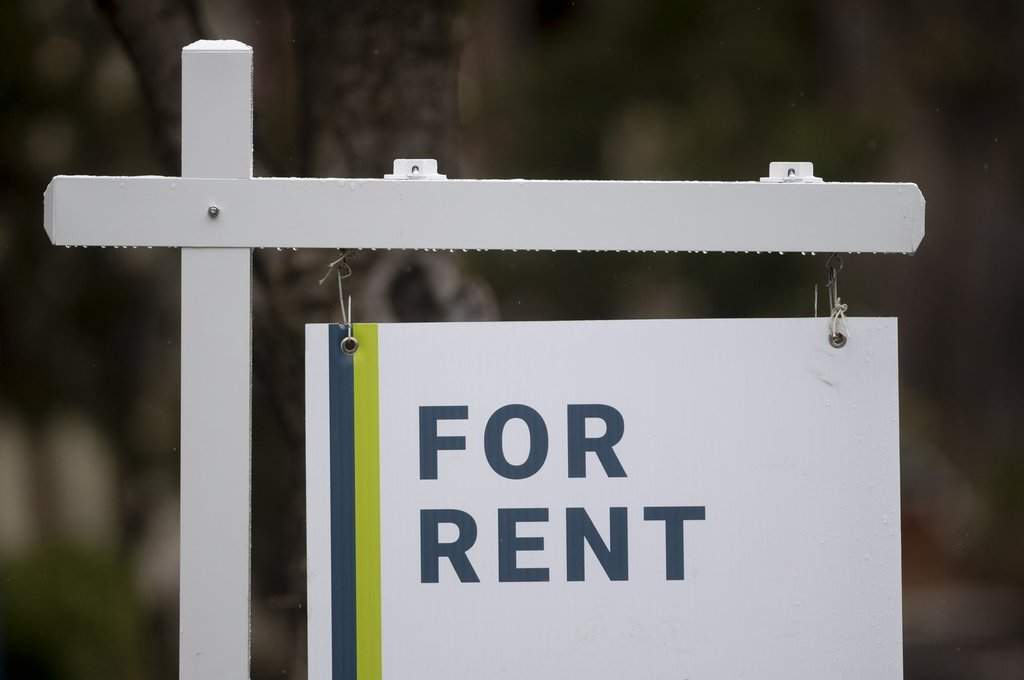
A second set of rental rules in Ontario are set to take effect next week, but while some landlords say it’s to bring balance to the system, tenants’ advocates say it’s the “wrong direction.”

The latest provisions are part of amendments made to the Residential Tenancies Act that were changed through two bills, Bill 60 passed last year, and Bill 97 that received Royal Assent in April.
Some rules came into effect in July, including requiring repayment plans for late rental payments to be done with an official agreement form.
But more rules are set to take effect Monday, Sept. 21, with one of the biggest changes being how much time a tenant could have to pay their rent if they missed the initial payment.
“It really is about just trying to provide some greater balance and fairness to a system,” said Tony Irwin, president and CEO of the Federation of Rental-Housing Providers of Ontario (FRPO).
Under the new rules, if a yearly or monthly tenant misses rent, a landlord can now give an N4 form that provides only a seven-day deadline to pay. The previous rules gave a 14-day deadline.
If the payment is not made within that time, the landlord can then file an L1 form with the Landlord and Tenant Board to evict them for non-payment.
The new rules also define “persistent” late payments as when a tenant doesn’t pay rent within seven days of the due date at least three separate times within six months. This can provide better record-keeping for the landlord to then take action on.

Get breaking National news
Even though the intent of the new rules is to speed up a process, Irwin cautioned it doesn’t necessarily speed up when the Landlord and Tenant Board actually hears the case.
“Imagine the Landlord and Tenant Board is like a funnel and so if one part of the funnel has been sped up, unless the whole sort of funnel is working it’s got to follow all the way through,” Irwin said. “Otherwise, you’ll make people proceed through one part more quickly, but they’re then going to be waiting held up at another part.”

According to LTB Landlord Paralegals, an L1 application for non-payment can take about three to five months, while the paperwork to deal with persistent non-payments can take five to eight months.
Housing advocates argue the new rules create more problems for tenants.
- Environmental advocates ask Sask. Court of Appeal to review coal decision
- Ontario government Microsoft Teams messages set to automatically delete
- Students finish testifying in former Christian school principal assault trial
- Metrolinx hands out limited-edition Lake Ontario Presto cards at Union Station
-
![]() Business Matters: Select Canadian goods hit by new U.S. tariffs
Business Matters: Select Canadian goods hit by new U.S. tariffs -
![]() Carney makes several economic announcements during keynote address at Toronto investment summit
Carney makes several economic announcements during keynote address at Toronto investment summit -
![]() Data centre biggest Sask. investment in history
Data centre biggest Sask. investment in history -
![]() ‘If it doesn’t save money, why do it?’: Poilievre on Carney seeking private investments at airports
‘If it doesn’t save money, why do it?’: Poilievre on Carney seeking private investments at airports


“They’re making it easier to evict people at a time when people are unable to pay their rent,” said Daniel Tucker-Simmons, principal lawyer at Avant Law and a tenants’ rights advocate. “These aren’t bad apples that need to be dealt with more harshly, they’re people that literally can’t afford one of the basic necessities of life.”
The recent rent report by Rentals.ca and Urbanation for August showed rental prices have fallen in Ontario, but the average cost for apartments and condos sits at about $2,248 per month. A two-bedroom apartment or condo, for example, costs about $2,457 a month.
“So you’re seeing people are increasingly unable to afford their rent and so that’s increasing the number of applications for eviction,” Tucker-Simmons said. “I think it’s the wrong direction.”
Shortening the length of time for non-payment of rent or what defines “persistent” late payments aren’t the only changes. Under Bill 60, a landlord can also move themselves or a family member into their property without paying compensation if they serve an N12 notice at least 120 days before the move-in date.
As well, if a tenant wishes to bring last-minute claims to the LTB at a hearing over late payments, Bill 60 dictates they must pay 50 per cent of overdue rent before they can raise those issues. Those issues could be things like delayed or denied maintenance, illegal entry, or harassment.
“I think that’s intended to show some good faith,” said Irwin. “If you want to bring other matters forward, there needs to have been some effort made to address the prevailing issue in order to then be able to bring other issues forward.”
That requirement is “striking,” Tucker-Simmons said.


It’s called a bottleneck
As a tenant who had a landlord create emergencies that interfered with our household income he filed an L1. I showed proof of the loss of income due to his conduct and neglect of duties and was awarded damages for the lost income and also awarded 13k more and they ordered him to have the repairs completed. However, I had filed my T2/T6 application on March 10 which he knew I was filing. He then filed his L1 on March 25. (My family been sleeping in our livingroom since January fyi due to collapsed roof. Yet I am still waiting for my T2/T6 hearing date. Yet since then he has filed several other bogus things against me. He has a roughly 100 rental units.
Sorry for the rant but wanted to provide context. This is a landlord who wants me out because he can rent the house for more then the 2100/mth I pay currently.
With this new law coming into effect, it gives landlords this loophole. Prevents actual justice.
A landlords conduct and actions heavily impact a tenants ability to generate income. The income for a tenant is their livelihood where as the rental amount for the landlord is an investment income.
Taking away the tenants ability to provide context as to why they were late seems like a big deal but as landlords find loopholes, so can tenants.
Section 83 defense, I think wouldnt apply to this new law because you are not raising separate issues, you are explaining the circumstances and asking the adjudicator to use their discretion to not grant the eviction.
Regardless, the LTB is heavily favoring landlords. Housing became a commodity, an investment vehicle and now peoples rights are being struck down for the sake of someone’s profits.
Dont get me wrong, there are problem tenants for sure and that equally needs to be dealt with.
However, tenants like me who pay rent on time and dont complain until the roof caves in in the children’s bedrooms after 3 years of repeated “formal requests for maintenance”. Im a contractor and builder so I knew to remove my kids in Jan from their rooms and it collapsed on March 5.
I only wanted the damages (lost work dealing with the emergencies, which lead to me not being able to pay March rent (i had lost over 4k income between Jan and March specifically because of him) yet the adjudicators also ordered a 75% abatement because I have lost most of my house. (Today, still same situation, close but not yet done, even after I involved the city).
I explain all this to understand how horrible it is for tenants. Its not an investment for us, its our life. Our family. Our safety. Our security. We pay to build someone else’s fortune so we definitely deserve to have way more rights. Even with everything going on, the LTB has no enforcement authority to push the landlord to actually comply with the order leaving me to wait a year or longer to get in front of an adjudicator. How is that fair at all?
So when I hear a landlord complain, honestly, its an investment and your profiting off of someone else’s home.
This residential rental system as a whole is just wrong. Single family houses, should not be rentable. The price of the homes wouldnt be so expensive to buy.
Im currently trying to buy because if I move I will spend a thousand more per month minimum. His expenses havent gone up and I’ve paid the mortgage twice over. Yet someone like me has absolutely no help. There are agencies which are all involved but nothing they can actually do to make him comply with ltb orders and the rta. I have to wait and he will obviously be hit hard with im guessing fines but still, that doesnt help me at all.
I cant be more clear, I pay my rent but living in a nearly uninhabitable home yet there is absolutely no authority.