

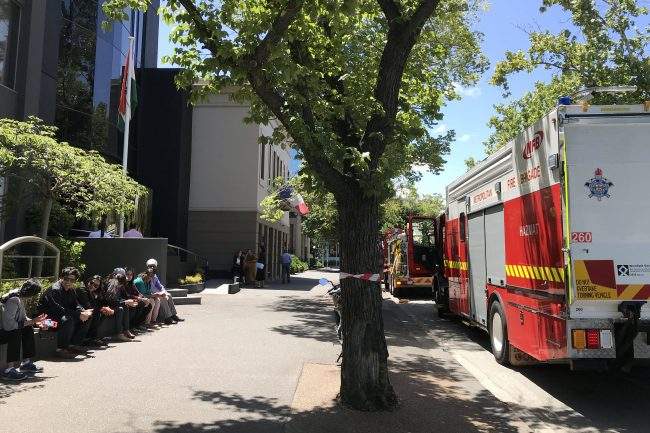
Police in Australia said on Wednesday they are investigating several suspicious packages sent to embassies and consulates, which media reports and other officials said included the U.S. and British missions, in the cities of Melbourne and Canberra.

There were no immediate reports of any harm to staff.
“The packages are being examined by attending emergency services,” the Australian Federal Police (AFP) said in a short statement without providing further details.
“The circumstances surrounding the incidents are being investigated,” the statement said.
Police did not identify any of the embassies or consulates involved, although the Australian newspaper reported that missions affected included the United Kingdom, New Zealand, India, Japan, Pakistan, South Korea, Germany, Greece, Spain, Seychelles, Switzerland, Croatia and Egypt.
Officials at the U.S. and British consulates separately confirmed suspicious packages had been received.
Get breaking National news
“We handled the package according to our standard procedures and in close coordination with local authorities … who are investigating the incident,” a spokesman for the U.S. Consulate said.
- Celine Dion returns to the stage after 6 years at Paris residency: ‘I missed this’
- Trump calls on Ukraine to stop strikes on Russian diesel citing global shortage
- At least 129 missing, 6 dead after ferry overturns in Indonesia’s Java sea
- Turkish authorities launch crackdown on LGBTQ+, HIV support groups


READ MORE: Officials clear suspicious packages at Time Warner Center, Sen. Dianne Feinstein’s L.A. office
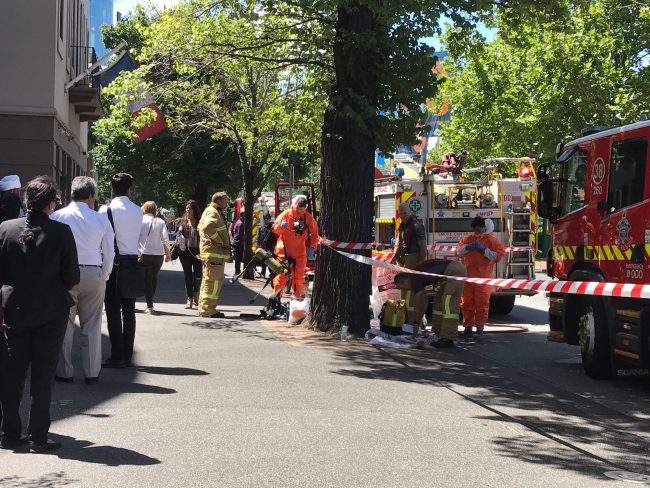
Australian media reported earlier that packages were sent to at least nine international missions in Melbourne, Australia‘s second-largest city, including the British, German, Swiss and Indian embassies.
Images taken by 9News showed firefighters and paramedics attending the Indian and U.S. missions in Melbourne.
WATCH: Part of Toronto Pearson International Airport’s Terminal 1 cleared due to ‘suspicious package’



Comments
Want to discuss? Please read our Commenting Policy first.